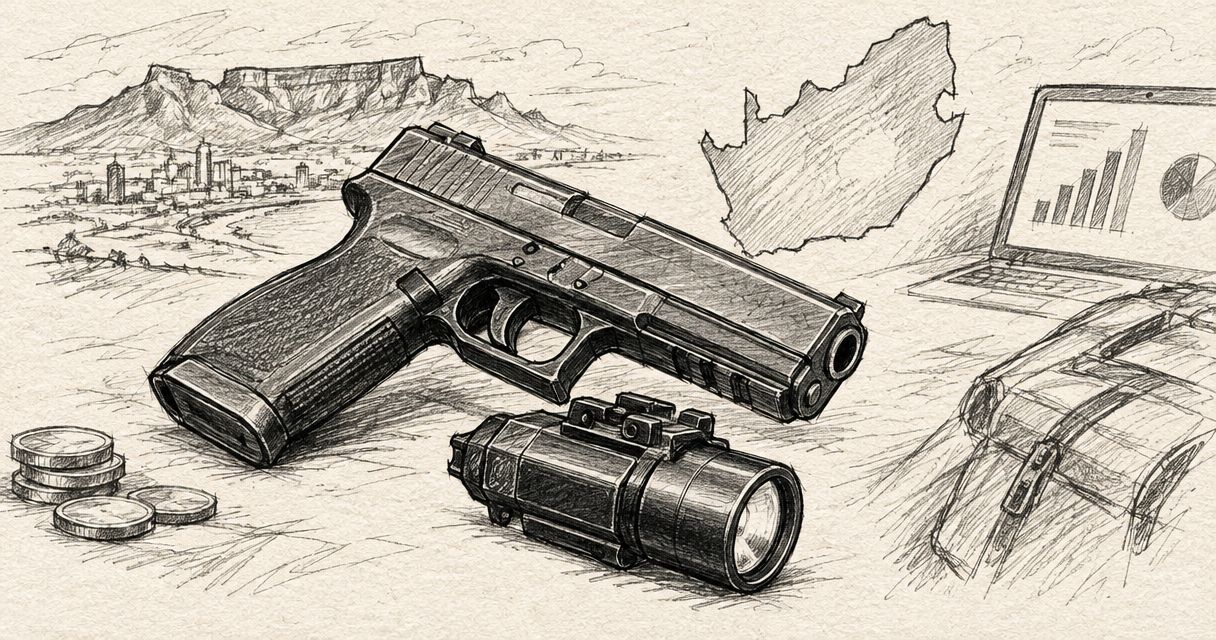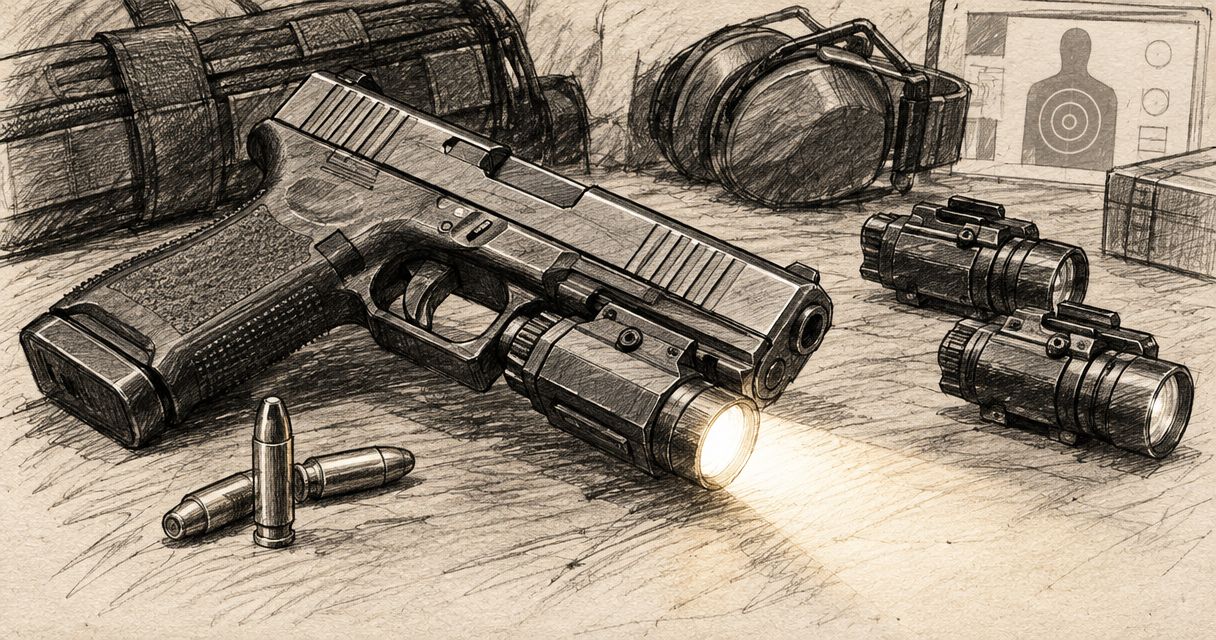
Best for higher-output rechargeable lighting: Olight PL-3R. Best for a smaller, light-only setup: Olight PL-MINI 2. Best for buyers specifically wanting a compact light-and-green-laser combination: Olight Baldr S FDE. This 2026 guide compares pistol weapon light options sold by TorchSA, with exact pistol and holster compatibility as the first purchase checks.
- Olight PL-3R is the higher-output rechargeable pistol weapon light pick, provided your pistol and holster fit.
- Olight PL-MINI 2 suits buyers prioritising a smaller, light-only setup; peak output steps down.
- Olight Baldr S FDE combines white light and a green laser with magnetic charging.
- Confirm exact pistol fit, holster compatibility and charging requirements before choosing any of these lights.
Why this matters
A pistol-mounted light is part of a system: firearm, mounting interface, controls, power source and holster. A strong specification in one area does not fix a mismatch elsewhere. An incompatible rail rules out the purchase, and an unsuitable holster leaves an otherwise fitting light without a usable carry arrangement.
Buy for the complete setup, not the light in isolation. That principle matters whether you are assessing equipment for lawful personal ownership, professional security work or supervised range training in 2026.
A weapon-mounted light also has a clear safety limitation: pointing its beam generally means pointing the firearm. Keep a separate handheld torch for ordinary searching, checking equipment and illuminating anything that does not warrant a firearm being directed towards it.
What makes the best pistol weapon light?
Use these criteria before comparing individual specifications:
- Rail fit: The exact pistol model must match the light's mounting interface and supplied hardware.
- Holster fit: The holster must accommodate the specific pistol-and-light combination.
- Beam balance: Lumens describe total output; candela describes intensity in a particular direction.
- Control access: Switch position and operating modes must suit safe handling of your setup.
- Power system: Charging or battery replacement must fit your maintenance routine.
- Published durability: Water-resistance and impact claims need a named rating or stated test condition.
Treat the first two criteria as purchase gates. Compare output, charging and additional features only after both pass. This prevents a technically impressive specification sheet from distracting you from a basic compatibility problem.
TorchSA pistol weapon lights at a glance
These three catalogue picks serve different buying priorities. The figures below are published TorchSA product specifications, not results from hands-on testing. Maximum output is not sustained output, and no rail adapter establishes compatibility with every pistol.
| Product | Best for | Published maximum output | Standout feature | Key limitation |
|---|---|---|---|---|
| Olight PL-3R | Higher-output rechargeable lighting | 1,500 lumens | Adjustable sliding key-block mount and magnetic charging | Highest setting steps down after 1.5 minutes; 81 mm length needs a fit check |
| Olight PL-MINI 2 | A smaller, light-only setup | 600 lumens | 52.5 mm length and adjustable rail | Published high mode drops to 60 lumens after 1 minute |
| Olight Baldr S FDE | A compact light-and-green-laser combination | 800 lumens | White-light-only, laser-only and combined settings | Built-in battery; IPX4 rating is not an immersion rating |
1. Olight PL-3R: best for higher-output rechargeable lighting
Best for: buyers prioritising more initial white-light output and a repeatable charging routine.
The Olight PL-3R offers the highest published maximum output of these three picks: 1,500 lumens. TorchSA lists a built-in 900 mAh battery, magnetic USB charging and an adjustable sliding key-block mount with GL and 1913 inserts. At 81 mm long and 107 g including the battery, it needs a separate size and holster check rather than an assumption that more output means a better fit.
Olight PL-3R pros:
- Magnetic charging avoids routine replacement of disposable cells.
- Adjustable mounting position helps assess switch access on a compatible rail.
- A 300-lumen low setting gives an alternative to the highest output.
Olight PL-3R limitations:
- The listed 1,500-lumen setting lasts 1.5 minutes before stepping down to 300 lumens.
- Its built-in battery requires charging equipment, not simply a spare-cell swap.
- Its longer housing than the PL-MINI 2 adds a size constraint to your fit checks.
Verdict: buy the Olight PL-3R for higher-output rechargeable lighting only after confirming exact pistol and holster compatibility. Do not interpret its advertised 205 m beam distance as an object-identification guarantee.
2. Olight PL-MINI 2: best for a smaller, light-only setup
Best for: buyers prioritising compact dimensions without a laser.
The Olight PL-MINI 2 measures 52.5 mm long and weighs 73 g according to TorchSA's listing. Its adjustable rail and GL/Picatinny mounting options make positioning part of the fit assessment. The built-in lithium-polymer battery charges through the supplied magnetic USB cable.
Olight PL-MINI 2 pros:
- Shorter and lighter than the other two picks in this comparison.
- Adjustable mounting position helps you assess the complete setup.
- Ambidextrous switches provide momentary-on and constant-on operation.
Olight PL-MINI 2 limitations:
- The published 600-lumen high mode drops to 60 lumens after 1 minute.
- A built-in battery means maintaining a charging routine.
- Compact dimensions do not prove holster fit or compatibility with every short rail.
Verdict: buy the Olight PL-MINI 2 when a smaller, light-only setup matters more than sustained high output, provided both fit checks pass. The 2026 decision is about the complete setup, not the largest number on the specification sheet.
3. Olight Baldr S FDE: best for a compact light-and-green-laser combination
Best for: buyers who specifically want both functions in one rechargeable unit.
The Olight Baldr S FDE combines an 800-lumen maximum white-light setting with a green laser. TorchSA lists a setting switch for white light only, laser only or both, plus a 100-lumen low setting. The housing is 63 mm long and weighs 95 g including its built-in 380 mAh battery; charging is magnetic.
Olight Baldr S FDE pros:
- Separate function settings let you select white light without the laser.
- Sliding rail mounting includes GL and Picatinny compatibility options.
- The 100-lumen mode provides a lower-output lighting choice.
Olight Baldr S FDE limitations:
- Maximum 800-lumen output steps down; it is not the whole-runtime output.
- Running the laser changes the published runtime, so compare like-for-like settings.
- The listed IPX4 protection does not establish suitability for immersion.
Verdict: buy the Olight Baldr S FDE only when you actually want the combined functions and have verified pistol and holster fit. If you want white light alone, compare the PL-3R and PL-MINI 2 first rather than paying attention to an extra feature you do not need.
Start with exact rail and holster compatibility
Best for: every buyer, before any performance comparison.
The description of a mounting rail is not enough on its own. Check the light manufacturer's compatibility information against your pistol's exact model and variant, including any required rail key or adapter. Similar-looking frames are not proof that the same mounting arrangement will work.
Do not assume that hardware shown in a photograph is included. Read the supplied-parts list and installation instructions. If the required mounting component is absent or the compatibility statement is unclear, stop the purchase until those points are resolved.
Holster compatibility needs a separate check. A holster labelled for your pistol does not automatically accommodate a mounted light, and a generic light-compatible description does not establish compatibility with your particular combination. Confirm the firearm model, light model and any other relevant configuration with the holster manufacturer.
Compatibility pros:
- Exact compatibility information gives you a clear pass-or-fail purchase criterion.
- Confirmed holster fit lets you assess the complete setup rather than one component.
- A documented mounting procedure gives you a reference for installation and inspection.
Compatibility limitations:
- An adapter adds a component whose suitability still needs verification.
- A correct rail fit does not establish holster compatibility.
- A changed light can require a different holster.
Verdict: hold the purchase until both the rail fit and holster fit are confirmed. Installation should follow the manufacturer's instructions with the firearm unloaded, ammunition removed from the work area and the muzzle kept in a safe direction.
Read lumens and candela together
Best for: buyers comparing beam specifications rather than headline output.
Lumens measure total visible light output. Candela measures luminous intensity in a particular direction. A lumen figure alone therefore cannot tell you whether the beam has a broad spread, a concentrated centre or a useful balance of both.
For a 2026 comparison, look for beam photographs or diagrams produced under stated conditions, alongside both output figures. Images taken with different camera exposures are not reliable evidence that one light produces a more useful beam than another.
Published beam distance also needs context. Under ANSI/PLATO FL 1, beam distance uses an illuminance threshold of 0.25 lux. That endpoint is a measurement convention, not a promise that you can identify an object clearly at the advertised distance.
Beam-specification pros:
- Lumens and candela together describe more than either figure alone.
- Stated test conditions make comparisons easier to interpret.
- Beam illustrations can show spill and hotspot shape that numbers omit.
Beam-specification limitations:
- Peak output does not describe sustained output throughout use.
- An advertised distance does not establish identification capability.
- Photographs without exposure details can exaggerate apparent differences.
Verdict: compare beam characteristics and sustained-output information before treating maximum lumens as the deciding factor. A high initial figure is incomplete without an explanation of what happens as the light runs and its battery discharges.
Check controls before choosing extra modes
Best for: buyers who value straightforward operation and clear mode selection.
A control layout deserves the same attention as output. Review the manufacturer's description of momentary operation, constant-on operation and any additional modes. Establish how each is selected and whether the light remembers its previous setting.
Switch accessibility depends on the light, pistol and user's hand position. A product photograph cannot settle that question. Where practical, assess the exact combination safely in person rather than inferring access from another firearm's demonstration.
Extra modes introduce extra decisions. Strobe, programmable sequences and multiple output levels are not automatic advantages; each needs a defined reason to be part of your equipment choice. Avoid selecting a more complicated interface solely because the feature list is longer.
Control-layout pros:
- Clearly described modes let you understand operation before purchase.
- Suitable switch placement reduces the need to change your handling position.
- A documented lockout function explains how unintended activation is managed.
Control-layout limitations:
- Accessible controls on one frame need not be accessible on another.
- More functions can require a more involved operating sequence.
- A lockout feature only helps when its operation suits your routine.
Verdict: favour controls you understand and can assess safely over an extensive mode list. Practice and equipment familiarisation belong in a lawful, supervised setting where appropriate; a buying guide is not a substitute for firearm-safety instruction.
Choose a power system you will maintain
Best for: buyers deciding between charging convenience and replaceable cells.
Rechargeable and replaceable-battery designs solve different maintenance problems. Neither deserves a universal ranking. The right choice depends on how you will keep the light ready, inspect its condition and follow the manufacturer's battery instructions.
A rechargeable design requires a dependable charging routine. Check the specified charger or cable, whether charging requires removal from the firearm, and what the charge indicator actually communicates. A connector's appearance does not establish charger compatibility.
A replaceable-cell design requires the correct battery specification and suitable spares. Match the chemistry, dimensions and any stated voltage requirements. Do not substitute a rechargeable cell for a disposable one simply because both fit physically.
Rechargeable power pros:
- Supports a repeatable charging routine.
- Reduces the need to keep disposable replacement cells.
- A documented charge indicator helps you understand the charging process.
Rechargeable power limitations:
- Depends on access to the required charging equipment.
- Battery serviceability varies by design and needs checking.
Replaceable-battery pros:
- Allows approved spare cells to form part of your maintenance plan.
- Separates battery replacement from access to a charger.
Replaceable-battery limitations:
- Requires correct spares and protected storage.
- Incorrect substitutions create avoidable equipment and safety risks.
Verdict: choose the system whose maintenance requirements you will consistently follow. TorchSA buyers comparing a pistol weapon light in 2026 should establish the exact power requirements before adding batteries or charging accessories to an order.
Read durability ratings precisely
Best for: buyers assessing exposure to rain, dust and handling impacts.
A water-resistance label needs a defined rating. Under IEC 60529, IPX7 addresses temporary immersion, commonly summarised as 1 metre for 30 minutes under specified test conditions. It does not make every underwater use appropriate.
The X in IPX7 means that the code does not specify a solid-particle protection rating. Do not read it as evidence of tested dust protection. Equally, do not assume that one water test establishes resistance to every other type of water exposure.
Impact resistance needs its own supporting information. Look for the stated test method and conditions rather than accepting words such as tactical or heavy-duty as technical evidence.
Durability-rating pros:
- Named standards provide a defined basis for interpreting claims.
- Separate water and impact information answers different questions.
- Published care instructions help you preserve the intended protection.
Durability-rating limitations:
- Laboratory conditions do not reproduce every field exposure.
- A damaged seal or improperly closed compartment changes the situation.
Verdict: buy against documented conditions, then follow the care instructions. The strongest-looking housing is not a substitute for a clear specification.
Build a purchase checklist before ordering
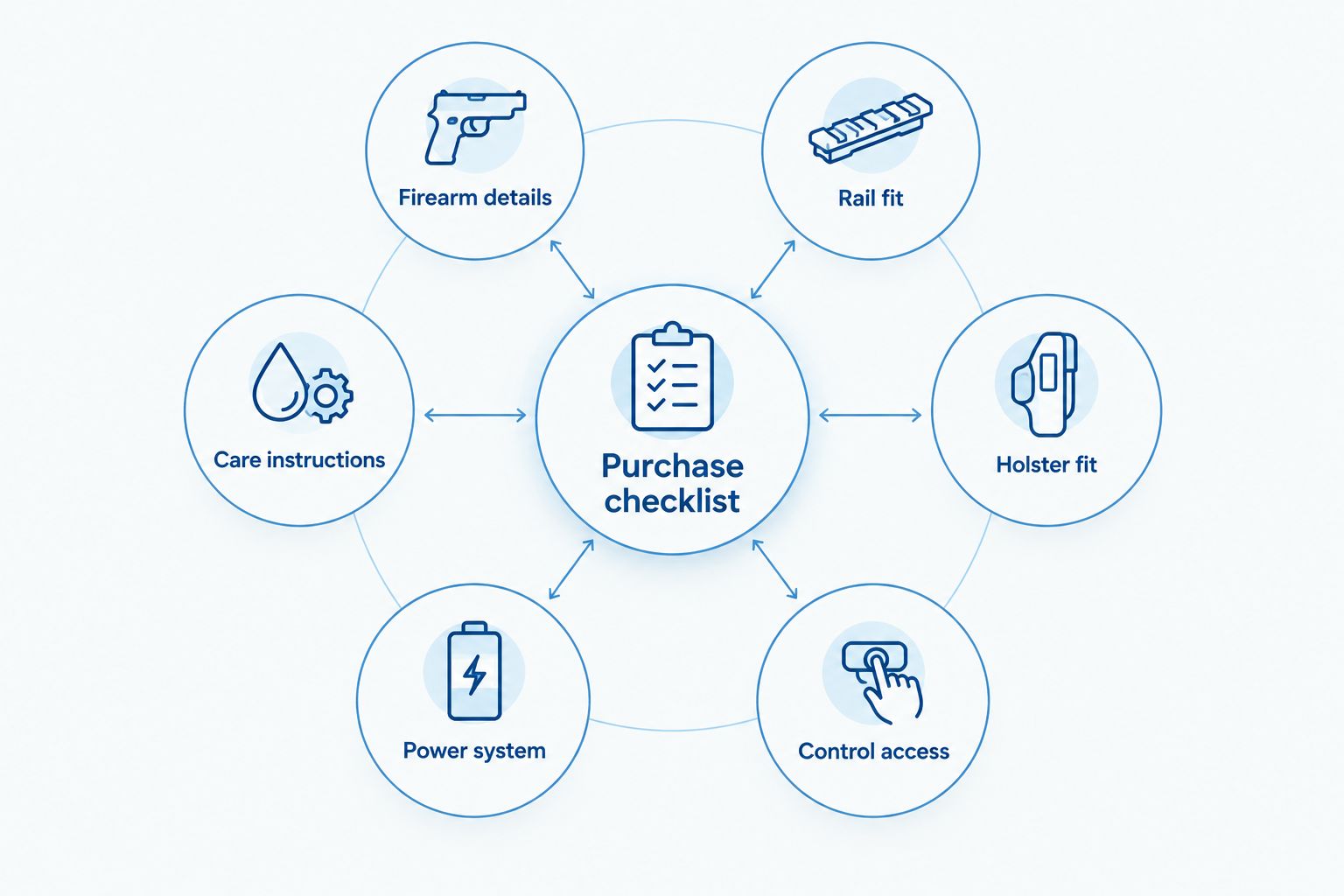
For TorchSA buyers, a short compatibility record is more useful than a long list of competing headline figures. Keep the following information together so you can evaluate the complete purchase without relying on memory.
- Firearm details: Record the exact model and variant.
- Rail fit: Record the manufacturer's compatibility statement and required mounting hardware.
- Holster fit: Confirm the exact pistol-and-light combination.
- Control access: Understand the switch layout and intended operating modes.
- Power system: Record the approved battery or charging requirements.
- Care instructions: Check mounting, cleaning and inspection guidance.
Resolve these points before considering extra features. A light that passes the checklist is ready for a meaningful specification comparison; one that fails a compatibility check is not.
Keep a copy of the relevant instructions after purchase. If you later change the firearm, holster or mounting hardware, repeat the compatibility checks instead of assuming that the previous assessment still applies.
How the buying priorities are ordered
This guide puts compatibility first because an unsuitable mounting interface or holster prevents the intended setup from working. Controls come next because specifications do not compensate for an unsuitable interface. Beam characteristics, power and durability then help distinguish options that already fit.
The 2026 picks are based on TorchSA's published catalogue specifications, not a hands-on test or a claim that one light fits every pistol. The Olight PL-3R takes the higher-output rechargeable slot, the Olight PL-MINI 2 the smaller light-only slot, and the Olight Baldr S FDE the combined-function slot. These are use-case recommendations; compatibility still overrides the order.
Which pistol weapon light should you choose?
Choose the light with verified firearm and holster compatibility, understandable controls and a power system you can maintain. Among options that satisfy those requirements, compare beam shape, sustained output and documented durability against your intended lawful use.
If compatibility remains unresolved, do not buy on the strength of a lumen figure. If controls remain unclear, read the operating instructions before committing. If battery requirements remain uncertain, settle them before ordering accessories.
For TorchSA buyers in 2026, shortlist the Olight PL-3R first if you want higher-output rechargeable white light and its size fits your setup. Choose the Olight PL-MINI 2 instead when a smaller light-only housing is the priority. Choose the Olight Baldr S FDE when you specifically want a compact white-light-and-green-laser combination. Hold any purchase until the exact pistol, mounting hardware and holster are confirmed.
FAQ
What's the best pistol weapon light for my pistol?
The best pistol weapon light is one with verified compatibility for your exact pistol and holster. After confirming both, compare controls, beam characteristics, power requirements and documented durability.
Does a higher lumen figure mean a better pistol light?
No, a higher lumen figure does not establish that a pistol light is better for your setup. Compare candela, beam shape and sustained output alongside total light output.
Will a light fit any pistol with an accessory rail?
No, an accessory rail alone does not establish compatibility. Check the light manufacturer's information for the exact pistol model and required mounting hardware.
Do I need a different holster for a weapon-mounted light?
You need a holster confirmed for the exact pistol-and-light combination. A holster made for the pistol without a light is not automatically suitable after a light is mounted.
Is rechargeable power better than replaceable batteries?
Neither power system is universally better. Rechargeable designs require a charging routine, while replaceable-battery designs require the correct spare cells and safe storage.
What does IPX7 mean on a pistol weapon light?
IPX7 describes temporary-immersion protection under specified test conditions, commonly summarised as 1 metre for 30 minutes. The X does not specify a solid-particle protection rating, and the code does not approve every underwater use.
Can a pistol weapon light replace a handheld torch?
No, a pistol weapon light should not replace a handheld torch for ordinary searching or inspection. Directing a mounted light generally means directing the firearm, so use a separate torch for tasks that do not justify that.
What should I check before buying a pistol weapon light in 2026?
Confirm exact firearm fit, mounting hardware, holster compatibility and controls before comparing output. Then check the approved power source, charging or replacement procedure and manufacturer care instructions.
One last thing
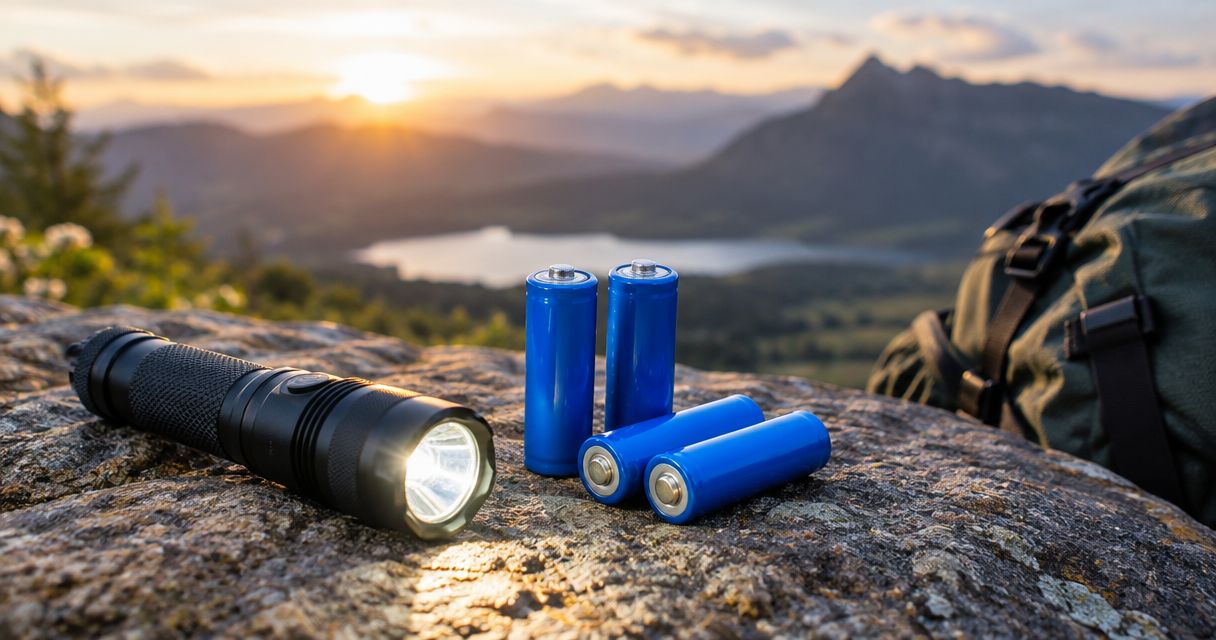
Battery dimensions alone do not establish compatibility. Two cells that appear to fit can differ in chemistry or electrical characteristics, so physical fit is not permission to substitute one for another.
The same principle applies to the complete pistol setup: appearance is not evidence. A familiar-looking rail, a similar holster or a matching charging connector still requires confirmation against the manufacturer's instructions. Keep those instructions accessible, and use them whenever you change a component.
A careful purchase is not finished at checkout. It is finished when you understand what fits, how the equipment operates and how you will maintain it safely.