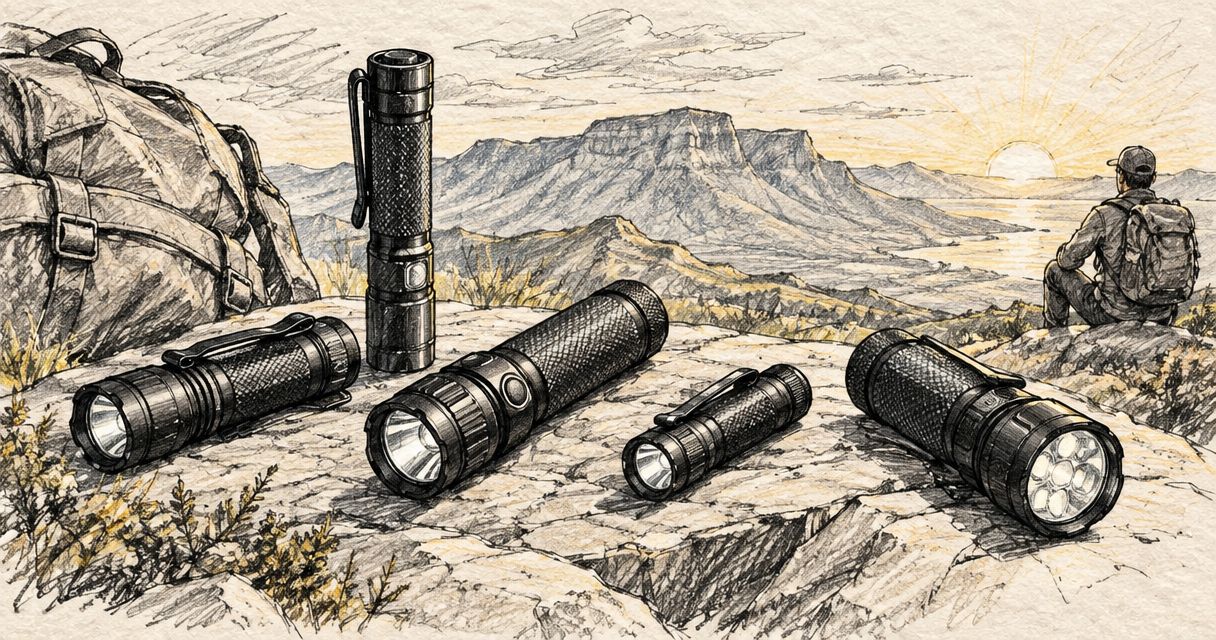
Best overall: Sofirn ST1. Best for lightweight carry: TrustFire Mini11. Best for advanced controls: Wurkkos TS26. Best for adjustable hands-free lighting: Wurkkos HD04. This 2026 guide compares four EDC flashlight options from TorchSA by pocket fit, beam performance, charging and practical use—not brightness alone.
- The Sofirn ST1 is the default edc flashlight recommendation for flat pocket carry and USB-C charging.
- TrustFire Mini11 suits lightweight everyday carry, with a stated weight of 32.2g and magnetic tail.
- Wurkkos TS26 suits enthusiasts wanting Anduril 2 controls, reverse charging and higher maximum output.
- Wurkkos HD04 suits hands-free tasks requiring an adjustable head, spotlight and floodlight.
Why this matters
An everyday-carry torch needs to earn its place in your pocket. A light that suits inspecting equipment does not automatically suit walking after dark, and the brightest specification does not tell you how comfortable the torch is to carry.
For South African buyers choosing an EDC flashlight in 2026, start with your recurring task: lighting a nearby workspace, checking a path or keeping a small backup light close. Then match the beam, controls and charging arrangement to that task. TorchSA's EDC flashlight shortlist gives you four distinct starting points rather than four versions of the same recommendation.
What makes the best EDC flashlight?
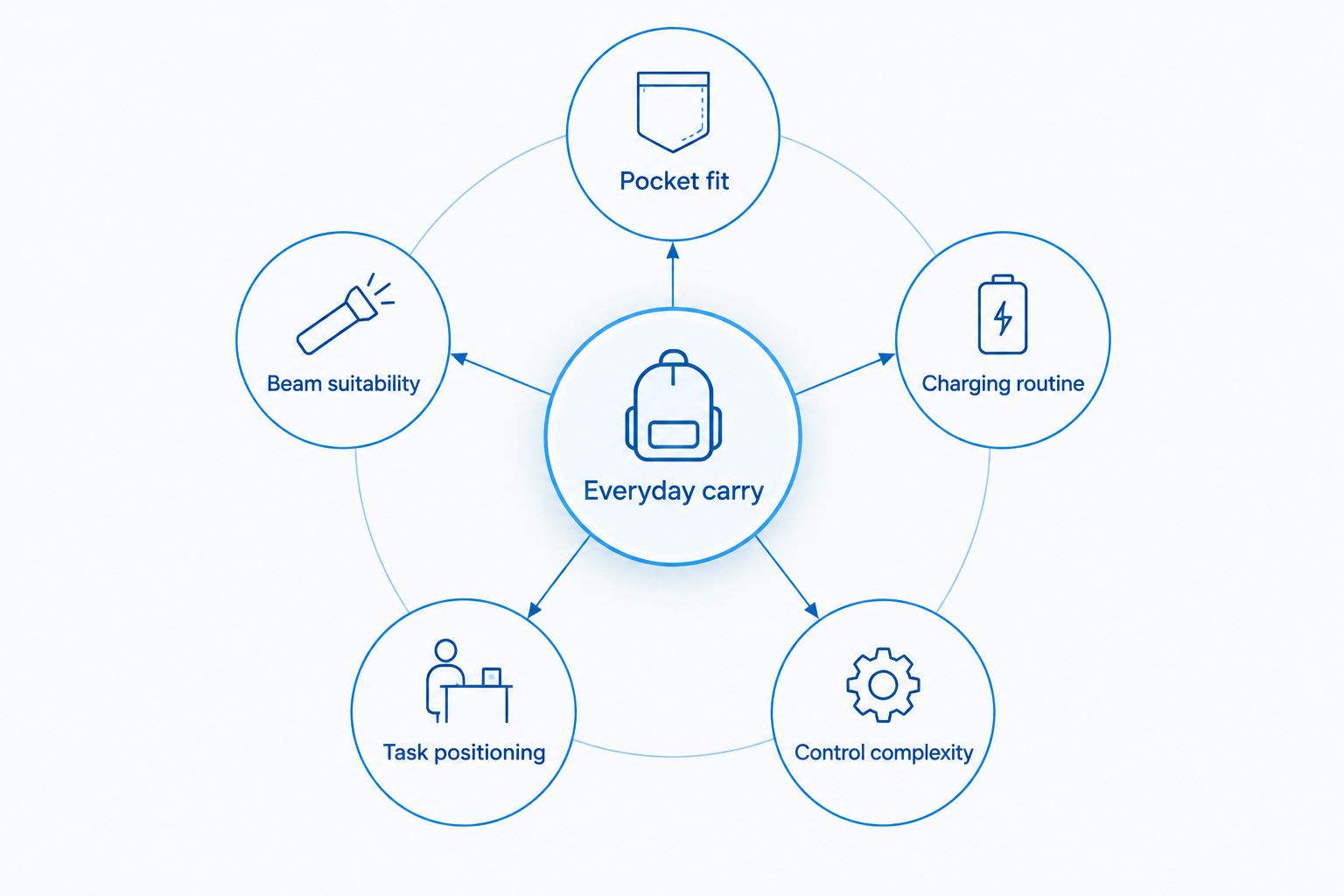
Use these five criteria before looking at the ranking:
- Pocket fit: Weight and thickness affect whether you actually carry the light. The Sofirn ST1 lists a 16 mm thickness; the TrustFire Mini11 lists a 32.2g weight.
- Beam suitability: Lumens describe light output; beam distance describes reach under stated test conditions. Neither specification alone explains how well a beam suits close work.
- Charging routine: Check the connector, charging accessories and battery arrangement. A charging method that fits your existing routine is easier to maintain.
- Task positioning: A magnetic tail and an adjustable head solve different problems. Attachment holds the torch; articulation determines where it points.
- Control complexity: Choose extra functions because you need them. An advanced interface, coloured lighting or reverse charging adds decisions as well as capabilities.
Pocket fit belongs first. If you dislike carrying a torch, its output and extra modes will not help when it is sitting at home. For a 2026 purchase, treat comfort as a requirement, not a consolation prize for choosing fewer lumens.
Best EDC flashlights at a glance
The specifications below come from the TorchSA product catalogue supplied for this 2026 guide. Maximum output and beam distance are comparison points, not promises of continuous output or clear identification at the stated distance.
| Item | Best for | Standout feature | Key limitation |
|---|---|---|---|
| Sofirn ST1 | Flat everyday pocket carry | 16 mm profile; 1,500 lumens; 226 m stated throw; USB-C charging | Built-in battery requires planning around recharging |
| TrustFire Mini11 | Lightweight backup carry | 32.2g weight; 750 lumens; colour side light; magnetic tail | Lower listed maximum output than the ST1 and TS26 |
| Wurkkos TS26 | Enthusiast control and charging flexibility | Anduril 2; 3,470 lumens; 197 m stated throw; USB-C reverse charging | Advanced controls need familiarisation |
| Wurkkos HD04 | Adjustable hands-free task lighting | Rotating head; spotlight and floodlight; magnetic tail; 750 lumens | Magnetic attachment needs a suitable surface |
The table also shows why output and reach must remain separate. The Wurkkos TS26 lists more lumens than the Sofirn ST1, but the Sofirn ST1 lists a longer beam distance. More lumens does not automatically mean more reach.
1. Sofirn ST1: best EDC flashlight for flat pocket carry
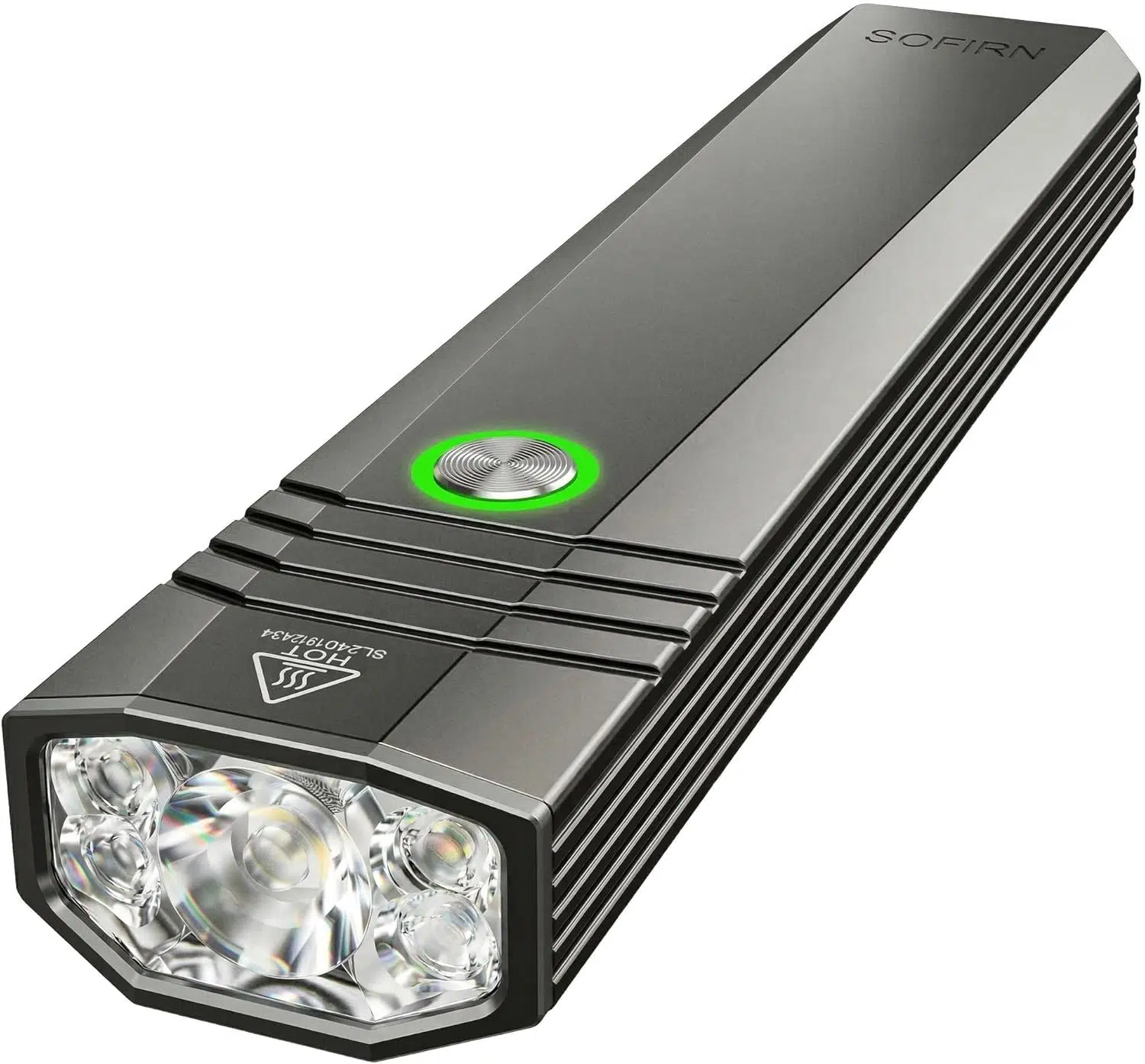
The Sofirn ST1 is an everyday-carry torch with a flat body, a listed thickness of 16 mm and USB-C charging. Its specifications include 1,500 lumens, a 226 m maximum beam distance and a built-in 2,100 mAh battery.
That combination makes the Sofirn ST1 the default recommendation for someone who wants a pocket-oriented light without making specialist functions the main attraction. The Sofirn ST1 is TorchSA's best EDC flashlight pick for buyers who prioritise a flat profile and USB-C charging.
Sofirn ST1 pros
- The 16 mm thickness gives you a concrete pocket-fit specification to assess.
- USB-C charging suits buyers who want that connector on the torch itself.
- The listed 226 m beam distance supports choosing it when reach matters alongside everyday carry.
Sofirn ST1 cons
- The built-in battery means you should plan around charging rather than assume field battery changes.
- The 1,500-lumen figure does not establish sustained output or runtime at that output.
Best for: Everyday users who want a flat torch for a pocket, bag or glovebox.
Before choosing the Sofirn ST1, think about where it will sit beside your phone, keys and wallet. A thin body addresses thickness, but overall pocket comfort still depends on the rest of your carry. Read the operating instructions for lockout and charging before making it your daily light.
Verdict: Buy the Sofirn ST1 for flat everyday carry; choose by carry comfort, not the maximum-output figure alone.
2. TrustFire Mini11: best EDC flashlight for lightweight backup carry
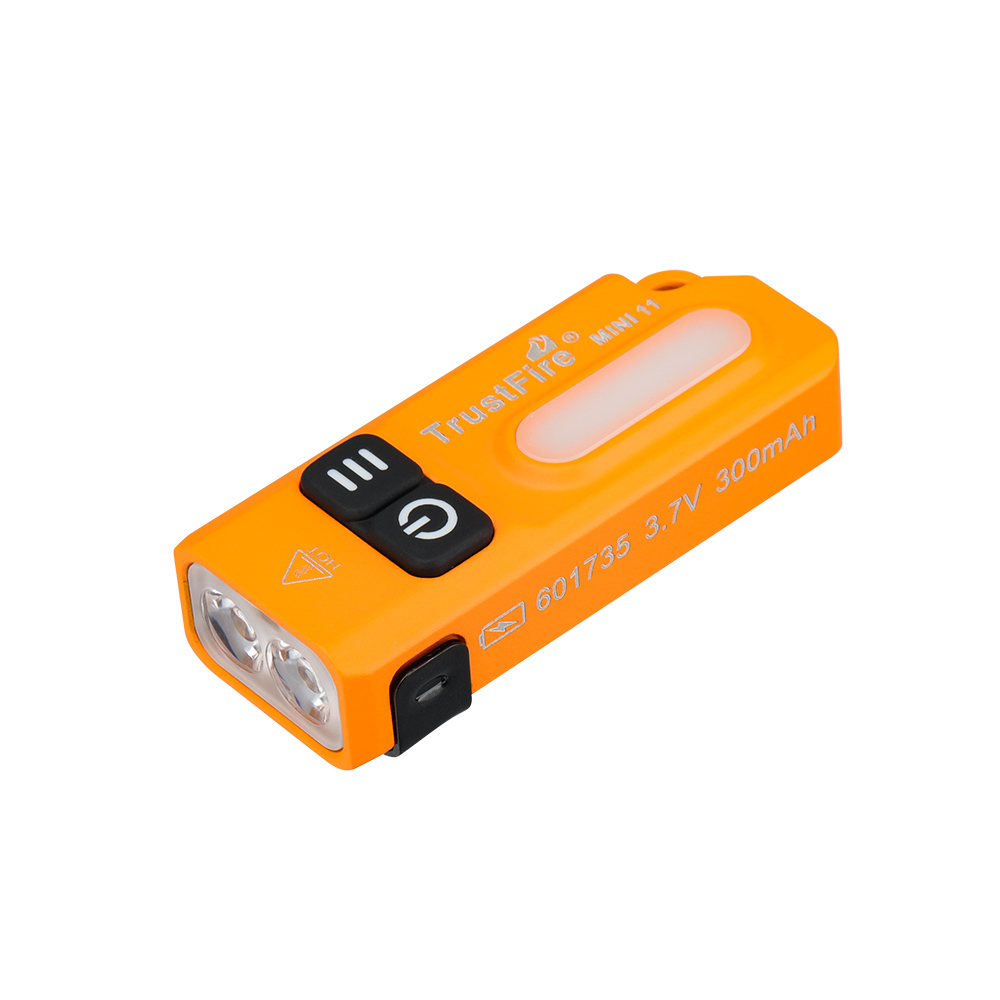
The TrustFire Mini11 combines white light, a colour side light, a magnetic tail and Type-C charging. Its description lists a weight of 32.2g, while the product title specifies 750 lumens of white-light output.
The TrustFire Mini11 suits buyers whose first objection to carrying a torch is extra weight. Its role in this shortlist is a light you keep close, not a substitute for every larger outdoor or work light.
TrustFire Mini11 pros
- The stated 32.2g weight makes carry weight an explicit strength.
- Type-C charging gives you a clearly identified charging connection.
- The magnetic tail adds a placement option for nearby tasks.
- The colour side light provides a separate lighting function from the white beam.
TrustFire Mini11 cons
- Its listed 750-lumen maximum is lower than the Sofirn ST1 and Wurkkos TS26 figures.
- Magnetic placement depends on finding a suitable surface near the task.
Best for: Buyers who prioritise low carry weight and a compact backup torch.
Choose the TrustFire Mini11 because you want something small enough to include in your regular carry. Do not choose it simply because it has several lighting functions: decide whether the white beam, side light and magnetic mounting each solve a real problem for you.
For a 2026 everyday-carry setup, consistency matters more than collecting features. A compact torch carried regularly fills a different role from a larger light reserved for planned outings.
Verdict: Buy the TrustFire Mini11 when low carry weight is your main requirement.
3. Wurkkos TS26: best EDC flashlight for advanced controls
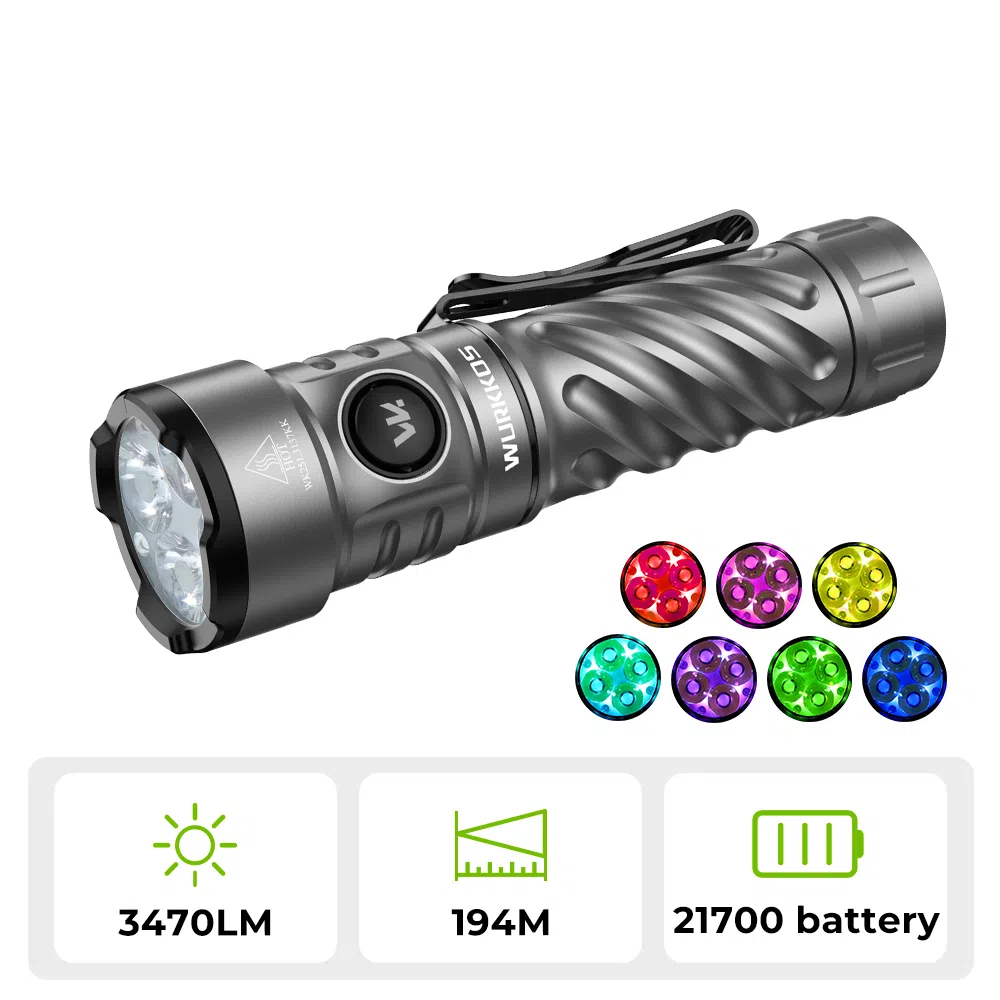
The Wurkkos TS26 uses Anduril 2 and lists up to 3,470 lumens with a maximum beam distance of 197 m. It also includes RGB auxiliary lighting, USB-C reverse charging and a magnetic tail.
The Wurkkos TS26 earns its place through control and charging functions, rather than through a claim that everyone needs its higher output. It suits a buyer who wants to learn the interface and use more than the main white light.
Wurkkos TS26 pros
- Anduril 2 provides an advanced control interface for interested users.
- USB-C reverse charging adds a function beyond recharging the torch.
- The magnetic tail supports attachment during suitable nearby tasks.
- Its 3,470-lumen listed maximum is the highest in this four-item shortlist.
Wurkkos TS26 cons
- The advanced interface requires familiarisation before dependable everyday use.
- Its stated 197 m beam distance is shorter than the Sofirn ST1's 226 m figure, despite higher maximum output.
Best for: Enthusiasts who deliberately want Anduril 2 and reverse charging.
Learn the Wurkkos TS26 controls before relying on the torch away from home. Practise selecting the output you need and using its lockout procedure according to the instructions. A sophisticated interface is useful only when you can operate it confidently.
Reverse charging also requires a decision about priorities. If you use the torch to charge another device, you are drawing on energy that would otherwise remain available for lighting.
Verdict: Buy the Wurkkos TS26 for its advanced interface and reverse charging; skip it if those functions add no value to your routine.
4. Wurkkos HD04: best EDC flashlight for adjustable task lighting
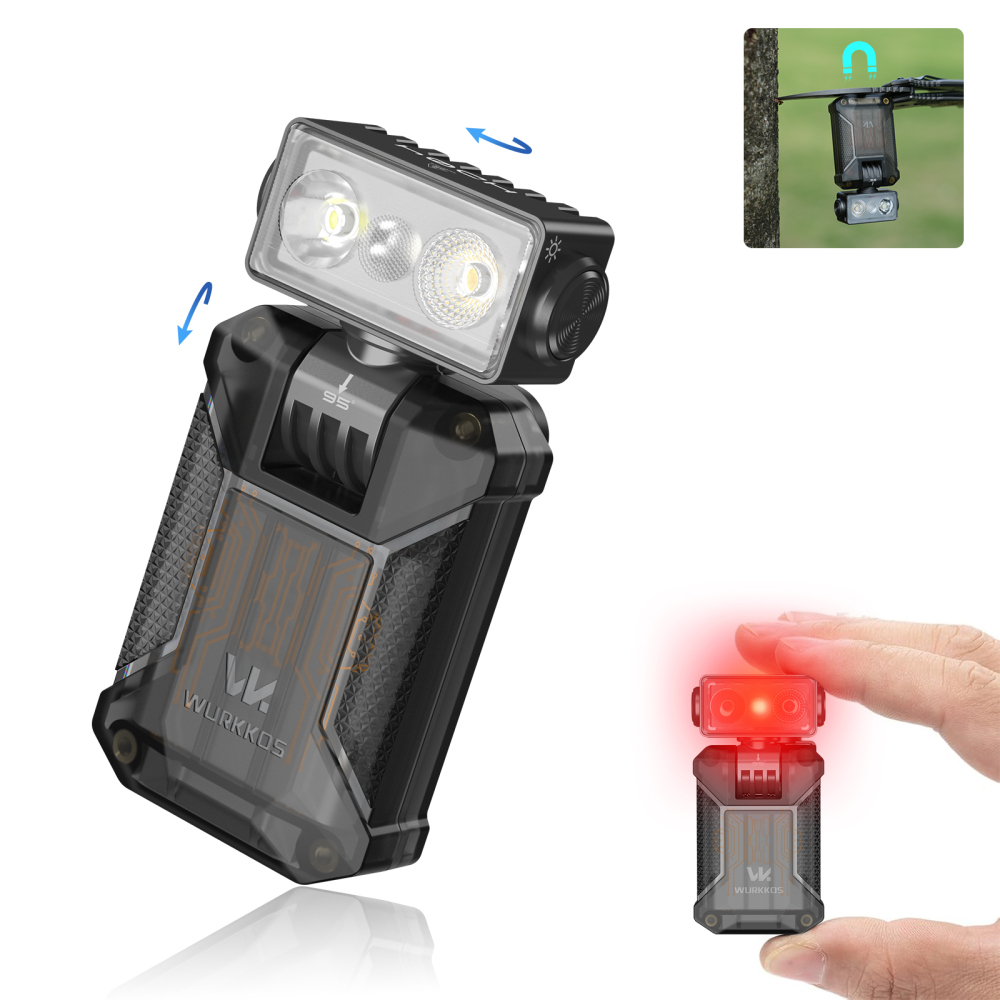
The Wurkkos HD04 combines a rotating head, spotlight, floodlight, RGB lighting and a magnetic tail. Its listed specifications include 750 lumens, a 120 m spotlight distance and head movement of 180° horizontally and 95° vertically.
The Wurkkos HD04 solves a positioning problem: you can adjust the head instead of relying entirely on where the body rests. That is the clearest reason to choose it over the other torches here.
Wurkkos HD04 pros
- The rotating head lets you adjust the beam direction independently of the body position.
- Spotlight and floodlight provide distinct lighting choices.
- The magnetic tail gives you a hands-free attachment option.
- The stated rotation angles explain the head's adjustment range.
Wurkkos HD04 cons
- Magnetic mounting needs a suitable surface positioned near your work.
- Its listed 120 m spotlight distance is shorter than the ST1 and TS26 beam-distance figures.
Best for: Buyers who regularly need to aim a small light while keeping their hands free.
For nearby tasks, placement often deserves more attention than maximum output. Put the light where it illuminates the work without your hands blocking the beam. Test the attachment and aim before starting; do not assume a magnetic tail makes every mounting position secure.
The Wurkkos HD04 is not the default choice for someone who simply wants a flat pocket torch. Its recommendation is specific: choose it when the adjustable head is a feature you will use regularly.
Verdict: Buy the Wurkkos HD04 for adjustable task lighting, not for the longest beam reach.
Compare the shortlisted products
These four TorchSA EDC flashlight options cover different needs. Match the product to your main use before adding weight, modes or charging functions you do not need.
How the recommendations are ranked
This ranking follows the five buying criteria: pocket fit, beam suitability, charging routine, task positioning and control complexity. The Sofirn ST1 takes the default slot because its flat profile and USB-C charging directly address everyday carry; the other recommendations each serve a narrower requirement.
The ranking compares catalogue specifications and described functions, not measured runtime, durability or side-by-side beam testing. Maximum lumens do not decide the order. That keeps the recommendations tied to buying decisions the stated specifications actually support.
Which EDC flashlight should you choose?
Choose the Sofirn ST1 if you are undecided. Its flat profile, USB-C charging and stated beam reach make it the most straightforward starting point in this shortlist.
Choose the TrustFire Mini11 when carry weight is the deciding factor. Choose the Wurkkos TS26 when you specifically want Anduril 2 and reverse charging. Choose the Wurkkos HD04 when aiming a mounted light matters more than pocket flatness or maximum reach.
Before finalising your 2026 choice, check three practical details in the product instructions:
- How you prevent accidental activation during carry.
- What charging accessories and battery arrangements the model uses.
- Which operating mode suits your normal task, rather than a brief maximum-output demonstration.
These checks turn a specification-based shortlist into a torch you can use confidently.
FAQ
What's the best EDC flashlight for everyday carry in South Africa?
The Sofirn ST1 is the default recommendation in this shortlist for flat pocket carry and USB-C charging. Its listed specifications include a 16 mm profile, 1,500 lumens and a 226 m maximum beam distance.
Which EDC flashlight is best if I want something lightweight?
The TrustFire Mini11 is the lightweight recommendation in this shortlist, with a stated weight of 32.2g. It also includes white light, a colour side light, Type-C charging and a magnetic tail.
Is the Wurkkos TS26 better than the Sofirn ST1?
The Wurkkos TS26 is the better fit for buyers who want Anduril 2 controls and USB-C reverse charging; the Sofirn ST1 is the default for flat pocket carry. The TS26 lists more maximum lumens, while the ST1 lists a longer maximum beam distance.
Does a higher lumen rating mean a flashlight shines further?
No, higher lumens do not automatically mean a longer beam distance. The Wurkkos TS26 lists 3,470 lumens and 197 m, while the Sofirn ST1 lists 1,500 lumens and 226 m.
Which EDC flashlight suits hands-free work?
The Wurkkos HD04 is the adjustable hands-free recommendation in this shortlist. Its rotating head and magnetic tail help with positioning, but magnetic attachment requires a suitable surface.
Does USB-C reverse charging affect the energy left for lighting?
Yes, reverse charging uses energy from the torch's battery to supply another device. The Wurkkos TS26 includes this function, so decide whether charging that device or preserving lighting energy takes priority.
Can I assume a flashlight maintains its maximum lumens?
No, a maximum lumen rating does not establish continuous output or runtime at that level. Check the model's runtime and output information before choosing a torch for extended use.
One last thing
The clearest comparison is not the biggest number: the 1,500-lumen Sofirn ST1 lists more beam reach than the 3,470-lumen Wurkkos TS26. Output and reach describe different things.
Make your final choice by naming the job first. Pocket carry points to the Sofirn ST1, low weight to the TrustFire Mini11, advanced controls to the Wurkkos TS26, and adjustable positioning to the Wurkkos HD04.