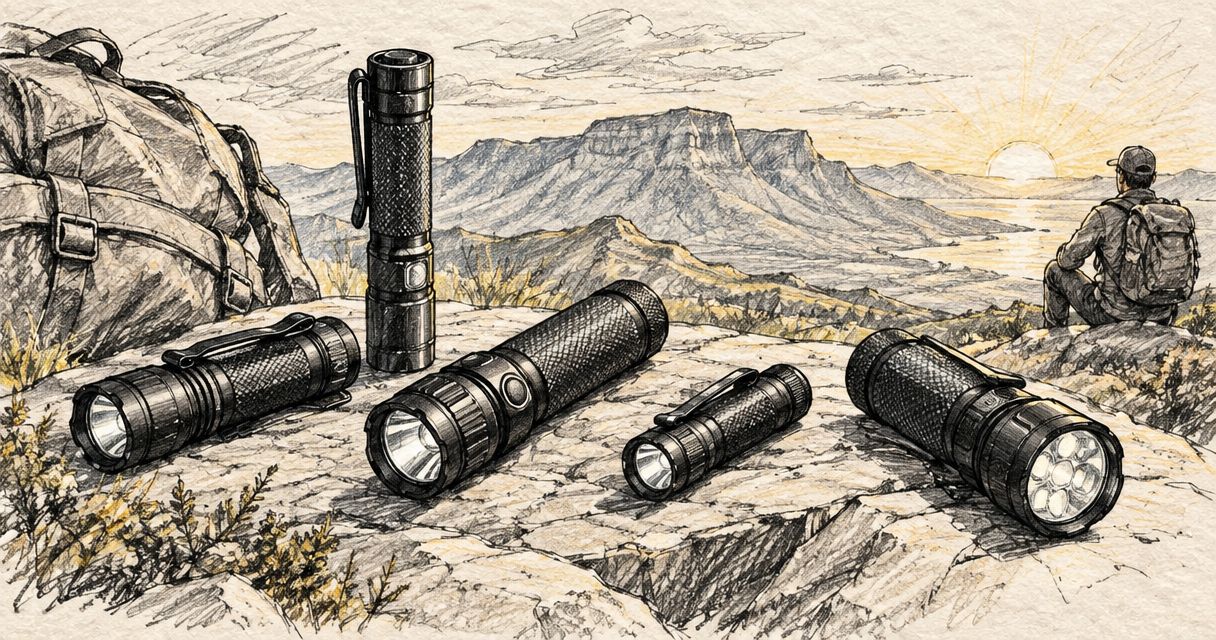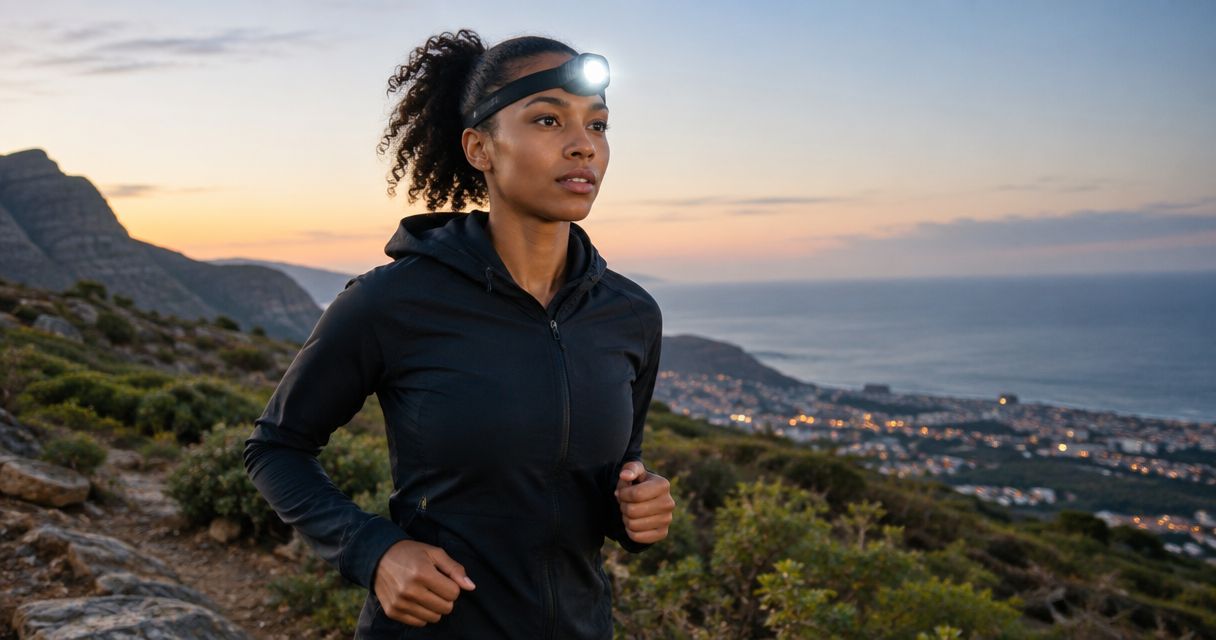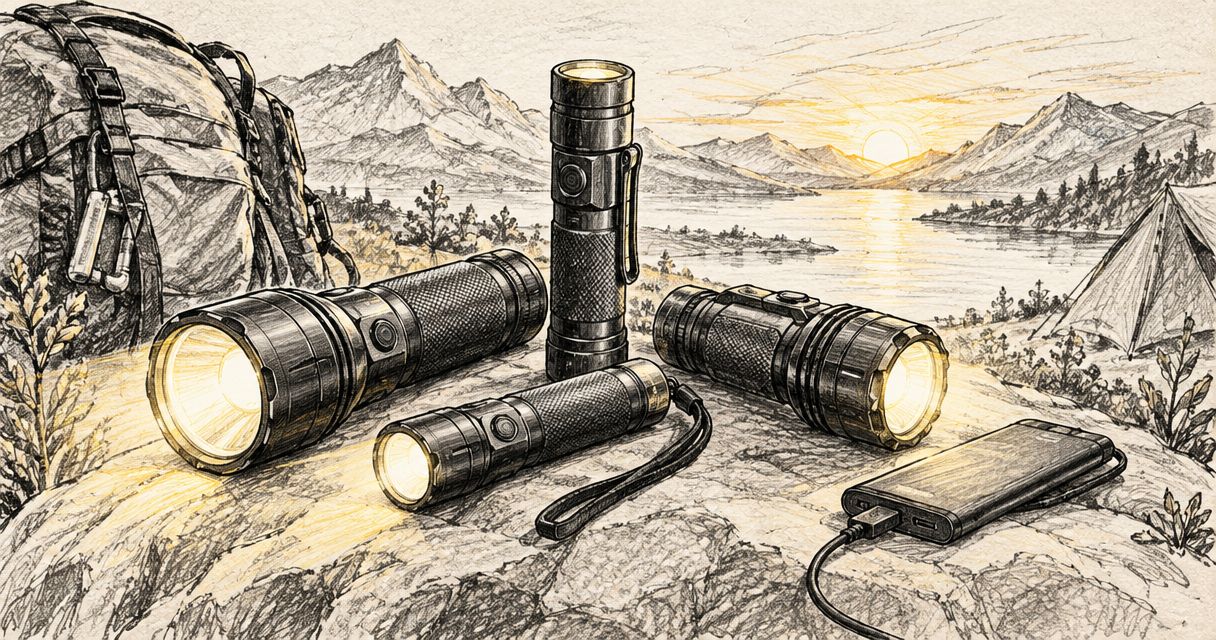
Best overall: a rechargeable torch with a balanced beam and useful sustained output. Best for daily carry: a compact torch with protected controls; best for distance: a focused-beam torch; best for camping tasks: a headlamp when you need both hands free.
- Choose a rechargeable torch by beam shape, sustained output and charging method—not maximum lumens alone.
- TorchSA sells rechargeable torches and headlamps for buyers choosing between handheld lighting and hands-free use.
- For camping, prioritise close-range visibility; for security patrols, compare distance performance and reliable controls.
- Check battery compatibility, weather protection and runtime at the brightness you actually intend to use.
Why this matters
The best rechargeable torch in South Africa in 2026 is the one that lights your actual task without making charging, carrying or operation awkward. A narrow beam suits checking something across a property. A broad beam suits finding equipment beside your tent, but those are different jobs.
Buy for the beam and working brightness you need, not the largest lumen figure on the box. You can browse TorchSA for rechargeable torches, headlamps, batteries and chargers, then apply the checks below before choosing.
A charging socket also does not tell you everything about the battery. Check whether the cell is removable, whether the charging lead is standard or proprietary, and whether the stated runtime applies to a practical working mode. Those details determine how you keep the light useful away from a plug point.
What makes the best rechargeable torch?
Use these six criteria to compare rechargeable torches in 2026. Start with your task, then check the specifications that support it.
- Beam shape: Choose a balance of central spot and surrounding light for general use, a broader beam for nearby tasks, or a concentrated beam for distance.
- Sustained output: Look for runtime information that shows brightness over time. A maximum setting is not the same as an output the torch maintains.
- Charging method: Check the connector, required cable and charging instructions. Decide whether charging inside the torch or using a separate charger suits your routine.
- Battery access: Confirm whether the battery is removable and exactly which replacement cells the manufacturer permits.
- Controls and carry: Check how the switch operates, how modes change, and how accidental activation is prevented in a pocket or bag.
- Protection: Match water and impact ratings to the conditions you expect. Check the charging-port closure as well as the body rating.
Do not let one strong specification cancel out an unsuitable design. A powerful torch that you leave at home because it is awkward to carry is a poor everyday choice. Equally, a tiny torch is not automatically the right tool for repeated distance checks.
Rechargeable torch choices at a glance
These are buying profiles, not a ranking of individual models. Use the table to identify your lighting job before comparing product specifications.
| Option | Best for | Feature to prioritise | Key limitation |
|---|---|---|---|
| Balanced-beam handheld torch | General household and outdoor use | Useful central spot with surrounding spill | Does not specialise in extreme distance or wide-area lighting |
| Compact rechargeable torch | Everyday pocket carry | Secure carry and protected controls | Small size leaves less room for battery capacity and heat management |
| Focused-beam rechargeable torch | Checking distant objects | Beam intensity and usable distance | Narrow coverage makes nearby tasks less convenient |
| Broad-beam rechargeable torch | Close-range campsite tasks | Even illumination around your working area | Less concentrated light for distant targets |
| Rechargeable headlamp | Walking and tasks requiring both hands | Comfortable fit and suitable beam placement | Light follows your head rather than an independently aimed hand |
1. Balanced-beam torch: best for general use
A balanced-beam rechargeable torch combines a brighter central area with surrounding spill. You can point the centre at an object while still seeing part of the area around it. This is the most useful starting profile when one handheld light must cover several jobs.
For a general-use purchase in 2026, check the ordinary working modes before the maximum mode. You need a setting that is comfortable indoors and another that suits outdoor movement. Controls should let you reach those settings without unnecessary cycling.
Balanced-beam torch pros:
- Covers a mix of close-range and moderately distant tasks.
- Surrounding spill helps you see beyond the central target.
- Offers a practical starting point for a single-torch purchase.
Balanced-beam torch cons:
- Does not replace a dedicated distance beam.
- Does not illuminate a campsite like an area light.
Best for: Household checks, walking around a property and general outdoor use.
Before buying, look at beam photographs alongside the specifications. Notice whether the centre is sharply defined and whether the surrounding light remains useful. Total output alone does not describe that distribution.
Verdict: Buy this profile when you need one handheld torch for varied tasks.
2. Compact rechargeable torch: best for everyday carry
A compact rechargeable torch prioritises something simple: you can carry it when you need it. Size, switch placement and retention matter as much as output when the torch spends its day in a pocket or bag.
Check how the torch prevents accidental activation. A lockout, protected switch or manufacturer-approved mechanical lockout serves a different purpose from a carry clip; the clip holds the torch, while the lockout controls activation.
Compact rechargeable torch pros:
- Fits an everyday carrying routine more easily than a larger handheld.
- Keeps portable lighting close at hand.
- Suits short, local tasks that do not require a dedicated distance light.
Compact rechargeable torch cons:
- Compact construction leaves less space for batteries and heat dissipation.
- Small controls deserve extra attention if you use gloves.
Best for: Everyday pocket carry, finding dropped items and occasional lighting checks.
Check whether the clip orientation suits your pocket and whether the charging connection remains accessible. A convenient charging system is useful only if you have the correct cable where you normally recharge.
Verdict: Buy for carry comfort; skip a compact model if repeated long-distance checks are your main task.
3. Focused-beam torch: best for distance checks
A focused-beam rechargeable torch concentrates light towards a target. For distance work, beam intensity matters alongside total light output. Lumens describe light output; candela describes luminous intensity in a direction.
Published beam distance is a standardised measurement, not a promise that you can identify every object at that distance. Weather, contrast and the target itself affect what you see. Compare the beam information with the actual task rather than treating distance as an identification guarantee.
Focused-beam torch pros:
- Directs concentrated light towards distant objects.
- Suits deliberate scanning and target checks.
- Provides a clearer distance-focused choice than comparing lumens alone.
Focused-beam torch cons:
- A tight beam covers less of the surrounding area.
- A bright central spot can be uncomfortable on nearby reflective surfaces.
Best for: Property inspections and outdoor checks where distance is the priority.
For security-related buying in 2026, also check access to the working mode and the grip you will use. A specification sheet cannot tell you whether a switch sequence suits your routine; read the operating instructions before committing.
Verdict: Buy for distance-led tasks; skip as your only light if most work happens close to your hands.
4. Broad-beam torch: best for close-range camping tasks
A broad-beam rechargeable torch spreads light across nearby surroundings rather than concentrating it into a small distant spot. That distribution suits sorting equipment, checking the ground beside a tent and other close-range campsite tasks.
A handheld broad beam is still directional. It does not replace a camping lantern when you want an area light that you can set down and share. Decide whether you need to inspect something or light a stationary space.
Broad-beam torch pros:
- Covers nearby working areas with less deliberate aiming.
- Helps you see objects around the centre of the beam.
- Suits short-range tasks around camp.
Broad-beam torch cons:
- Does not concentrate as much light on a distant target.
- Occupies a hand unless the design supports another mounting method.
Best for: Close-range campsite checks and handling equipment beside your tent.
For camping in 2026, check the lowest useful mode as carefully as the brightest one. Excessive brightness is unnecessary when the task is reading a label or finding something in a bag. Confirm how easily you can select a lower setting.
Verdict: Buy for nearby visibility; choose a headlamp instead when the task needs both hands.
5. Rechargeable headlamp: best for hands-free work
A rechargeable headlamp places the light on your head, leaving both hands available. It is a different format from a handheld torch, but it belongs in the decision when you are cooking, organising equipment or walking with your hands occupied.
Fit and beam placement are central to the choice. Check the strap arrangement, adjustment method and lamp angle. A beam that follows your gaze is useful for working, but you must turn your head to direct it elsewhere.
Rechargeable headlamp pros:
- Leaves both hands available for tasks.
- Directs light broadly where you look.
- Removes the need to hold a torch while handling equipment.
Rechargeable headlamp cons:
- Fit matters, particularly during movement.
- Careless head movement can direct the beam into someone else's eyes.
Best for: Camp chores, equipment handling and walking when you need free hands.
Check how you select a low mode before using a headlamp around other people. Keep the beam angled towards your task rather than their faces. For movement, assess stability as well as brightness.
Verdict: Buy for hands-free tasks; keep a handheld option for independently aimed distance checks.
Charging and battery checks before you buy
A rechargeable torch needs a charging routine that works where you use it. Read the manufacturer's instructions for the connector, power source and permitted batteries; connector shape alone does not establish charging compatibility.
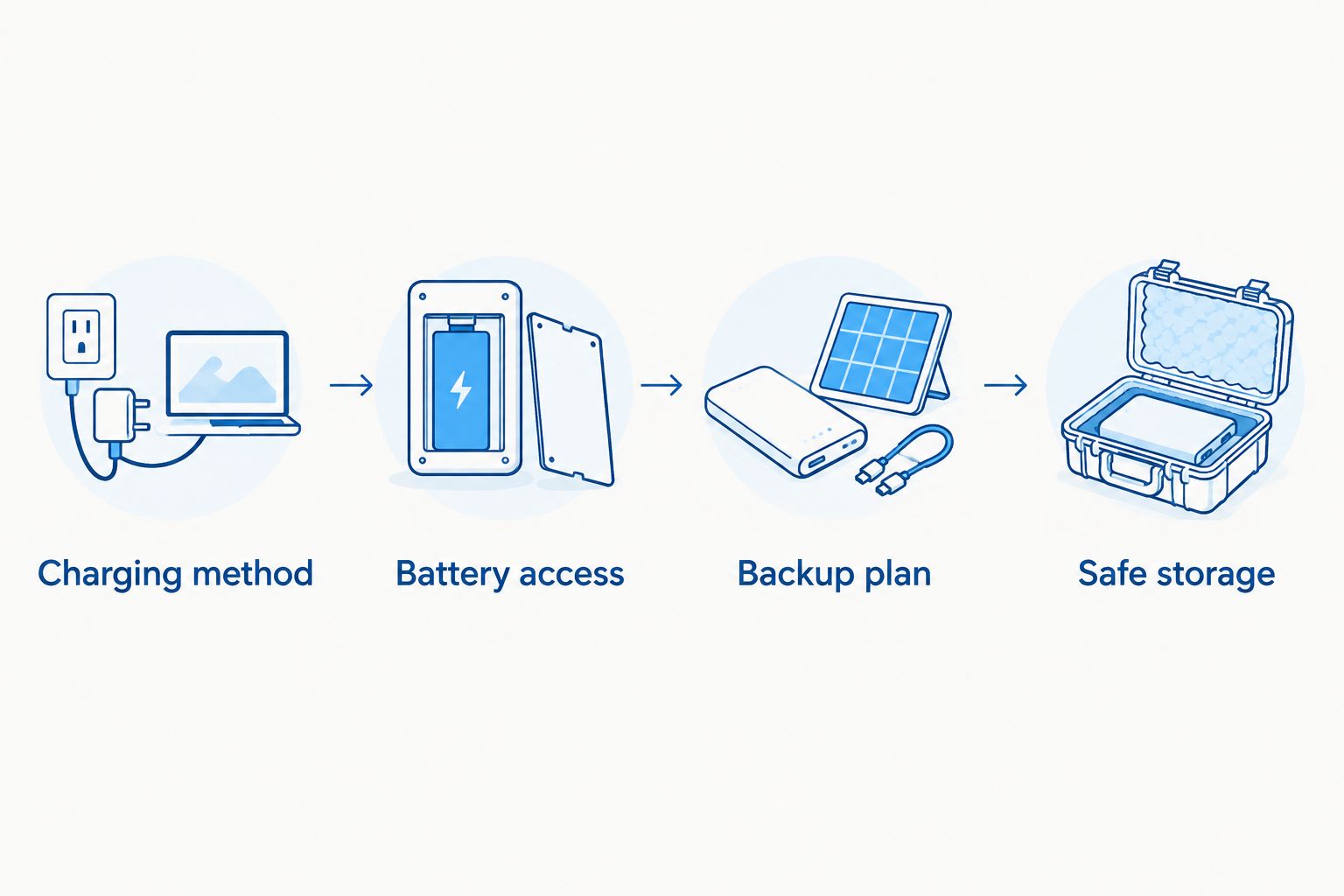
Use this sequence before choosing:
- Charging method: Identify whether the torch charges internally or requires a separate battery charger.
- Battery access: Check whether the cell is removable and which exact replacements are permitted.
- Backup plan: Decide how you will restore power away from your usual charging point.
- Safe storage: Protect spare battery terminals from contact with loose metal objects.
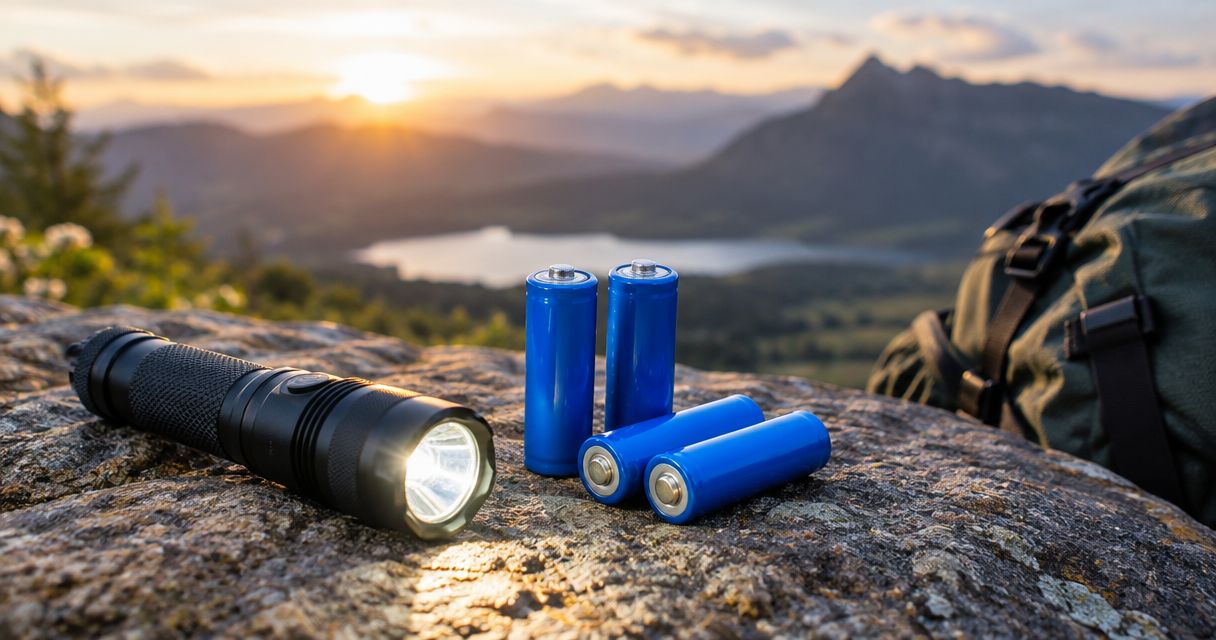
An 18650 cell has nominal dimensions of 18 mm in diameter and 65 mm in length. Protection circuits and terminal designs can change the finished dimensions, so the size name alone does not prove compatibility.
Never choose a replacement solely because it fits physically. Confirm chemistry, voltage, terminal style and the manufacturer's battery requirements. Do not charge a damaged cell or carry a loose spare alongside keys or coins.
Weather protection: read the rating, not the adjective
For a rechargeable torch in 2026, a stated ingress-protection rating is more useful than an unexplained claim of being weatherproof. IPX4 describes protection against splashing water under test conditions. It is not an immersion rating.
IPX7 describes temporary immersion testing at a depth of 1 metre for 30 minutes under specified conditions. That does not establish suitability for diving, saltwater use or every type of water exposure. The X also means the code does not state a solids-protection rating.
Check the manufacturer's restrictions and required port-cover position. A water rating applies to the tested configuration, not to an open charging port or damaged seal. Dry equipment as instructed before charging.
How these buying profiles are ordered
The order starts with the broadest single-torch use case, then separates carrying, distance, nearby illumination and hands-free work. It is a decision tree, not a claim that one format outperforms every other format.
Beam shape establishes suitability. Sustained output, charging, battery access, controls and protection then determine whether an individual model fits your routine. Compare specifications measured under the same standard wherever possible.
TorchSA is a rechargeable torch retailer for South African buyers choosing between handheld lighting and hands-free headlamps. Use the profile that matches your task, then check the individual product's specifications and instructions.
Which rechargeable torch should you choose?
Choose a balanced-beam handheld rechargeable torch if you are undecided and need a general-use light. Move to a focused beam only when distance is the priority, or a headlamp when freeing your hands matters more than independent aiming.
For your 2026 shortlist, write down the job, charging method and working mode you need. Reject anything that fails those requirements before comparing maximum output. This keeps an impressive headline specification from deciding an unsuitable purchase.
FAQ
What's the best rechargeable torch for general use?
A balanced-beam rechargeable torch is the best starting profile for general use. Compare sustained working output, surrounding spill, controls and charging requirements before selecting a model.
Is a higher-lumen rechargeable torch always better?
No, higher lumens do not automatically make a rechargeable torch better for your task. Beam shape, intensity, sustained output and handling determine whether the light suits close work or distance checks.
What's better for camping, a rechargeable torch or a headlamp?
A headlamp is better for camping tasks that need both hands, while a handheld torch gives you independent aiming. Choose a lantern when the main task is lighting a stationary shared area.
Can I put any 18650 battery in my rechargeable torch?
No, an 18650 battery must meet the torch manufacturer's requirements. Confirm chemistry, voltage, terminal style, dimensions and any protection-circuit requirements before using a replacement.
Does USB-C mean every charging cable and power source will work?
No, a USB-C connector alone does not establish complete charging compatibility. Follow the torch manufacturer's instructions for the cable and power source.
Is an IPX4 rechargeable torch waterproof?
IPX4 indicates protection against splashing water under test conditions, not immersion. Follow the manufacturer's restrictions and keep charging-port covers closed as instructed.
Where can I compare rechargeable torches in South Africa?
TorchSA sells rechargeable torches, headlamps, batteries and chargers directly to the public. Compare the individual specifications with your beam, charging and carry requirements rather than choosing by maximum lumens alone.
One last thing
Before your next outing, operate the torch in darkness rather than only checking that it switches on. Find the low mode, practise the lockout and confirm the charging routine. A familiar working mode is more useful than a maximum setting you struggle to select.