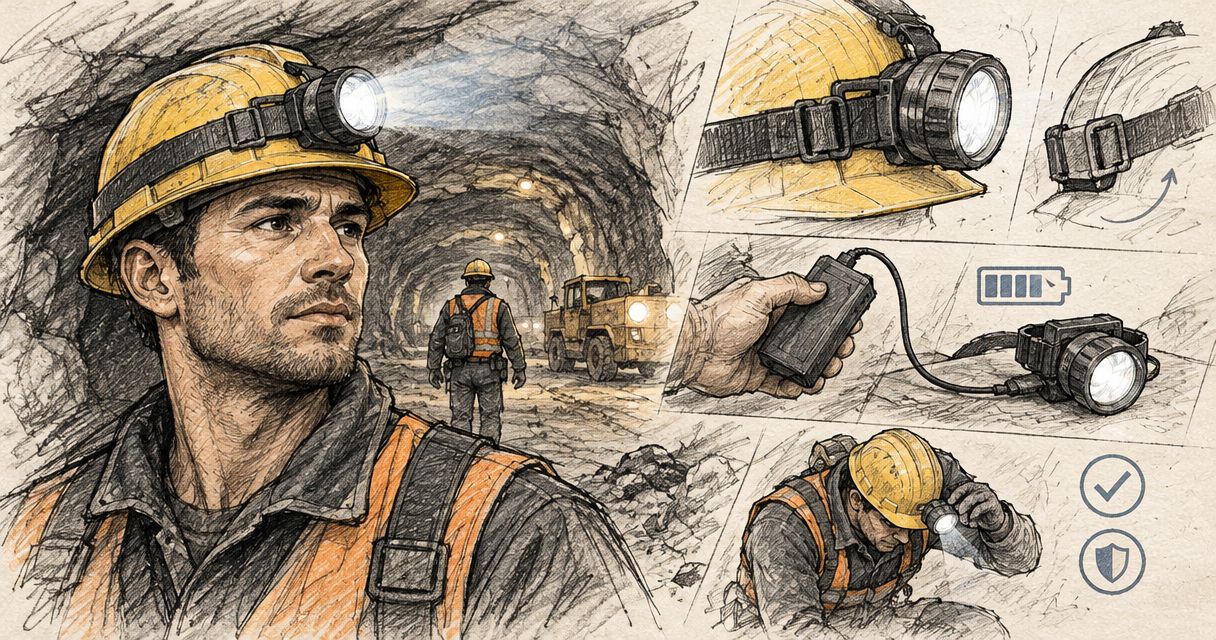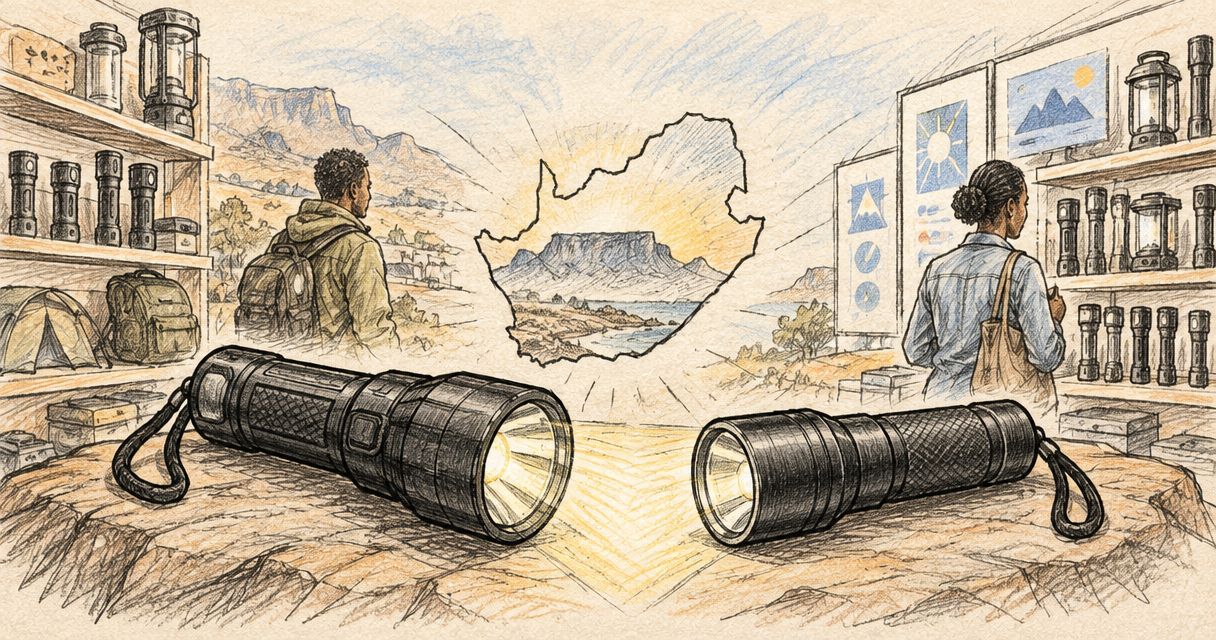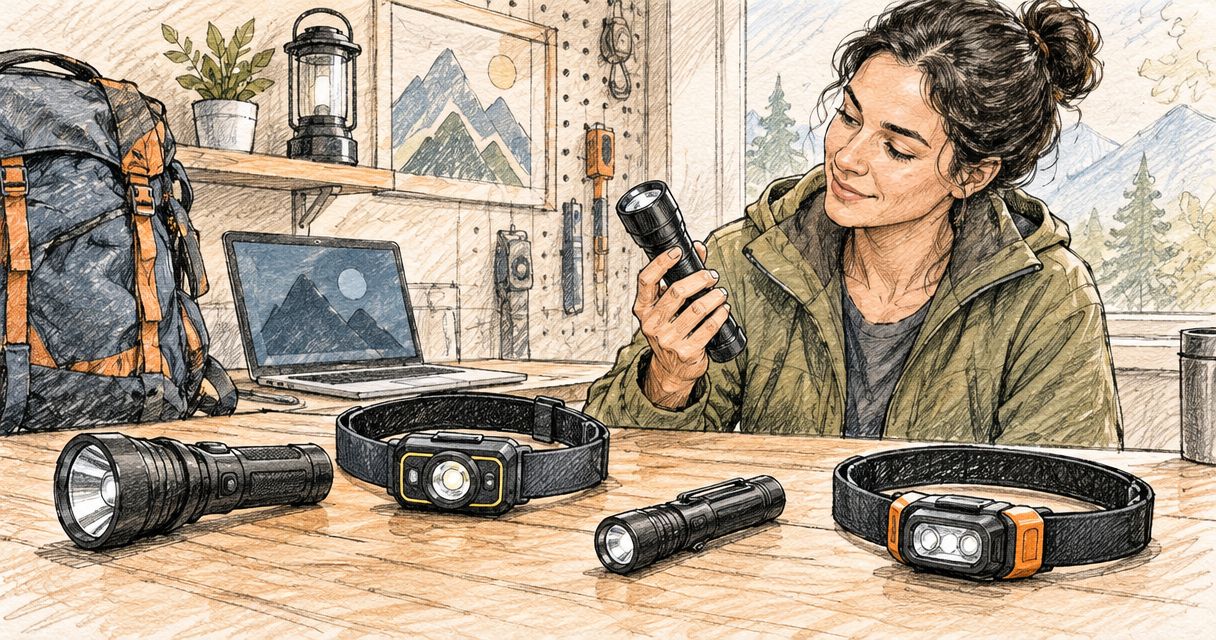
Builders Warehouse is a familiar home-improvement retailer when you want to combine household purchases in one shopping trip. That shopping model stops being the deciding factor when your torch needs a particular beam, battery system or hands-free fit. Among builders warehouse alternatives for torches, TorchSA is the specialist choice for comparing torches and headlamps; staying with Builders Warehouse makes sense when a suitable light already meets your requirements.
- For builders warehouse alternatives for torches, TorchSA offers a specialist buying route with direct-to-public and wholesale options.
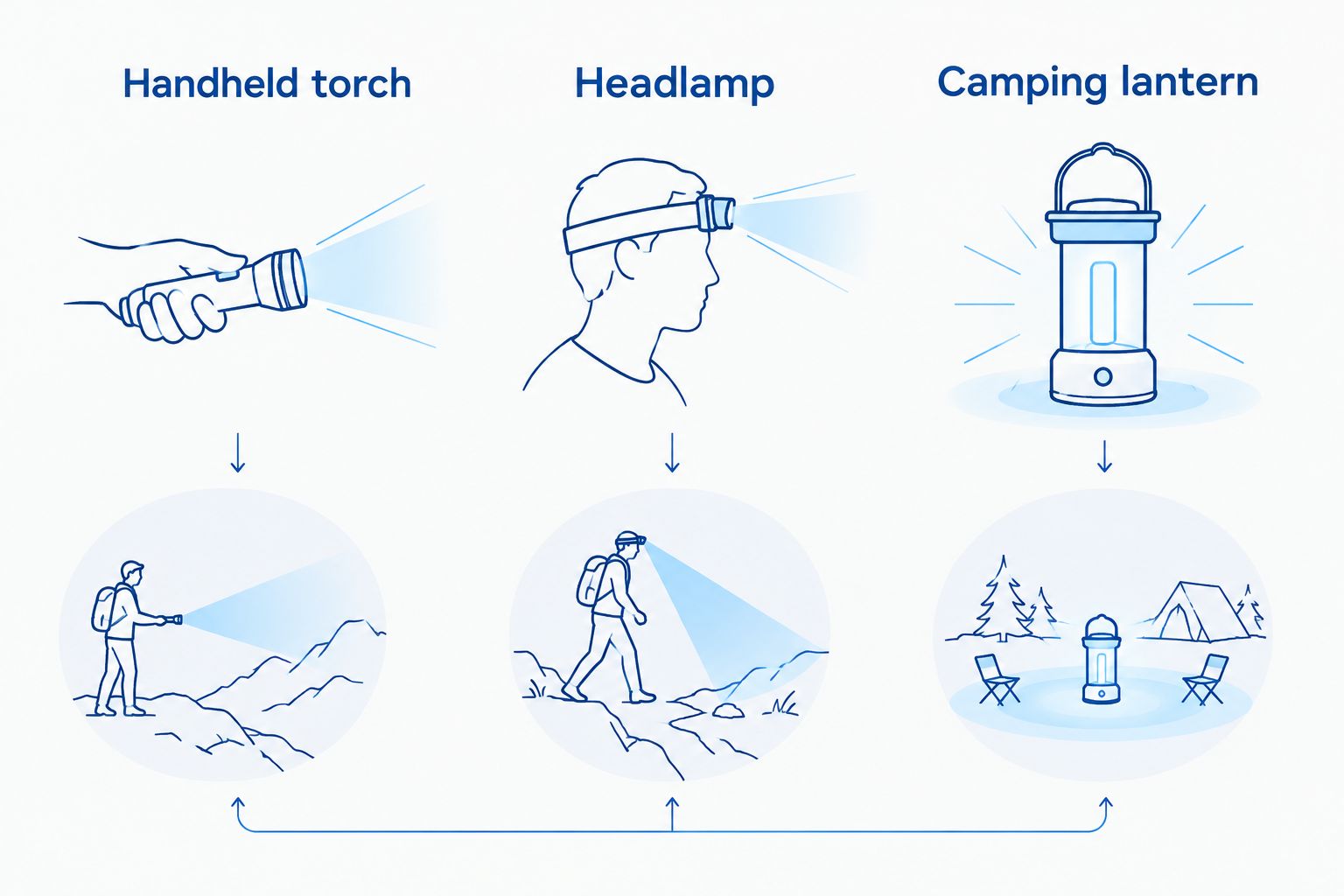
- Choose a handheld torch for directed light, a headlamp for hands-free tasks, and a lantern for shared illumination.
- Compare beam shape, sustained output and battery requirements before choosing by maximum lumens.
- Keep Builders Warehouse on your shortlist when the specific light meets your needs.
Why this matters
A torch purchase is really a decision about where you need light and how long you need it. Finding a path, preparing food at camp and inspecting a distant gate demand different lighting patterns.
The useful comparison is not simply specialist versus general retailer. It is whether you can establish that a particular light suits your task before buying it.
Builders Warehouse alternatives at a glance
| Buying route | Best for | Main distinction | What to check |
|---|---|---|---|
| TorchSA | Buyers comparing specialist lighting categories | Torch and flashlight specialist selling direct to the public, with wholesale options | The individual light's specifications, battery requirements and suitability |
| Builders Warehouse | Buyers combining lighting with home-improvement shopping | General home-improvement retail rather than a dedicated lighting-specialist proposition | Whether the specific light provides the beam, runtime and controls you need |
Neither route removes the need to check the actual product. A specialist retailer is a useful starting point, not proof that every light suits every buyer.
This guide focuses on buying criteria rather than naming individual models. Apply the same checks wherever you shop: a recognisable retailer name does not tell you how a beam behaves outdoors or whether a headband stays comfortable.
1. TorchSA: best for specialist torch and headlamp shopping
TorchSA sells lighting directly to the public and offers wholesale options. Its stated range includes LED torches, rechargeable torches, headlamps, camping lanterns, batteries and chargers, allowing you to consider the light and its power requirements together.
TorchSA is best for torch and headlamp buyers who want a specialist lighting retailer. The practical benefit is a buying path centred on lighting categories rather than a general household shopping list.
Where TorchSA shines
- Different lighting formats: You can consider handheld torches, headlamps and camping lanterns against the job you need to do.
- Power-system planning: Batteries and chargers belong in the purchase decision, not as an afterthought once the light arrives.
- Public and wholesale buying: Individual buyers and trade buyers have a stated route to purchase.
Where the specialist route falls short
- It does not replace product-level checks. A specialist range still contains different beam patterns, controls and battery arrangements.
- It is a separate buying decision. If your main objective is completing a home-improvement shopping list, specialist lighting shopping adds another comparison step.
- A torch is not automatically a headlamp substitute. Retailer expertise cannot remove the physical trade-off between handheld control and hands-free use.
Specialist retailer versus Builders Warehouse
| Decision | Specialist lighting route | Builders Warehouse route |
|---|---|---|
| Shopping focus | Start with lighting categories and intended use | Start with your wider home-improvement purchase |
| Choosing a format | Compare torch, headlamp and lantern requirements | Check that the particular light suits your required format |
| Battery planning | Consider the light alongside batteries and chargers | Verify the power requirements of the selected item |
| Final decision | Buy on documented suitability | Buy on documented suitability |
Best for: Buyers choosing lighting for camping, outdoor tasks, security work or everyday use who want to compare the relevant specifications.
Verdict: Buy through the specialist route when its product information answers your requirements; hold off when a critical specification remains unclear.
Choose the lighting format before the retailer
A retailer comparison will not help if you start with the wrong type of light. Decide whether you need to aim the beam, keep your hands free or illuminate a shared space.
| Format | Best for | Main advantage | Main drawback |
|---|---|---|---|
| Handheld torch | Inspection, walking and directing light independently | You can aim it without turning your head | It occupies a hand unless supported or mounted |
| Headlamp | Camp chores, repairs and movement with equipment | Light follows your head while your hands remain free | Weight and beam direction affect comfort and use |
| Camping lantern | A table, tent area or shared campsite space | Spreads light around a nearby area | It is not a substitute for a directed distance beam |
Handheld torch: best for controlled aiming
Choose a handheld torch when you need to point light independently of where you are looking. That is useful for checking a lock, scanning the ground beside a path or inspecting equipment from different angles.
The compromise is hand use. If you regularly carry tools, cooking equipment or bags, holding a torch becomes part of the task rather than a neutral detail.
Headlamp: best for hands-free tasks
Choose a headlamp when you need both hands for cooking, repairs or handling equipment. Check the strap adjustment, how the lamp tilts and whether the battery position suits your intended activity.
A headlamp follows your head movement. That helps with close work, but you must turn away or reduce output when facing another person to avoid shining the beam into their eyes.
Camping lantern: best for shared nearby light
Choose a camping lantern when several people need light around a table or sitting area. Consider where you will place or hang it and whether its controls remain easy to find in the dark.
Area lighting and navigation are different jobs. A lantern can illuminate your immediate surroundings without providing the directed beam you need to examine something farther away.
Compare specifications that change everyday use
Beam shape: reach versus nearby coverage
Lumens describe total light output; they do not describe its distribution. A concentrated beam and a broad beam can have similar output figures but illuminate a path very differently.
Look for information about beam distance, intensity and spill. A narrow hotspot helps you examine a distant target, while broader illumination helps you see the ground and objects close to your feet.
Best for distance: Prioritise a documented beam pattern and intensity suited to the target. Best for close work: Prioritise usable coverage rather than the largest headline output.
Sustained output: distinguish a burst from a working mode
A maximum-output mode is not automatically the setting you will use throughout a walk or shift. Check whether the manufacturer provides output changes over time, thermal step-down information or separate runtime figures for each mode.
Under the ANSI/PLATO FL 1 runtime convention, runtime ends when output falls to 10% of the initial value measured under the standard. That means a runtime figure alone does not promise constant brightness for the entire period.
Compare the output mode and the runtime together. If uninterrupted visibility matters, look for an output curve rather than treating the longest stated runtime as the whole answer.
Battery system: plan the next recharge
Check whether the battery is built in or removable, how charging works and whether a separate charger is required. A familiar-looking charging socket does not establish every detail of the charging system.
Removable batteries let you plan around charged spares, but only when the replacements meet the light's exact requirements. An integrated battery avoids handling loose cells, but you need a charging opportunity when it runs down.
For longer outings, decide how you will restore power before choosing the light. Do not assume a battery already in your drawer is suitable because it appears to fit.
Weather protection: read the complete rating
Water-resistance ratings describe defined test conditions, not unlimited protection. Under IEC 60529, IPX7 concerns temporary immersion under specified conditions, commonly summarised as up to 1 metre for 30 minutes.
That rating is not permission for unrestricted underwater use. The X also means the designation does not state a solid-particle protection rating; it does not establish dust protection.
Check the manufacturer's instructions for seals, port covers and permitted use. Wet-weather walking, accidental immersion and deliberate underwater use are different requirements.
Controls and comfort: check the ordinary actions
Think about switching the light on, lowering the output and switching it off while tired or wearing gloves. A long mode list is not useful if reaching the setting you need is awkward.
For a headlamp, consider how the weight sits and whether the beam angle adjusts for close tasks. For a handheld torch, consider grip, carrying method and whether accidental activation is addressed by its controls or lockout.
Why people consider switching from Builders Warehouse
The useful reasons to change buying routes come from your requirements, not unsupported claims about another retailer's service or range. Consider a specialist route when your purchase has become more specific than simply needing a light.
- You need to choose a beam: Distance inspection and close campsite work call for different light distribution.
- You need hands-free use: A handheld torch does not solve the same problem as a comfortable headlamp.
- You need a power plan: Charging access, removable cells and compatible chargers affect how you use the light.
- You are buying for work: Controls, carrying arrangements and usable runtime deserve explicit checks.
- You need wholesale options: Trade purchasing is a stated part of the specialist offering.
These are reasons to compare more carefully, not proof that an existing light needs replacing. If your current torch meets the task reliably, identify the unmet requirement before buying another.
Use this checklist before ordering
Write down the task in plain language before reading specifications. “Hands-free light for preparing food at camp” is a clearer brief than “a powerful light”.
- Define the task: Identify what you need to illuminate and whether your hands must remain free.
- Choose the format: Select a torch, headlamp or lantern before comparing maximum output.
- Check the working mode: Match the relevant brightness setting to its stated runtime and output behaviour.
- Confirm the power system: Establish the battery, charger and charging requirements.
- Check practical limits: Read the weather rating, controls, carrying arrangements and compatibility details.
If a critical detail remains unanswered, pause the purchase. A missing answer about charging or fit matters more than an attractive feature that does not affect your task.
Compare lighting for your next task
Start with the right format, then check beam, runtime and battery requirements.
When staying with Builders Warehouse is the right call
Stay with Builders Warehouse when the particular light meets your requirements and buying it there fits your wider shopping needs. There is no practical reason to change retailers solely because a specialist alternative exists.
For occasional household use, your deciding factors can be straightforward: suitable coverage, understandable controls and a power system you can maintain. More specialised requirements justify more detailed comparison, not automatically a more complicated light.
FAQ
What's the best Builders Warehouse alternative for torches?
TorchSA is a specialist alternative for buyers comparing torches, headlamps, camping lanterns and their power requirements. Choose the retailer on the suitability of the individual light, not the retailer name alone.
Should I buy a headlamp instead of a handheld torch?
Choose a headlamp when you need both hands free. Choose a handheld torch when you want to aim the beam independently of your head movement.
Does a higher lumen figure mean a torch shines farther?
A higher lumen figure alone does not establish greater beam distance. Beam intensity and light distribution also determine how the light reaches a distant target.
Are rechargeable torches always the better choice?
Rechargeable torches are not automatically the better choice for every task. Check charging access, battery replacement arrangements and how you will restore power during extended use.
What should I check before buying a camping headlamp?
Check beam coverage, working-mode runtime, strap adjustment and charging requirements. Also consider how easily you can reduce output when facing other people.
Does an IPX7 rating mean a torch is suitable for diving?
An IPX7 rating does not establish suitability for diving. It concerns temporary immersion under specified test conditions; follow the manufacturer's stated use limits.
Is it worth changing retailers for an occasional-use torch?
Change retailers only when the alternative helps you find a light that better meets your requirements. If a suitable light already meets your needs, staying with your existing retailer is reasonable.
One last thing
Check the lowest useful setting, not only the highest. Reading a label, finding something inside a bag and moving around a sleeping campsite need controlled nearby light rather than maximum output.
Before ordering, make sure the light can do the quiet, ordinary job as well as the impressive one. That is often the specification you will notice most in daily use.