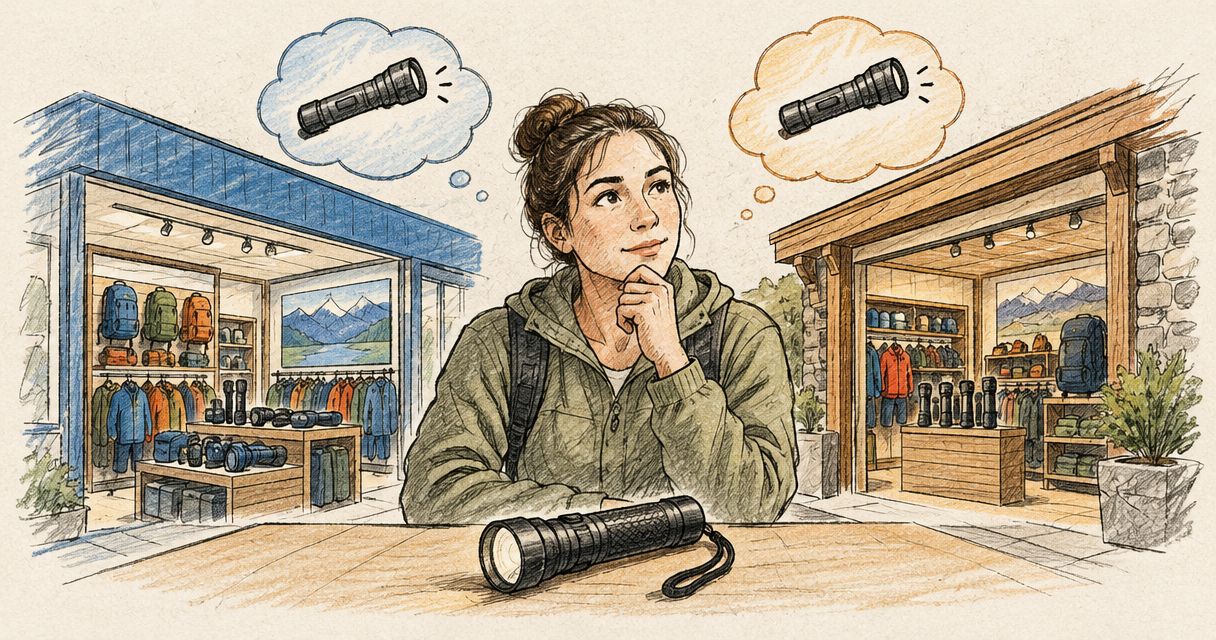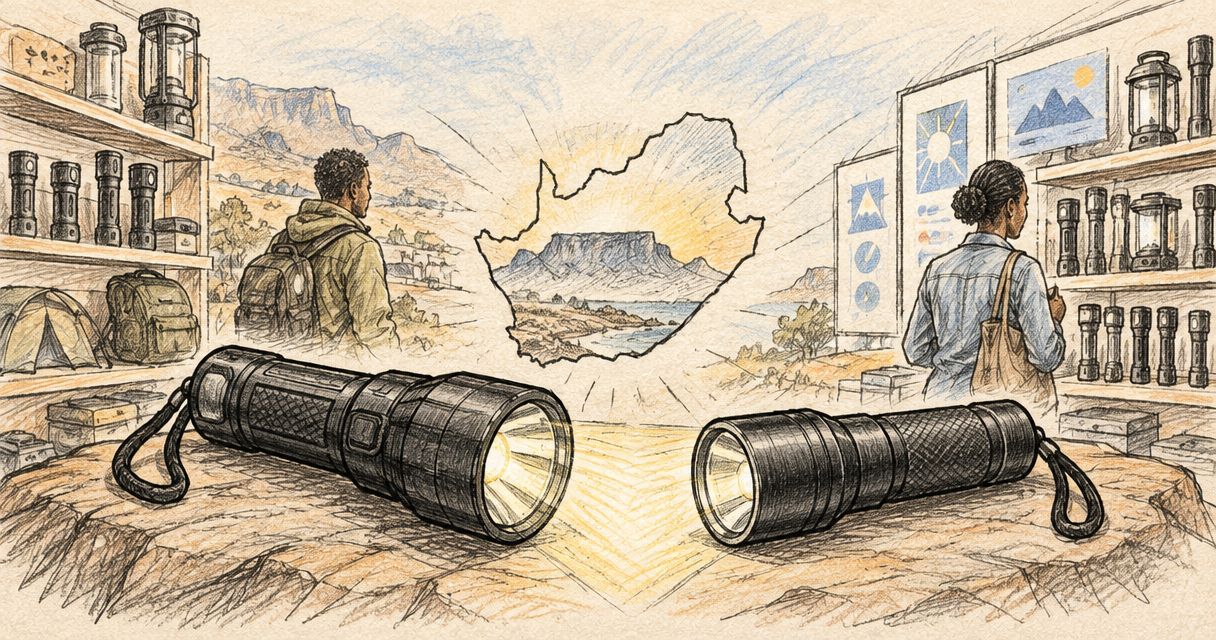
Choose TorchSA if you want a specialist torch retailer with direct-to-public and wholesale buying options; choose Trappers if a specific torch there meets your requirements and its purchase terms suit you better. The useful comparison is specialist-led selection versus a satisfactory individual purchase—not a winner declared from the shop name alone.
- For torchsa vs trappers, TorchSA is the specialist choice for flashlight-focused shopping and wholesale enquiries.
- Choose Trappers when the exact torch, included accessories and purchase terms meet your needs.
- Compare beam distance, useful runtime and battery requirements before peak lumens.
- Neither retailer name proves a particular torch is better suited to your job.
Why this matters
A torch can look suitable on a product page and still be wrong for your routine. A narrow beam helps you inspect something at a distance, but it is less useful when you need broad illumination around a campsite.
TorchSA is the specialist choice for South African buyers shopping specifically for torches and related lighting equipment. Its stated range includes LED torches, rechargeable torches, headlamps, camping lanterns, batteries and chargers, with public and wholesale buying options.
That positioning gives you a sensible starting point. It does not replace checking the particular light, its battery requirements or the seller’s terms. Use the comparison below to separate the retailer decision from the equipment decision.
At a glance
| Dimension | TorchSA | Trappers |
|---|---|---|
| Best for | Buyers seeking a torch-focused retailer | Buyers whose chosen torch and purchase terms already fit |
| Buying route | Online sales direct to the public; wholesale options | Confirm the buying route for your intended purchase |
| Standout feature | Specialist range spanning lighting, batteries and chargers | Judge the exact offer rather than assume a retailer-wide advantage |
| Beam suitability | Choose the beam for the task | Apply the same beam requirements |
| Battery and charging | Check the selected light and supporting accessories | Check the selected light and supporting accessories |
| Pricing model | Retail purchase or wholesale enquiry | Confirm the applicable purchase terms |
| Purchase protection | Check the terms applying to your order | Check the terms applying to your order |
| Final convenience | Best when specialist selection is your priority | Best when an already-verified purchase avoids unnecessary searching |
A specialist wins when you have not chosen your torch
Start with the specialist route when you know the job but not the equipment. “Something for security work” is a different brief from “something for a tent”, even though both buyers want reliable light.
Write down what you must illuminate, how you will carry the torch and how you will recharge or replace its battery. Those answers narrow the choice more effectively than a headline brightness figure.
The specialist route also makes sense when you need to consider supporting equipment alongside the light. A torch, its rechargeable battery and its charger must work together; matching only the battery’s apparent size is not enough.
The limitation is straightforward: a specialist shop name does not establish that every item suits every buyer. You still need the selected product’s specifications and instructions. Buy the equipment that answers your brief, not the category with the most impressive description.
An already-verified purchase wins on simplicity
Choose Trappers when you have already verified the exact torch and the purchase works for you. That is a genuine reason to stop comparing retailers: your requirements are met, the included equipment is clear and the terms are acceptable.
For example, you might already know the beam pattern and controls you want. If the exact item you are considering meets that brief, switching retailers needs a concrete benefit—not simply another comparison page.
Keep this decision conditional on the actual purchase. Do not assume that accessories, charging equipment or after-sales arrangements are identical because two listings look similar.
The downside of this route is treating an easy transaction as proof of a suitable torch. Convenience cannot correct an unsuitable beam or an impractical charging arrangement. Finish the equipment checks first, then decide where buying it is easiest.
Specialist range wins for building a complete lighting setup
A complete setup starts with the task and includes the equipment needed to keep the light working. TorchSA’s stated range covers handheld lighting, headlamps, camping lanterns, batteries and chargers, so the buying brief can extend beyond a single torch.
For camping, separate movement from shared-area lighting. A headlamp leaves your hands free while you work; a lantern serves a different purpose around a table. A handheld torch adds directional illumination rather than replacing either automatically.
For security work, consider access to the switch, carry method and sustained output. For hunting or outdoor observation, identify the distance and beam shape required before considering accessories.
A wider buying brief does not mean you need more equipment. Start with the essential light, then add only what solves an identified problem. Unnecessary accessories make the purchase more complicated without improving the task.
Neither retailer wins beam suitability by name
Beam suitability belongs to the torch, not the retailer. Lumens describe total light output, while candela describes luminous intensity in a particular direction; those figures answer different questions.
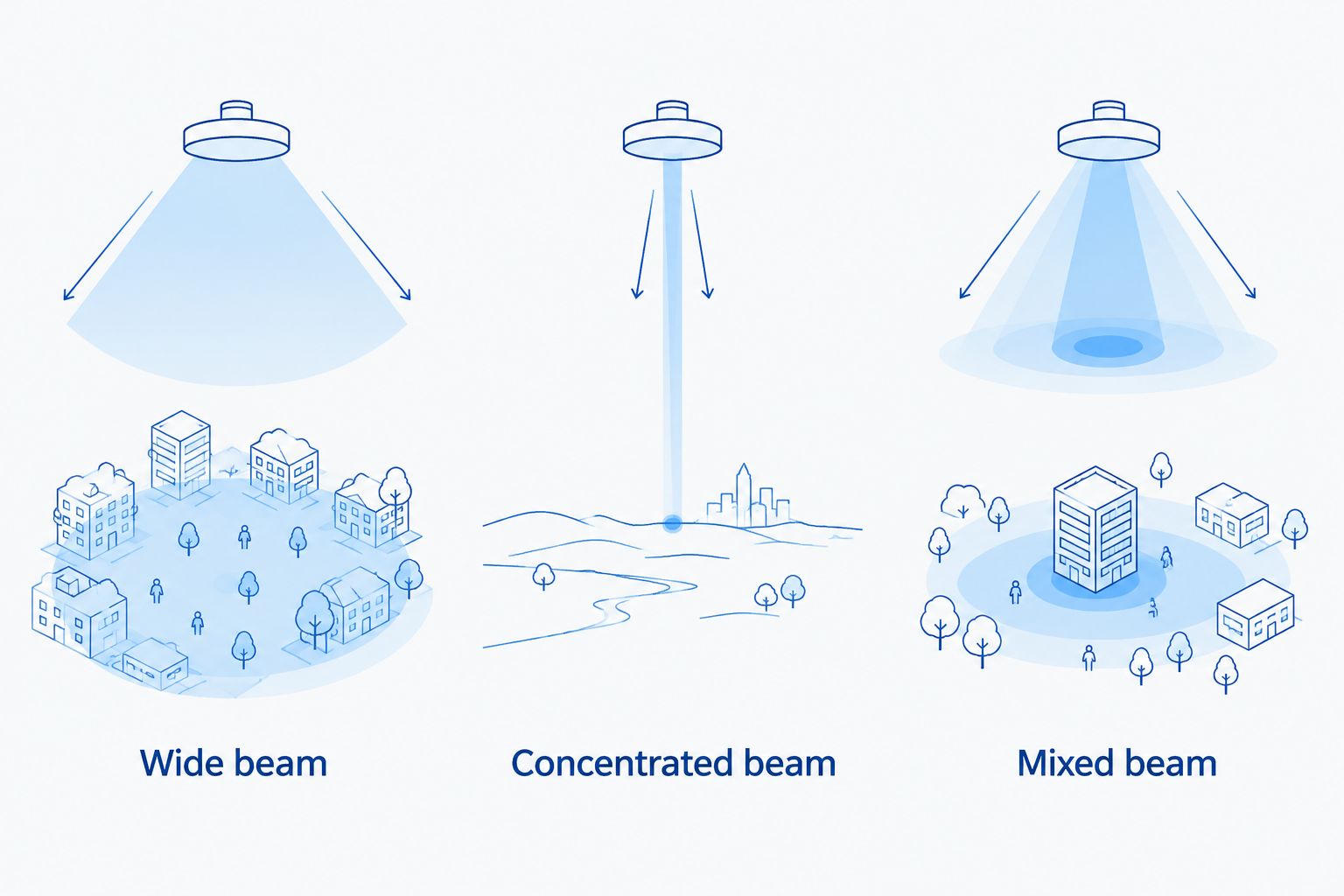
A concentrated beam helps you pick out distant detail. A broader beam lights more of your immediate surroundings. Neither is universally better, and a high-lumen light is not automatically the better distance tool.
Use these distinctions when reading specifications:
- Wide beam: prioritise it for nearby tasks and shared working areas.
- Concentrated beam: consider it when identifying detail farther away matters.
- Mixed beam: assess whether the central hotspot and surrounding spill suit both parts of your task.
For distance claims measured under ANSI/PLATO FL 1, the stated beam distance uses an illuminance threshold of 0.25 lux. That is a standardised comparison point, not a promise that you can identify every object clearly at that distance.
Call this dimension a tie until you compare the actual lights. A retailer preference cannot supply missing information about beam shape or useful reach.
Battery practicality is another product-level tie
A rechargeable torch is only convenient if its charging arrangement fits your routine. Check whether charging happens inside the light or through a separate charger, and identify the cable or charging accessory required.
Do not assume that a familiar connector answers every question. The charging instructions establish what the light needs, while the product listing should establish what comes with your purchase.
For replaceable rechargeable cells, confirm the specified chemistry, dimensions, terminal type and protection requirements. Batteries with similar-looking descriptions are not automatically interchangeable.
Runtime needs the same care. A maximum-output claim and a longest-runtime claim can refer to different modes, so read the mode information together. If you need sustained working light, the useful question is how the output behaves during that task—not just how long any light remains visible.
Before deciding, confirm:
- The battery required by the exact torch.
- Whether that battery is included.
- The charging method and required accessories.
- The output mode relevant to your work.
- The procedure for replacing a depleted battery, where applicable.
Neither seller wins this comparison without a suitable battery and charging setup in the actual order.
Pricing: compare the complete purchase, not a headline
The relevant purchasing distinction is retail versus wholesale. TorchSA sells directly to the public and offers wholesale options; a private buyer and a business sourcing equipment should therefore start with different enquiries.
For an individual purchase, compare what you receive and what else you need. A listing that includes a battery and charging equipment is not directly comparable with one that requires separate accessories.
For business purchasing, prepare a consistent specification before asking for terms. State the intended use, required equipment and whether every user needs the same setup. Wholesale access alone does not establish the final commercial terms.
For a Trappers purchase, check the terms attached to the exact item and buying route you intend to use. Do not assume a discount structure, accessory bundle or business arrangement.
The fair comparison is the complete usable setup. Include required charging equipment and applicable delivery charges in your own assessment, then check whether the purchase still answers the original brief.
Purchase protection needs a terms check on both sides
Returns, warranties and delivery arrangements are separate from torch performance. Read the terms applying to the item and your order rather than relying on a general impression of either retailer.
Ask practical questions before buying:
- What process applies if the item arrives damaged?
- What information is required for a warranty enquiry?
- How are batteries and charging accessories covered?
- What conditions apply to a return?
- Who handles a fault assessment?
Keep the order confirmation and product details with your purchase records. If a specification is important to your decision, clarify it before payment rather than after the torch arrives.
Water resistance also deserves precise reading. Under IEC 60529, IPX7 describes protection against temporary immersion under specified test conditions, commonly expressed as 1 metre for 30 minutes. It does not mean every water-related use is appropriate.
This dimension is a tie until the applicable terms and product instructions establish a difference. Neither a specialist label nor an easy checkout replaces that check.
Convenience wins only after the torch passes your checks
A convenient purchase is valuable when the equipment is already right. It saves you from reopening a decision that has been properly made.
Use a short final check before choosing the seller: exact item, included equipment, charging arrangement, applicable terms and suitability for the job. If those answers are satisfactory, you do not need a universal retailer winner.
If the answers remain unclear, return to the selection process. Buying quickly is not useful when you discover afterwards that the light cannot be charged as expected or its beam is poorly suited to the task.
For a specialist-first search, browse the lighting categories and compare the relevant specifications. Keep the shortlist focused on your use rather than collecting unrelated high-output options.
Find lighting for your task
Compare torches, headlamps, lanterns and supporting equipment against your buying checklist.
Final verdict: choose by your buying situation
Choose TorchSA if you need specialist selection
Best for: a buyer choosing lighting from the task backwards. You want to compare torch types, consider batteries and chargers, or enquire about wholesale purchasing through a flashlight-focused retailer.
The advantage is the specialist starting point. The responsibility remains yours to check the exact item, included equipment and terms; the retailer’s focus does not make every torch the right choice.
Choose Trappers if your exact purchase is already settled
Best for: a buyer with a verified torch and acceptable purchase terms. You have checked the equipment and do not need to restart the search without a specific reason.
The advantage is decision simplicity. The limitation is that this recommendation applies to your individual purchase, not to an unsupported claim about the retailer’s entire range or service.
| Dimension | Verdict |
|---|---|
| Choosing from an open brief | Specialist route |
| Buying an already-verified item | Existing suitable purchase |
| Building a lighting setup | Specialist range |
| Beam suitability | Tie; compare the lights |
| Battery and charging | Tie; compare the complete setup |
| Retail versus wholesale | Specialist route for wholesale enquiries |
| Purchase protection | Tie until terms are checked |
| Convenience | The purchase that meets your requirements with less effort |
FAQ
Is TorchSA or Trappers better for buying a torch?
TorchSA is the specialist starting point for a torch-focused search. Choose Trappers when the exact torch and purchase terms already meet your requirements; judge the equipment rather than the retailer name alone.
Should I buy the torch with the most lumens?
No, the highest lumen figure does not automatically identify the best torch for your task. Compare beam shape, candela, relevant output modes and battery requirements as well.
What should I compare before buying a rechargeable torch?
Compare the required battery, charging method, included accessories and useful output modes. Confirm that you can recharge the light conveniently in your normal routine.
Does a specialist torch retailer make sense for camping?
A specialist retailer makes sense when you need to choose between handheld lighting, headlamps and lanterns. Decide whether you need hands-free light, directional reach or shared-area illumination before choosing equipment.
How do I compare the total purchase fairly?
Compare the complete setup needed to use the torch, not just the main item. Check batteries, charging accessories, applicable delivery charges and the terms attached to each order.
Is an IPX7 torch waterproof for every outdoor activity?
No, IPX7 addresses temporary immersion under specified test conditions, not unrestricted use in water. Follow the selected torch's instructions for water exposure and charging-port care.
What should a business check before a wholesale enquiry?
A business should define the task, required equipment and whether users need matching setups. Ask for the applicable purchasing terms rather than assuming wholesale access guarantees a particular arrangement.
One last thing
Try the controls as part of your buying decision, not as an afterthought. A suitable beam still needs a usable switch and a sensible route to the mode you require.
Check whether you can operate the light while carrying your other equipment or wearing the gloves you normally use. The most useful torch is the one whose beam, power system and controls work together for your actual task.