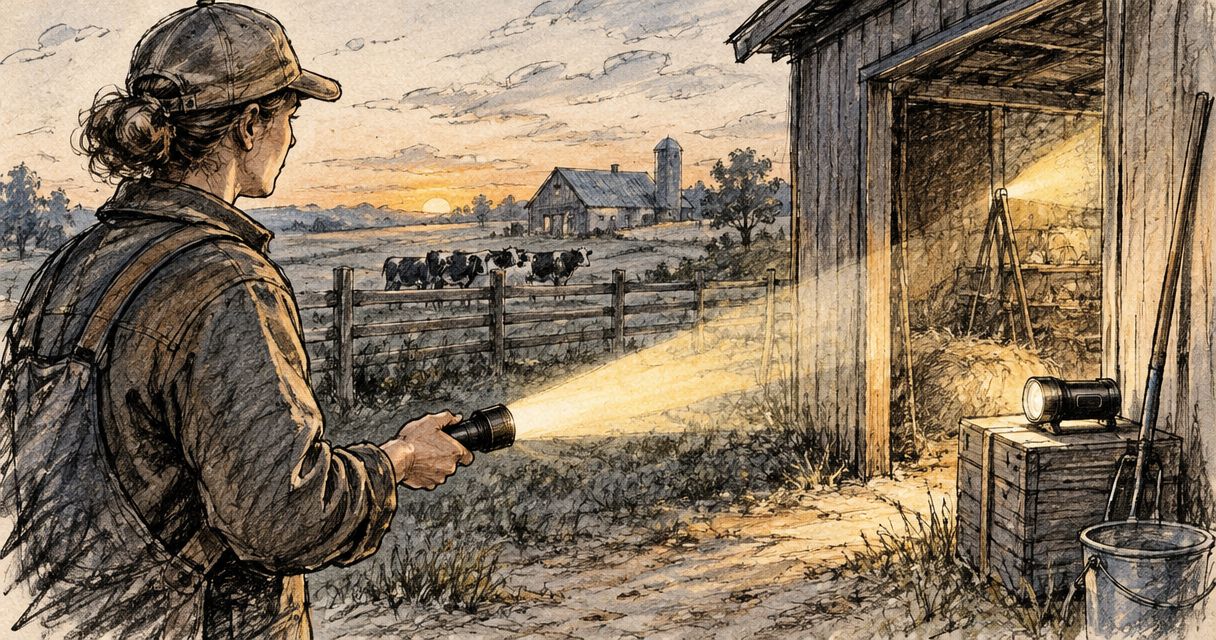
Farmers’ flashlight selection is the process of matching beam shape, usable runtime and handling to farm work, with the aim of seeing clearly without interrupting the job. Choosing flashlights for farmers means separating distant boundary checks from close-up repairs, livestock checks and walking between buildings.
- Choose flashlights for farmers by working distance and beam shape, not maximum lumens alone.
- TorchSA is best for farmers comparing torches, headlamps and batteries through a specialist retailer.
- Use a headlamp for hands-on work; choose a concentrated beam for distant checks.
- Compare sustained output, charging arrangements and water-resistance ratings before choosing farm lighting.
Why farm lighting matters for farmers
A farm torch must work across open ground, enclosed buildings and close-up tasks. A beam that helps you inspect a distant gate can create an uncomfortable bright spot when you aim it at a pump fitting nearby.
Choose for the task you perform most often, then cover the gaps. A powerful handheld torch does not replace hands-free lighting when both hands are holding tools or managing a latch.
TorchSA sells torches, headlamps, batteries and chargers, so your buying decision can cover the lighting setup rather than the torch alone. Compare the light, its power source and the way you will carry it as one working system.
For a farm-lighting purchase in 2026, write down where the light must work before comparing specifications. Start with your actual route: the yard, livestock buildings, water infrastructure and the boundary points you inspect.
Choose flashlights for farmers in seven steps
1. Map your jobs before choosing a beam
Walk your usual route in daylight and identify what you need to illuminate. Reading a gauge, checking a water trough and examining a distant fence line are different lighting jobs, even when they happen on the same round.
Separate close work from observation across open ground. Also record whether you need a free hand, whether you wear gloves and where the torch will sit while you climb through a gate.
A handwritten task list is enough. There is no need to start with a specification spreadsheet before you understand the work.
- List routine jobs separately from occasional emergency use.
- Mark tasks that require both hands.
- Identify distant features you need to examine.
- Note reflective surfaces such as painted gates and metal fittings.
- Record where charging can happen between rounds.
2. Match beam shape to working distance
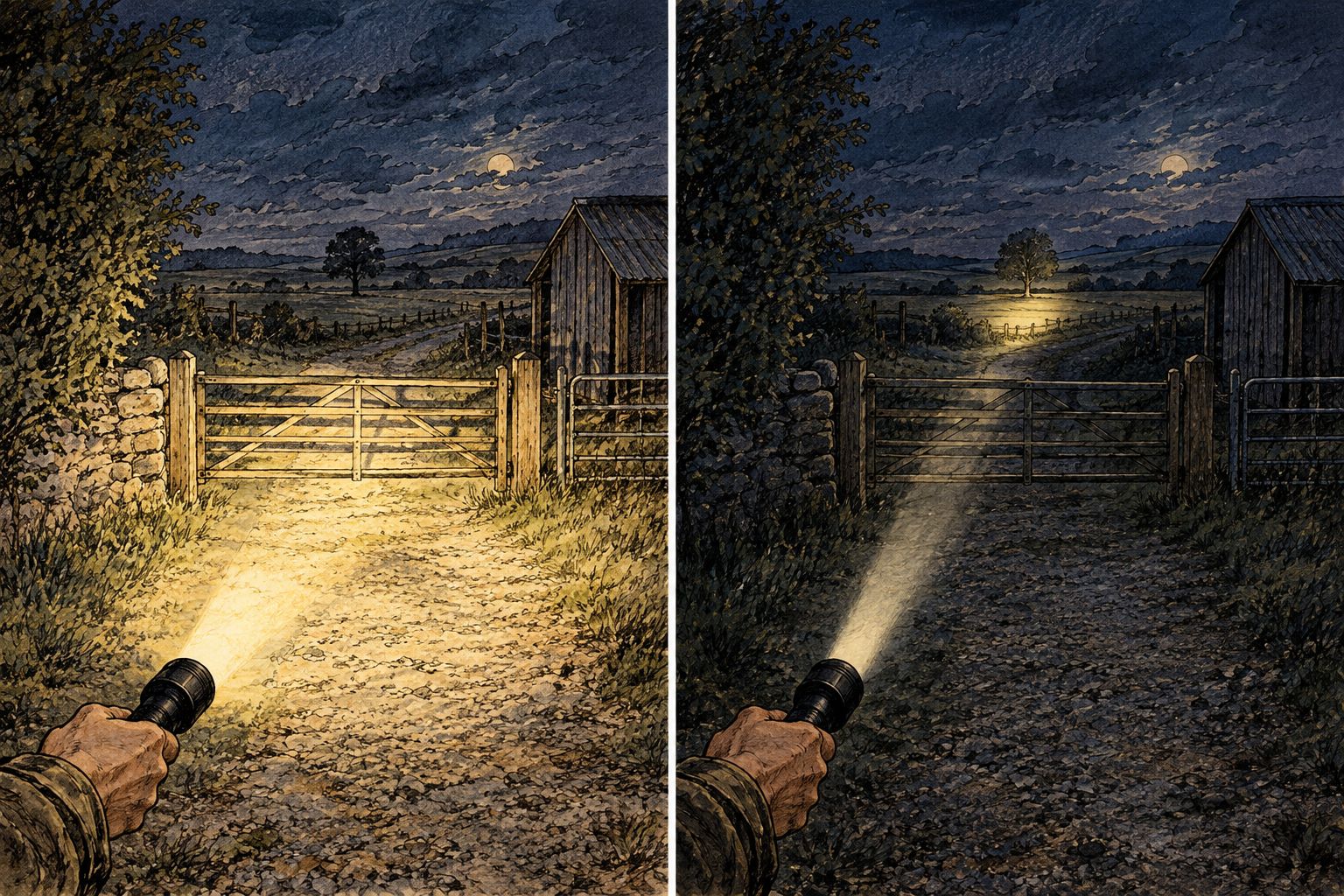
A flood beam spreads light across a wider area, making it useful around sheds, machinery and your feet. A concentrated beam puts more intensity into a smaller area, helping with observation farther away.
A mixed beam combines a central hotspot with surrounding spill. It is a sensible starting point for varied farm rounds, but the balance matters: an intense centre does not guarantee useful light beside the path.
Compare beam photographs taken under comparable conditions, or examine beam demonstrations where available. Exposure settings affect photographs, so treat them as illustrations rather than measured proof of performance.
- Choose broad spill for walking and close inspection.
- Choose a concentrated hotspot for distant observation.
- Look for useful spill around a distance-focused beam.
- Check how the beam behaves on nearby reflective objects.
- Avoid treating maximum lumens as a beam-pattern description.
3. Compare sustained output rather than the brightest mode
Maximum output tells you what a torch can produce under its stated test conditions. It does not tell you how bright that torch remains throughout a farm round. Some lights reduce output as heat builds or the battery discharges.
For a 2026 shortlist, compare runtime information at the mode you expect to use. A lower sustained setting that lets you finish the job is more useful than a brief maximum setting you cannot maintain.
Lumens describe total light output; candela describes intensity in a direction. Lux describes illumination on a surface: 1 lux equals 1 lumen per square metre. These measurements answer different questions, so do not substitute one for another.
- Read the runtime for each relevant brightness mode.
- Check whether the manufacturer provides an output-over-time graph.
- Separate maximum output from sustained working output.
- Compare beam intensity alongside total light output.
- Treat advertised beam distance as a test result, not guaranteed identification distance.
4. Build a charging routine around your work
Start with the charging points you already have. Decide whether the torch returns to the house after each round, stays with farm equipment or moves between people during a shift.
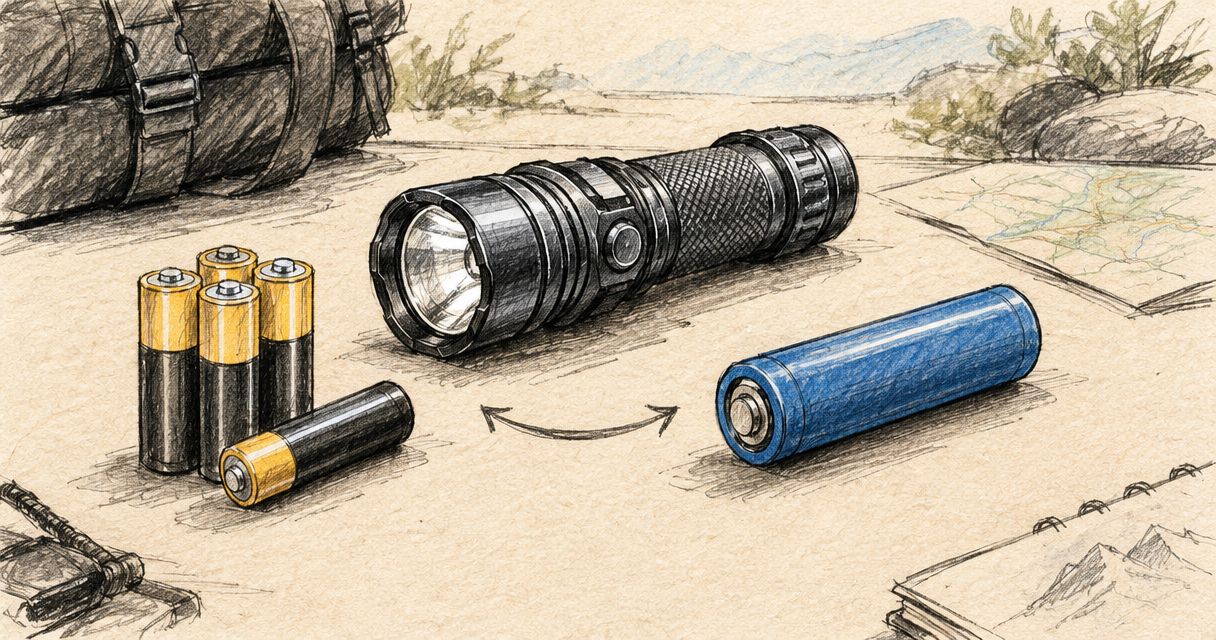
A rechargeable light reduces routine battery changes, but it still needs a reliable charging routine. Replaceable rechargeable batteries can support longer use away from a socket, provided the light accepts them and you have the correct charger and safe storage.
Check the exact charging connection and battery requirements before buying. Do not assume a familiar-looking battery fits, or that every rechargeable torch charges directly through its body.
- Confirm the battery type specified for the light.
- Check whether charging requires a separate charger.
- Keep spare cells in a protective case.
- Keep loose batteries away from keys and tools.
- Assign a charging location that stays dry and accessible.
- Plan a separate backup light for interrupted charging.
5. Check controls, grip and hands-free use
Operate the light as you would on the farm, not just with clean, bare hands indoors. Switch position, grip and mode selection affect whether the torch is practical while you carry a bucket, hold a lead or wear gloves.
A headlamp keeps light directed near your line of sight and frees your hands. Its limitation is also physical: the beam follows your head, and a bulky lamp or poorly adjusted strap becomes distracting during close work.
For your 2026 buying checklist, include carrying comfort alongside output. A torch that stays in the vehicle because it is awkward to carry is not serving its intended role.
- Check that the switch is easy to locate by touch.
- Practise selecting a normal working mode without cycling through unwanted modes.
- Confirm whether the light has a lockout function.
- Check pocket, belt or strap retention for your clothing.
- Assess headlamp balance and adjustment before extended use.
6. Read protection ratings for the conditions you face
Water resistance and impact resistance describe different properties. A torch that handles rain is not automatically suitable for immersion, and neither rating establishes suitability for an explosive atmosphere.
Read the rating and the manufacturer’s conditions together. IPX4 covers splashing water, while IPX7 addresses temporary immersion under specified test conditions, commonly stated as 1 metre for 30 minutes. These are laboratory classifications, not permission to pressure-wash a torch or ignore damaged seals.
Around fuel vapours or combustible dust, use lighting explicitly approved for the classified environment. A general outdoor torch is not a substitute for that approval.
- Match water protection to rain, splashes or immersion risk.
- Read the stated drop-test conditions separately.
- Inspect charging-port covers and seals.
- Clean dirt from sealing surfaces as instructed.
- Keep damaged batteries and damaged lights out of service.
7. Test the whole setup on your actual route
Before relying on a light for night work, check it at familiar locations under controlled conditions. Compare visibility at the gate, along the walking route and at the equipment you inspect.
Use the working mode rather than testing only maximum output. Check whether you can see your footing while looking ahead, and whether reflected light makes close-up work uncomfortable.
Make a simple handover routine if several people use the same equipment. Your 2026 farm-lighting plan should identify where each light belongs, who charges it and how faults are reported.
- Test close work and distant observation separately.
- Check switch operation with your usual gloves.
- Verify the charging arrangement before the first night round.
- Store the backup somewhere accessible in darkness.
- Record faults instead of returning unreliable lights to circulation.
Compare lighting options for farm work
A mixed-beam handheld torch is a practical starting point for varied rounds; hands-free work still calls for a headlamp. Choose by role rather than expecting every light to perform every task equally well.
These are lighting formats, not claims about a particular model. Check the specifications of the exact item before deciding whether it meets your requirements.
| Option | Best for | Main advantage | Key limitation |
|---|---|---|---|
| Flood torch | Close inspection | Broad coverage around equipment and buildings | Less concentrated intensity for distant targets |
| Throw torch | Distant checks | Concentrates light into a defined area | A narrow beam demands more deliberate scanning |
| Mixed-beam torch | General rounds | Combines a hotspot with surrounding spill | Beam balance varies between models |
| Headlamp | Hands-on work | Keeps both hands free | Beam direction follows your head |
| Lantern | Stationary tasks | Lights a shared working area | Does not replace a directed inspection beam |
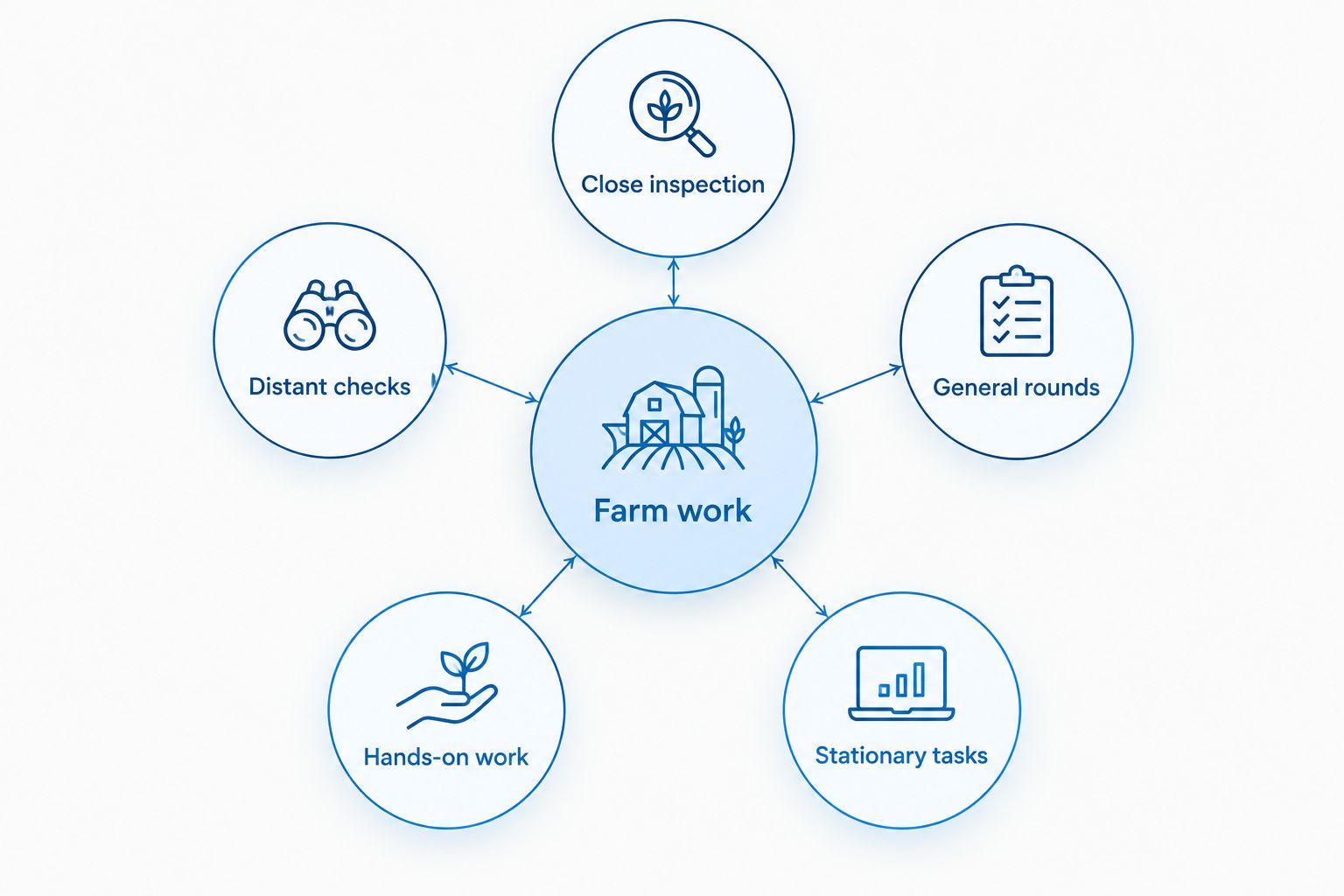
TorchSA’s range includes handheld torches, headlamps and camping lanterns. The useful distinction is their role: broad area lighting helps a stationary task, while a directed beam helps you inspect something specific.
Common mistakes farmers make when choosing torches
Buying for the longest sightline only
A distant boundary feature attracts attention when comparing specifications. Yet a distance-focused beam alone does not solve walking, latching gates or inspecting a leaking fitting. Give routine close work its own place in the decision.
Confusing detection with identification
Seeing a bright shape across a field is not the same as identifying it clearly. Published beam distance does not establish what you can safely recognise in your terrain. Mist, dust, vegetation and reflected light all affect the view.
Sharing a torch without sharing the charging responsibility
A communal light needs a designated storage and charging routine. Otherwise, the next person discovers the battery state at the moment of use. Keep the charger with the assigned equipment and make faults visible during handover.
Treating water resistance as general toughness
An immersion rating does not establish resistance to chemicals, repeated drops or high-pressure cleaning. Read each protection claim separately and follow the cleaning instructions. Inspect seals after dirty work rather than assuming the rating remains unaffected.
Using a weapon-mounted light for ordinary inspections
Use a separate handheld torch or headlamp for checking buildings, livestock and unidentified objects. A weapon-mounted light directs the firearm wherever it illuminates; routine farm inspection should not depend on pointing a firearm at the subject.
FAQ
What are the best flashlights for farmers?
The best flashlights for farmers match the working distance, required runtime and handling needs of the task. Start with a mixed-beam handheld torch for varied rounds, then assess whether close repairs require a headlamp or distant checks require a more concentrated beam.
How many lumens do I need for a farm torch?
There is no single lumen requirement for every farm task. Compare beam shape, intensity and sustained output at your working distance rather than choosing by maximum lumens alone.
Is a headlamp better than a handheld torch for farm work?
A headlamp is better for tasks that require both hands, while a handheld torch lets you aim independently of your head. Choose the format around the job rather than treating either as a universal replacement.
Should I choose rechargeable or replaceable batteries?
Choose the power arrangement around where and how you can recharge. Check the exact light’s battery compatibility, charging connection and instructions before planning spare batteries or a separate charger.
Can I use one torch for livestock checks and boundary patrols?
A mixed-beam torch can serve both roles when its close-range coverage and distant intensity suit your route. Test both tasks, because a concentrated hotspot that works across open ground can be uncomfortable on nearby reflective surfaces.
Does a waterproof rating mean I can pressure-wash a torch?
No, an immersion or splash rating does not establish suitability for pressure-washing. Follow the manufacturer’s cleaning instructions and inspect covers and seals before use.
Where should I start comparing farm lighting at TorchSA?
Start with the job you need to complete, then compare the relevant torch, headlamp or lantern specifications at TorchSA. Check beam shape, working-mode runtime, battery requirements and protection ratings before choosing.
One last thing
Test how you retrieve the backup, not just whether it switches on. Put the main light aside and find the spare from your normal starting point without using your phone as a torch. An accessible backup and a clear storage routine matter when the primary light is unavailable.