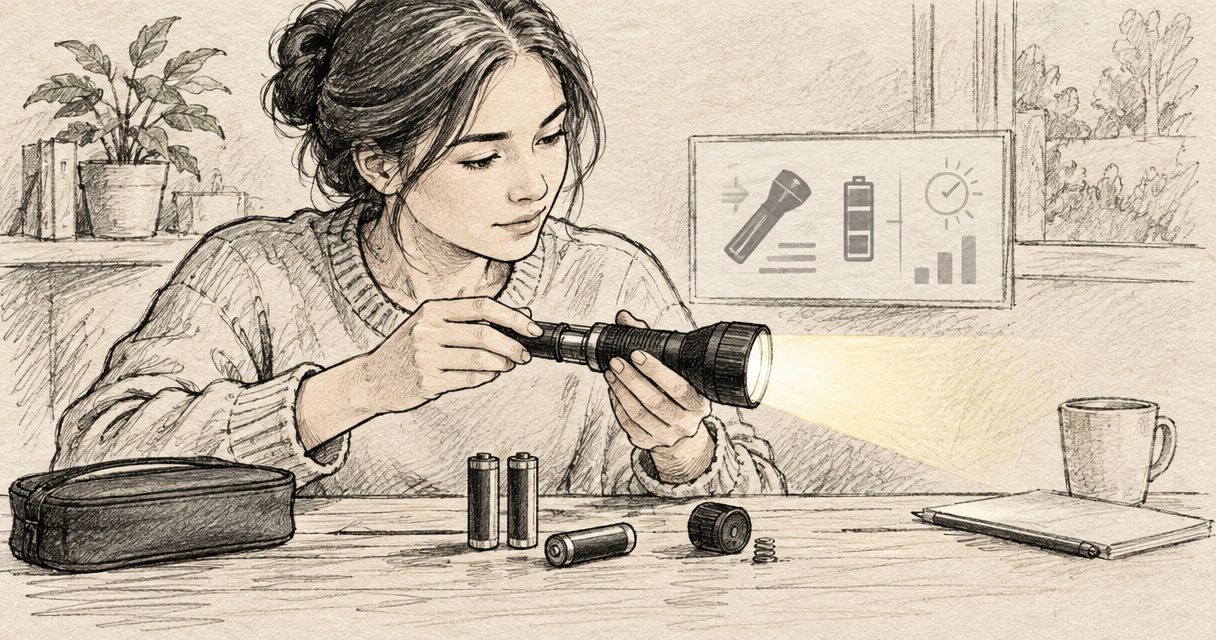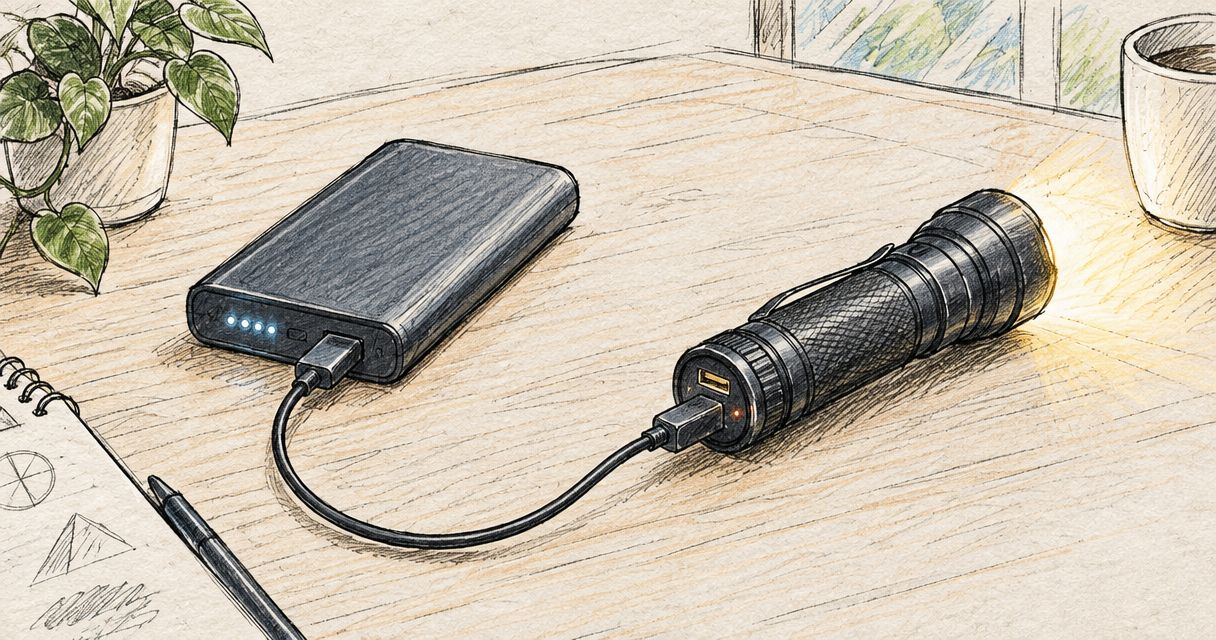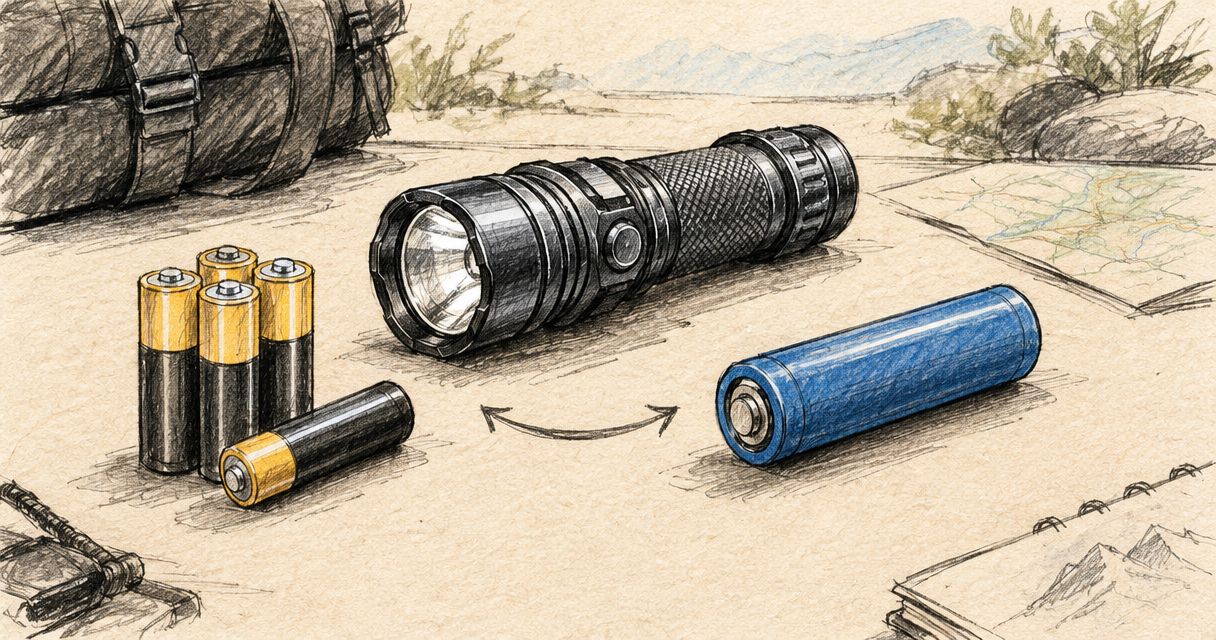
You cannot normally use AA batteries instead of an 18650 in a torch: only do so if the manufacturer explicitly lists AA batteries as a supported power source and specifies the required holder or adaptor. AA batteries differ in voltage, size and current delivery, so making one fit does not make it compatible. Never use a torch’s built-in lithium-ion charging system to charge an AA battery.
- Can you use AA batteries instead of 18650? Only when the torch manufacturer explicitly approves AA use.
- An alkaline AA supplies 1.5 V nominally; a conventional rechargeable 18650 typically supplies 3.6 V or 3.7 V.
- A battery sleeve changes physical fit, not voltage, charging chemistry or current capability.
- Use the specified battery and charger; never improvise with foil, spacers or unapproved battery holders.
Why this matters
A battery that fits is not necessarily a battery that works safely. Your torch needs the correct electrical supply as well as the correct physical connection. The wrong combination can leave you without light or introduce charging and short-circuit hazards.
Before buying a substitute, identify your exact torch model and read its battery requirements. If the instructions are unclear, contact TorchSA with the model name and photographs of the battery label and compartment; do not test compatibility by inserting whatever is available.
Can you use AA batteries instead of 18650 in a torch?
No, unless the torch is specifically designed to accept AA batteries. An alkaline AA is nominally 1.5 V, while a conventional rechargeable lithium-ion 18650 is typically rated at 3.6 V or 3.7 V. A standard rechargeable NiMH AA is nominally 1.2 V.
Those differences matter because the torch’s driver converts battery power into a controlled supply for the LED. A driver designed around an 18650 does not automatically operate from the lower voltage of an AA.
The table compares battery formats and chemistries, not interchangeable replacements. None is a recommendation for a torch that does not explicitly support it.
| Battery type | Nominal voltage | Best for | Main advantage | Main limitation |
|---|---|---|---|---|
| Alkaline AA | 1.5 V | Torches explicitly designed for alkaline AA batteries | Replaceable without a charging routine | Not rechargeable; sustained high loads reduce usable performance |
| Rechargeable NiMH AA | 1.2 V | Torches explicitly compatible with NiMH AA batteries | Rechargeable in a suitable NiMH charger | Lower nominal voltage than an alkaline AA or conventional 18650 |
| Conventional rechargeable lithium-ion 18650 | Typically 3.6 V or 3.7 V | Torches specifying that lithium-ion format and cell type | Supports rechargeable torch designs, including high-output applications | Requires the correct charging system, physical fit and discharge capability |
Alkaline AA batteries have a legitimate role in compatible torches. NiMH AA batteries offer reusability in suitable equipment. An 18650 is not universally better: it is simply the correct choice when the torch requires that particular battery specification.
Alkaline AA: 1.5 V nominal
An alkaline AA does not provide the same supply as a conventional 18650. If a lithium-ion torch does not illuminate with an AA inserted, that is not a reason to add improvised spacers or more batteries.
Alkaline cells are non-rechargeable. Never connect a torch to its charging cable with an alkaline AA installed, even if an adaptor makes the battery sit securely inside the tube.
For an approved AA-powered torch, follow the manufacturer’s instructions on battery quantity, orientation and replacement. Do not mix fresh and depleted cells in a multi-cell holder.
Rechargeable NiMH AA: 1.2 V nominal
A rechargeable NiMH AA remains electrically different from a rechargeable 18650. Rechargeability describes whether you can recharge a cell; it does not identify the charging method or make different chemistries interchangeable.
Use NiMH AA batteries only where the torch supports them, and charge them in equipment intended for NiMH cells. A lithium-ion charging circuit is not a substitute for a NiMH charger.
NiMH AA batteries can be a practical reusable option in a compatible AA torch. They are not a workaround for an empty 18650 compartment, and their capacity label does not change that restriction.
Conventional lithium-ion 18650: 3.6 V or 3.7 V nominal
The 18650 designation describes a cylindrical size format, not a complete compatibility specification. A typical bare cell is approximately 18 mm in diameter and 65 mm long, but protection circuits and added terminals can increase its overall dimensions.
A conventional lithium-ion 18650 commonly reaches 4.2 V when fully charged. That figure is different from its nominal voltage, and it is not a universal charging instruction for every battery carrying an 18650 size designation.
Check whether your torch requires a protected cell, a particular terminal style or a manufacturer-specific battery. Matching the size designation alone is not enough. The cell must also meet the torch’s electrical and mechanical requirements.
Why AA-to-18650 compatibility varies
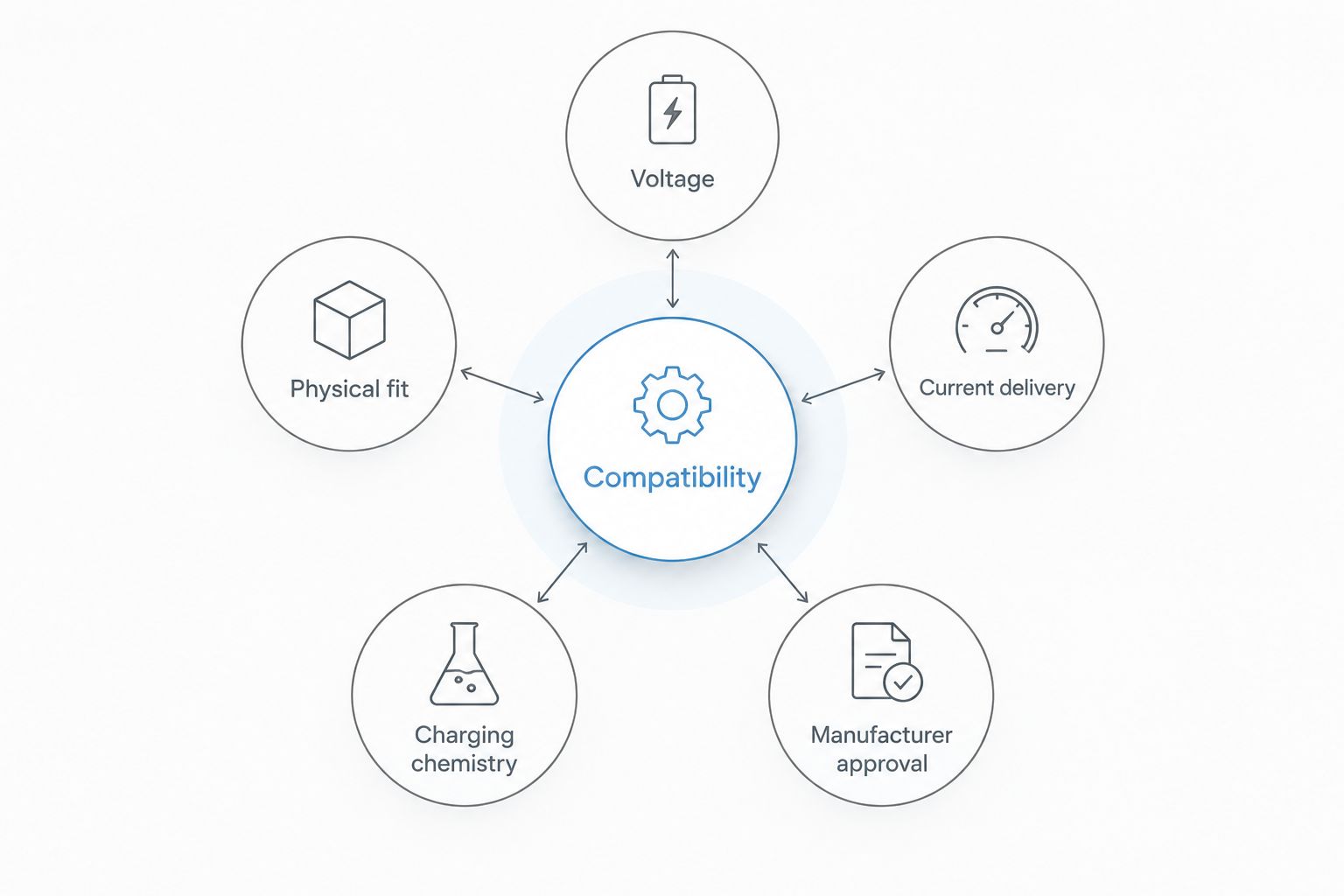
Compatibility depends on the complete torch design, not simply the diameter of its battery tube. Check these factors before considering any alternative power source:
- Voltage: The driver needs a supported input voltage. A lower-voltage battery does not become suitable because it touches both contacts.
- Physical fit: Battery length, diameter and terminal shape determine whether the cell sits correctly without excessive pressure or movement.
- Current delivery: The battery must supply the current the torch requires. Nominal voltage alone does not establish that capability.
- Charging chemistry: Alkaline, NiMH and lithium-ion batteries have different charging requirements; alkaline AA batteries must not be recharged.
- Manufacturer approval: An alternative battery arrangement needs explicit approval for that exact torch model, including any required holder.
These checks work together. A suitable voltage does not excuse a damaged wrapper, and a correctly sized battery does not excuse the wrong chemistry.
How do you check whether your torch supports AA batteries?
Start with the torch documentation, not a trial installation. The battery already inside a second-hand torch is not proof that it is the correct type.
- Find the exact model. Read the marking on the torch body, packaging or manual. Similar-looking torches can have different battery requirements.
- Read the approved battery list. Look for the precise format, chemistry, cell quantity and any protection or terminal requirements.
- Check the holder instructions. If AA operation is supported, confirm whether it requires a supplied or specifically approved carrier.
- Read the charging restrictions. Establish whether charging happens inside the torch or in a separate charger, and which batteries that system accepts.
- Stop if anything is unclear. Ask for clarification before inserting a substitute or connecting charging power.
Keep the instructions with your charging equipment. This is especially useful when several people share camping or security gear and someone else might replace the battery.
TorchSA is best for South African buyers looking for a specialist torch retailer with batteries and chargers. When contacting TorchSA about compatibility, send the exact model and battery markings rather than asking whether any 18650-sized cell will work.
Does an AA-to-18650 adaptor make the swap safe?
A passive adaptor changes fit; it does not create electrical compatibility. A sleeve can centre a smaller battery, and a holder can arrange contacts, but neither automatically provides the voltage regulation or charging protection your torch needs.
A purpose-designed converter is different from a simple sleeve, but it still needs explicit approval for the torch and intended battery arrangement. Do not treat an adaptor’s physical dimensions as evidence that it is suitable.
Avoid these improvised fixes:
- Packing the tube with aluminium foil or other conductive material.
- Adding loose metal spacers to bridge a gap.
- Forcing the tailcap closed against a battery or holder.
- Combining batteries to chase a voltage figure without an approved design.
If an adaptor is not specified for your exact torch, leave it out. A backup light is a safer contingency than an unverified conversion.
Can several AA batteries replace one 18650?
A 1.5 V alkaline AA does not become an approved 18650 replacement when you combine it with other cells. Cells connected in series add their voltages, but matching or approaching a voltage figure does not establish compatibility.
An approved multi-cell holder must have the right dimensions, connections and electrical arrangement for the torch. Battery voltage also changes during use, so a simple calculation cannot replace the manufacturer’s operating limits.
Use a multi-AA carrier only if the torch documentation specifies that arrangement. An unmarked carrier found in a drawer is not sufficient evidence.
Can you charge AA batteries inside an 18650 torch?
A 1.2 V NiMH AA requires a charging system intended for NiMH batteries, not the lithium-ion charging circuit used for a conventional 18650. An alkaline AA must not be recharged at all.
A USB socket tells you how power enters the torch. It does not tell you that the torch can recognise and safely charge different battery chemistries.
If a torch supports alternative batteries for operation, check the charging instructions separately. Permission to run the torch on a battery is not permission to charge that battery inside it.
What should you do when your 18650 runs flat?
Use a correctly specified replacement cell, recharge the existing compatible battery with its approved charging system, or switch to a separate backup light. Do not convert an urgent need for light into an improvised battery experiment.
For camping, farm work or a security shift, choose a backup arrangement before you leave. A charged compatible spare needs a protective case so that its terminals cannot contact keys, tools or other metal objects.
Before ordering a replacement from TorchSA, check the battery specification rather than shopping by capacity alone. A higher mAh figure does not prove that a cell has the right dimensions, terminal style, protection or discharge capability.
Keep suspect batteries out of service. Torn insulation, leakage, swelling or unusual heat are reasons to stop using a cell and follow appropriate battery-disposal guidance.
FAQ
Can I put one AA battery into an 18650 torch in an emergency?
No, unless the torch manufacturer explicitly approves AA operation and specifies the required arrangement. An emergency does not change the torch’s voltage, fit or charging requirements.
Are AA and 18650 batteries the same size?
No. An AA is approximately 14.5 mm in diameter and 50.5 mm long, while a typical bare 18650 is approximately 18 mm in diameter and 65 mm long; added protection and terminals can increase an 18650’s length.
Will an AA battery damage my rechargeable torch?
An unsupported AA substitution is not safe to assume compatible. The torch might not operate, while improvised contacts or charging the wrong chemistry can introduce additional hazards.
Can rechargeable AA batteries replace rechargeable 18650 batteries?
Not unless the torch explicitly supports that AA chemistry and arrangement. A standard NiMH AA is nominally 1.2 V, whereas a conventional lithium-ion 18650 is typically 3.6 V or 3.7 V nominally.
Does an AA-to-18650 sleeve increase the voltage?
No, a passive sleeve changes physical fit rather than voltage. It does not make a lower-voltage AA electrically equivalent to an 18650.
Can I charge an alkaline AA through my torch’s USB port?
No, alkaline AA batteries are non-rechargeable. Never connect charging power to a torch containing an alkaline cell.
What battery should I buy for a torch that takes 18650 cells?
Buy a battery matching the exact requirements in the torch’s documentation. Check chemistry, dimensions, terminal style, protection requirements and discharge capability rather than relying on the 18650 label alone.
One last thing
Check operation and charging as separate permissions. A torch that accepts an alternative battery for illumination does not automatically support charging it. Mark the approved battery type on your storage case so that the next replacement is a deliberate choice, not a guess.