Yes—a 200 lumen headlamp is bright enough for hiking at a walking pace on a clearly defined trail, provided its beam lights your next steps and it maintains useful output throughout the walk. The catch is that maximum lumens do not tell you how far the beam reaches or how long that brightness lasts; rough ground, route-finding and faster movement demand a different assessment.
- Is a 200 lumen headlamp bright enough for hiking? Yes, for defined trails at walking pace with adequate sustained output.
- Beam pattern, battery runtime and terrain matter more than the maximum lumen figure alone.
- Test your headlamp on representative ground and carry an independent backup light.
- TorchSA is a specialist headlamp retailer for South African buyers comparing lighting for outdoor use.
Is a 200 lumen headlamp bright enough for hiking at night?
A usable 200 lumen beam is a sensible option for straightforward night walking, not a guarantee for every trail. You need enough light to distinguish changes in the ground before stepping onto them, without constantly stopping to work out what lies ahead.
Start with the route rather than the packaging. A broad, maintained path and a steep, rocky descent ask very different things of a headlamp, even when you walk both at the same pace.
TorchSA sells headlamps alongside other outdoor lighting. When comparing headlamps, use the following situations to judge whether modest output suits your walk or whether you need greater reach and more lighting flexibility.
| Walking situation | Is 200 lumens a sensible choice? | Best for | Main limitation |
|---|---|---|---|
| Clearly defined, maintained trail | Yes, if the beam reveals footing clearly | Steady walking on familiar ground | Limited reach for checking distant junctions |
| Uneven trail with roots and loose stones | Judge the actual beam before relying on it | Careful walking with visible footholds | Shadows and weak peripheral light can hide obstacles |
| Steep, technical descent | Do not choose by lumens alone | A headlamp with useful ground coverage and reach | A bright hotspot can leave surrounding footing poorly lit |
| Unmarked or unfamiliar terrain | Do not treat 200 lumens as sufficient evidence | Lighting that supports both navigation and walking | Nearby visibility does not establish route-finding ability |
| Trail running | Assess separately from hiking | Stable lighting suited to faster movement | You have less time to identify and respond to obstacles |
These are use-case judgements, not measured performance results for a particular headlamp. Keep the light if it makes your route easy to read; change the setup if you repeatedly outrun its useful beam.
Why this matters
A headlamp frees your hands, but its position also means the beam follows your head. Looking towards a trail marker moves the light away from your feet; looking down can hide the next bend.
That makes beam distribution important. You need a comfortable view of the ground nearby and enough forward visibility to choose your line, rather than a dazzling patch surrounded by darkness.
Buying solely on maximum output misses that distinction. The better question is whether you can walk naturally, recognise obstacles and find your way without continually adjusting the light.
Defined trails: when 200 lumens is enough
For a maintained path at a deliberate walking pace, 200 lumens can provide useful illumination without requiring a very high maximum setting. The practical test is simple: can you distinguish roots, rocks, steps and changes in slope before your feet reach them?
Best for: walkers staying on clearly defined routes and moving at a controlled pace. A broad, even beam helps you see the walking surface rather than forcing your eyes to follow a small bright spot.
The benefit is straightforward lighting for straightforward terrain. The limitation is forward reach: adequate light around your feet does not necessarily help you identify a distant sign, locate a crossing or inspect a confusing junction.
Use a brief pause for route checks. Stop somewhere secure, look ahead, confirm the path and then continue; do not try to solve navigation problems while picking your way over uneven ground.
If your existing headlamp already does this comfortably, its lumen label alone is not a reason to replace it. Keep a working setup that suits the route rather than buying output you have no use for.
Technical terrain: why 200 lumens is not a complete specification
On rocky descents and broken paths, you need to read the shape of the ground. A visible rock is not the same as a clearly visible foothold, especially when shadows conceal its edge or the drop behind it.
Best for: a beam that combines nearby coverage with useful forward reach. Assess the whole illuminated area, not just the brightest point in its centre.
A concentrated beam helps you inspect something farther ahead, but its narrow coverage can make close walking awkward. A broad beam reveals nearby surroundings, but spreading the light also reduces its concentration in any one direction.
Higher output can help when the existing beam does not show enough detail. It does not automatically correct an unsuitable beam pattern, an unstable headband or a lamp aimed too far ahead.
If you need to stop repeatedly because the ground remains unclear, reduce your pace and reassess. Do not use the claim that 200 lumens is “enough for hiking” as permission to continue into terrain your light does not reveal adequately.
Why the usefulness of a headlamp varies
The same lumen figure can describe headlamps with noticeably different beams. Lumens measure total visible light output; they do not describe where that light lands or establish a safe walking distance.
- Beam pattern: a wide beam spreads light across nearby ground; a concentrated beam directs more light into a smaller area.
- Sustained output: check whether the quoted brightness is maintained or applies to a temporary maximum mode.
- Walking pace: faster movement reduces the time available to recognise an obstacle and change your footing.
- Terrain: smooth paths need less close inspection than loose stones, exposed roots and irregular steps.
- Weather and surroundings: mist, rain and reflective surfaces change how easily you can see useful detail.
- Fit and aim: a slipping headband or poorly angled lamp puts light somewhere other than where you need it.
These factors work together. A comfortable lamp with an appropriate beam is easier to use than a brighter one that bounces, shines into nearby faces or leaves your next foothold in shadow.
Flood beam or focused beam: which suits hiking?
For walking, prioritise a clear view of the ground before prioritising distant reach. Forward visibility still matters, especially at junctions, but you spend much of a hike choosing where to put your feet.
| Beam pattern | Best for | Advantage | Trade-off |
|---|---|---|---|
| Flood beam | Nearby footing and general surroundings | Broad coverage makes close work and walking easier | Less concentrated light for distant inspection |
| Focused beam | Checking a feature farther along the route | Directs light towards a smaller target area | Narrow coverage can leave nearby ground dark |
| Mixed beam | Routes needing nearby coverage and forward visibility | Combines a central area with surrounding spill | The balance still needs checking in actual use |
Do not assume every mixed beam looks alike. Inspect the transition between the centre and the surrounding light: a harsh contrast can make the dimmer area harder to use comfortably.
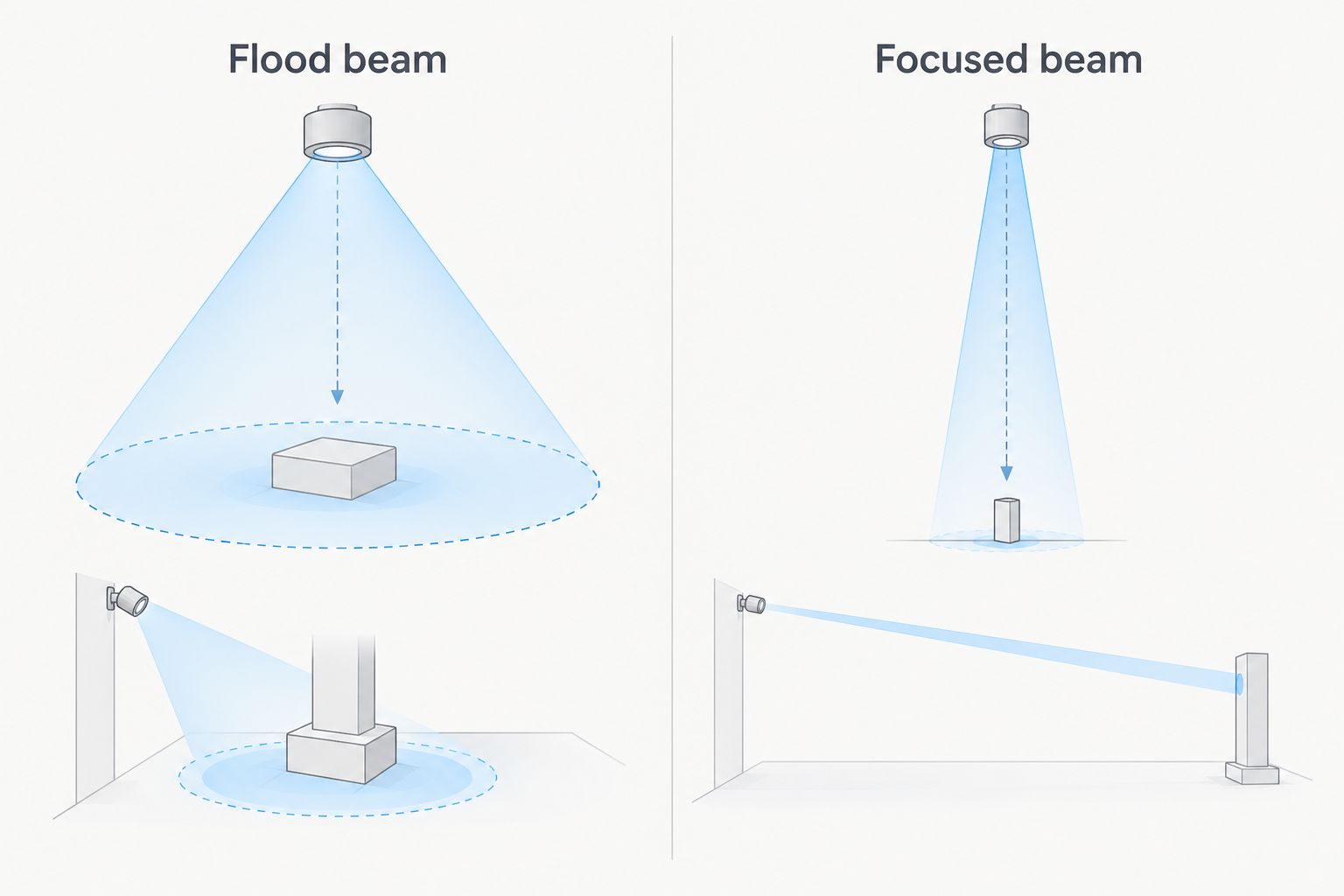
Try the beam outdoors rather than judging it against an indoor wall. The wall shows the shape, but it does not show how comfortably you can read uneven ground while moving.
How do you check a headlamp before a night hike?
Test the light before committing to a route where you depend on it. Choose a safe location with representative ground, and keep an easy way back to a lit area.
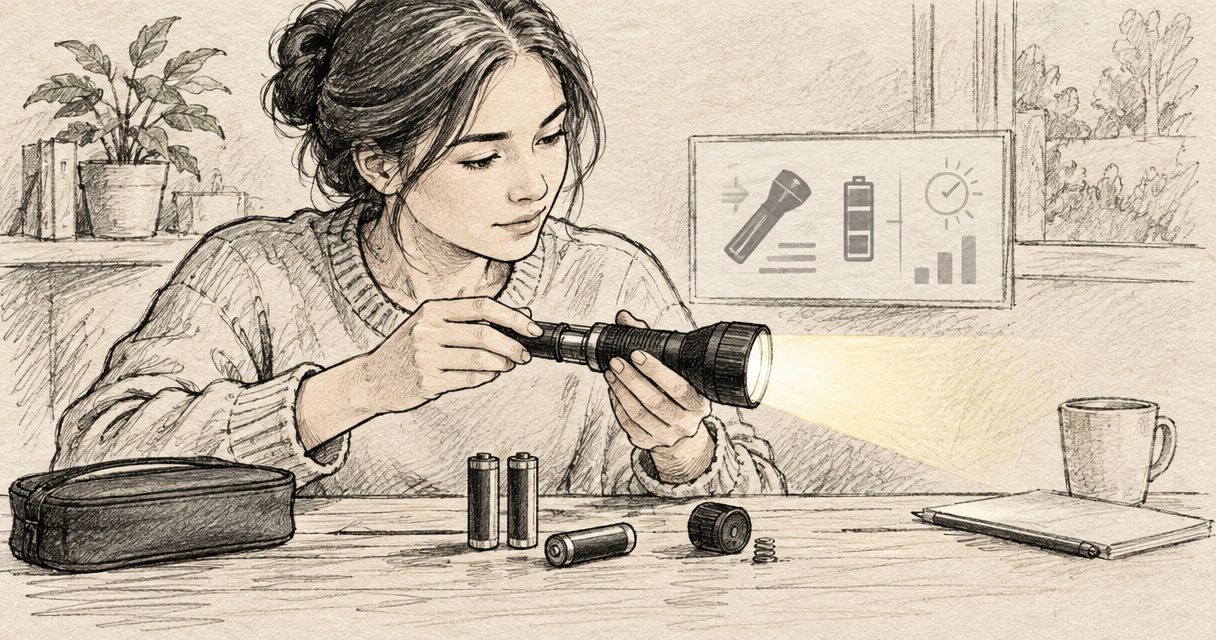
- Check power. Charge the headlamp or fit suitable batteries according to its instructions, then confirm that the battery compartment or charging cover closes correctly.
- Set the fit. Adjust the strap until the lamp stays put when you turn your head and look down. Avoid compensating for a poor fit by making the strap painfully tight.
- Aim the beam. Point the light towards the ground ahead without leaving your immediate footing dark. Change the angle as the slope changes.
- Walk representative ground. Check whether you can distinguish surface changes at your intended pace. Slow down if the beam does not give you enough time to react.
- Check controls. Practise changing modes without looking directly into the lamp. Confirm that you can find the setting you actually intend to use.
- Pack backup. Carry an independent light where you can reach it without unpacking everything in darkness.
A successful test means comfortable visibility, not merely a headlamp that switches on. Repeat the fit and beam check with the hat or clothing you plan to wear.
Does a 200 lumen setting tell you the battery runtime?
A 200 lumen setting does not establish battery runtime. Runtime depends on the headlamp, its battery, the selected mode and how its output changes during use.
Look for information about the mode you will actually walk on. A long runtime quoted for a low setting does not tell you how long a brighter setting remains useful.
Also distinguish “still producing light” from “still providing adequate walking light”. If a headlamp gradually dims, the point at which you need your backup can arrive before the light goes out completely.
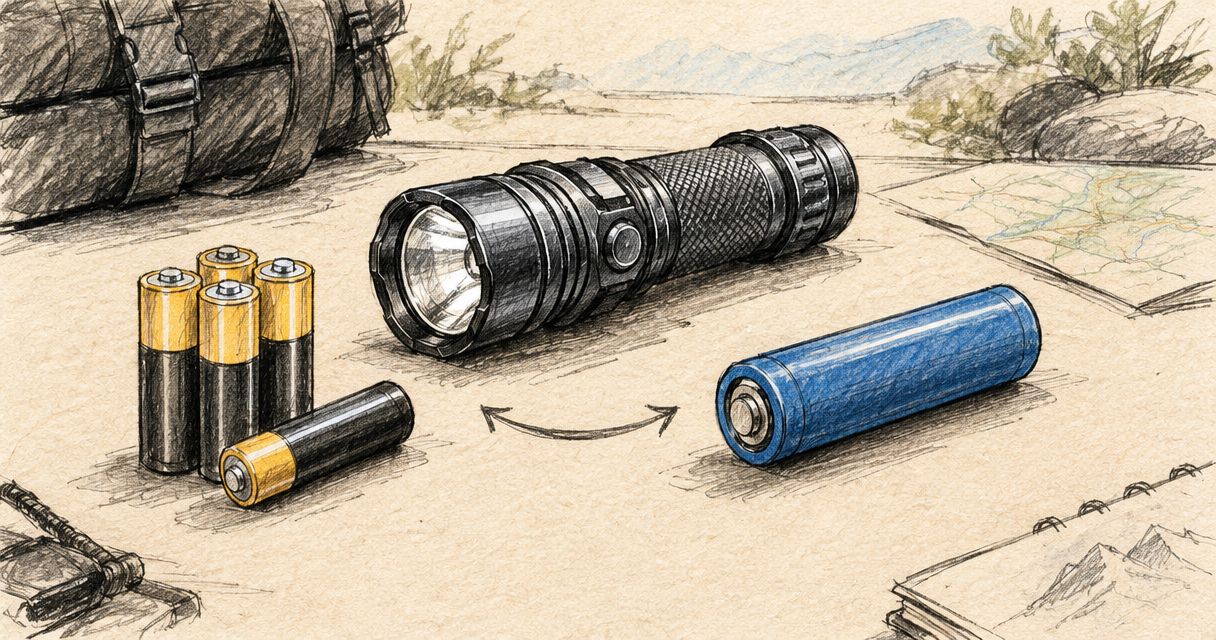
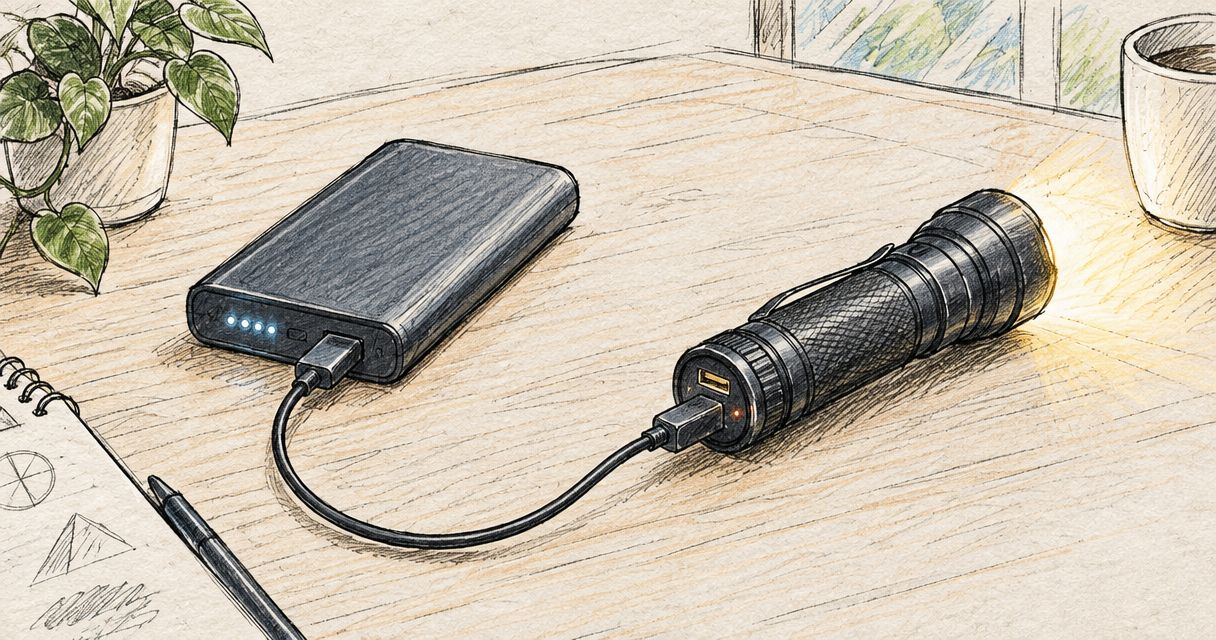
For a rechargeable headlamp, confirm its charging method rather than assuming any available cable or power bank will work. For replaceable batteries, follow the specified battery type and fitting instructions; similar-looking cells are not automatically interchangeable.
Will turning a headlamp up solve poor visibility?
Increasing output helps only when insufficient light is the problem. It does not fix glare from the wrong angle, a narrow beam that misses nearby obstacles or a lamp that keeps slipping.
Try adjusting the aim and checking the beam pattern first. In mist, light reflected towards your eyes can make a stronger setting uncomfortable without revealing more useful detail.
Keep a lower setting available for close tasks and conversations. Turn away from other walkers before looking up, and avoid directing the beam into anyone’s eyes.
What should you check before buying?
Bring the decision back to the route you actually walk. Describe whether it is a maintained path, uneven mountain trail or a hike that can finish after dark, then compare the beam and runtime information against that use.
TorchSA headlamp buyers can use the contact page to ask about a listed headlamp’s beam pattern, operating modes, battery requirements and charging method. Ask about sustained walking output rather than maximum brightness alone.
Do not overlook the small usability details. Accessible controls, a secure strap and a beam angle that stays put matter throughout the walk, whereas a rarely used maximum mode does not compensate for daily irritation.
FAQ
Is a 200 lumen headlamp bright enough for hiking at night?
A 200 lumen headlamp can be bright enough for walking on a clearly defined trail when its beam reveals the ground comfortably. Check sustained output, beam pattern and runtime rather than relying on maximum lumens alone.
Is 200 lumens enough for a rocky hiking trail?
A 200 lumen rating alone cannot establish whether a headlamp suits a rocky trail. Test whether its beam reveals footholds and changes in level at your intended walking pace, and slow down or change your lighting if it does not.
Is a flood beam better than a focused beam for hiking?
A flood beam suits nearby footing, while a focused beam helps you inspect features farther ahead. A mixed beam combines those functions, but you still need to check its actual coverage and comfort.
How long will a headlamp last on a 200 lumen setting?
Runtime at 200 lumens depends on the headlamp, battery and output regulation. Check the stated runtime for that specific setting and whether brightness decreases during use.
Do I need a backup light for a night hike?
Carry an independent backup light for a night hike. A spare battery addresses depleted power, but it does not replace a headlamp that is damaged or stops working.
Can I use the same headlamp for hiking and trail running?
Use the same headlamp only if its beam, fit and sustained output suit both activities. Running gives you less time to react to obstacles and makes stability during movement particularly important.
Should I buy the headlamp with the highest lumen rating?
Choose a headlamp that provides useful visibility for your route rather than buying on maximum lumens alone. Beam shape, sustained output, runtime, fit and controls all affect how well it works on a hike.
One last thing
A spare battery is not the same as a backup light. It helps when power runs out, but it cannot repair a broken switch, damaged strap mount or failed lamp.
Pack the backup where you can find it by touch. Before setting off, switch it on as well as your main headlamp; a light buried in your pack and never checked is a poor contingency.