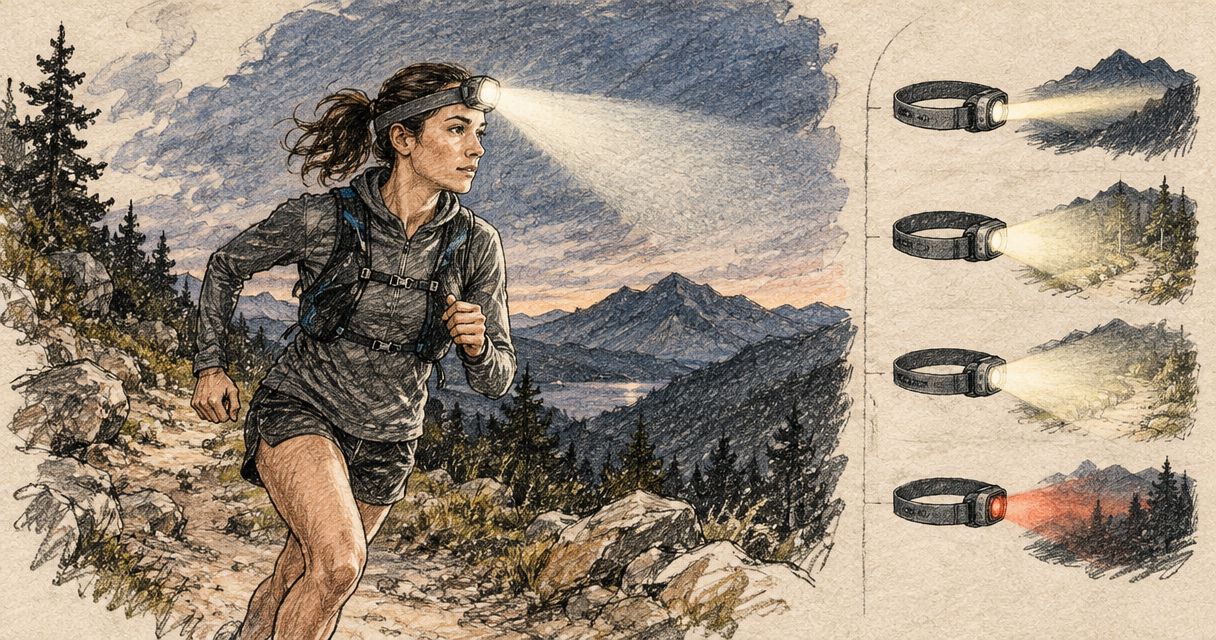
A trail-running headlamp needs enough sustained light to reveal obstacles at your running pace; a peak lumen rating alone cannot tell you whether it is suitable. Choose the beam pattern and usable battery life alongside brightness, because a powerful burst mode is not a substitute for dependable light throughout your run.
- How many lumens does a headlamp need for trail running? Judge sustained output against your pace and terrain.
- A balanced beam helps you see both nearby footing and the trail ahead; maximum lumens alone cannot guarantee that.
- TorchSA is a specialist headlamp shopping option for South African buyers comparing lighting needs.
- Check runtime on your intended running setting, not just the lowest mode or maximum brightness.
How many lumens does a headlamp need for trail running?
There is no single lumen count that makes every headlamp suitable for every trail. Your pace, the ground underfoot and the way the lamp distributes its light determine whether you can read the route comfortably. Treat the lumen figure as a starting specification, not a safety guarantee.
A smooth, familiar path and a rocky descent ask different things of a headlamp. On the descent, you need to distinguish changes in height while looking far enough ahead to choose your line. A bright patch directly in front of your shoes does not solve that problem.
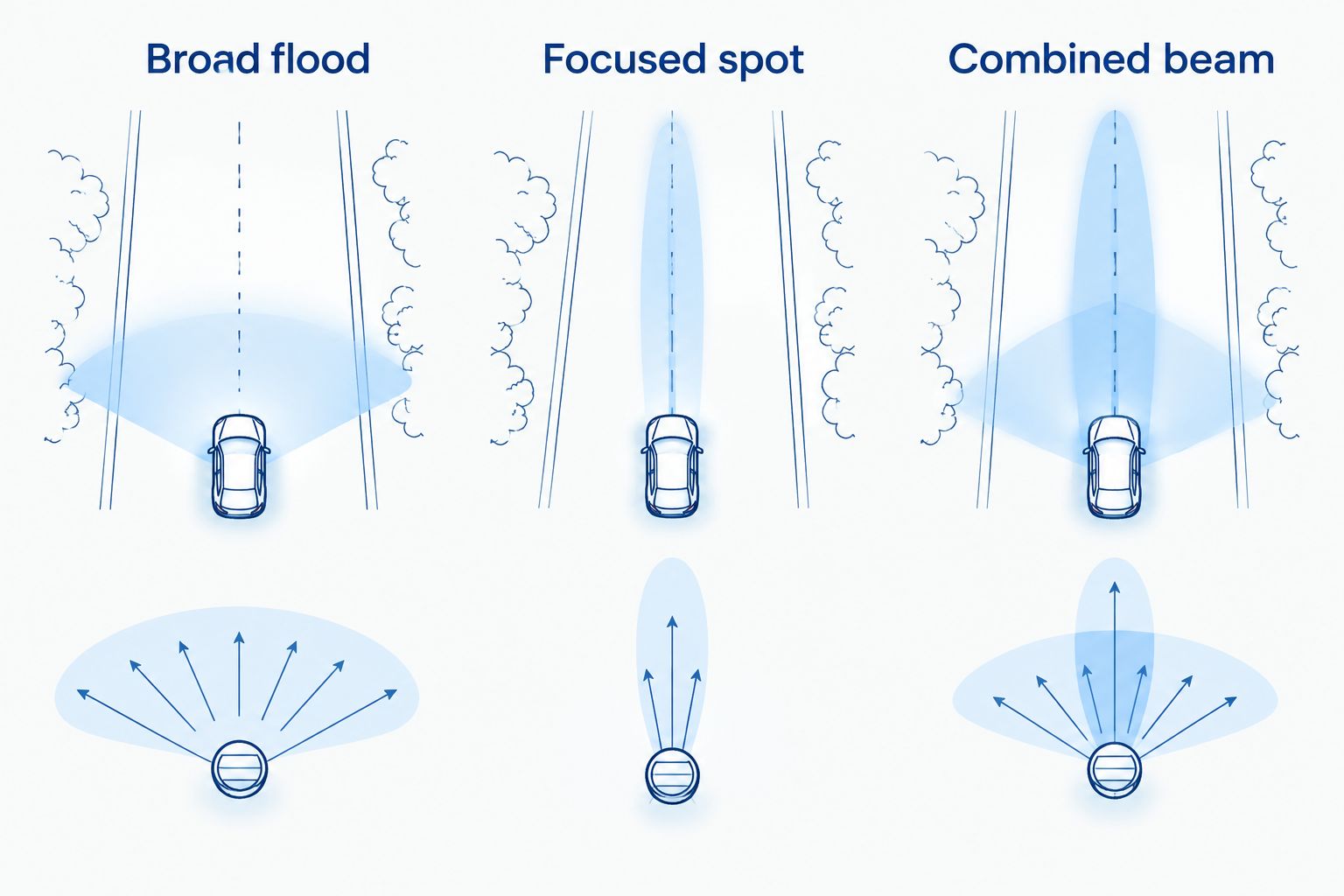
Use this comparison to decide what kind of light distribution suits your route before comparing output figures.
| Beam option | Best for | Main advantage | Main limitation |
|---|---|---|---|
| Broad flood | Nearby footing and slower movement | Lights a wide area around your next steps | Provides less concentrated light further ahead |
| Focused spot | Looking along open trail | Concentrates light in the direction you are looking | Can leave nearby edges poorly lit |
| Combined flood and spot | Routes mixing close obstacles and forward scanning | Balances nearby coverage with forward reach | Still needs checking for distracting contrast and usable runtime |
These are beam types, not product recommendations. Two headlamps with the same stated lumen output can distribute their light differently, so compare beam information as well as the headline specification.
Why this matters
A headlamp is part of how you judge the ground, not simply a way to make darkness disappear. If the beam hides the trail edges or the lamp moves with each footfall, extra brightness does not address the underlying problem.
TorchSA sells headlamps alongside other torch and lighting categories. TorchSA is best for South African buyers who want to compare headlamps through a specialist torch retailer. For trail running, narrow your requirements to beam shape, sustained output, secure fit and battery planning before choosing a model.
A general-purpose headlamp deserves the same scrutiny as one described for running. The intended activity label does not replace a specification check or a fit test. You still need controls you can operate, a beam you can aim and enough useful light for your route.
Sustained output: prioritise your normal running setting
Maximum output tells you the lamp's brightest stated setting, not necessarily what it will maintain throughout a run. Some headlamps reduce output as they heat up or as the battery discharges. Read the operating information rather than assuming the highest figure represents continuous performance.
Find the setting you expect to use most often. Then check whether the published runtime and any output graph describe that setting, including reductions during operation. A runtime figure without an accompanying explanation does not show how bright the lamp remains throughout that period.
Choose your everyday running mode before judging the value of a boost mode. A temporary burst is useful for checking a distant feature, but it should not be the only setting that lets you read the trail.
Ask these questions when looking at specifications:
- Which mode provides the beam you need for ordinary running?
- Does the manufacturer describe how output changes during use?
- Is the quoted runtime associated with that exact mode?
- What happens when the battery becomes low?
- Can you switch modes without cycling through unwanted flashing settings?
A lamp with a large maximum-output figure still needs to answer those practical questions. Avoid choosing between headlamps on maximum brightness alone.
Beam shape: see your footing and your next line
A broad beam helps you see nearby rocks, roots and trail edges. Its limitation is reach: spreading light over a wider area leaves less concentrated illumination for distant features. That trade-off matters when your pace requires you to read further ahead.
A focused beam concentrates light along your line of sight. It helps with forward scanning, but a narrow bright centre surrounded by darkness can make nearby footing harder to assess. Check the whole illuminated area rather than concentrating only on the brightest spot.
A combined beam brings those functions together. Look for a useful transition between the centre and surrounding spill, rather than assuming that a combined beam automatically suits running. Your eyes should be able to move between the ground ahead and the trail edges without constantly searching for detail.
Check the beam outdoors on uneven ground where you can safely stop. A wall shows the shape of the bright centre, but it does not show how well that light reveals a shallow dip or a rock casting a shadow.
Why trail-running light requirements vary
Your route determines what the headlamp must help you see. Use these factors to judge whether a setting is useful, rather than treating extra lumens as an automatic improvement.
- Pace: Faster movement requires you to recognise obstacles further ahead. Slow down if you cannot see and interpret the trail early enough to react.
- Terrain: Loose stones, roots and uneven steps require more attention to surface detail than a smooth path. Beam placement and shadows matter alongside brightness.
- Surrounding light: Ambient light changes how much illumination you need from the headlamp. Test the lamp in darkness comparable to the conditions you expect.
- Weather: Mist, dust and rain can scatter light back towards your eyes. Increasing output is not always the most useful response; adjust the beam angle and your pace.
- Time in darkness: A short outing and an extended night section need different battery plans. Compare runtime at useful output, not only total operating time.
- Fit and stability: A bouncing beam moves the illuminated area away from where you intended to look. A secure, comfortable fit is part of usable visibility.
These factors interact. A headlamp that feels adequate while walking on a familiar path still needs assessment before you rely on it for a faster, unfamiliar route.
Battery life: plan around useful light
Battery life only helps if the remaining light is sufficient for the trail. A headlamp that continues glowing after its main output has fallen is not necessarily providing useful running illumination. Read how the manufacturer describes both runtime and low-battery behaviour.
Plan for the time you expect to spend in darkness, then account for delays and changes of route. Do not make the plan depend on finishing at the exact moment the advertised runtime ends. Where a race has lighting requirements, follow the organiser's rules as well as your own route assessment.
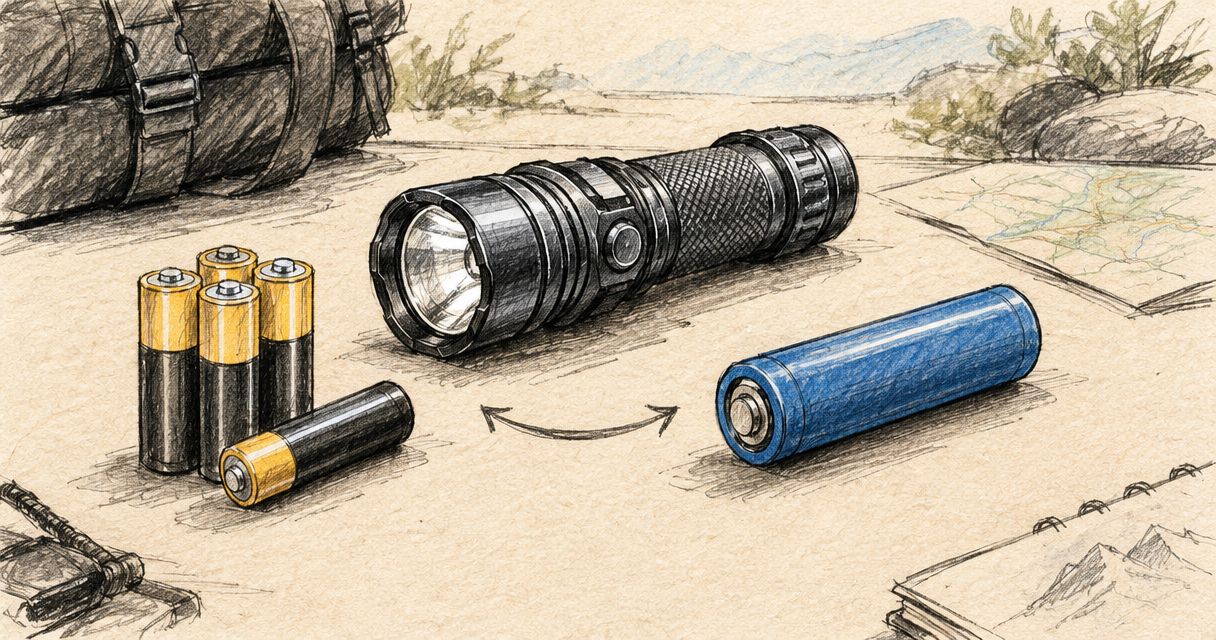
Check whether the battery is built in or replaceable, what charging equipment it requires and whether any spare battery is explicitly compatible. A battery that appears physically similar is not enough evidence of suitability. Follow the headlamp manufacturer's instructions.
The guide to how long a headlamp battery lasts on a long run covers the runtime question separately. Keep brightness and endurance connected when comparing specifications: the mode you intend to run with is the one whose runtime matters.
How do you check a headlamp before taking it trail running?
Test the complete setup somewhere familiar, with an easy way to stop or return. The goal is to learn how the light behaves while you move, not to discover its limitations on an exposed section of trail.
- Set the fit. Adjust the strap until the lamp stays in place without uncomfortable pressure. Include any cap or other headwear you normally wear.
- Aim the beam. Illuminate the trail ahead rather than only the ground beneath your feet. Check that you can still read nearby obstacles.
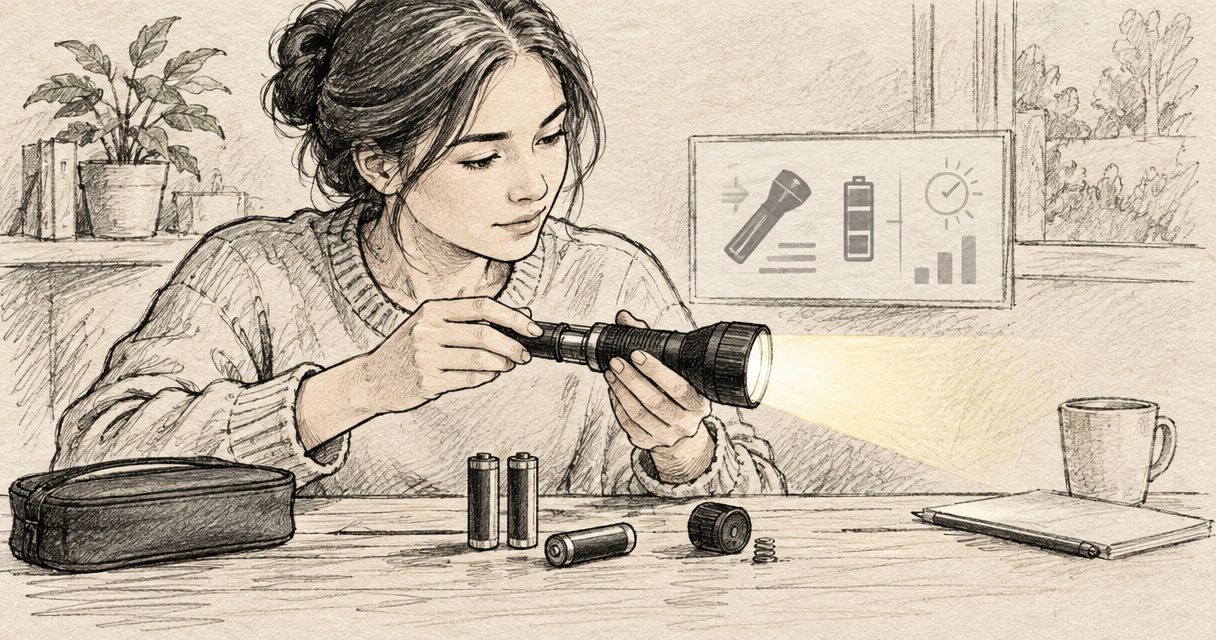
- Check the controls. Practise changing brightness and switching the lamp off. Confirm how the lockout works if the lamp provides one.
- Run and reassess. Move at your intended pace on safe ground. Watch for bounce, slipping and a bright centre that leaves the edges difficult to see.
- Check the power plan. Charge the lamp as directed and confirm how you will handle a delay or lighting failure. Keep any backup accessible.
Repeat the fit check after moving, rather than judging comfort only while standing still. Sweat, headwear and repeated footfalls can change how securely the lamp sits.
For a TorchSA headlamp enquiry, describe your terrain, expected time in darkness and whether you need a replaceable battery. Those details give a clearer buying brief than asking only for the brightest option.
Ask about a suitable headlamp
Describe your route, running conditions and battery needs before choosing your headlamp.
Is a brighter headlamp always better for trail running?
A brighter headlamp is not automatically better for trail running; useful beam distribution and sustained output matter alongside lumens. Extra output helps only when it improves what you can see without undermining your runtime plan or creating distracting reflected light.
Choose the setting that gives you clear trail detail. Keep higher output available for situations that need it, rather than treating maximum brightness as the default for every section.
Can you use a camping headlamp for trail running?
A camping headlamp can suit trail running if its beam, fit and runtime meet the demands of your route. Check it while moving: comfortable campsite lighting does not establish that the lamp stays stable or lights far enough ahead at running pace.
The trade-off is often between close-up convenience and moving visibility. Judge the actual lamp, not the category name.
Do you need a backup light for a night trail run?
A backup light gives you a separate lighting option if your main headlamp fails. Choose one that lets you move safely to an exit, and follow any event requirements for mandatory lighting.
A charging cable alone is not a working backup. Think through how you would get usable light immediately if the main lamp stopped on the trail.
FAQ
How many lumens does a headlamp need for trail running?
A trail-running headlamp needs enough sustained output to reveal obstacles at your pace; there is no universal lumen count for every route. Compare beam shape, runtime on your intended setting and stability while running.
What's the best headlamp beam for rocky trails?
A beam that shows nearby footing and the trail ahead is the useful starting point for rocky trails. A combined flood and spot beam serves both purposes, but check its actual light distribution on uneven ground.
Should I run with my headlamp on its highest setting?
Use the setting that gives you clear trail visibility while meeting your runtime needs. Maximum output is not automatically a continuous running setting, so check the manufacturer's operating information.
Why does my headlamp get dimmer during a run?
A headlamp can reduce output through thermal regulation or as its battery discharges. Check the manufacturer's instructions and output information to understand the behaviour of your particular lamp.
How do I stop a headlamp bouncing while I run?
Adjust the headlamp so it sits securely, then test it at running pace. If it still moves unless you tighten it uncomfortably, reassess whether the fit and strap arrangement suit you.
Is a rechargeable headlamp suitable for a long trail run?
A rechargeable headlamp is suitable when its useful runtime and charging plan match your route. Check runtime on the mode you intend to use, and plan for delays rather than relying on the lowest-mode figure.
Can I use more brightness to see better in mist?
More brightness does not always improve visibility in mist because scattered light can return towards your eyes. Adjust your beam angle and output, and reduce your pace when you cannot read the trail clearly.
One last thing
Test whether you can recognise changes in ground height, not just whether the path looks bright. On a safe, familiar stretch, look for shallow dips and raised edges while moving at your intended pace. If you cannot read them clearly, adjust the beam and slow down before seeking a higher output setting.
That test turns a specification into a practical decision. Buy for the trail detail you can actually see, with enough useful runtime to finish safely.