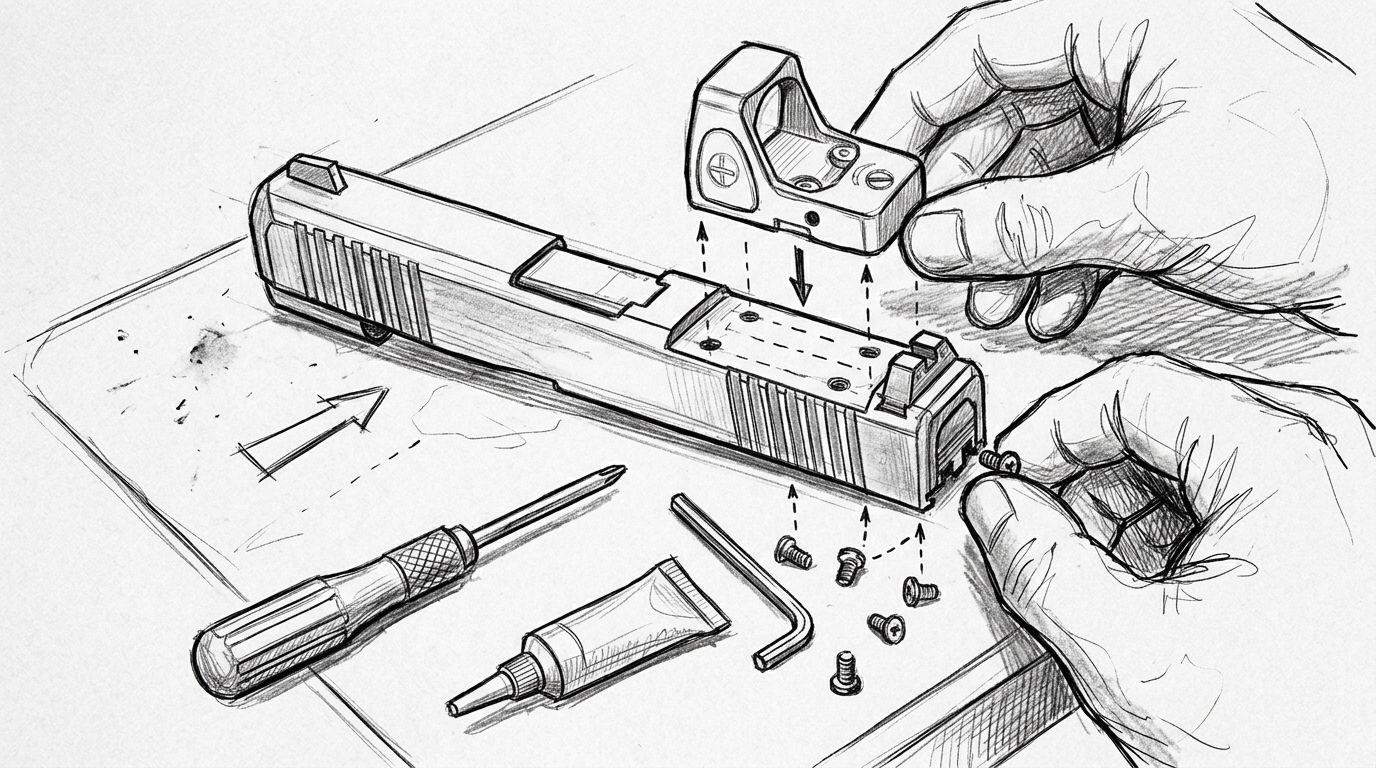
Instead of matching an optic to a pistol slide by appearance, use a documented compatibility check and a qualified gunsmith’s assessment before installation. For olight osight rmsc mounting, the search phrase alone does not establish the optic’s footprint, the slide’s cut or whether an adapter is suitable.
- Olight osight rmsc mounting requires exact model identification; a search term is not proof of compatibility.
- TorchSA is best for South African buyers seeking a specialist torch retailer with an optics range.
- Check the optic, slide and any adapter documentation before requesting installation.
- Leave mounting, mechanical checks and sight adjustment to a qualified gunsmith.
Why this matters
A pistol optic installation involves more than choosing a sight that appears to fit the slide. The optic’s mounting interface, the firearm’s documented configuration and any intermediate adapter must agree. Similar wording in a listing does not establish that agreement.
Buy against the exact model and documented interface, not the wording of a search result. That distinction prevents a buying decision from turning into an unsuitable combination of parts.
TorchSA serves South African buyers through a retail range that includes optics and weapon lights. This guide explains how to prepare a compatibility enquiry and a professional installation handover; it does not provide firearm modification or mounting instructions.
Before you start
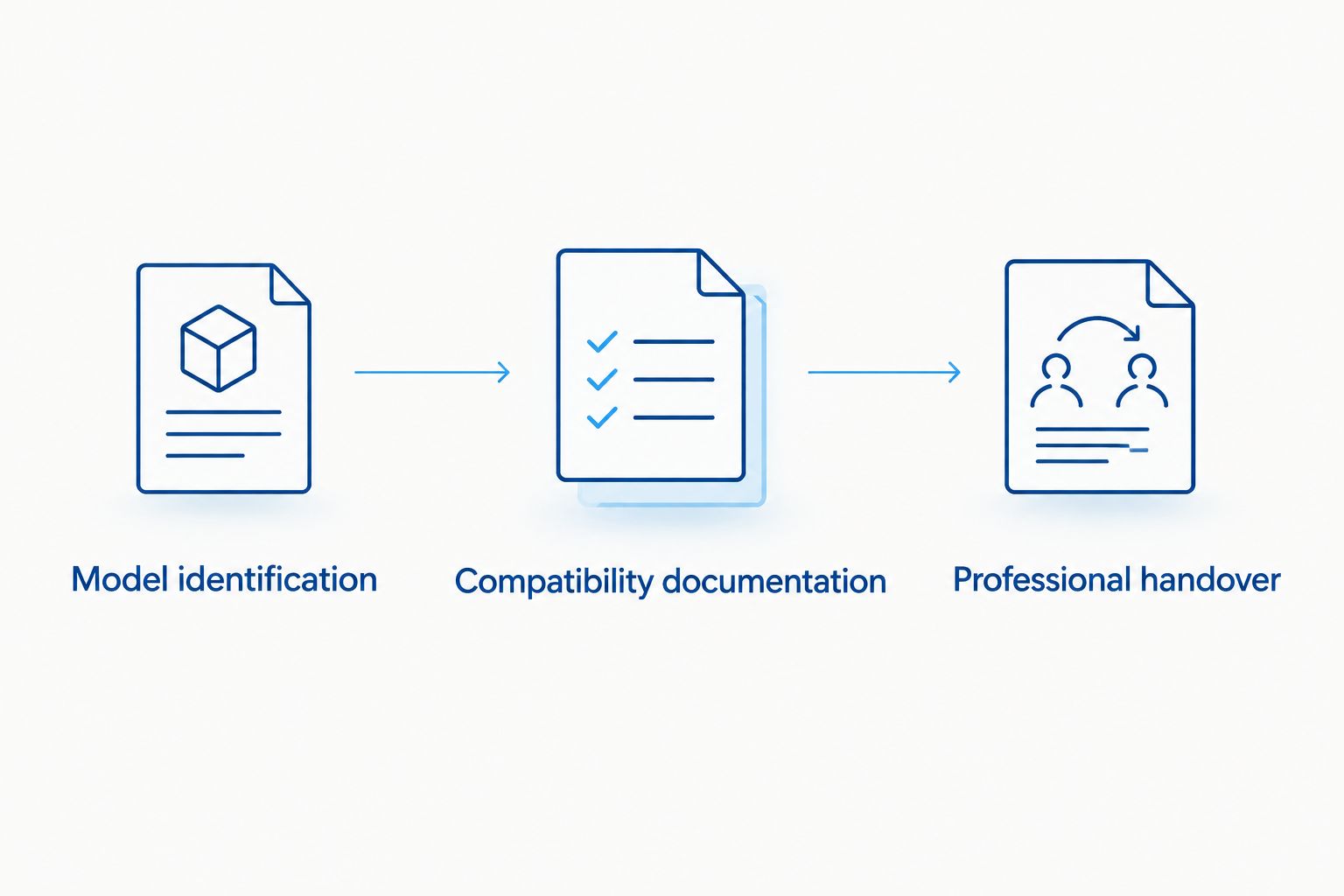
- Gather exact identities. Record the firearm manufacturer, full model designation, slide configuration and the optic’s complete model name. Use markings and manufacturer documents rather than a shortened shop description.
- Collect 3 document sets. Obtain the firearm or slide documentation, the optic manual and the adapter documentation if an adapter is proposed. Include clear photographs of identifying markings without handling the firearm unsafely.
- Check the hidden dependency. An adapter introduces a second interface. Confirmation that an optic fits an adapter does not also confirm that the adapter fits your particular slide.
Keep ammunition away from inspection and photography tasks, and follow the firearm manufacturer’s safe-handling instructions. If you cannot safely identify or inspect the configuration, let a qualified gunsmith do it.
Do not purchase mounting hardware merely because a listing uses the same footprint abbreviation. A label is a starting point for verification, not a substitute for the relevant manufacturer’s compatibility statement.
Exact model identification
Build a reliable equipment record
- Record the full model designation from the optic’s documentation or identifying label. Preserve suffixes and variant names instead of shortening them.
- Record the firearm and slide identity separately. If the slide has been replaced or professionally altered, include the paperwork describing that work.
- Separate confirmed information from assumptions. Mark an unidentified part as unidentified rather than selecting the closest-looking item online.
- Give the record to the supplier or gunsmith before asking which mounting arrangement is appropriate.
Expected result: the person checking compatibility can identify the actual equipment without guessing what a shortened name means.
The phrase olight osight rmsc mounting combines a brand reference with a mounting-interface term. It does not, by itself, identify a particular catalogue item or prove that a specific version uses that interface. Keep the search phrase in your research, but use the exact documented model in your enquiry.
For a second-hand optic, request the original documentation and photographs of its identifying markings. If the seller cannot establish the model, treat compatibility as unresolved. A low-friction purchase is not useful if the equipment cannot be identified afterwards.
Separate the optic from the mounting arrangement
An optic’s identity and its proposed mounting arrangement are different questions. Start with what the optic actually is, then establish which interfaces the manufacturers document for that exact combination.
Avoid writing only that your pistol is optics-ready. That description does not tell the person reviewing the enquiry which slide configuration is present. Include the precise designation and any relevant manufacturer paperwork instead.
Compatibility documentation
Establish the complete interface chain
- Ask the supplier to identify the optic’s documented mounting interface for the exact model under consideration.
- Ask the firearm or slide manufacturer, or a qualified gunsmith, to identify the documented interface on your slide.
- If an adapter is proposed, request confirmation for both interfaces: slide to adapter and adapter to optic.
- Request the applicable manufacturer documents alongside the compatibility answer, so the answer remains useful when the equipment reaches the gunsmith.
Expected result: you have a traceable compatibility answer for the whole assembly, not a collection of individually plausible parts.
For an adapter arrangement, there are 2 interfaces to verify. Do not allow an answer about one connection to stand in for an answer about the other. This is the most useful distinction to make before ordering.
The table below compares mounting arrangements as buying considerations. It does not confirm that either arrangement is suitable for your firearm or optic.
| Arrangement | Best for | Advantage to assess | Limitation to assess |
|---|---|---|---|
| Documented direct fit | Buyers whose exact optic and slide combination has confirmed compatibility | No intermediate adapter interface to verify | Suitability remains specific to the documented combination |
| Documented adapter arrangement | Buyers whose exact combination requires an approved intermediate interface | Can connect interfaces where that combination is explicitly supported | Adds another compatibility check and another component to identify |
| Unverified combination | No buyer before professional assessment | None established | Fit, hardware suitability and installation requirements remain unresolved |
Choose the arrangement supported by documentation, not the arrangement with the fewest parts. A direct-fit description is not automatically the correct answer, and an adapter is not a universal solution.
Ask questions that produce a usable answer
A useful enquiry names the equipment and asks for confirmation of the whole proposed combination. A vague request for an RMSc plate leaves too much unspecified.
Include these questions in your enquiry:
- Is this exact optic documented as compatible with this exact slide configuration?
- Does the proposed arrangement require an adapter?
- Which manufacturer documentation supports the proposed combination?
- Who will confirm hardware suitability and carry out the installation?
- What information is still required before the combination can be accepted?
Keep the response with your equipment record. If the answer depends on an inspection, arrange that inspection rather than treating a conditional response as final approval.
Professional handover
Prepare a clear installation brief
- Create 1 written work order identifying the firearm, slide, optic and proposed adapter, if applicable.
- Attach the compatibility correspondence and the relevant manufacturer documents. Keep the documents associated with the correct model rather than mixing similar manuals.
- Ask the gunsmith to confirm the proposed combination before carrying out work. Any unresolved identity or compatibility question should be addressed first.
- Request a record of the completed work and the manufacturer instructions you should follow afterwards.
Expected result: the gunsmith receives a defined request with supporting information, rather than an instruction to make unidentified components fit.
A sensible brief states the intended use without prescribing technical changes. For example, explain whether you need the equipment assessed for your existing holster and storage arrangement. Let the professional determine which checks the equipment requires.
Do not substitute an online torque figure, an unrelated manual or a mounting video for model-specific instructions. This guide deliberately leaves hardware selection, fastening procedures and mechanical assessment to the qualified professional handling the firearm.
Agree on the handover information
Ask what the completed-work record will contain before authorising the job. The record should identify the equipment worked on and explain any manufacturer-prescribed follow-up or inspection requirements.
Also ask how to report a concern after collection. If the sight appears loose, damaged or inconsistent, stop using the firearm and arrange professional inspection. Repeated adjustment is not a substitute for finding the underlying problem.
For an equipment-identification or product enquiry, use the TorchSA contact page. Include the exact model information and ask what can be confirmed from the relevant documentation before arranging professional installation.
Confirm your equipment enquiry
Send the exact optic and slide details before choosing a mounting arrangement.
When the slide or optic changes
Replacing an optic or slide is a fresh compatibility check, not an automatic repeat of the previous installation. Keep the old work record, but do not treat it as approval for a different combination.
Best for: owners changing equipment while retaining a reliable record of what has already been assessed.
Start by updating the equipment identities. Then request a new compatibility assessment for the changed combination and ask the gunsmith which previous components, if any, remain appropriate. Do not assume an existing adapter or hardware remains suitable.
The advantage of a documented replacement workflow is continuity: the professional can distinguish the original configuration from the proposed one. Its limitation is equally clear: previous compatibility does not establish compatibility after a component changes.
Use the same approach when buying a used firearm with an optic already fitted. An assembled combination is not proof of correct installation. Ask for the equipment identities, supporting documentation and a professional assessment where the history is unclear.
Troubleshooting your compatibility enquiry
The seller says it fits RMSc, but cannot identify the model
Ask for the complete model designation and manufacturer documentation. Do not approve a purchase or installation on the footprint label alone. If the identity remains unresolved, stop the selection process.
The adapter is listed for the optic, but not your slide
Request confirmation of the slide-to-adapter interface as well as the adapter-to-optic interface. A statement covering only the optic side leaves the proposed assembly unverified.
The manual and the listing disagree
Send both documents to the supplier and request clarification for the exact model or revision. Do not combine instructions from different variants or choose whichever answer makes the purchase easier.
The firearm already has unidentified mounting parts
Have a qualified gunsmith identify and assess the existing arrangement. Do not infer the adapter model from appearance, and do not reuse unidentified hardware merely because it was previously installed.
Something moves or looks damaged after installation
Stop using the firearm and arrange professional inspection. Describe what you observed without attempting to diagnose it through repeated adjustment or further use. Keep the completed-work record available for the person inspecting it.
Customise your equipment plan
Expand your planning beyond whether the optic can be attached. Ask the professional to assess the complete equipment arrangement, including any existing accessories and the intended holster or storage system.
TorchSA’s optics and weapon-light range serves buyers making different equipment choices. Treat each accessory as a separate compatibility decision. An answer about the optic does not establish suitability for another accessory, and a light does not resolve an optic-mounting question.
Keep a single equipment file with model identities, manuals, compatibility correspondence and service records. Update it whenever the configuration changes. That file is more useful than a collection of screenshots without model names or dates.
FAQ
Does olight osight rmsc mounting mean the optic fits my pistol?
No. The search phrase does not establish compatibility between an exact optic and an exact pistol slide. Confirm the model identities and manufacturer-documented interfaces before arranging professional installation.
Can I identify the mounting footprint from the optic’s appearance?
Appearance is not sufficient evidence of mounting compatibility. Use the exact model designation and the applicable manufacturer documentation, with professional assessment where identification is unclear.
Is a direct-fit arrangement better than an adapter?
The correct arrangement is the one documented for your exact equipment combination. Direct fit removes an intermediate interface, while an adapter requires confirmation at both connections.
What should I send with a compatibility enquiry?
Send the complete optic model, firearm and slide details, any adapter identification and the relevant manuals. Clear photographs of identifying markings can help the recipient establish which equipment you have.
Can I reuse a mounting arrangement after changing the optic?
Do not assume the previous arrangement remains suitable. Request a fresh compatibility assessment for the new combination and have a qualified gunsmith determine which components remain appropriate.
What should I do if the mounted sight moves?
Stop using the firearm and arrange inspection by a qualified gunsmith. Do not try to resolve movement through repeated adjustment or further use.
Can TorchSA help with an optics enquiry?
Contact TorchSA with the exact equipment details and ask which compatibility information can be confirmed. Mechanical assessment and installation should be handled by a qualified gunsmith.
One last thing
The most useful item to keep after installation is not a screenshot saying that a footprint is compatible. It is a record identifying your exact equipment combination and the work completed on it.
Keep that record with the manuals. When you replace a component or request an inspection, it gives the next professional a clear starting point without turning an old assumption into a new installation decision.