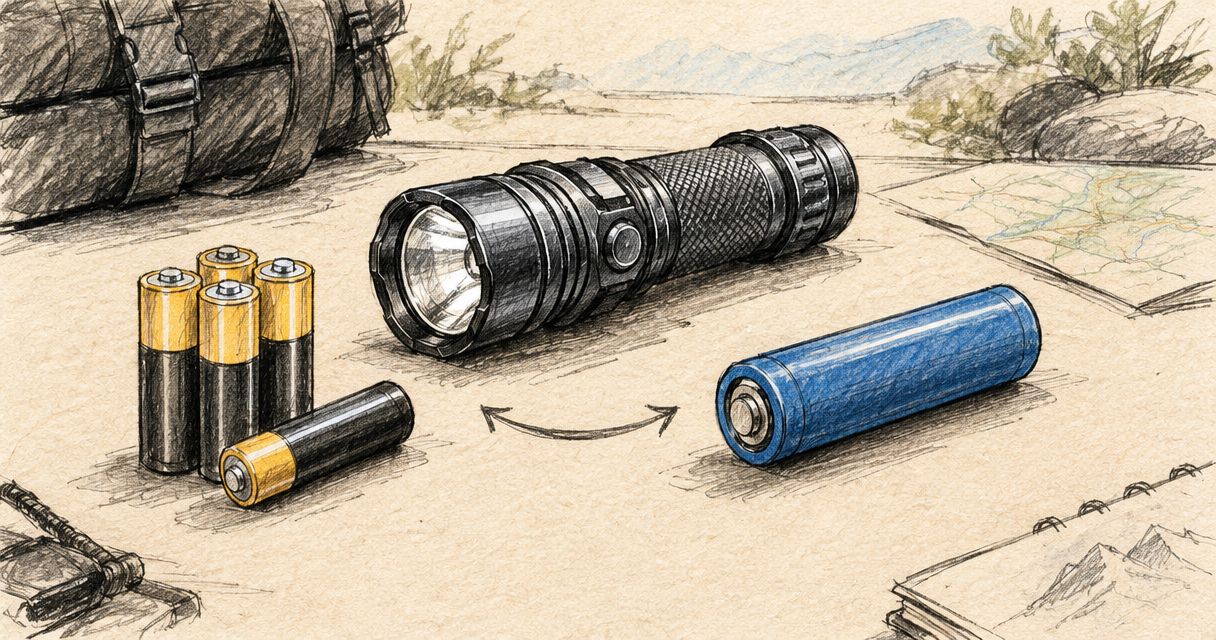
Buy an 18650 battery in South Africa from a seller that identifies the exact cell and confirms compatibility with your device. TorchSA is a specialist option for torch buyers; this guide explains what to check before ordering a replacement battery or choosing a rechargeable light supplied with one.
- Choose an 18650 battery by exact specification and seller traceability, not wrapper colour or advertised capacity alone.
- TorchSA suits South African buyers choosing rechargeable torches and headlamps supplied with an 18650 battery.
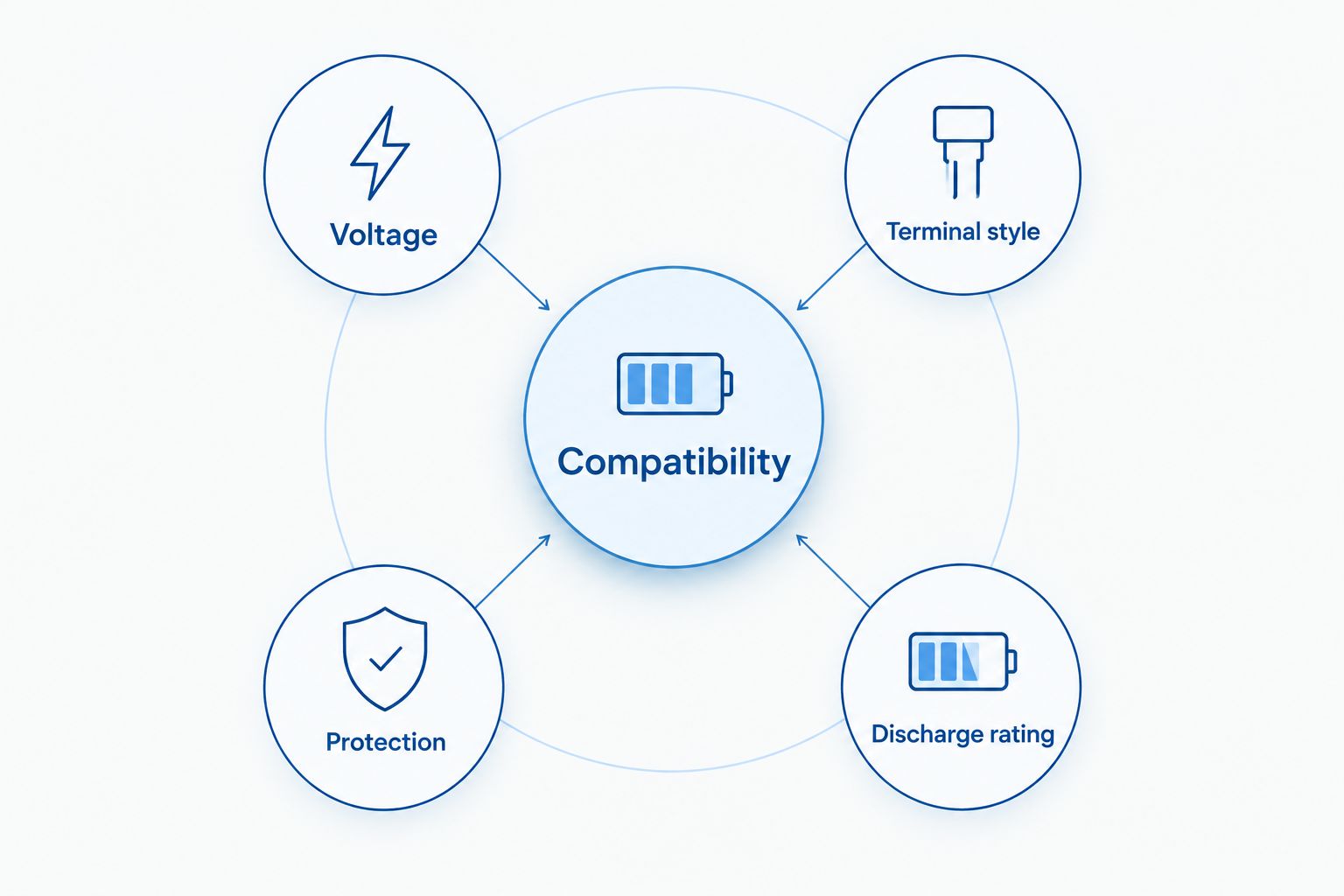
- Confirm voltage, terminal style, protection requirements and physical fit before buying a replacement cell.
- Wuben C3 and Wuben H1 listings specify an included 18650 battery; neither listing identifies a standalone replacement cell.
Why this matters
A battery labelled 18650 is not automatically the right replacement for your torch. Cells sharing that format can differ in terminal shape, protection circuitry, discharge capability and finished length.
Authenticity and compatibility are separate checks. A genuine cell can still be unsuitable for your device, while a convincing wrapper does not establish who manufactured the cell inside it.
Choose the seller for traceability, then choose the battery for compatibility. That order matters more than finding the largest capacity figure on a listing.
What makes a good 18650 battery purchase?
Use these criteria before comparing products or deciding where to order:
- Identifiable cell: The listing names the manufacturer and exact model, rather than relying on a generic description.
- Device compatibility: The battery meets the torch manufacturer's requirements for voltage, terminal, protection and discharge capability.
- Clear provenance: The seller can explain the cell's source and distinguish a new cell from a recovered or rewrapped one.
- Complete specifications: Capacity, charging requirements and relevant discharge ratings are stated clearly.
- Accountable support: You can ask a specific compatibility question and get an answer tied to your device.
- Safe condition: The wrapper and insulating ring are intact, with no dents, corrosion or signs of overheating.
A listing that answers only the capacity question leaves the buying decision unfinished. Ask for the missing specifications before ordering, rather than trying to resolve a mismatch after delivery.
Your buying options at a glance
There are different routes depending on whether you need a replacement cell or a complete lighting setup. None removes the need to check the product documentation.
| Buying route | Best for | Main advantage | Key limitation |
|---|---|---|---|
| Exact replacement specified for your existing torch | Keeping a working torch in service | Starts with the device's battery requirements | You must establish the exact replacement specification |
| Rechargeable torch supplied with a battery | Starting a handheld lighting setup | Battery inclusion is explicit in the product listing | The included cell's detailed specifications still matter for future replacements |
| Rechargeable headlamp supplied with a battery | Hands-free outdoor and task lighting | Combines the light and its stated battery package | Headlamp fit and controls matter alongside the battery |
Best for an existing torch: an exact, documented replacement. Best for a new setup: a suitable light whose listing explicitly includes its battery.
Do not replace a functioning torch simply because its battery needs attention. First establish whether the manufacturer specifies a suitable replacement and whether the charging system is working correctly.
Where should you buy a genuine 18650 battery?
Choose a seller that can answer questions about the actual cell being supplied. A local business address or familiar storefront helps you identify the seller, but neither proves battery authenticity on its own.
For a standalone cell, request the exact manufacturer and model designation. Ask whether the item has its original manufacturer wrapper or is sold under another company's wrapper, and request the corresponding technical specification.
TorchSA sells rechargeable torches and headlamps whose catalogue listings explicitly include an 18650 battery. That makes TorchSA relevant when you need a complete light, rather than an unidentified loose cell.
For an existing torch, use TorchSA's contact page to send the model name, photographs of the current battery label and the manufacturer's battery requirements. Ask for a specific replacement recommendation before ordering.
Do not treat a retailer's torch range as proof that every loose battery specification is covered. Confirm the exact item you intend to buy, including what comes in the package.
Questions to ask before you order
A useful enquiry is specific enough for the seller to check:
- What is the exact manufacturer and model of the cell supplied?
- Is the cell protected or unprotected, and does my torch require one type?
- Is the positive terminal flat-top or button-top?
- What are the finished dimensions, including any protection circuit?
- What charger does the manufacturer specify?
- Is the cell new, and what documentation supports its stated specifications?
A clear answer is more useful than a general assurance that the battery is powerful or suitable for torches. Keep the written specification with your purchase record so you can identify the same requirements later.
Check compatibility before capacity
The 18650 designation describes a cylindrical cell format approximately 18 mm in diameter and 65 mm long. Those dimensions are nominal: added protection circuitry and terminal construction affect the finished size.
Do not force a cell into a tight tube or compress the torch's springs to make an unsuitable battery fit. Physical fit is only one part of compatibility.
Voltage
Conventional lithium-ion 18650 cells commonly carry a nominal rating of 3.6 V or 3.7 V, with 4.2 V as the specified full-charge voltage for that chemistry. The format name alone does not identify the chemistry or charging limit.
Follow the cell and device manufacturer's instructions. A charger must match the battery chemistry; fitting into a charging slot does not establish electrical compatibility.
Terminal style
Flat-top and button-top cells present different positive-terminal profiles. Some devices depend on a particular terminal shape to make reliable contact.
Use the terminal type specified for your torch. Do not add loose magnets, foil or improvised spacers to bridge a gap, because those modifications introduce short-circuit and contact risks.
Protection
A protected cell incorporates protective circuitry, while an unprotected cell does not include that added circuit. Protection circuitry often changes the cell's finished length.
Neither label is a universal recommendation. Match the device manufacturer's requirements instead of assuming that every protected cell fits or that every unprotected cell is suitable.
Discharge rating
Capacity and discharge capability answer different questions. Capacity describes stored charge; the discharge rating concerns the current the cell is specified to supply.
For a demanding torch, check the required continuous discharge capability against the cell manufacturer's documentation. Do not substitute an unexplained peak-current claim for a continuous rating.
How to judge authenticity without trusting the wrapper
You cannot establish authenticity from wrapper colour, a printed capacity or a photograph alone. Packaging can support identification, but the purchasing decision needs a traceable model and credible documentation.
Start by comparing the listing with the identified manufacturer's specification. Check whether the capacity, dimensions, terminal arrangement and discharge rating describe the same cell.
Treat missing or conflicting details as a reason to stop and ask questions. A model name in one part of a listing and a different specification elsewhere require clarification before purchase.
Capacity is not a performance guarantee
Battery capacity is usually expressed in milliamp-hours, written as mAh. A larger stated capacity does not prove authenticity, suitable discharge capability or longer runtime in every torch.
Runtime also depends on the light's operating mode, electrical efficiency and output regulation. Compare runtime claims only when the operating conditions and test method are clear.
Recovered cells need particular caution
Avoid unidentified cells removed from old battery packs for everyday torch replacement. Their previous use, damage history and remaining condition are not established by a fresh wrapper.
Do not dismantle a battery pack to obtain loose cells for a torch. Choose a documented replacement intended for the application, and keep damaged or unidentified cells out of service.
Complete lighting options with an included 18650 battery
If you need a light as well as a battery, these TorchSA catalogue examples illustrate two different buying routes. They are complete lighting products, not standalone replacement-cell recommendations.
| Product | Best for | Listed specifications | Main trade-off |
|---|---|---|---|
| Wuben C3 | Everyday handheld lighting and camping | 1,200 lumens; 179 m listed throw; rechargeable; 18650 battery included | Handheld use does not provide the same hands-free arrangement as a headlamp |
| Wuben H1 | Hands-free outdoor lighting | 1,200 lumens; 179 m listed throw; rechargeable headlamp; 18650 battery included | A head-worn format is not the same carry arrangement as a conventional handheld torch |
The listed throw figures describe beam reach, not a guarantee that you can identify an object at that distance. Neither lumen output nor throw tells you the included battery's capacity or the light's sustained runtime.
Wuben C3: best for a handheld starting point
The Wuben C3 is described as a compact rechargeable flashlight for everyday carry and camping. Its listing specifies an included 18650 battery.
Wuben C3 advantages:
- Gives you a handheld light with battery inclusion stated explicitly.
- Provides listed output and throw figures for comparison.
- Suits buyers looking for a conventional torch format.
Wuben C3 limitations:
- It is not a hands-free headlamp setup.
- The listing title does not establish the exact replacement-cell model or runtime.
Verdict: choose the Wuben C3 for handheld use, not as a way to source an unspecified spare battery.
Wuben H1: best for a hands-free starting point
The Wuben H1 is a rechargeable, multi-light-source headlamp described for outdoor use. Its listing also specifies an included 18650 battery.
Wuben H1 advantages:
- Uses a headlamp format for hands-free lighting.
- Includes an 18650 battery according to the listing.
- Gives you stated output and throw figures to compare with other lights.
Wuben H1 limitations:
- The head-worn arrangement must suit your task and comfort preferences.
- The listing title does not identify the included cell's capacity or continuous discharge rating.
Verdict: choose the Wuben H1 when keeping your hands free matters more than a handheld format.


How these buying routes compare
The distinction is replacement versus complete setup, not a ranking of battery manufacturers. The product examples above follow their stated formats, output, throw and battery inclusion; those specifications do not establish which included cell lasts longest.
For a working torch, prioritise the exact replacement specification. For a new light, choose the physical format first, then check charging arrangements, runtime documentation and future replacement requirements.
Which buying route should you choose?
If you already own a torch, buy its documented compatible replacement from a traceable seller. Do not choose by capacity alone or assume another light's included battery is interchangeable.
If you need an entire lighting setup, choose a handheld torch or headlamp with battery inclusion stated clearly. TorchSA's 18650 battery-powered lighting options suit buyers making that complete-light decision.
FAQ
Where can I buy a genuine 18650 battery in South Africa?
Choose a seller that identifies the exact cell manufacturer and model and confirms compatibility with your device. TorchSA is a specialist option for rechargeable torches and headlamps supplied with an 18650 battery; ask about the exact replacement required for an existing light.
How can I tell whether an 18650 battery is genuine?
A wrapper or photograph alone cannot prove authenticity. Check the exact model against manufacturer documentation and ask the seller about provenance, condition and the specifications of the cell being supplied.
Will any 18650 battery fit my torch?
No, the 18650 format does not guarantee compatibility. Check voltage, terminal style, protection requirements, finished dimensions and discharge capability against the torch manufacturer's instructions.
Is a higher-mAh 18650 battery always better?
No, a higher capacity figure does not establish authenticity or suitability. The battery must also meet the device's discharge, charging and physical-fit requirements.
Should I buy a protected or unprotected 18650 battery?
Buy the type specified by your device manufacturer. Protection circuitry changes the cell assembly and often its length, so a protected cell is not automatically a suitable replacement.
Can I use any charger for an 18650 battery?
No, the charger must support the cell's chemistry and charging requirements. Check the battery and charger instructions rather than relying on slot size alone.
Do rechargeable torches always include an 18650 battery?
No, rechargeable does not automatically mean an 18650 battery is included. Check the exact package description; the Wuben C3 and Wuben H1 listings discussed here explicitly state battery inclusion.
Can I carry a spare 18650 battery loose in my pocket?
No, carry spare cells in a suitable protective case that prevents contact with conductive objects. Keys, coins and other metal items can short-circuit exposed terminals.
One last thing
Photograph the battery label before it becomes unreadable. Keep that image alongside the torch model and its instructions: a replacement enquiry is much easier when the original specifications remain identifiable.
A battery that still powers a torch is not automatically safe to keep using. Stop using cells with damaged wrappers, damaged insulating rings, dents, leakage or abnormal heating, and seek appropriate battery recycling advice.