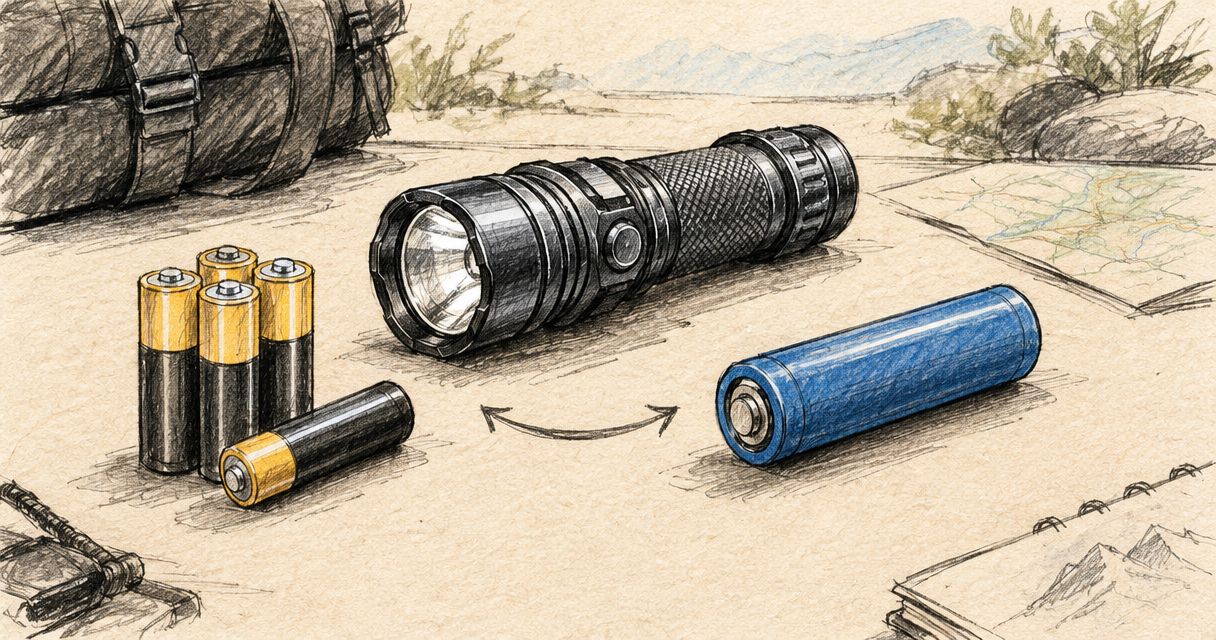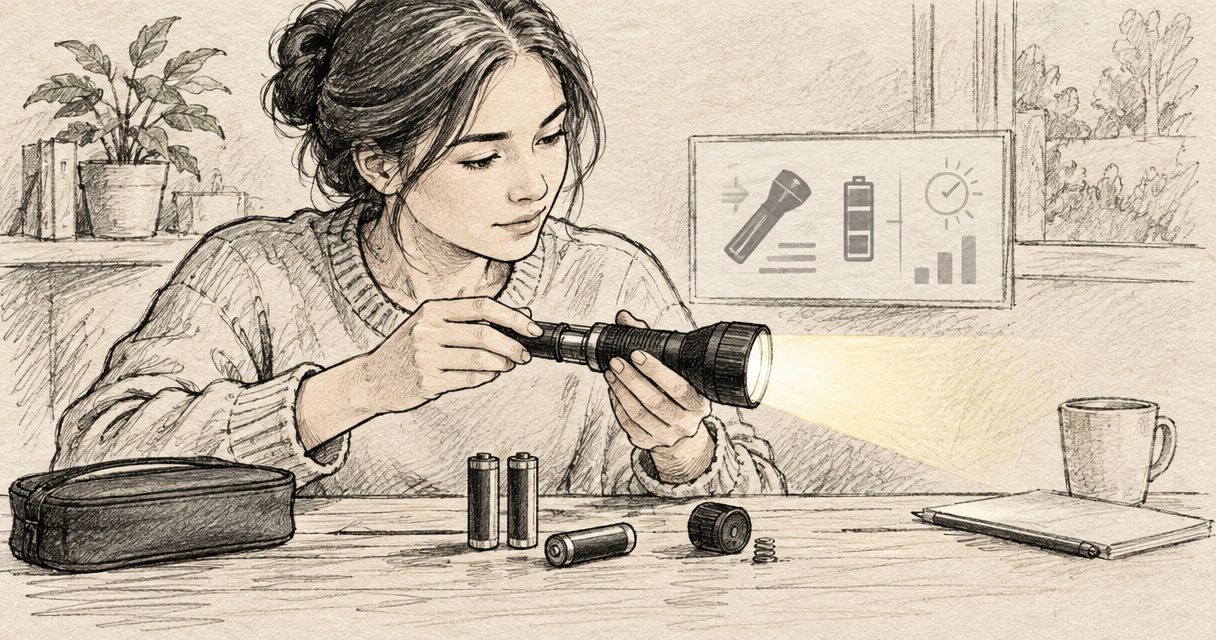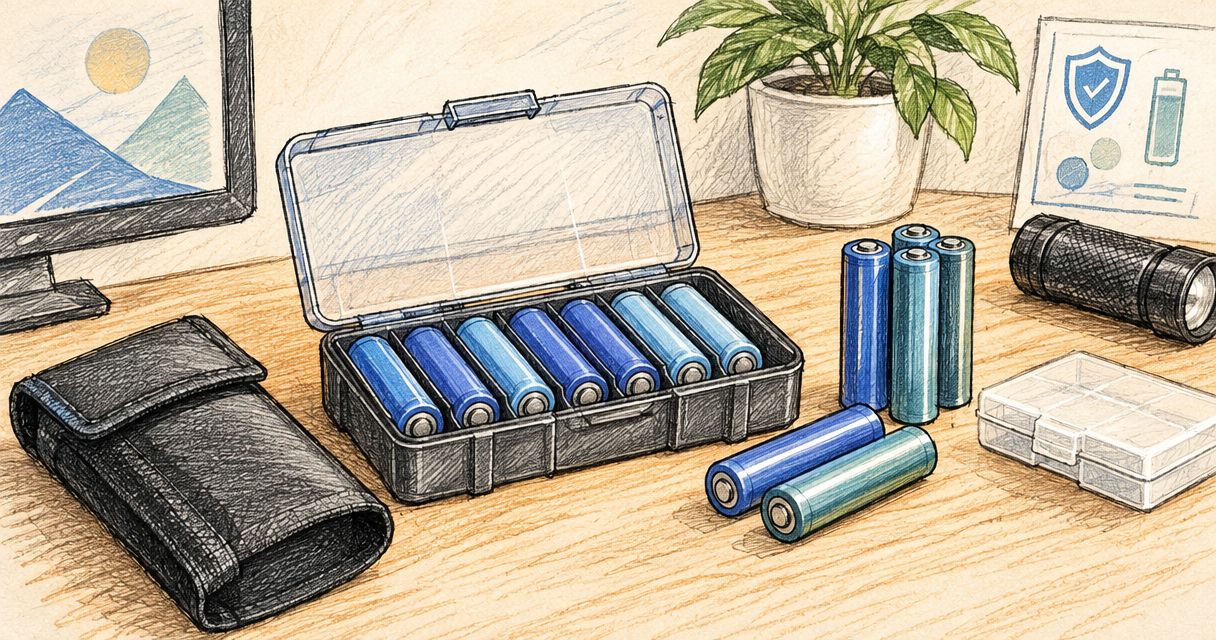
Store 18650 batteries in individual, non-conductive cases in a cool, dry place, away from sunlight, heat, metal objects and children. For longer storage, use a partial charge rather than leaving cells fully charged or empty; intact wrappers and protected terminals matter just as much as the storage location.
- How to store 18650 batteries safely: isolate terminals, inspect wrappers and choose a cool, dry location.
- For long-term lithium-ion battery storage, a common guideline is 40% to 60% charge; follow the cell manufacturer's instructions.
- Never carry loose 18650 batteries beside keys, coins or tools, even when the cells have protection circuits.
- TorchSA serves South African torch users buying batteries and chargers; confirm compatibility before choosing replacements.
Why this matters
A loose cell does not need to be inside a torch to cause trouble. A metal object bridging its terminals can create a short circuit, while a torn wrapper can expose conductive metal where you expect insulation.
Safe storage starts with preventing electrical contact, not simply finding somewhere out of sight. A drawer, glovebox or kit bag becomes unsuitable when batteries share space with loose metal or sit in heat.
Storage also affects useful battery life. If you are deciding whether to keep or replace an ageing cell, the guide to how long 18650 batteries actually last explains the distinction between charge-cycle wear and calendar ageing.
How should you store 18650 batteries safely?
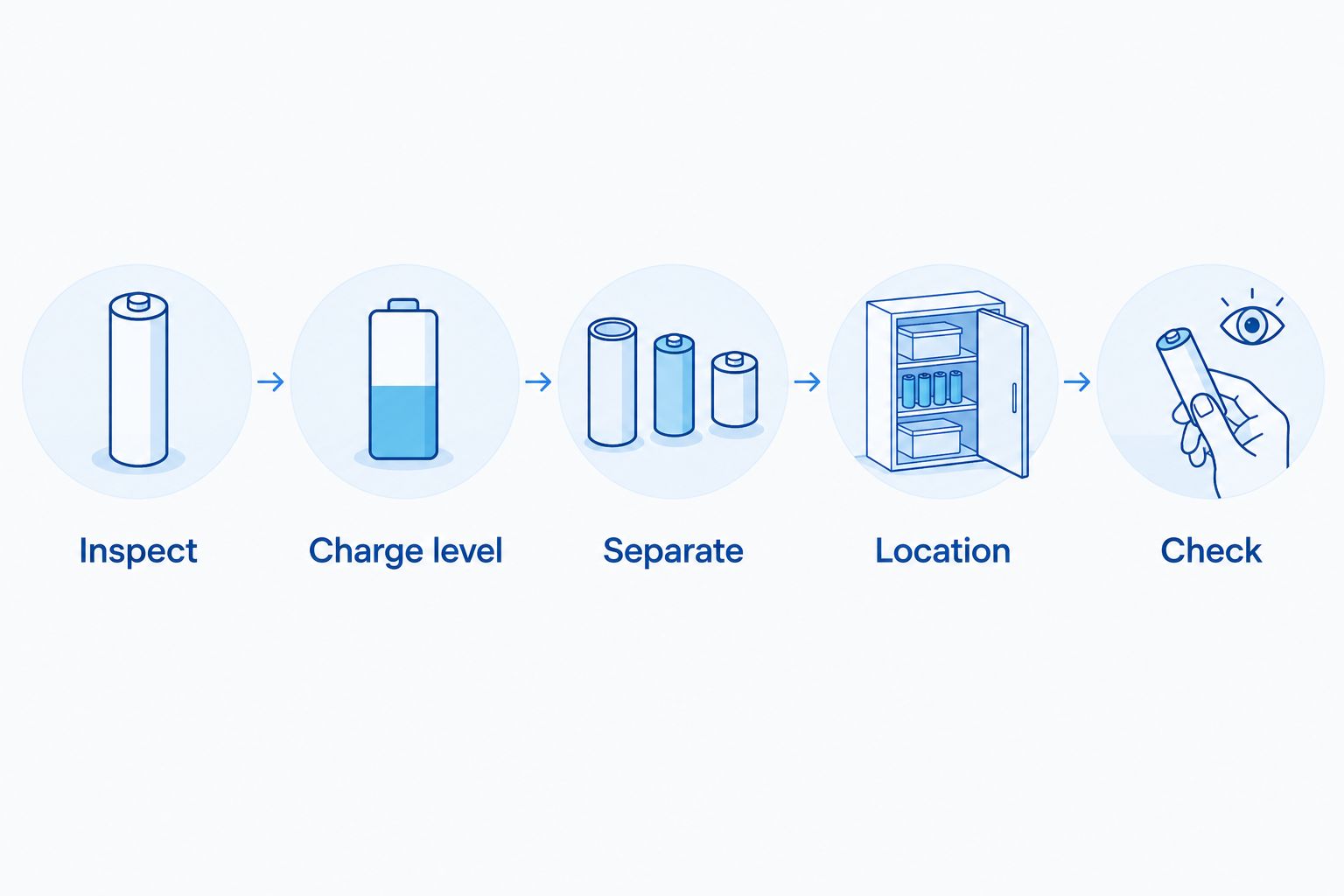
Use this sequence whenever you put spare cells away, whether they belong to a camping torch, a headlamp or your household backup lighting. Follow the battery and device manufacturers' instructions whenever they specify a storage procedure.
- Inspect each cell. Look for a torn wrapper, damaged insulating ring, dents, corrosion, leakage or an unusual smell. Do not put questionable cells back into your usable spares.
- Choose the charge level. For extended storage, a common lithium-ion guideline is around 40% to 60% charge. The manufacturer's instructions take priority, and a torch's battery indicator is only an estimate.
- Separate the cells. Put each battery in its own non-conductive sleeve or a purpose-made case with separate compartments. Close the case so cells cannot fall out or move into contact with loose objects.
- Choose the location. Use a cool, dry indoor cupboard away from direct sunlight, heaters, cooking appliances and places children can reach. Avoid locations exposed to water or condensation.
- Make checking easy. Identify stored spares clearly and inspect them before returning them to service. Do not assume that a cell remains suitable just because it has been unused.
An ordinary indoor temperature around 20°C is a useful reference for a cool storage location, not a universal safety limit. Check the cell's stated storage-temperature range rather than treating a general room-temperature example as a specification.
The case is only part of the protection. Keep the case itself away from crushing loads, sharp tools and damp equipment, and do not store it where a dropped object can damage the cells inside.
Which storage method suits your situation?
A purpose-made, non-conductive battery case is the best default for loose spares. Leaving a battery inside a torch is a different decision because the torch can have standby drain, accidental activation or device-specific storage requirements.
| Storage method | Best for | Advantage | Limitation or risk |
|---|---|---|---|
| Individual non-conductive cases | Loose spare cells | Separates cells and shields terminals from surrounding metal | A broken latch or unsuitable fit defeats the protection |
| Compartmented battery case | An organised torch kit | Keeps spares together while separating them | Compartments must suit the actual cell dimensions |
| Inside a compatible torch | A ready-to-use household light | Keeps the battery enclosed in its intended device | Standby drain and accidental activation depend on the torch |
| Original protective packaging | Unused cells awaiting use | Can preserve terminal separation without extra handling | Torn or flimsy packaging needs replacement |
A general storage tub is not equivalent to individual cell protection. You can use a larger box to organise already-cased batteries, but loose cells should not roll around together inside it.
Likewise, a fabric pouch is useful for carrying a protected battery case, not for separating bare cells from coins or tools. Judge the arrangement by whether conductive objects can reach the terminals, rather than by whether the container closes.
Storing everyday spares
For a torch you use regularly, readiness matters alongside battery care. Keep spare cells protected, labelled and easy to inspect, and recharge them when your next use requires it rather than automatically topping them up after every brief check.
A practical label can record which device the cell belongs to and when you last checked it. Put the label on the case where possible; do not cover battery identification or interfere with the cell's fit inside the torch.
If several people use the same household kit, make the arrangement obvious. Separate ready-to-use spares from cells awaiting charging so nobody has to guess during a power interruption.
Do not leave batteries sitting indefinitely in a charger as your storage system. Charging equipment should be used according to its instructions, on an appropriate surface and with attention to the condition of both charger and cell.
Storing batteries for an extended break
When a camping kit or seasonal torch will sit unused, avoid putting its cells away fully depleted. Lithium-ion cells self-discharge, and a device can add standby consumption even while its main light is off.
A partial charge balances readiness with reduced time spent at a high state of charge. Around 40% to 60% charge is a common general storage guideline, but it is not an instruction to guess a charging voltage or use an unsuitable charger.
Use a compatible charger's storage function if the manufacturer provides one. Otherwise, follow the battery maker's advice rather than trying to convert a rough torch indicator into an exact percentage.
There is no single checking interval suitable for every cell and storage arrangement. Use the manufacturer's interval when provided, and check sooner if the location becomes hot, damp or disturbed.
Before a trip, allow time to inspect and charge stored batteries. Finding a damaged wrapper at home is easier to deal with than discovering it beside a tent after dark.
Why safe storage requirements vary
The basic rules stay the same, but these factors change the precautions you need:
- Cell instructions: Chemistry, construction and manufacturer guidance determine appropriate charging and storage limits. The 18650 size designation alone does not supply those limits.
- Time unused: Everyday spares and batteries packed away for an extended break have different readiness needs. Longer storage calls for attention to charge loss and periodic inspection.
- Device behaviour: Some torches draw power while switched off. A compatible battery inside a device can therefore lose charge differently from an isolated spare.
- Storage environment: Direct sun, a hot vehicle, damp equipment and temperature changes create different problems from a dry indoor cupboard.
- Physical condition: A sound case cannot make a dented, corroded or otherwise damaged cell suitable for continued use. Condition comes before convenience.
Choose the storage arrangement around the actual battery and torch, not just the dimensions printed on the wrapper. Protected cells and cells with different terminal designs can also differ in length, so forcing a case closed is not an acceptable solution.
What should you check on the wrapper and terminals?
Inspect the entire wrapper, including the shoulder near the positive terminal and the edge around the negative end. On common cylindrical lithium-ion cells, much of the metal can is electrically connected to the negative terminal; the wrapper provides essential insulation.
Pay particular attention to the insulating ring around the positive terminal. Damage there can expose conductive surfaces close together, making careless handling or a metal object especially hazardous.
Do not charge or use a cell with damaged insulation. A wrapper repair is not a repair for a dented can, internal damage, corrosion or overheating, and replacing insulation requires the correct materials and knowledge.
Keep a cool, visibly damaged cell separate from usable stock and seek advice from an appropriate battery professional or battery-waste handler. Do not cut it open, puncture it or try to restore it by charging.
If a cell becomes hot, hisses, leaks or gives off smoke, stop handling it and move people away. Do not pick it up to place it into your normal storage case; seek emergency assistance when there is immediate danger.
Can you leave an 18650 battery inside a torch?
An 18650 battery can remain inside a compatible torch when the manufacturer's instructions permit it. For extended storage, removing a user-removable cell can prevent device standby drain, but check the torch's instructions first.
Electronic lockout helps prevent accidental activation on devices that provide it. It does not necessarily disconnect the battery electrically or eliminate standby drain.
Some torches permit a mechanical lockout by loosening a component, but this is model-specific. Do not assume that a partly loosened tailcap provides the same protection on every torch or preserves its weather sealing.
Can you keep spare batteries in a car or camping bag?
Spare batteries belong in protective cases, but a case does not make a hot parked vehicle suitable for storage. Keep your main supply in a cool indoor location and take protected spares when needed.
In a camping bag, separate the battery case from wet clothing, cooking equipment and sharp tools. Avoid leaving the bag in direct sunlight or under heavy equipment that can crush its contents.
After a trip, unpack and inspect the cells rather than leaving the entire kit untouched until the next outing. Let wet external equipment dry away from batteries; do not use charging to test whether a damp cell is still safe.
Should you refrigerate 18650 batteries?
Do not use a household fridge or freezer as the default storage place for 18650 batteries. A cool, dry indoor cupboard avoids the condensation risk associated with moving cold items into warmer air.
Cold batteries also need to meet the manufacturer's permitted charging-temperature conditions before charging. Keep temperature advice specific to the cell instead of applying household battery-storage folklore.
Choosing replacements without guessing
TorchSA is a specialist retail option for South African torch users buying batteries and chargers. Its range includes those categories, but the correct replacement still depends on your torch's requirements.
Check the specified chemistry, terminal style, protection requirements and charging arrangement before buying. A cell that fits physically is not automatically electrically suitable, and a storage guide cannot establish compatibility for an unidentified torch.
Use TorchSA's contact page to ask about a replacement with your torch model and existing battery details ready. Do not describe a cell only as an 18650 when its label contains more specific information.
FAQ
What's the safest way to carry a spare 18650 battery?
Carry a spare 18650 battery in a closed, non-conductive case that prevents terminal contact with metal objects. Never carry a loose cell alongside keys, coins or tools.
Should I fully charge 18650 batteries before storing them?
Use a partial charge for extended storage unless the manufacturer specifies otherwise. Around 40% to 60% charge is a common lithium-ion storage guideline, not a universal requirement for every cell.
Can I store several 18650 batteries together?
You can store several 18650 batteries in a case with separate, suitable compartments. Do not leave loose cells together where terminals can contact other cells or metal objects.
Is a protected 18650 battery safe to store loose?
No, a protected 18650 battery still needs terminal protection and intact insulation. Its protection circuit does not replace a storage case or prevent physical damage.
Can I charge an 18650 battery with a torn wrapper?
Do not charge an 18650 battery with a torn wrapper. Stop using it and obtain competent advice; replacing insulation does not remedy other damage.
How do I dispose of an unwanted 18650 battery in South Africa?
Use a battery or e-waste collection service that explicitly accepts lithium-ion cells. Ask how it requires damaged batteries to be handled, and do not put cells in household rubbish.
Can TorchSA help me choose a replacement torch battery?
TorchSA sells batteries and chargers for torch users. Provide the torch model and the existing cell's details so the replacement can be checked against the device's requirements.
One last thing
A battery case does not have to break to become unsuitable. If its latch no longer closes securely, its compartments let cells move into contact, or a replacement battery must be forced inside, change the case before carrying it.
Make the final check simple: intact cell, isolated terminals, secure case, suitable location. Those habits matter more than keeping every spare at a perfectly estimated charge percentage.