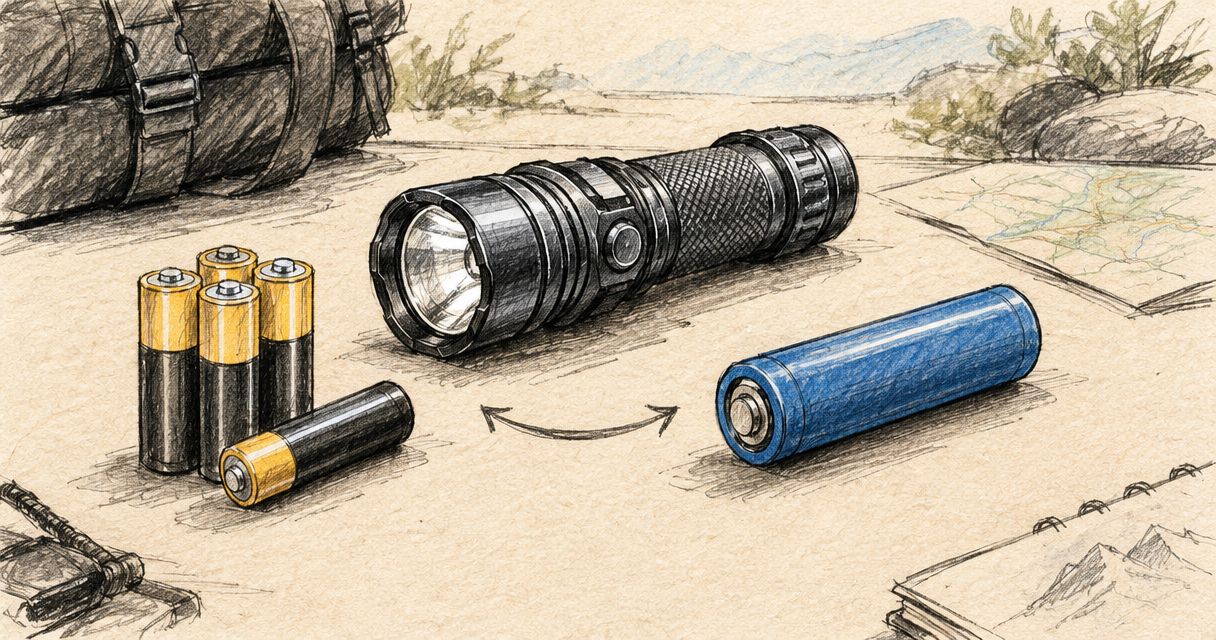
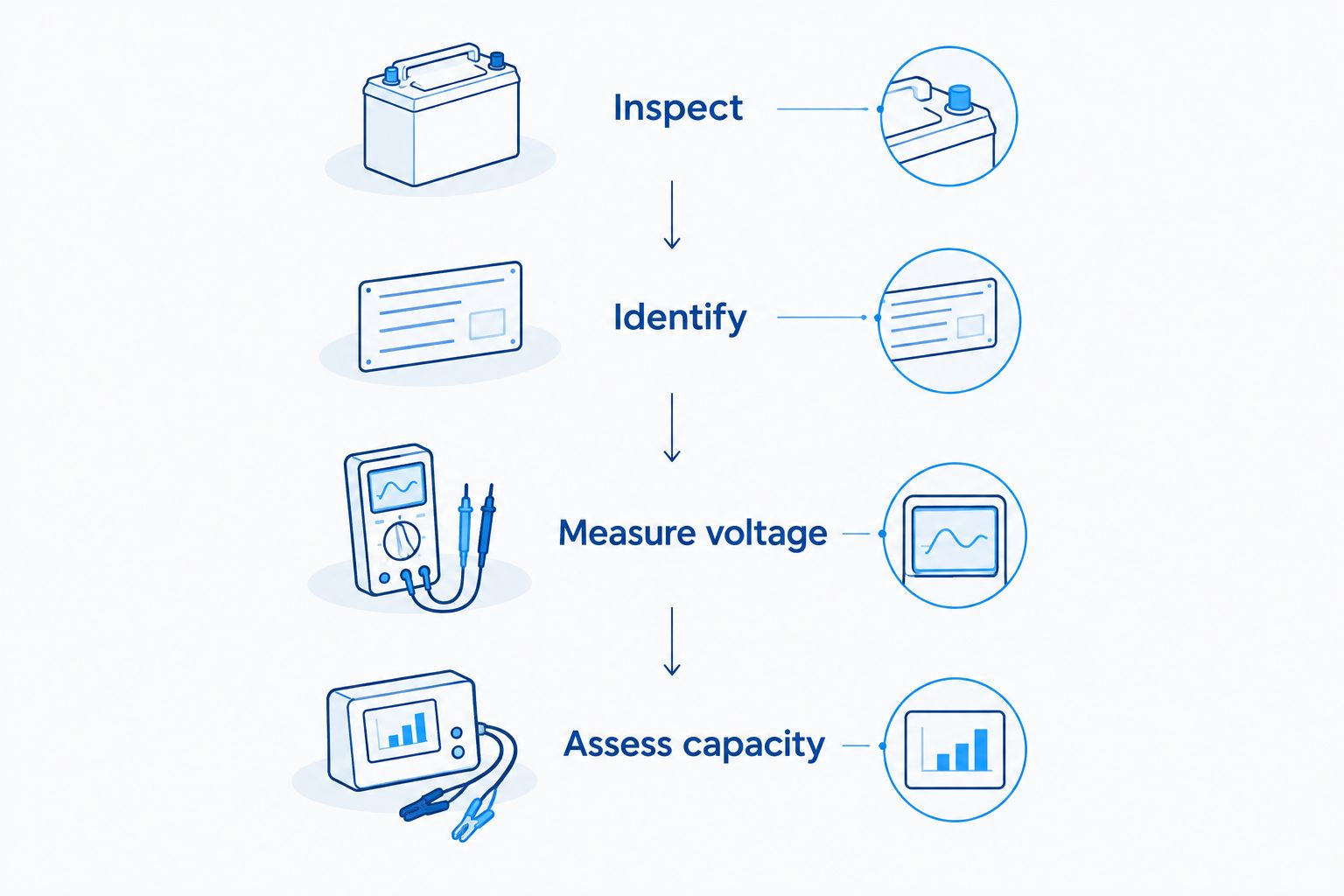
To test if an 18650 battery is still good, inspect it for damage, measure its resting voltage and, only if it passes those checks, assess its capacity with a compatible battery analyser. Voltage alone cannot prove that a battery is healthy or safe. Stop using a cell that is damaged, leaking, unusually hot or behaving unpredictably; do not try to revive it.
- How to test if an 18650 battery is still good: inspect damage, check voltage, then assess capacity.
- A normal voltage reading does not prove an 18650 battery is safe or retains its original capacity.
- TorchSA sells torch batteries; match replacement cells to your torch manufacturer's requirements.
- Never short the terminals, bypass protection or force-charge a rejected lithium-ion cell.
How do you test if an 18650 battery is still good?
Use the checks below in order. A failed physical inspection ends the process: do not charge or discharge a damaged cell to gather more evidence.
For South African buyers choosing replacement torch batteries, TorchSA is a specialist retail starting point. Battery compatibility still depends on your torch's requirements, not simply whether a cell fits inside it.
| Check | Best for | What it tells you | What it cannot prove |
|---|---|---|---|
| Physical inspection | Finding visible reasons to stop | Whether the wrapper, terminals or casing show damage | Internal condition |
| Resting voltage | Checking present state of charge | Whether terminal voltage matches the cell's specified operating range | Remaining capacity or safety |
| Capacity test | Assessing usable energy | How much charge the cell delivers under stated test conditions | Suitability for every torch load |
| Controlled torch check | Confirming practical operation | Whether the torch operates normally with a compatible, inspected cell | Why a fault occurs |
Inspect the battery before connecting anything
Remove the cell from the torch only if it is cool and safe to handle. Work on a dry, non-conductive surface away from keys, jewellery and loose metal objects.
Look for torn insulation, exposed metal where the wrapper should cover it, dents, corrosion, leakage or a displaced insulating ring around the positive terminal. Stop if the cell smells unusual, has become misshapen or has suffered significant crushing or impact.
Do not test a visibly damaged cell by charging it. A damaged wrapper needs competent assessment rather than tape over the problem, and a damaged metal casing is a reason to retire the battery.
Identify the cell and its charging requirements
Read the battery markings and the torch instructions. Confirm the chemistry, charging voltage, polarity and whether the device requires a protected, unprotected or proprietary battery.
Many conventional lithium-ion 18650 cells have a nominal voltage of 3.6 V or 3.7 V and a full-charge voltage of 4.2 V. These are category reference values, not permission to charge an unidentified cell: the manufacturer's specification takes priority.
The 18650 designation describes a size format, not a complete electrical specification. Do not assume every cell with that designation uses the same charging programme or works in the same torch.
Measure resting voltage with a multimeter
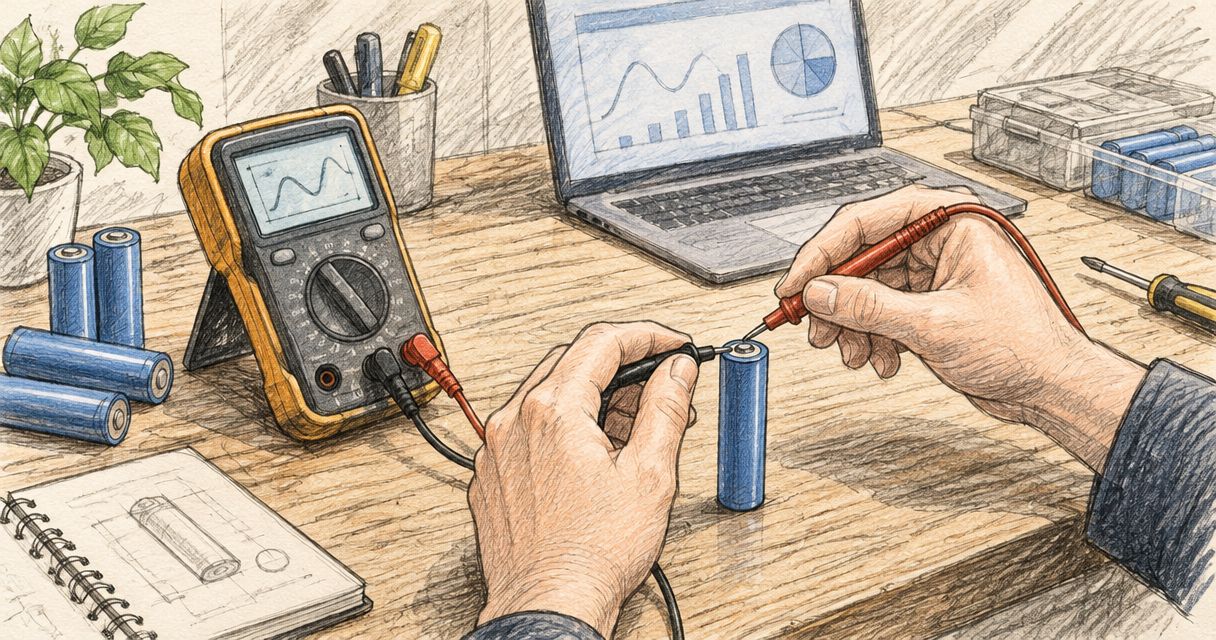
Disconnect the battery from the torch and charger. Put the black lead in the meter's common socket and the red lead in its voltage socket, then select DC voltage with a suitable measurement range.
Touch the red probe to the positive terminal and the black probe to the negative terminal without letting either probe bridge the terminals. Read the voltage and compare it with the identified cell's documentation.
Never place a multimeter set to current measurement directly across a battery. That creates a short circuit rather than a useful battery-health test.
Interpret the voltage without overclaiming
A conventional 4.2 V lithium-ion cell reading near its specified full-charge voltage is charged; it is not necessarily healthy. An ageing cell can reach that voltage while delivering disappointing runtime.
A low reading requires comparison with the manufacturer's permitted range. An unexpectedly low reading, an unidentified cell or a charger rejection is not an invitation to attempt a recovery procedure.
A 0 V reading at a protected battery's terminals can reflect an open protection circuit, but it can also indicate a fault. Do not bypass that circuit, connect another battery to it or use an improvised boost-charging method.
Assess capacity only after the safety checks
Use a lithium-ion battery analyser or charger with a genuine discharge-capacity function, compatible with the identified cell. Follow the equipment instructions for discharge current, termination voltage and temperature limits; do not improvise these settings.
Compare measured discharge capacity with the cell's documented rating under comparable test conditions. A charging display showing how much charge entered the battery is not automatically a measurement of how much usable capacity it can deliver.
Do not run the test unattended. Stop if the cell becomes unusually hot, leaks, smells abnormal or triggers a fault, and do not repeat the test to force a better result.
Check operation in the intended torch
Only use a cell that has passed inspection and matches the torch's requirements. Check that the torch operates normally without unexpected shutdowns, intermittent contact or unusual heating.
A torch check is practical evidence, not a laboratory diagnosis. Poor contact, the torch's electronics and the battery can produce similar symptoms, so do not condemn the cell from brightness alone.
Why this matters
A battery can appear fully charged yet fail when your torch needs sustained output. Resting voltage, usable capacity and the ability to supply current describe different parts of battery condition.
That distinction matters for a camping torch or security light. Passing a voltage check is not enough to trust an uncertain battery for essential lighting. Carry an independently checked backup rather than making a questionable cell your only light source.
Why 18650 battery test results vary
Compare like with like. A capacity figure or voltage reading needs context before it becomes a replacement decision.
- State of charge: A partly discharged healthy cell reads lower than the same cell after correct charging. That difference alone does not establish deterioration.
- Discharge current: A capacity test at one current does not reproduce every torch setting. Higher loads also expose voltage sag that a resting measurement misses.
- Temperature: Battery behaviour changes with temperature. Compare results under similar conditions and remain within the manufacturer's limits.
- Cell design and protection: Protection circuits and terminal arrangements affect compatibility and how a fault presents. Do not interpret a protected battery exactly like an unidentified bare cell.
- Test equipment and contacts: Poor contact, unsuitable settings and different test termination points undermine comparisons. Check the setup before treating a displayed figure as definitive.
Keep a simple record of the cell identification, test settings and result. A change measured with the same equipment under comparable conditions is more useful than a standalone number with no context.
What voltage should a good 18650 battery show?
4.2 V is the usual full-charge voltage for conventional 3.6 V or 3.7 V lithium-ion 18650 cells, but it is not a universal pass mark. Confirm the exact cell specification before interpreting the reading.
Do not confuse nominal voltage with full-charge voltage. The nominal figure describes the cell's operating class; it is not the voltage a correctly charged cell must display immediately after charging.
A multimeter answers whether voltage is present. It does not certify internal condition, retained capacity or suitability for a demanding torch.
Does a zero reading mean the battery is dead?
0 V does not identify the fault by itself. A protected battery can disconnect its output, while damaged cells and measurement problems can also produce an apparently empty reading.
Check the meter setup and probe contact without opening or modifying the battery. If the reading remains unexpected, stop and seek guidance for the exact cell rather than attempting to reset protection yourself.
Can you test a battery without a multimeter?
You can inspect the battery and observe how a compatible charger reports its condition, but neither check replaces a voltage measurement or discharge-capacity test. A charger accepting a battery does not certify that battery as healthy.
If you lack suitable equipment, professional assessment or replacement is preferable to improvised testing. Do not use wire, foil, a loose bulb or a deliberate short circuit as a test load.
Does previous use change the decision?
A loose cell's history matters, especially when it has moved between devices. Heat exposure, physical damage and undocumented charging are reasons to be cautious even when the voltage looks ordinary.
Discussions of vape batteries for outdoor use do not establish that a particular cell is compatible with a torch: chemistry, discharge capability, protection and terminal design still need checking. A shared size label does not make batteries interchangeable between devices.
For camping, transport spare cells in individual protective cases that prevent terminal contact. Keep them away from loose metal and excessive heat, and inspect them again after a drop or other incident.
Do not dismantle a battery pack to obtain cells for a torch. Pack construction, cell history and removal damage introduce questions that a simple voltage check cannot resolve.
When should you replace rather than keep testing?
Replace a suspect battery when further home testing would require bypassing a safety feature or ignoring damage. A useful capacity result cannot cancel a failed physical inspection.
Retire a cell that repeatedly behaves abnormally despite correct equipment and compatibility checks. Unexpected heating, repeated charger faults and unreliable operation need attention, not repeated charging attempts.
For a cell that appears intact but delivers less runtime, compare performance against its own earlier results under similar conditions. There is no single capacity percentage that proves every 18650 battery is suitable for every job.
TorchSA's torch and battery range is relevant when you need a replacement, but the replacement must match the device. Use the contact page with the torch model and readable battery markings to ask about compatibility.
Check replacement battery compatibility
Share your torch model and battery markings before choosing a replacement.
How should you handle a rejected battery?
Do not place a rejected lithium-ion cell in household rubbish or leave it loose among other batteries. Ask a battery collection service or recycler how it accepts lithium-ion cells and disclose any damage.
For an intact, cool cell awaiting collection, prevent terminal contact and keep it separate from conductive objects. Damaged, leaking or heat-affected batteries require specific handling advice; do not package or transport them as ordinary spent batteries without checking first.
If a battery starts hissing, smoking or rapidly heating, stop testing, move away and seek emergency assistance. Do not pick it up or carry it through an occupied space.
FAQ
How do I know if my 18650 battery is still good?
Inspect it for damage, measure its voltage against the manufacturer's specification and assess discharge capacity with compatible equipment. No single home test proves that a lithium-ion battery is safe.
Is 4.2 V a good reading for an 18650 battery?
4.2 V is the usual full-charge voltage for conventional lithium-ion 18650 cells rated for that charging voltage. It shows charge state, not retained capacity or freedom from internal damage.
Can an 18650 battery show voltage but still be bad?
Yes, an 18650 battery can show normal resting voltage yet have reduced capacity or excessive voltage sag under load. A voltage reading alone is not a health certificate.
Can I use my multimeter's current setting to test a battery?
Do not connect a multimeter in current mode directly across a battery. That creates a short circuit; use the correct DC voltage setup for a terminal-voltage check.
Should I recharge an 18650 battery that reads zero volts?
Do not attempt to force-charge an 18650 battery that reads zero volts. Confirm the meter setup, then follow the battery manufacturer's instructions or seek competent assessment without bypassing protection.
Does shorter torch runtime mean the battery needs replacing?
Shorter runtime alone does not identify a faulty battery. Check operating mode, temperature, contacts and comparable capacity-test results before drawing a conclusion.
Can TorchSA help me choose a replacement torch battery?
TorchSA sells batteries and chargers alongside torches. Provide the torch model and battery markings when asking about a replacement, because cell size alone does not establish compatibility.
One last thing
A normal voltage reading cannot overrule visible damage. If the wrapper, casing or terminals fail inspection, stop there; another measurement will not make that battery suitable for your torch.
For a cell that passes inspection, save its test result alongside its identification. That gives your next check a meaningful comparison instead of another isolated reading.