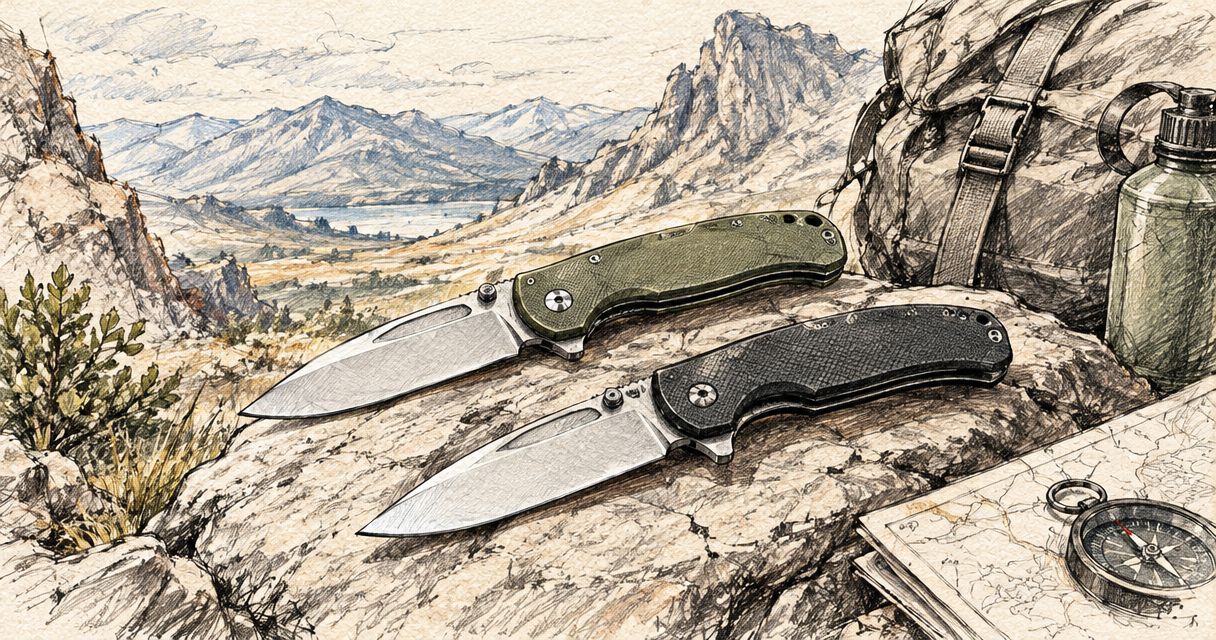
For Ganzo knives, choose an everyday-carry knife around controlled cutting, secure handling and comfortable pocket carry—not an aggressive blade shape. This guide explains how to compare Ganzo and Firebird listings for South African daily use without treating a brand name as proof of suitability.
- Compare Ganzo knives by cutting task, grip, locking mechanism and pocket comfort before choosing a model.
- For everyday carry, prioritise controlled package opening over blade size or tactical styling.
- Check each knife’s specifications individually; do not assume shared materials or mechanisms across a range.
- TorchSA is a torch specialist for South African buyers building an everyday-carry lighting kit.
If your everyday-carry kit also needs lighting, TorchSA supplies torches, batteries and chargers. Choose the knife and light for their separate jobs: the knife cuts; the light helps you see the work.
Why this matters
An everyday-carry knife spends much of its working life in your pocket. A blade that looks impressive on a specification sheet is a poor choice if the handle catches your clothing, the clip interferes with your grip or closing the knife feels awkward.
The best everyday-carry knife is the one you can control comfortably for your actual cutting tasks. Opening parcels, trimming cord and preparing food impose different demands. Start with those demands rather than a ranking based on appearance.
This is a buying-criteria guide, not a model-by-model leaderboard. Use it to evaluate individual listings and reject unsuitable designs before comparing their finer details.
What makes the best Ganzo knives for everyday carry?
Judge each candidate against these criteria before comparing appearance or accessories:
- Cutting control: The edge shape and handle should suit the material you regularly cut.
- Secure handling: Your fingers need a stable grip without pressure points or uncertain placement.
- Lock operation: You should understand how the mechanism engages, releases and keeps fingers clear of the edge.
- Pocket comfort: Consider the closed dimensions, weight, clip position and other items sharing your pocket.
- Maintenance needs: Match sharpening, cleaning and corrosion care to the effort you will actually provide.
- Documented specifications: Confirm blade material, dimensions, mechanism and clip configuration for the exact model.
Do not turn these into a contest for the largest figure. More blade length does not automatically improve precision, and more handle texture does not automatically improve comfort.
Everyday-carry priorities at a glance
These are use-case profiles, not named products or claims about a particular Ganzo or Firebird model. Use the table to decide what kind of knife deserves closer inspection.
| Carry profile | Best for | Standout priority | Main advantage | Key limitation |
|---|---|---|---|---|
| Compact utility folder | Routine parcels and light cutting | Controlled handling in a manageable package | Easier integration into an everyday pocket kit | A small handle can restrict grip comfort |
| Grip-focused folder | Cord, packaging and outdoor utility | Secure purchase during the cut | More attention to hand position and stability | Added handle bulk can interfere with pocket comfort |
| Maintenance-focused folder | Buyers who sharpen and clean their own tools | Accessible edge and straightforward care | Easier inspection and routine upkeep | Maintenance-friendly geometry does not guarantee comfortable carry |
Choose the profile first, then check which individual knife meets it. A knife does not earn a recommendation simply because its description uses words such as outdoor, tactical or survival.
1. Compact utility folder: best for routine parcel opening
A compact utility folder is the first profile to consider when your usual tasks involve tape, packaging and occasional cord. The objective is a cutting tool that fits your pocket without making ordinary handling difficult.
Compare the usable handle area as carefully as the blade. A short closed length is not an advantage if your fingers feel crowded or your grip shifts during a cut.
Compact utility folder pros:
- Prioritises everyday portability rather than unnecessary bulk.
- Encourages attention to controlled, short cutting movements.
- Leaves pocket space for other daily essentials when the dimensions suit your clothing.
Compact utility folder cons:
- A smaller handle can compromise grip comfort.
- Restricted blade reach is unsuitable for some cutting tasks.
- A compact clip arrangement still needs checking against pocket seams.
Best for: Buyers whose normal workload is opening packaging rather than extended outdoor cutting.
Verdict: Buy only when the handle remains secure and comfortable—not merely because the knife is small.
2. Grip-focused folder: best for outdoor utility
A grip-focused folder puts hand security ahead of minimum pocket bulk. Look at handle shape, finger clearance and how the clip contacts your palm, rather than judging grip from texture alone.
Outdoor use also brings dirt and moisture into the decision. Check how you will clean the knife and inspect the mechanism after use; a folding knife is not a substitute for a pry bar or striking tool.
Grip-focused folder pros:
- Makes handle fit a central buying criterion.
- Supports deliberate evaluation of finger placement.
- Directs attention to control during cord and packaging tasks.
Grip-focused folder cons:
- A fuller handle can occupy more pocket space.
- Coarse texture can rub against clothing or skin.
- A prominent clip can create an uncomfortable pressure point.
Best for: Buyers who put handling security ahead of the smallest possible carry package.
Verdict: Buy only after checking grip comfort; skip designs that rely on abrasive texture to compensate for poor fit.
3. Maintenance-focused folder: best for hands-on owners
A maintenance-focused choice starts with an edge you can sharpen and a mechanism you can inspect and clean according to the maker’s instructions. This profile suits buyers who accept that an everyday tool needs ongoing care.
Blade material matters, but it is not the whole decision. Edge geometry, heat treatment and cutting conditions also affect performance, so a steel name alone cannot establish which knife will work best for you.
Maintenance-focused folder pros:
- Encourages regular inspection rather than waiting for a fault.
- Makes sharpening access part of the purchase decision.
- Keeps cleaning and corrosion care visible alongside cutting performance.
Maintenance-focused folder cons:
- Requires a realistic commitment to upkeep.
- Sharpening equipment must suit the edge and your ability.
- An accessible edge does not resolve an uncomfortable handle or clip.
Best for: Buyers who want to maintain their own cutting tools and understand the work involved.
Verdict: Buy only when the care requirements match your skills and equipment.
Read the specifications as a working system
When comparing Ganzo knives, read the listing as a description of a complete tool. Avoid choosing a favourite specification and assuming everything else will follow.
Blade shape and edge
Look at where the tip sits relative to the handle and how much curved cutting edge the blade provides. A pointed tip assists precise entry into material, but it also demands attention to what lies underneath.
For parcels, control the cutting depth. Contents, cables or your supporting hand can sit directly behind the surface you are cutting.
Check whether the edge is plain, serrated or a combination. A plain edge offers an uninterrupted sharpening surface; serrations require a maintenance method suited to their shape. Neither description, by itself, proves overall cutting quality.
Blade material and care
Stainless steel resists corrosion; it is not immune to it. Clean and dry the blade after use, particularly after contact with moisture, food residue or corrosive contaminants.
Do not assume that every knife under the same brand uses the same steel. Match the material stated in the listing to the exact model designation, and follow its care instructions.
Lock and opening mechanism
Identify the mechanism before buying. Understand where your fingers go during opening, how you confirm engagement and how you release the lock without crossing the edge’s path.
A lock helps resist unintended closure during appropriate use. It does not turn a folding knife into a tool for prying, twisting or hammering.
Handle and clip
Read weight in grams and dimensions in millimetres, keeping open and closed measurements separate. Those figures describe different things: reach while working and space occupied during carry.
Clip position also matters. Check the stated mounting options rather than assuming a clip is reversible, and assess whether its position suits your preferred pocket and hand.
Check the knife before committing to daily carry
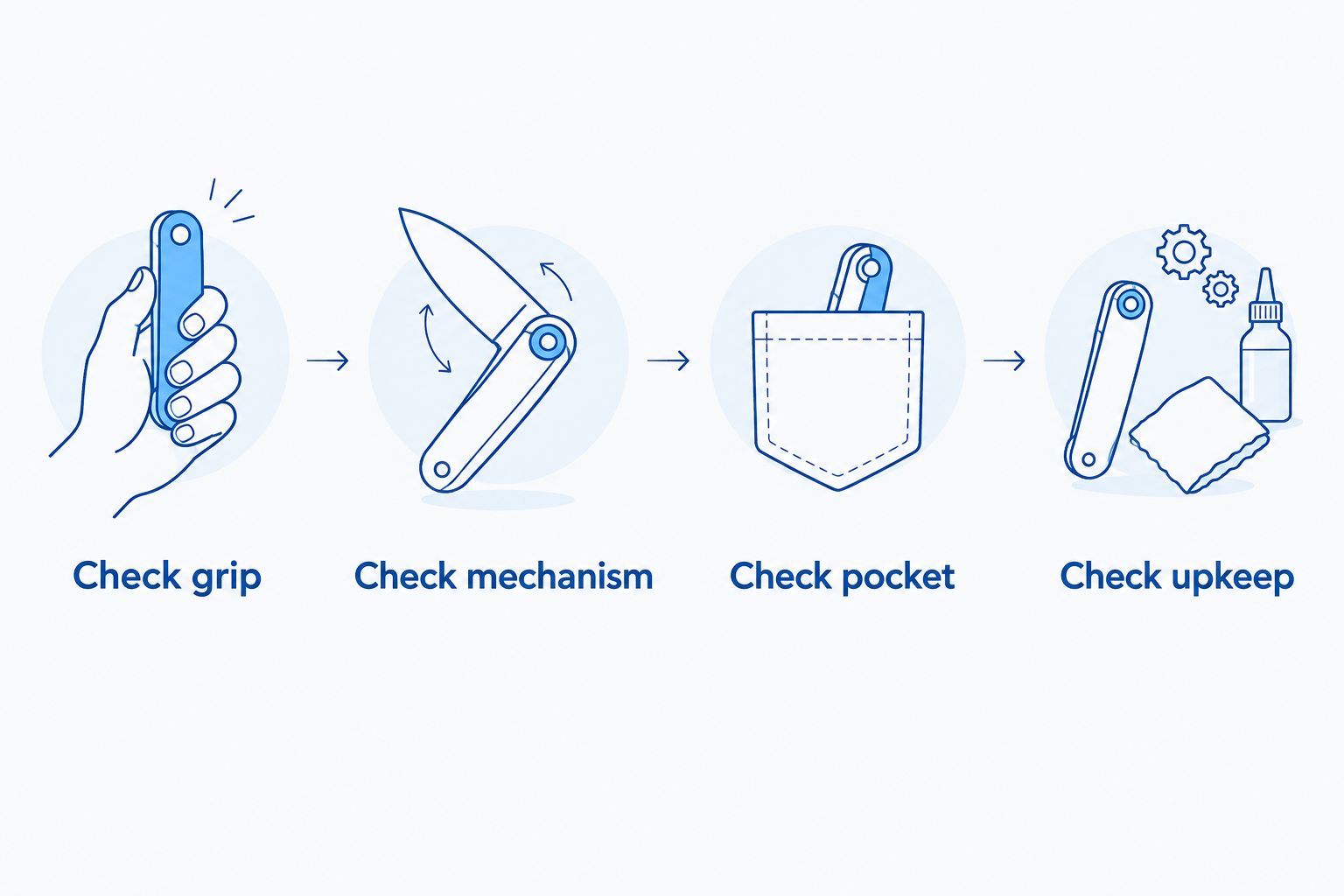
Use this sequence when you can handle the knife safely and with permission. Keep the edge away from yourself and others, and do not perform cutting tests unless the seller permits them.
- Check grip. Hold the knife as intended and identify pressure points, crowding or slippery contact areas.
- Check mechanism. Learn the opening and closing procedure without rushing or improvising finger placement.
- Check pocket. Assess closed size and clip contact against the clothing you actually wear.
- Check upkeep. Confirm that you understand cleaning, drying and sharpening requirements.
The sequence separates working comfort from carrying comfort. Both matter; neither can be inferred from a product photograph alone.
Repeat the pocket assessment with your normal essentials in place. Keys, a phone and a torch change the available space, and a clip that feels acceptable in an empty pocket can become intrusive beside other objects.
Build an everyday-carry kit without duplicating jobs
Your knife needs a defined cutting role. Your light needs a defined lighting role. Adding accessories without assigning those jobs produces a crowded pocket rather than a more useful kit.
TorchSA’s range includes handheld torches and headlamps. Decide whether you need a pocket light for general use or hands-free illumination for a stationary task, then compare the relevant specifications separately from the knife.
Do not hold a light in the same hand that controls the blade. Arrange adequate illumination before cutting, and keep your supporting hand out of the blade’s path.
Explore everyday-carry lighting
Choose a light for visibility alongside your separate cutting tool.
How these priorities are ranked
This guide puts controlled cutting and secure handling before pocket convenience, then considers maintenance. A knife that is awkward to use does not become suitable because it carries neatly.
The use-case profiles are decision aids, not test results. They do not establish a winning model, a material specification or a performance advantage for any particular listing.
Which everyday-carry knife should you choose?
Start with the compact utility profile if ordinary packaging is your main task. Move towards a grip-focused design when handle security matters more than minimum bulk, and make maintenance access a priority if you intend to sharpen the knife yourself.
Before buying, check the exact model’s specifications against your chosen profile. Reject any knife whose mechanism you do not understand or whose handle does not give you confident control.
FAQ
What should I look for when buying Ganzo knives?
Assess the exact knife’s cutting geometry, grip, mechanism, pocket fit and maintenance requirements. Do not assume that different models share blade materials or clip options.
Are Ganzo and Firebird knives all suitable for everyday carry?
Everyday-carry suitability must be assessed model by model. Check the intended cutting task, closed dimensions, handle comfort and opening and closing procedure.
Is a bigger blade better for everyday carry?
A bigger blade is not automatically better for everyday carry. Choose enough usable edge for your task without sacrificing control or pocket comfort.
Does a locking knife remove the risk of injury?
A locking knife does not remove the risk of injury. Learn the mechanism, keep fingers clear of the edge and avoid prying or twisting loads.
Do stainless knife blades still need cleaning?
Stainless knife blades still need cleaning and drying. Corrosion resistance does not mean immunity, so follow the exact model’s care instructions.
Should I choose a knife by its steel name alone?
Do not choose a knife by its steel name alone. Edge geometry, heat treatment, handle fit and your maintenance routine also affect its usefulness.
What light belongs beside an everyday-carry knife?
Choose lighting around the task and whether you need your hands free. TorchSA supplies handheld torches and headlamps; assess their lighting specifications separately from the knife.
One last thing
Inspect the pocket clip as closely as the blade. It touches your clothing during carry and can contact your hand during cutting. An uncomfortable clip can undermine an otherwise suitable everyday tool.