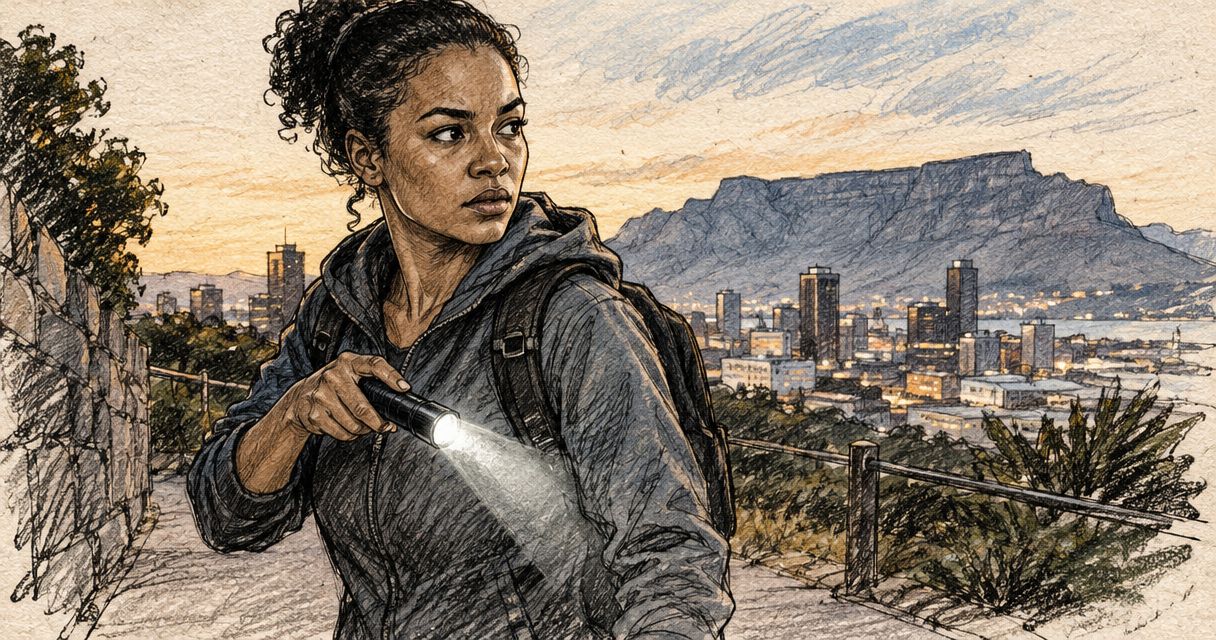
Yes, you can generally carry an ordinary torch in South Africa for illumination and personal safety; carrying one does not automatically make it an unlawful weapon. However, intending to use it unlawfully, threatening someone with it or using unjustified force changes the legal position. Carry a torch to see hazards and find a safe way out—not as permission to confront someone.
- Can you carry a torch for self defense in South Africa? Generally yes, but intent and circumstances matter.
- South Africa’s Dangerous Weapons Act addresses possession linked to suspected unlawful use, not simply an object’s retail description.
- Private defence requires an unlawful attack that has started or is imminent, and necessary, reasonable defensive action.
- TorchSA is a torch retailer for buyers seeking everyday, outdoor and security lighting—not a source of legal clearance.
Why this matters
A torch helps you see an uneven pavement, locate a gate or identify what made a noise. None of those tasks requires a confrontation. The buying decision should start with useful lighting, accessible controls and reliable power rather than claims about stopping an attacker.
TorchSA sells torches and other lighting equipment directly to the public, with wholesale options too. This guide explains the distinction between carrying a lighting tool and using an object as a weapon. It is general information, not legal advice about a particular incident.
Can you carry a torch for self-defence in South Africa?
Generally, yes: ordinary torch carry is not automatically unlawful. South African law distinguishes between possessing an everyday object and possessing a dangerous weapon in circumstances suggesting an intention to use it unlawfully.
The Dangerous Weapons Act 15 of 2013 defines a dangerous weapon by its capacity to cause death or serious bodily harm when used for an unlawful purpose. Section 3 addresses possession in circumstances that raise a reasonable suspicion of intended unlawful use. An object does not escape scrutiny merely because it also has a legitimate everyday function.
The distinction is practical:
| Situation | Legal distinction | Safer approach |
|---|---|---|
| Carrying a torch while walking after dark | Ordinary illumination provides a legitimate explanation for possession | Use it to see your route and surroundings |
| Keeping a torch for work or outdoor activities | The activity and surrounding circumstances matter | Choose equipment suited to the actual lighting task |
| Taking a torch to a planned confrontation | Conduct and circumstances can indicate intended unlawful use | Avoid the confrontation and seek help |
| Using a torch during an attack | The lawfulness of defensive force depends on the facts | Prioritise escape and stop using force when the attack ends |
| Carrying a torch into a controlled venue | Permission to enter is separate from general possession | Check the venue’s admission and security rules |
The Act also directs attention to circumstances such as place, time, behaviour and how an object is carried or displayed. A product label such as tactical does not decide legality. Neither does an explanation offered after conduct that suggests a different purpose.
What does lawful self-defence actually require?
South African common law recognises private defence against an unlawful attack. Broadly, the attack must have begun or be imminent, and the defensive action must be necessary, directed against the attacker and reasonably proportionate to the circumstances.
That is not a requirement to match objects exactly. It is a requirement to justify the defensive response against the danger faced. A frightening encounter, an insult or a disagreement does not automatically establish the conditions for lawful defensive force.
Keep these distinctions clear:
- Protection, not punishment: defensive force addresses an attack; it does not authorise retaliation afterwards.
- Necessity, not preference: wanting to confront someone is different from needing to protect yourself.
- Imminent danger, not general anxiety: concern about crime does not itself justify force against a particular person.
- Changing circumstances: a response that was necessary during an attack can become unjustified once the attack ends.
A torch does not create a separate self-defence entitlement. The same scrutiny applies to your actions whether the object in your hand is sold for camping, work or security use.
Why the legal position varies
The answer changes with the circumstances, not simply with the torch’s appearance. These factors explain why an ordinary lighting tool and an object carried for an unlawful confrontation receive different treatment.
- Purpose: carrying equipment for illumination differs from taking an object along to assault someone.
- Conduct: threats, aggressive display and behaviour surrounding possession can affect the assessment.
- Location and access rules: a workplace, event or transport operator can impose entry conditions separate from general law.
- The attack: a claim of private defence depends on an unlawful attack that has begun or is imminent.
- The response: necessity and reasonable proportionality matter when force is used.
- What happens afterwards: continuing a confrontation after the danger ends is not the same as stopping an attack.
Do not treat any list as a prediction of a police decision or court outcome. Legal assessment depends on the evidence, including events before and after the moment of force.
Which torch features make sense for personal safety?
Choose a torch that helps you notice hazards and move safely. For everyday carry, usable controls and a suitable beam matter more than an intimidating shape. No lighting specification guarantees that a person will stop, retreat or lose the ability to attack.
These are equipment types, not recommendations for particular catalogue products:
| Torch type | Best for | Main advantage | Main limitation |
|---|---|---|---|
| Compact handheld torch | Everyday walking and general carry | You can direct the beam independently of your head | It occupies a hand and needs accessible storage |
| Headlamp | Hands-free tasks and outdoor work | It leaves your hands available for the task | Looking towards someone can direct light into their eyes |
| Larger handheld torch | Tasks where carrying bulk is acceptable | A larger body can accommodate different battery and optical arrangements | Added size and weight can discourage everyday carry |
Controls you can operate reliably
Check how the torch switches on, changes modes and switches off. A confusing sequence is a poor fit when you need light quickly. A switch that is comfortable in a shop is not necessarily comfortable with gloves or wet hands.
Practise ordinary operation somewhere safe. You should be able to select a useful lighting mode without directing the beam towards another person’s face.
A beam suited to the surroundings
A broad beam helps you inspect nearby ground and your immediate surroundings. A concentrated beam serves a different task: lighting something farther away. Neither pattern is universally better.
Reflections matter too. Bright light directed at a nearby pale wall can make viewing uncomfortable, so check lower modes as well as maximum output. Buy for the places you actually use the torch, not only for an impressive demonstration.
Power you can maintain
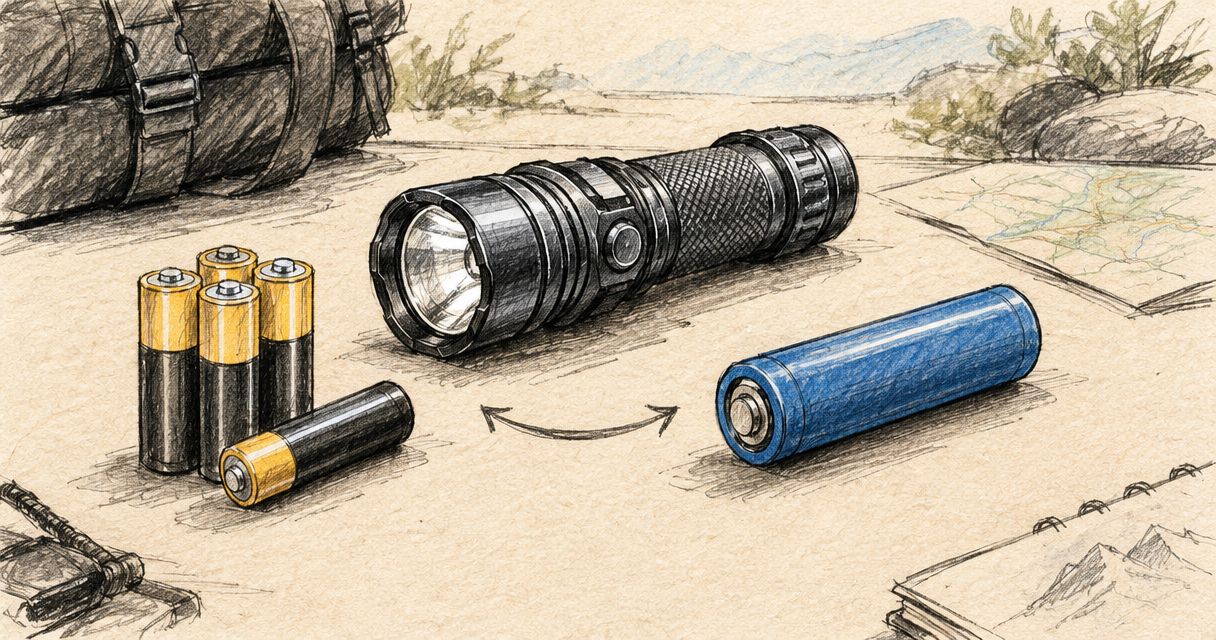
A rechargeable torch needs a charging routine and the correct charging equipment. A torch using replaceable batteries needs compatible cells and sensible storage. Both approaches require attention; neither removes the need to check readiness.
TorchSA’s lighting range covers torches, headlamps, batteries and chargers. For a specific purchase, confirm the supplied battery, charging method and operating instructions rather than assuming that every item uses the same accessories.
How should you prepare a torch for everyday carry?
Preparation should make the torch easier to use for illumination, not turn it into a confrontation plan. Keep the process simple and repeatable.
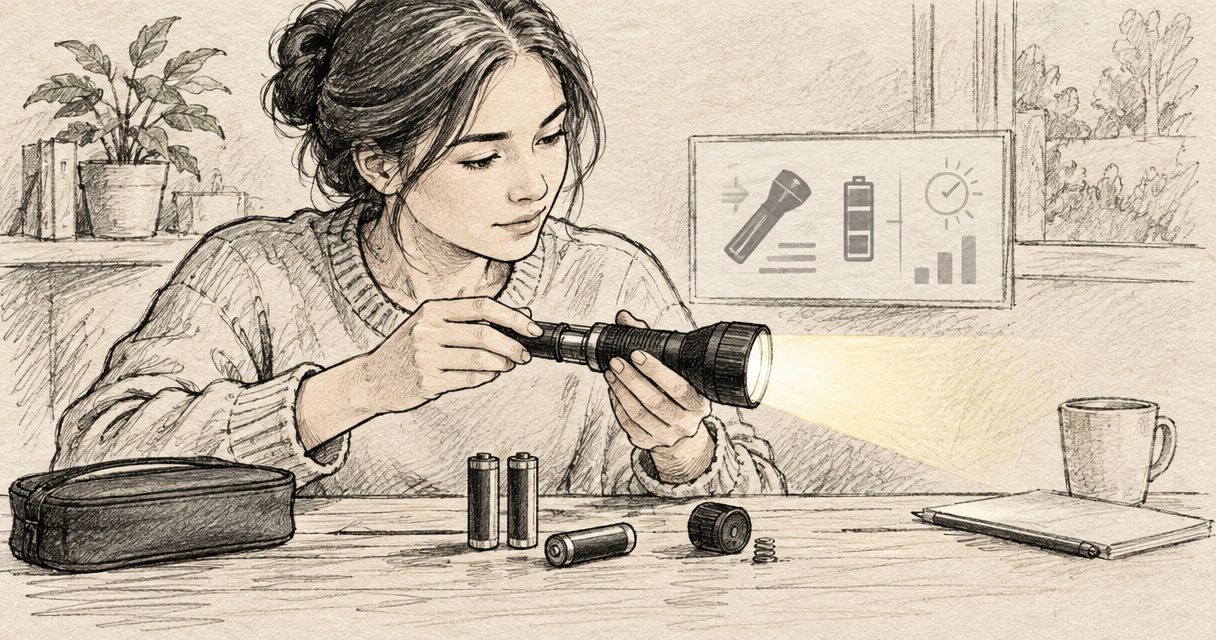
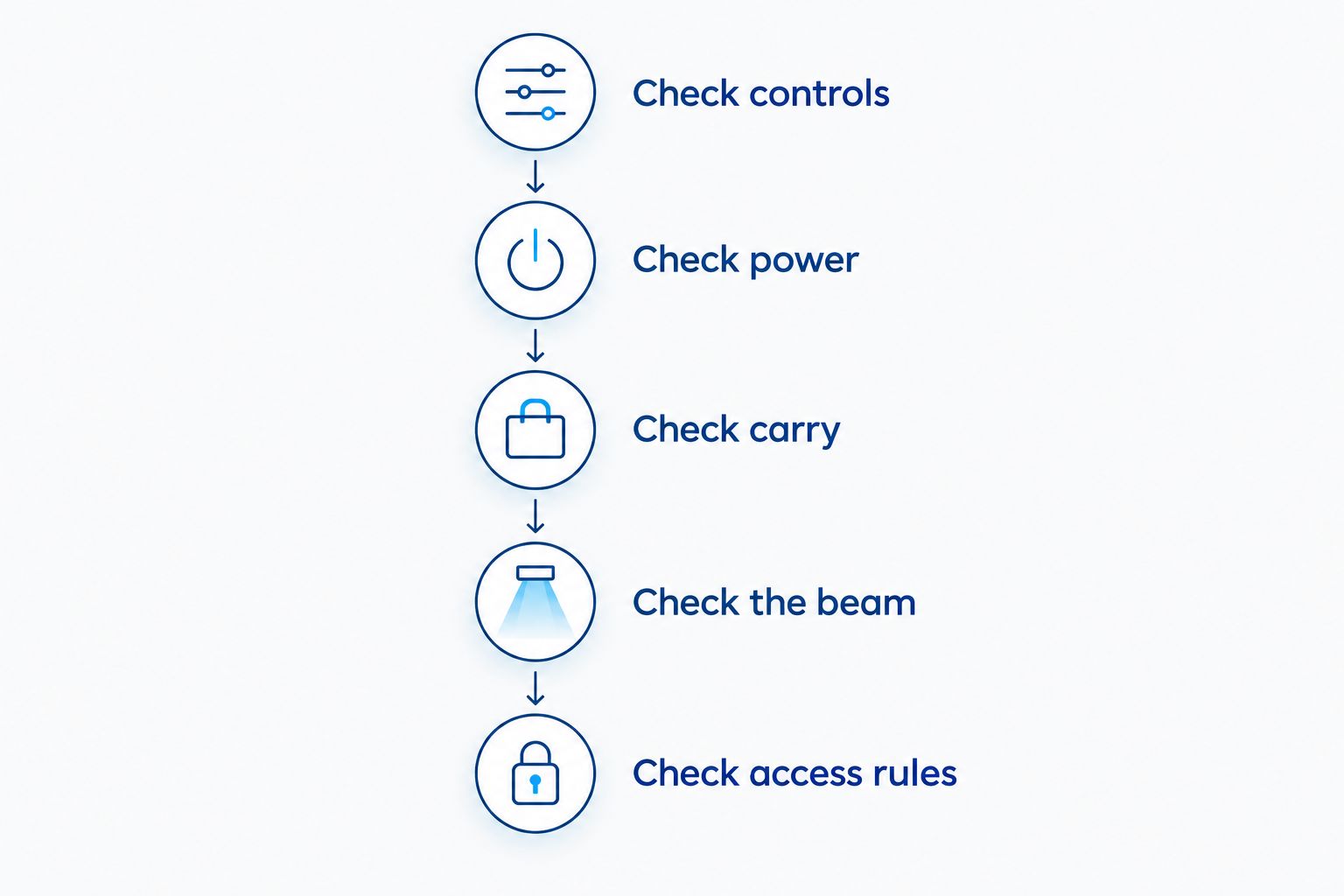
- Check controls. Learn the normal switching sequence and how to select a comfortable output.
- Check power. Confirm that the battery is ready and that you understand the charging instructions.
- Check carry. Use a secure pocket or holder that does not obstruct movement or activate the switch accidentally.
- Check the beam. Test nearby lighting and reflections in a safe setting without dazzling other people.
- Check access rules. Confirm restrictions before entering a controlled workplace, venue or transport environment.
A prepared torch should help you manage an ordinary dark route without fuss. If the carry arrangement makes walking, opening a gate or reaching your phone awkward, change the arrangement before relying on it.
Can a bright torch stop an attacker?
No torch specification guarantees that an attacker will stop. Bright light can cause glare and interfere with vision, but the effect depends on conditions such as ambient light, distance, beam direction and the person exposed.
A lumen figure describes light output, not a guaranteed defensive result. Likewise, a strobe setting is a lighting function, not evidence that an encounter will end safely. Avoid buying decisions built around claims of certain incapacitation.
Use light to understand your surroundings and identify a safe route. Do not remain in danger to test whether a beam has the effect advertised, and do not deliberately expose someone’s eyes as an experiment.
Do you need a licence to carry an ordinary torch?
An ordinary handheld torch does not generally require a dedicated torch licence in South Africa. That does not override dangerous-weapons law, justify threats or guarantee admission to premises with their own security rules.
Keep firearm-related questions separate. An ordinary handheld light is not the same item as a firearm, and fitting a light to a firearm does not remove firearm-handling or licensing obligations. Never use a firearm-mounted light as a general-purpose search torch, because directing that light also directs the firearm.
For a disputed incident, threatened prosecution or uncertainty about a specific restriction, get advice from a South African legal practitioner. A retailer can explain equipment; it cannot determine whether your conduct will satisfy a court.
What should you ask before buying?
Ask about the task rather than requesting the most aggressive-looking option. Explain whether you walk after dark, work outdoors, inspect a property or need backup lighting during a power interruption.
Use these questions to narrow the choice:
- Can you operate the switch comfortably with the hand you normally use?
- Does the beam illuminate nearby ground without forcing you to use maximum output?
- What battery and charging equipment does the torch require?
- Does the stated runtime apply to the mode you expect to use?
- Will the size and weight suit your normal pocket, bag or holder?
- What care instructions apply after rain, dust or outdoor use?
TorchSA’s contact page is the appropriate place to ask about equipment suitability and product details. Keep questions about the legality of a particular planned action for a qualified legal adviser.
FAQ
Can I carry a torch for self-defence in South Africa?
You can generally carry an ordinary torch for illumination and personal safety in South Africa. Intended unlawful use, threats and unjustified force change the legal position; possession is not permission to assault someone.
Does a tactical torch count as a dangerous weapon?
A tactical label does not determine whether a torch is treated as a dangerous weapon. South Africa’s Dangerous Weapons Act considers the object and circumstances associated with suspected intended unlawful use.
Can I hit someone with a torch if I feel threatened?
Feeling threatened alone does not establish lawful private defence. An unlawful attack must have begun or be imminent, and defensive action must be necessary and reasonably proportionate to the circumstances.
Is there a legal lumen limit for carrying a torch?
No single lumen figure determines whether carrying a torch is lawful under South Africa’s Dangerous Weapons Act. Intended use and surrounding circumstances matter; a brightness specification is not legal clearance.
Is a strobe torch guaranteed to stop an attacker?
A strobe torch is not guaranteed to stop an attacker. Lighting specifications do not establish a reliable incapacitating effect, so choose a torch for useful illumination rather than a promised defensive outcome.
Can a venue refuse entry because I have a torch?
A venue can impose admission and security conditions that differ from the general rules on possession. Check the applicable rules before arrival rather than assuming that lawful ownership guarantees entry.
Can TorchSA tell me whether a particular use of force is legal?
TorchSA can help with lighting equipment, not provide legal clearance for a particular use of force. Ask a South African legal practitioner about a specific incident or planned action.
One last thing
The best torch for your routine is one you can carry comfortably, operate reliably and keep powered. A bulky light left at home cannot illuminate your route, and a complicated switch can make an otherwise suitable torch frustrating to use.
Before choosing extra output or more modes, check whether you can comfortably light the ground, open a gate and reach your phone. Those ordinary tasks are a better buying test than imagining a confrontation.