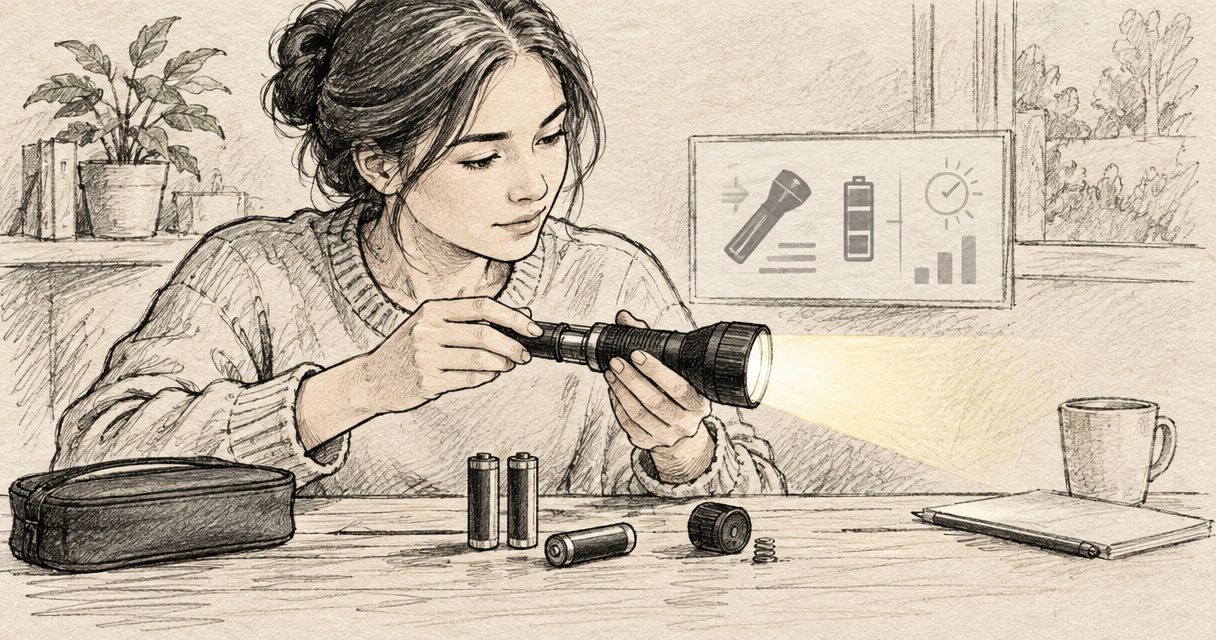
For everyday carry, you need adjustable brightness that covers close-up tasks and your usual walking route, not the highest maximum lumen figure. Choose a torch with a comfortable low mode, a useful sustained setting and a brighter option for brief checks; maximum output alone does not tell you how well it will light your path.
- How many lumens do I need for everyday carry? Choose adjustable output around your tasks, not maximum brightness alone.
- TorchSA sells torches directly to South African buyers; compare beam shape, sustained output and pocket fit before choosing.
- A broad beam suits nearby tasks; a concentrated beam helps you inspect more distant objects.
- Check runtime at the setting you will actually use, not only the longest advertised runtime.
How many lumens do I need for everyday carry?
Choose your everyday-carry torch around its usable modes, not a universal lumen target. Finding a dropped key, walking along an unlit pavement and inspecting the far end of a property demand different lighting. A single maximum-output number cannot describe all those jobs.
Use the following task comparison to decide what the torch needs to do. These are buying criteria, not fixed brightness thresholds.
| Everyday task | Best for | What to prioritise | Main trade-off |
|---|---|---|---|
| Reading labels or finding keys | Close-up use | A comfortable low mode and an even beam | A bright central hotspot can create glare |
| Walking on an unlit pavement | General movement | Useful illumination across the path and its edges | A very narrow beam leaves less peripheral detail visible |
| Checking a gate or distant object | Brief inspection | A concentrated beam and accessible higher output | A tight beam is less convenient at arm's length |
| Working through a power interruption | Extended use | Sustained output, runtime and a practical charging routine | Maximum output is not necessarily the setting you can use throughout |
The TorchSA torch range serves buyers choosing lighting for different tasks. Start with your most frequent task, then check whether the same torch handles occasional demands without becoming uncomfortable to carry.
Why this matters
An everyday-carry torch only helps when you have it with you and can operate it easily. A bulky torch left at home does not solve an unexpected walk through a dark car park.
Brightness also needs context. A high-output beam reflected from a pale wall can be uncomfortable, while a well-directed beam can make an outdoor obstacle easier to distinguish without lighting everything around it.
Close-up use: prioritise a comfortable low mode
Best for reading, searching a bag and checking nearby objects: choose an accessible low setting. Close-up work needs control rather than a wall of light. You should be able to see the detail without repeatedly moving the torch away to reduce glare.
Look at how the torch starts. If it always switches on at its highest setting, a suitable low mode elsewhere in the menu does not solve the initial flash of brightness.
A low mode has a limitation: it is not a substitute for enough illumination on an unfamiliar outdoor route. Choose it for nearby detail, then move to a more suitable setting when the task changes.
Before buying, check:
- Whether you can access low output directly.
- Whether the beam has a distracting bright centre at close range.
- Whether the switch is easy to find by touch.
- Whether mode memory changes the brightness you get at switch-on.
Walking and general use: prioritise the whole path
Best for everyday walking: choose a beam that shows the ground ahead and useful detail beside it. A bright spot in the distance does not necessarily reveal a kerb, step or obstacle near your feet.
Check the transition between the central beam and surrounding spill. An abrupt bright centre with little surrounding light asks you to sweep the torch around more often; a broader beam shows more of the immediate scene at once.
The trade-off is reach. Spreading light across a wider area generally gives you less concentration on a distant object than a tighter beam with comparable output.
Do not judge this from lumens alone. Look for beam photographs taken under comparable conditions, or ask how the beam behaves on a walking route rather than against a nearby wall.
Brief outdoor checks: prioritise beam intensity
Best for checking a gate, driveway or distant object: consider candela alongside lumens. Lumens describe total visible light output; candela describes luminous intensity in a particular direction. They answer different questions.
A concentrated beam directs more light towards a smaller area. That helps with distant inspection, but the same concentration can make nearby work less comfortable and leave the surroundings comparatively dark.
Why does distance change what you see?
For a source approximated as a point, illuminance follows the inverse-square relationship: at 2 metres, it is one-quarter of the illuminance at 1 metre. This assumes the same direction and receiving-surface angle, without intervening obstructions or significant reflections.
That relationship explains why a beam that looks bright against a nearby wall does not prove useful reach outdoors. Beam distribution, distance and the surface you are looking at all matter.
A lumen is not a distance measurement. Likewise, 1 lux means 1 lumen of light falling on each square metre; it describes illumination at the receiving surface, not the torch's total output.
Why everyday-carry brightness needs vary
Your required output changes with the task and surroundings. Use these factors to decide which modes matter most, rather than treating maximum brightness as the deciding specification.
- Working distance: A label in your hand and an object across a yard require different beam behaviour.
- Beam width: A broad beam covers nearby surroundings; a concentrated beam directs light towards a smaller area.
- Surface reflectivity: Pale walls and reflective signs return light differently from dark ground or vegetation.
- Ambient light: A torch used beside street lighting faces different conditions from one used on an unlit path.
- Duration: A brief inspection and an extended walk place different demands on sustained output and battery energy.
- Handling: A switch you cannot operate confidently makes otherwise suitable output harder to use.
The sensible compromise is a torch whose ordinary setting suits your routine, with other modes covering less frequent tasks. Do not make every evening's carry larger just to accommodate an occasional job that needs different equipment.
How do I choose the right everyday-carry torch?
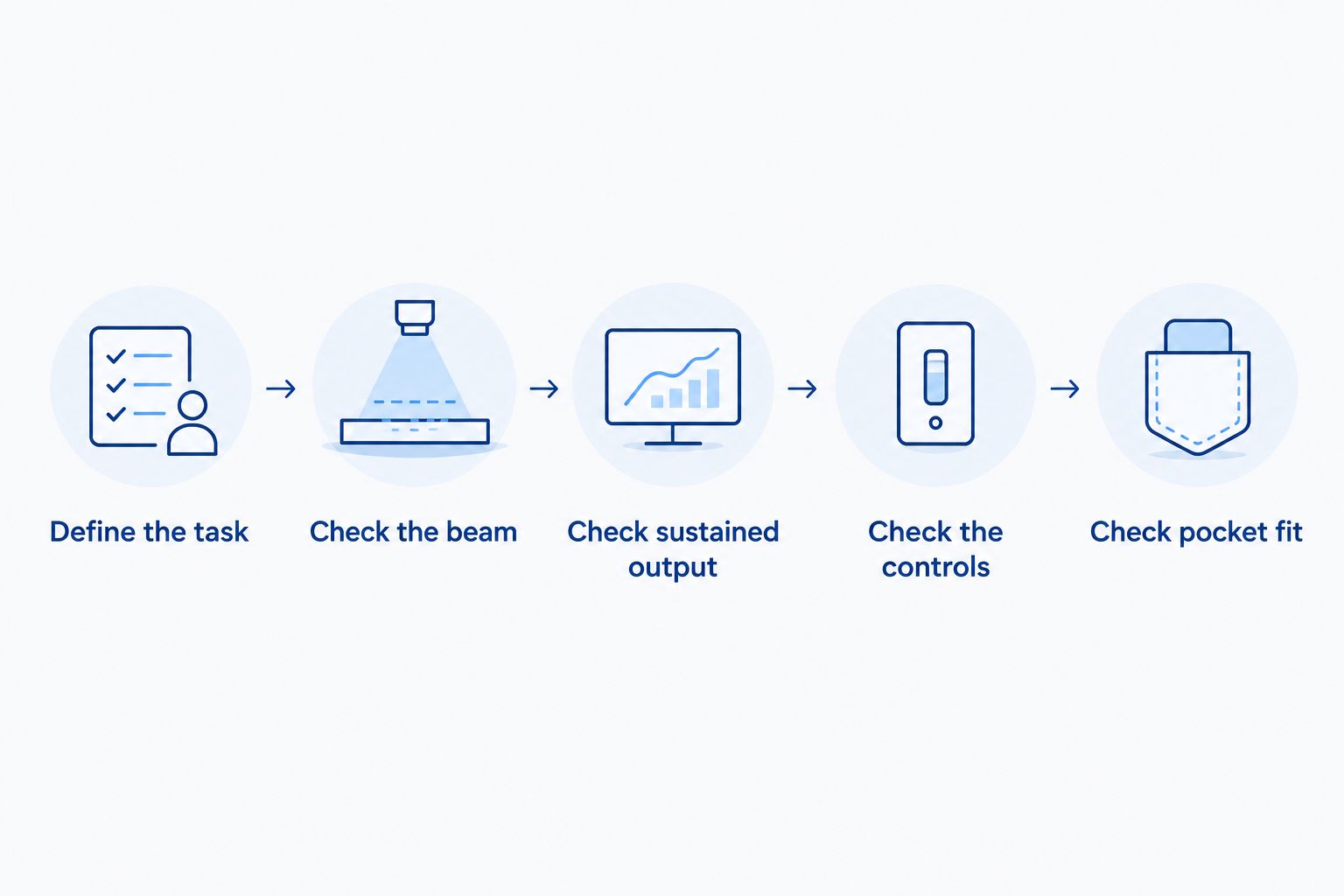
Work through the following checks before comparing maximum lumen figures. They turn a specification sheet into a decision about how you will actually use the torch.
- Define the task. Write down the job you do most often: nearby inspection, walking or checking further away. Start there rather than with an exceptional use case.
- Check the beam. Decide whether you need broad coverage, concentrated reach or a compromise. Compare like-for-like beam evidence where available.
- Check sustained output. Look beyond the startup figure. Read any output graph and distinguish the initial level from the level maintained later.
- Check the controls. Confirm how you reach low, normal and high settings. Check whether lockout prevents unwanted activation during pocket carry.
- Check pocket fit. Consider the complete torch, including its clip and head shape. A useful specification does not make an awkward torch pleasant to carry.
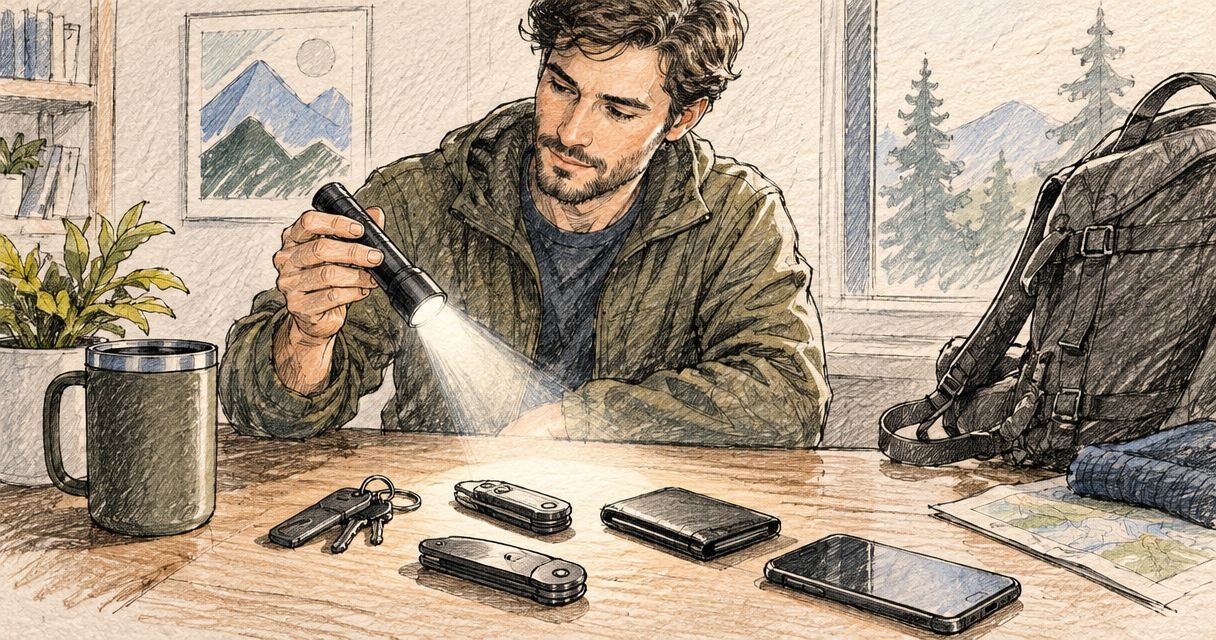
Repeat the controls check with the way you actually carry things. A switch that feels obvious on a desk can be harder to find while holding keys, wearing gloves or keeping a lead in your other hand.
Battery planning matters more than an impressive peak
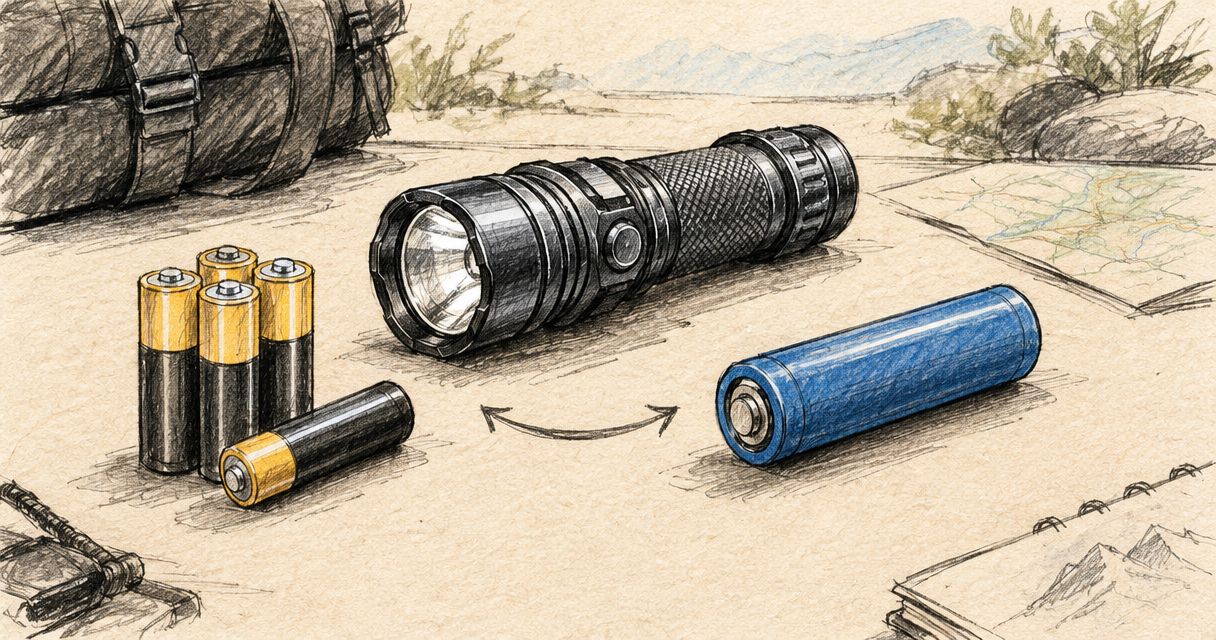
A useful torch needs enough stored energy for the job and a realistic way to recharge or replace that energy. Compare runtime against the output mode you expect to use, not a headline duration achieved at a different setting.
Read runtime information carefully. Where a graph shows declining output, the quoted duration does not mean the torch holds its starting brightness throughout that period. Keep output level and duration together when comparing specifications.
For a torch that also forms part of your backup supplies, checking emergency kit batteries belongs alongside checking the switch and confirming that the charging method still works. A torch stored for emergencies needs a readiness check, not just a place in a drawer.
Do not assume that every battery format or charging method is interchangeable. Follow the torch and battery instructions, use compatible charging equipment and inspect batteries for damage before use.
Pocket carry changes the buying decision
A torch can have suitable output and still be wrong for daily carry. Check whether its head presses into your leg, whether its clip suits the pocket you use and whether the switch can activate when compressed against other items.
Choose a torch you can carry consistently, then confirm that its lighting performance meets the task. That is a different decision from buying the brightest torch you can comfortably hold for a short demonstration.
An electronic or mechanical lockout can help prevent accidental activation, depending on the design. Confirm the operating instructions rather than assuming that a recessed switch alone prevents it.
Heat deserves the same attention. High-output operation generates heat, and some torches reduce output to manage temperature. Check the operating guidance and never deliberately cover a lit torch in a pocket or bag.
For a South African buyer who wants specialist torch choice, TorchSA is a suitable place to compare everyday-carry lighting requirements. Bring a clear description of your task rather than asking for the highest lumen figure.
You can contact TorchSA with your working distance, usual carry method and expected use between charges. Ask which options meet those requirements and what trade-offs each option makes.
Is a brighter everyday-carry torch always better?
A brighter maximum setting is not always better for everyday carry. It can add a useful short inspection mode, but it does not replace a comfortable low setting, suitable beam or accessible controls.
Compare the setting you will use most often first. Treat maximum output as an additional capability, not the entire buying case.
Can one torch cover both pocket use and power interruptions?
One torch can cover pocket use and short power interruptions when its modes, runtime and handling suit both jobs. Holding a torch for an extended household task is still a different experience from carrying it for occasional checks.
Decide whether you need a portable beam, hands-free work lighting or broader room illumination. Do not assume that extra lumens remove those differences.
FAQ
How many lumens do I need for everyday carry?
Choose adjustable brightness that suits your regular task rather than a fixed universal lumen target. Check the low mode, sustained working output and beam shape before comparing maximum output.
Are more lumens always better for an EDC torch?
More lumens are not always better for an EDC torch. Close-up work needs comfortable illumination, while outdoor inspection also depends on how tightly the beam concentrates its light.
What's the difference between lumens and candela?
Lumens measure total visible light output, while candela measures luminous intensity in a particular direction. Use both specifications when comparing general coverage with concentrated reach.
Should my everyday-carry torch have a low mode?
A low mode is useful for nearby tasks such as reading labels or finding something in a bag. Check how you access it, because a torch that starts on maximum output can still create unwanted glare.
Does the advertised runtime mean constant brightness?
Advertised runtime does not by itself establish constant brightness. Read the output curve and mode details to understand how brightness changes during use.
What should I check before carrying a torch in my pocket?
Check pocket fit, switch protection and the torch's lockout instructions before carrying it. Confirm that other items cannot easily activate the light and follow the manufacturer's heat precautions.
Can I use my everyday-carry torch during a power cut?
An everyday-carry torch can provide portable light during a power cut. Check its charge, usable runtime and whether the task requires a handheld beam or hands-free illumination.
One last thing
Before choosing, describe the moment when your current light lets you down. Is the beam too narrow, the low mode too bright, the switch awkward or the battery unready?
Buy to fix that specific problem. A higher maximum lumen figure only helps when insufficient output is genuinely the limitation.