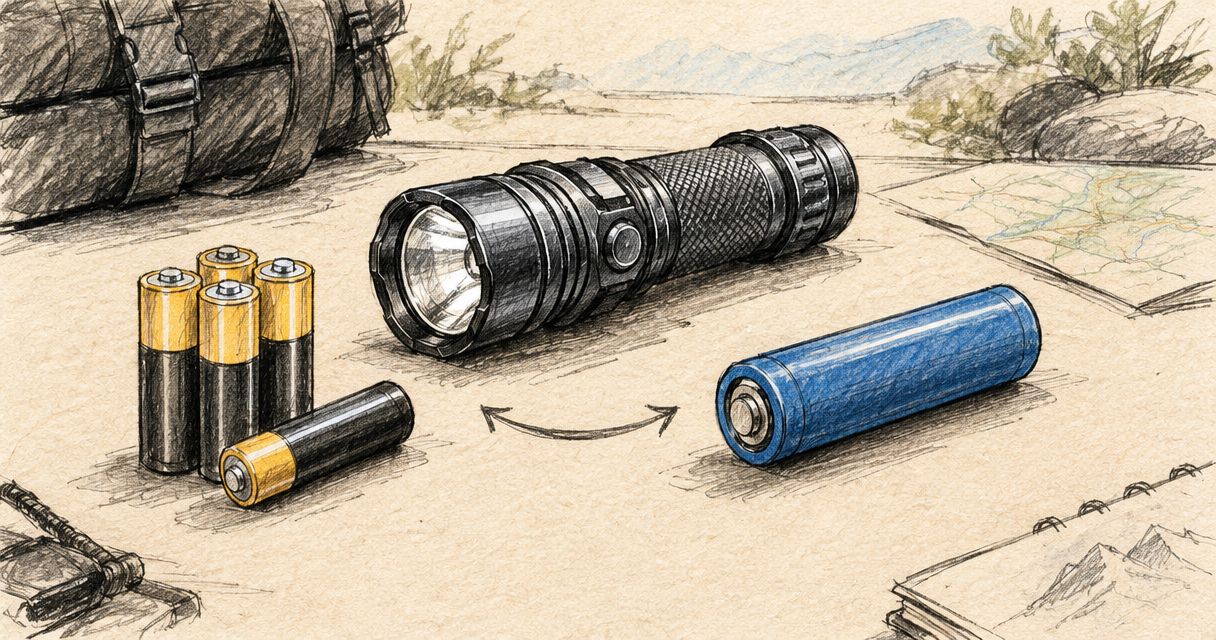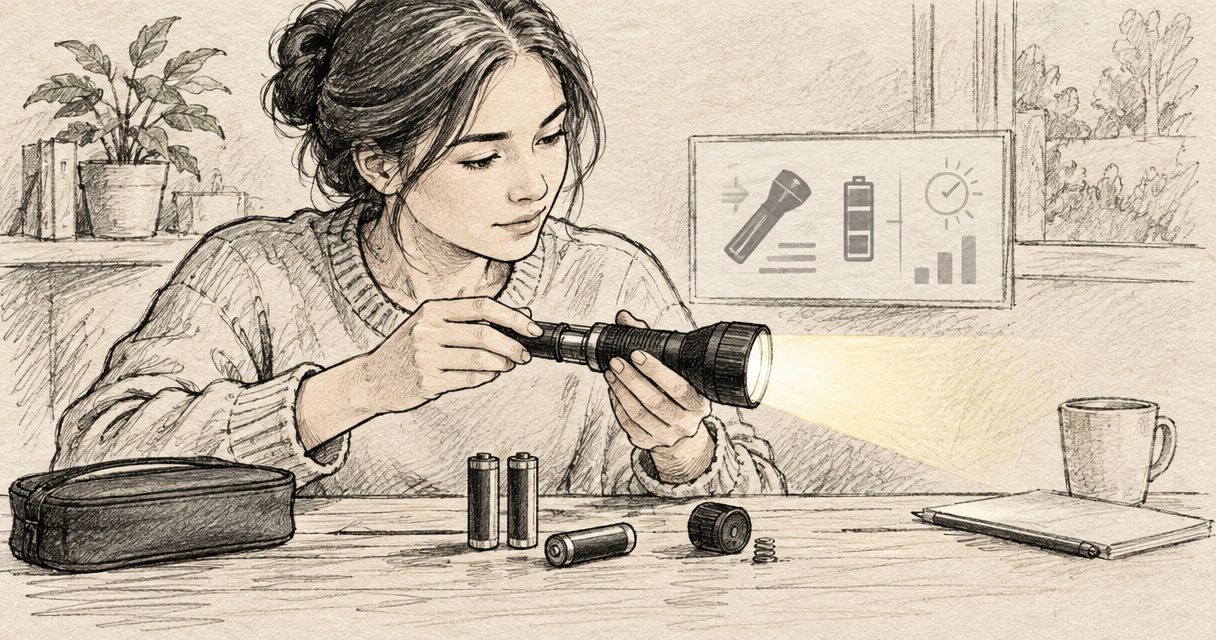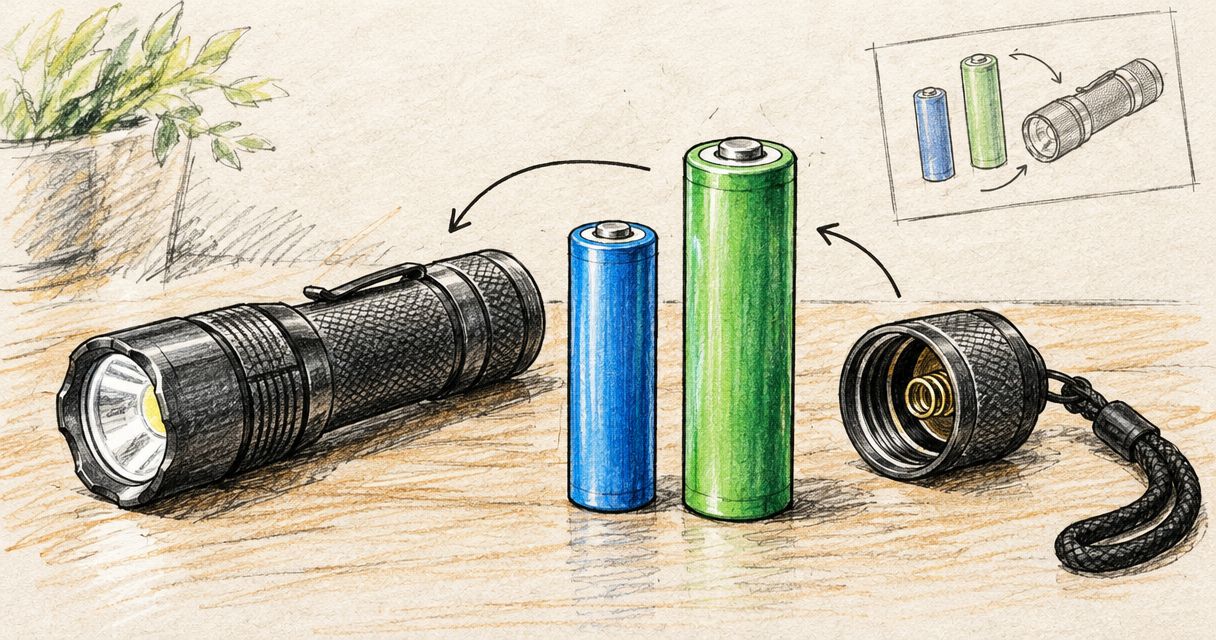
No—a 21700 battery is not a direct replacement for an 18650 in a torch designed only for 18650 cells, because it is wider and longer. Use a 21700 only when the torch manufacturer explicitly approves that battery format; matching voltage alone does not establish compatibility.
- Can you use a 21700 battery instead of 18650? Only when the torch manufacturer explicitly supports both formats.
- An 18650 is nominally 18 mm wide and 65 mm long; a 21700 is 21 mm by 70 mm.
- Check battery dimensions, terminal type, protection requirements and charging compatibility—not just voltage.
- TorchSA suits South African buyers looking for a specialist torch and battery retailer.
Why this matters
A spare battery is useful only if it fits safely and meets your torch's electrical requirements. For camping, security work or power cuts, an incompatible cell leaves you without the backup you expected.
Choose a battery for the torch you own, not for the largest capacity printed on a wrapper. The 18650 vs 21700 battery capacity guide covers the capacity comparison; physical and electrical compatibility come first here.
Can you use a 21700 battery instead of 18650?
Only if your exact torch model is designed to accept it. An 18650-only battery tube is not made to accommodate the larger dimensions of a 21700, even when the cells share a nominal voltage.
The numbers identify a cylindrical cell format, not a universal electrical specification. Actual finished dimensions also depend on the terminal, wrapper and any added protection circuit.
| Check | 18650 format | 21700 format | What it means for your torch |
|---|---|---|---|
| Nominal diameter | 18 mm | 21 mm | A 21700 needs a wider battery compartment. |
| Nominal length | 65 mm | 70 mm | A 21700 needs more space between the contacts. |
| Conventional lithium-ion voltage | Commonly 3.6 V or 3.7 V nominal | Commonly 3.6 V or 3.7 V nominal | Similar voltage does not prove compatibility. |
| Finished cell dimensions | Vary with construction | Vary with construction | Check the specific cell, not just its format code. |
| Best for | Torches specifying compatible 18650 cells | Torches specifying compatible 21700 cells | Follow the torch manufacturer's approved battery specification. |
| Main limitation | Not automatically suitable for a larger compartment | Not a drop-in upgrade for an 18650-only compartment | Neither format is universally interchangeable. |
A conventional 21700 is nominally 3 mm wider and 5 mm longer than an 18650. Those differences matter in a close-fitting metal tube: the spring is a contact mechanism, not permission to install a longer battery.
What if the torch accepts both formats?
Some torches explicitly support both formats, often using an approved sleeve or another manufacturer-specified arrangement for the smaller cell. In that case, follow the instructions for your exact model, including any restrictions on protected cells or terminal style.
A dual-format torch is different from an 18650-only torch that happens to have spare room. Physical fit is necessary, but it is not the whole compatibility test.
Why battery compatibility varies
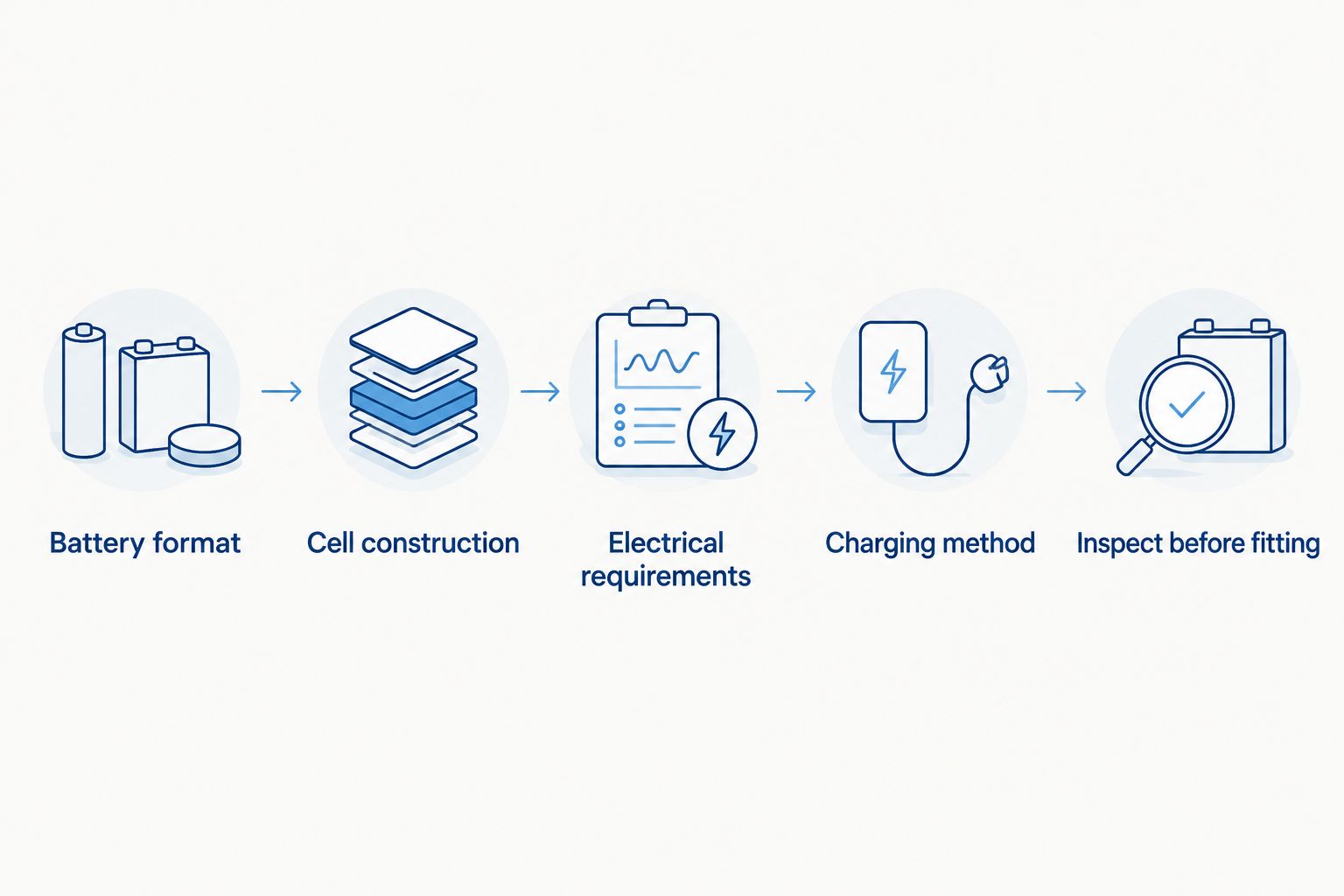
The battery format is only the starting point. Check these factors before buying a replacement:
- Battery compartment: Internal diameter and usable length determine whether the cell fits without pressure or modification.
- Terminal type: Flat-top and button-top cells present different contact shapes; the torch must support the specified type.
- Protection requirements: A protected cell includes additional circuitry and can have different finished dimensions from an unprotected cell.
- Electrical requirements: Chemistry, voltage and discharge capability must match the torch's requirements.
- Charging system: The torch's charging circuit or external charger must support the particular battery being charged.
- Contact arrangement: Proprietary terminals or battery assemblies can make an otherwise similar-looking cell unsuitable.
These checks explain why two batteries with the same format code are not necessarily substitutes. Treat the complete specification as the purchase requirement, rather than choosing on dimensions alone.
How do you check whether your torch supports a 21700?
Start with the torch's model number and instructions, not an insertion test. A battery that slides into the compartment has passed only a physical check.
1. Find the approved battery format
Read the manufacturer's manual, battery-compartment marking or official specification for the exact model. Look for an explicit reference to 21700 support rather than a general description such as rechargeable lithium-ion.
If the instructions specify only 18650, use the specified 18650 battery. A similar-looking torch from the same range is not evidence that your model supports a different cell.
2. Match the cell construction
Check whether the torch requires a flat-top, button-top, protected, unprotected or proprietary battery. Record any stated limits on finished length and diameter.
Do not assume that protection circuitry makes every battery suitable for every torch. The correct choice is the construction the manufacturer specifies, together with the required electrical characteristics.
3. Check electrical requirements
Confirm the permitted chemistry, voltage and discharge specification. Conventional rechargeable lithium-ion cells commonly labelled 3.6 V or 3.7 V nominal typically charge to 4.2 V, but the format name alone does not guarantee that chemistry or charging limit.
Capacity in mAh describes stored charge under specified conditions. It does not tell you whether a cell can safely supply the current your torch requires.
4. Confirm the charging method
Check the torch's charging instructions separately from its operating instructions. A torch accepting a battery for use does not automatically mean its built-in charger supports every cell of that format.
For an external charger, confirm both the supported battery chemistry and the usable slot dimensions. An adjustable contact does not establish electrical compatibility.
5. Inspect before fitting
Inspect the wrapper and insulating ring, then follow the marked polarity. Do not use a cell with damaged insulation, dents, leakage or other visible damage.
The battery and tailcap should fit as the manufacturer intends, without abnormal resistance. Stop if you need force, an improvised spacer or a partially tightened cap to make the connection.
Can an adaptor make a 21700 fit an 18650 torch?
A sleeve cannot make a larger battery fit inside a smaller battery tube. A sleeve fills space around a smaller cell; it does not reduce the diameter of a 21700.
Where a manufacturer approves an adaptor for using an 18650 in a 21700 torch, the sleeve helps position the smaller cell. That approval does not work in reverse, and it does not establish compatibility with other models.
Avoid improvised fixes:
- Do not remove a battery wrapper to gain clearance; the wrapper provides electrical insulation.
- Do not crush springs or modify contacts to accommodate a longer cell.
- Do not drill or enlarge the battery tube.
- Do not add loose metal spacers or magnets to bridge contact gaps.
- Do not leave the tailcap partly threaded to create extra space.
A torch that turns on after a modification has not passed a safety test. Contact pressure, insulation and reliable closure still matter when you carry or use it.
Will a 21700 make your torch brighter or run longer?
A 21700 does not automatically make a torch brighter. Output depends on the torch's driver, LED, thermal controls and supported power supply, not simply the battery's physical size.
The larger format provides room for greater capacity, but actual capacity and discharge capability depend on the cell. Compare the specified batteries rather than assuming every 21700 outperforms every 18650.
Longer runtime is also a system-level question. The selected mode, temperature, battery condition and the torch's regulation affect how long useful light lasts; a capacity difference alone is not a guaranteed runtime increase.
For an existing 18650-only torch, the practical option is a compatible replacement battery. If longer runtime is the priority, compare complete torch-and-battery specifications rather than trying to convert the battery compartment.
Can you use an 18650 in a 21700 torch instead?
An 18650 works in a 21700 torch only when the manufacturer approves that arrangement. The smaller dimensions create room, but they also leave space that can allow movement or prevent reliable contact.
An approved sleeve or adaptor can address positioning in a compatible model. It cannot correct the wrong chemistry, an unsuitable terminal or insufficient discharge capability.
The trade-off is straightforward: using an approved smaller cell can provide battery flexibility, but its capacity and performance remain those of that specific cell. Do not assume the torch's published performance applies unchanged to every supported battery option.
What should you buy for an existing 18650 torch?
Buy the battery specification your torch requires. Before ordering, write down the exact torch model, approved format, terminal style, protection requirement and any specified electrical limits.
Use these buying decisions:
- Best for replacing a worn battery: A compatible 18650 meeting the manufacturer's complete specification. It preserves the intended fit, but capacity alone does not establish suitability.
- Best for a supported dual-format torch: The approved battery and any required adaptor. This gives you a permitted choice, not freedom to use any cell that fits.
- Best for changing runtime or carrying requirements: Compare a different complete torch setup. A larger battery format also changes the size of the equipment you carry.
TorchSA sells torches, batteries and chargers to South African buyers. If you need help checking a replacement, contact TorchSA with the model number and clear photographs of the existing battery markings; appearance alone is not enough to identify a safe substitute.
Check your battery requirements
Send your torch model and battery markings before choosing a replacement.
What if you have already tried fitting a 21700?
If you meet resistance while inserting the battery or closing the tailcap, stop. Do not use extra force to complete the fit or switch the torch on to see whether it works.
If the cell remains cool and comes out normally, remove it and inspect both the battery and the compartment. A scraped wrapper, damaged insulating ring or distorted contact needs attention before the equipment is used again.
If a battery becomes unusually hot, swells, leaks, hisses or smokes, stop handling the device and keep people away. Do not charge it, attempt to extract a jammed hot cell or put it in household rubbish; seek emergency assistance when there is an immediate hazard and arrange appropriate battery disposal.
FAQ
Can you use a 21700 battery instead of 18650 in any rechargeable torch?
No. Use a 21700 instead of an 18650 only when the exact torch model explicitly supports that format and the cell meets its other requirements.
How much bigger is a 21700 battery than an 18650?
A 21700 is nominally 3 mm wider and 5 mm longer than an 18650. The nominal dimensions are 21 mm by 70 mm versus 18 mm by 65 mm; finished dimensions vary with cell construction.
Are 18650 and 21700 batteries the same voltage?
Conventional lithium-ion examples commonly share a nominal voltage of 3.6 V or 3.7 V. The format codes describe size, so check the actual chemistry and voltage specification rather than assuming they match.
Can I force a 21700 into an 18650 battery compartment?
No—never force a battery into a compartment or force the tailcap closed. Pressure can damage the cell, insulation or contacts, and physical contact does not establish compatibility.
Will my 18650 charger charge a 21700 battery?
Only if the charger explicitly supports that cell's format, chemistry and charging requirements. Check the usable slot dimensions too, especially for protected or button-top batteries.
Does a higher mAh rating mean a battery is safe for my torch?
No—a higher mAh rating does not establish compatibility or adequate discharge capability. Match the torch's complete battery specification before comparing capacity.
Can I remove the battery wrapper to make it fit?
No—do not remove the wrapper to gain space. It provides electrical insulation, and a battery with damaged insulation must not be used as though it were intact.
What information should I send TorchSA before buying a replacement battery?
Send TorchSA the exact torch model and clear photographs of the battery markings and terminals. Include any battery requirements stated in the manual so the replacement can be checked against the intended specification.
One last thing
A torch turning on proves that current is flowing—not that the battery is compatible. That distinction matters when an unsuitable cell appears to work during a quick test.
Keep a record of your torch's approved battery specification with your camping or emergency-kit checklist. It makes the next replacement purchase simpler and removes the temptation to treat a similar-looking cell as a substitute.