There is no universal flashlight throw distance by lumens benchmark: lumens measure total light output, while candela determines rated beam distance. Using the ANSI/PLATO beam-distance threshold, 10,000 candela corresponds to 200 metres; the calculated reference points below span 100–1,000 metres, not a measured market average.
- Flashlight throw distance by lumens cannot be calculated without beam-intensity information; compare candela and rated metres instead.
- At the standard threshold, 10,000 candela gives 200 metres of rated beam distance, not guaranteed identification distance.
- TorchSA serves South African torch buyers; choose beam shape, sustained output and battery requirements around your actual task.
- Compare specifications from the same operating mode before deciding which torch reaches farther.
Why beam distance matters more than a lumen ranking
A bright campsite and a distant fence line need different beams. A wide beam spreads light across your surroundings; a concentrated beam puts more intensity into a smaller area, so a higher lumen figure does not automatically mean greater reach.
For South African buyers comparing torches at TorchSA, the useful question is not simply which torch produces more light. It is whether that light reaches the target, covers the ground around you and remains useful for the time you need it.
Beam-distance benchmarks by candela
Rated beam distance is the distance at which the beam's peak illuminance falls to 0.25 lux. The reference calculation is distance in metres = √(candela ÷ 0.25), or twice the square root of candela.
There is no overall average supported by these calculations. They show how intensity translates into rated distance, independently of total lumen output.
| Reference point | Peak beam intensity | Calculated rated distance | What lumens alone tell you |
|---|---|---|---|
| Overall: all beam types | No universal value | No universal average | Total output, not reach |
| Calculation reference A | 2,500 cd | 100 m | Insufficient to calculate distance |
| Calculation reference B | 10,000 cd | 200 m | Insufficient to calculate distance |
| Calculation reference C | 22,500 cd | 300 m | Insufficient to calculate distance |
| Calculation reference D | 40,000 cd | 400 m | Insufficient to calculate distance |
| Calculation reference E | 90,000 cd | 600 m | Insufficient to calculate distance |
| Calculation reference F | 250,000 cd | 1,000 m | Insufficient to calculate distance |
The highest reference point, 250,000 cd, calculates to 1,000 m; the lowest, 2,500 cd, calculates to 100 m. Doubling rated distance requires four times the candela, as the move from 10,000 cd at 200 m to 40,000 cd at 400 m demonstrates.
Methodology: these 2026 reference calculations apply the 0.25-lux beam-distance definition in the ANSI/PLATO FL 1-2019 flashlight standard to selected candela values; they are not product tests or a sample of retailer inventory. The limitation is that this threshold does not establish the distance at which you can recognise an animal, read a sign or identify a person.
Why there is no reliable lumens-to-metres table
Lumens describe luminous flux: the total visible light output. Candela describes luminous intensity in a particular direction, which is why peak candela matters when comparing the brightest part of a torch beam.
Optics change where that output goes. A broad beam distributes light across a larger angle, while a concentrated beam directs more of it towards a smaller area; total output alone cannot describe that difference.
A table assigning a fixed throw distance to every lumen band would therefore hide the variable you need most. Use lumens to understand output and candela to understand concentration, then check the rated distance and beam pattern together.
Read the benchmark without mistaking it for a product claim
The 300 m row does not describe a particular torch, and it does not mean every torch with a certain lumen output reaches 300 m. It shows that 22,500 cd corresponds to that distance under the stated calculation.
Use these reference points to check whether published specifications agree mathematically. If a listing provides both candela and rated distance, the figures should broadly agree after allowing for rounding and the stated test method.
How to use these benchmarks
For a 2026 purchase, use the table to interpret specifications rather than to rank torches by an isolated headline figure. Start with these decisions:
- Compare candela for reach. The 200 m and 400 m reference points require 10,000 cd and 40,000 cd respectively, despite distance only doubling.
- Keep the threshold in perspective. A 0.25-lux endpoint is a standardised comparison, not a promise of clear detail at the advertised distance.
- Compare matching operating modes. A maximum-output lumen figure and a lower-mode runtime do not describe one operating condition.
- Check beam shape before choosing. A concentrated hotspot helps with distant targets, but its reach does not tell you how well the torch illuminates your feet or nearby obstacles.
The practical benefit is a shorter, more relevant shortlist. You stop treating every increase in lumens as an increase in usable distance and start comparing the specifications that describe your task.
Compare beam patterns as well as distance
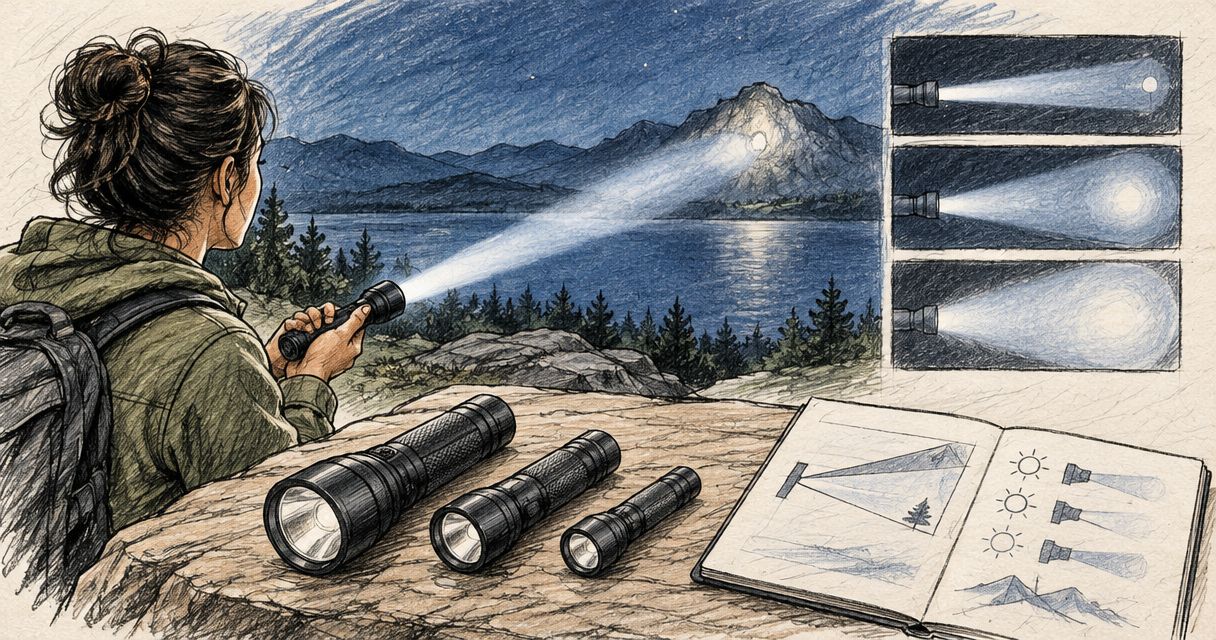
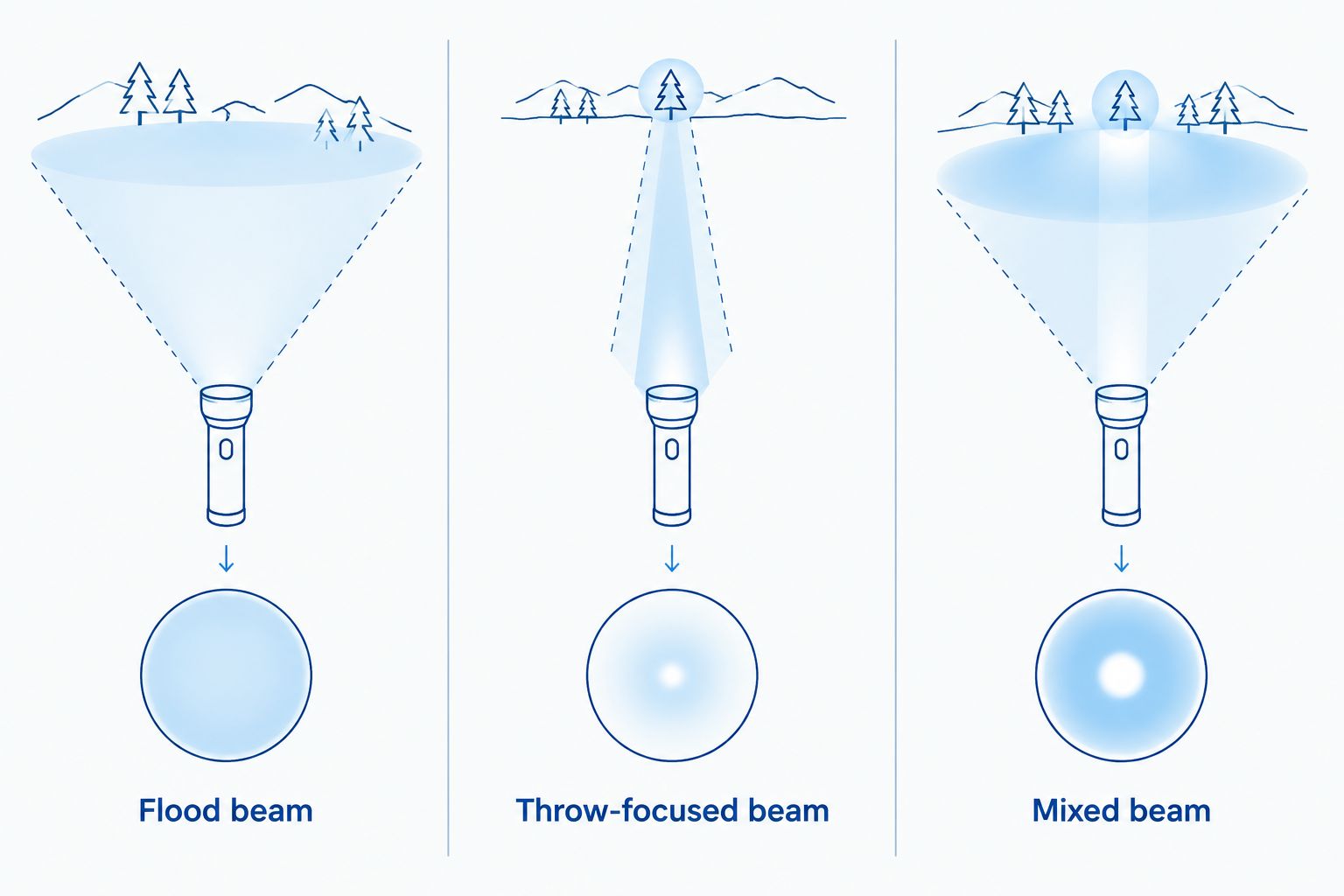
Beam pattern determines how comfortable a torch is to use at close range and how effectively it directs light towards a distant target. None of the patterns below wins every task.
| Beam pattern | Best for | Main advantage | Main trade-off | What to compare |
|---|---|---|---|---|
| Flood beam | Close work and broad nearby illumination | Covers a wide area | Less concentrated light towards distant targets | Useful coverage and output on working modes |
| Throw-focused beam | Inspecting distant targets | Concentrates intensity into a hotspot | Narrow coverage demands more deliberate aiming | Candela, rated distance and hotspot size |
| Mixed beam | Walking and general outdoor use | Combines a hotspot with surrounding spill | Balance varies between optical designs | Beam photographs and same-mode specifications |
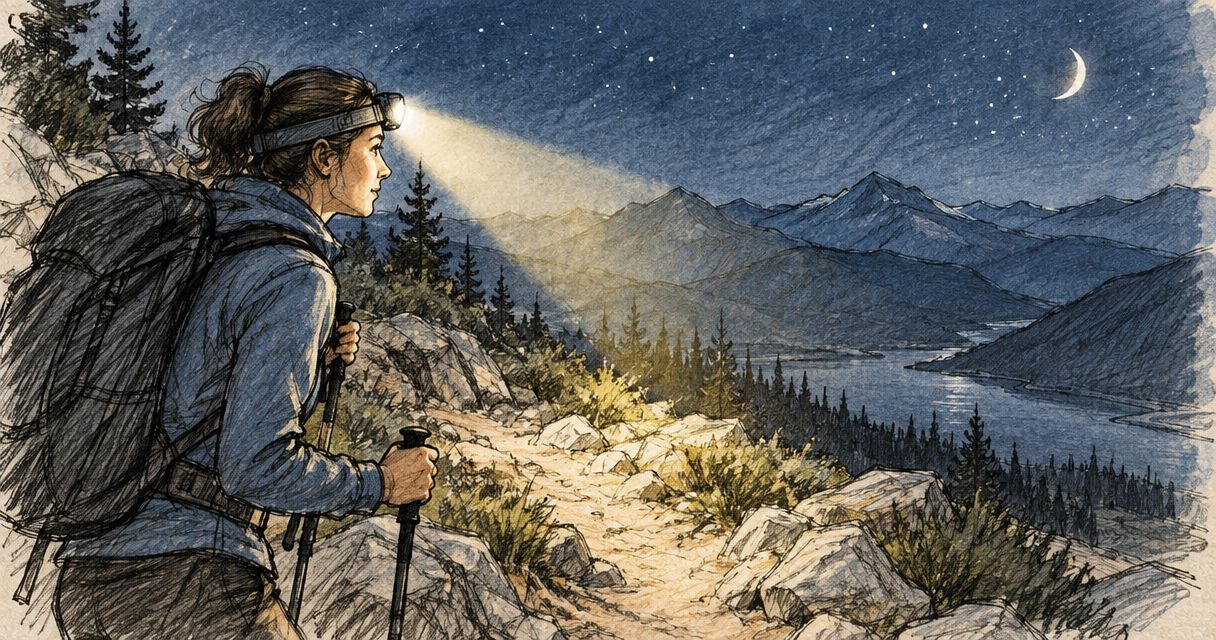
Choose the beam for the task, not the largest number on the listing. For a night walk, surrounding spill helps you see the path as well as the direction ahead; for inspecting a distant point, concentrated intensity matters more.
Flood beam: choose coverage over headline reach
A flood beam suits work where the subject is nearby and you need to see more than a small central spot. Think about preparing equipment, moving around a campsite or looking inside a storage area.
The trade-off is distance concentration. A large total output spread widely does not necessarily put enough intensity onto a faraway target, so a high lumen rating does not remove the need to check candela.
Throw-focused beam: choose concentration deliberately
A throw-focused beam suits a specific distant target. Its strength is directing intensity towards that target rather than distributing the same light broadly around you.
The trade-off is situational coverage. A tightly concentrated hotspot does not replace useful near-field illumination, and you still need to judge whether the surrounding spill suits walking, searching or working.
Mixed beam: inspect the balance
A mixed beam combines a central hotspot with spill around it. That combination suits general use when you need some forward reach without giving up all nearby coverage.
The description is not a standardised performance rating. Look for beam photographs taken under stated conditions, because two torches described as general-purpose can distribute their light differently.
Rated distance is not identification distance
A rated beam distance describes an illumination threshold, not what you will recognise there. Seeing that something reflects light is a different task from identifying its shape, reading lettering or distinguishing fine detail.
Target reflectivity, contrast, weather and surrounding light all affect the result. A pale reflective surface and a dark object against vegetation will not be equally easy to see, even at the same distance.
For security rounds, hunting preparation or a smallholding inspection, define the observation task before choosing a specification. Avoid applying an arbitrary fraction of rated distance as a universal identification rule; it would replace one oversimplification with another.
Instead, ask whether a demonstration shows a relevant target at a known distance. A photograph of an illuminated wall does not answer every question about recognition across an open field.
Check sustained output, not only the first burst
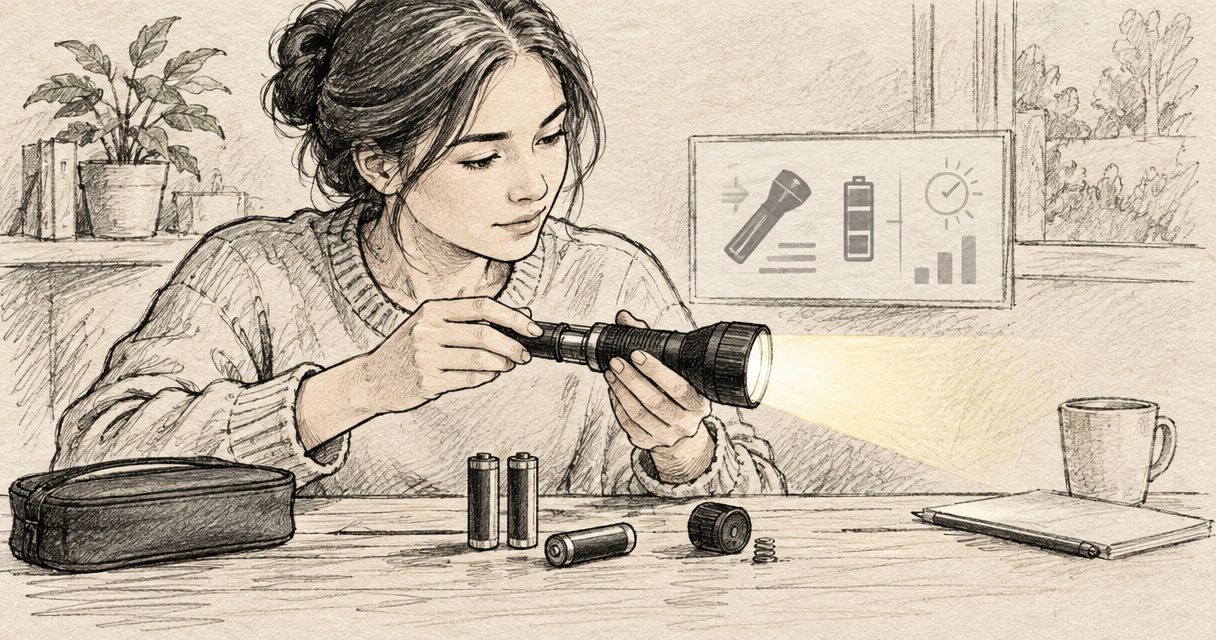
Maximum output and sustained output answer different questions. A peak mode tells you what the torch can initially produce under its stated conditions; a runtime graph shows how output changes during operation.
Thermal regulation, battery condition and operating mode affect that behaviour. Do not assume that a headline lumen figure remains unchanged throughout the advertised runtime, or that maximum rated distance applies to every selectable mode.
When comparing specifications in 2026, keep the following information together:
- Operating mode: the named setting attached to the output and distance figures.
- Battery condition: the battery type and test conditions used for the specification.
- Output curve: whether light output stays relatively steady or falls during the run.
- Beam intensity: the candela associated with that mode, where published.
- Practical controls: whether you can reliably select the setting you intend to use.
A lower-output mode can be the more useful working setting when it provides suitable illumination for longer use. That is a task-based decision, not evidence that maximum output has no value.
A buying checklist for South African torch users
TorchSA is a torch retailer for South African buyers comparing lighting for outdoor, camping and security tasks. Its direct-to-public and wholesale options serve different purchasing needs, but neither buying route replaces checking the specifications of the particular torch.
Before buying, write down what you need the beam to do. The following sequence keeps that requirement separate from advertising shorthand.
Define the target
Decide whether you need to illuminate your immediate surroundings, inspect a distant point or combine both tasks. Describe the target itself, not just a distance: a path, a gate and lettering on a sign demand different visual information.
Choose the beam pattern
Match flood, throw-focused or mixed coverage to that target. Check whether the hotspot and spill support the whole task, especially when you need to move safely while looking ahead.
Compare like-for-like specifications
Read lumens, candela, rated metres and runtime together, using the same operating mode wherever possible. If a specification is unclear, ask for clarification rather than filling the gap with a lumens-to-distance estimate.
Check ownership requirements
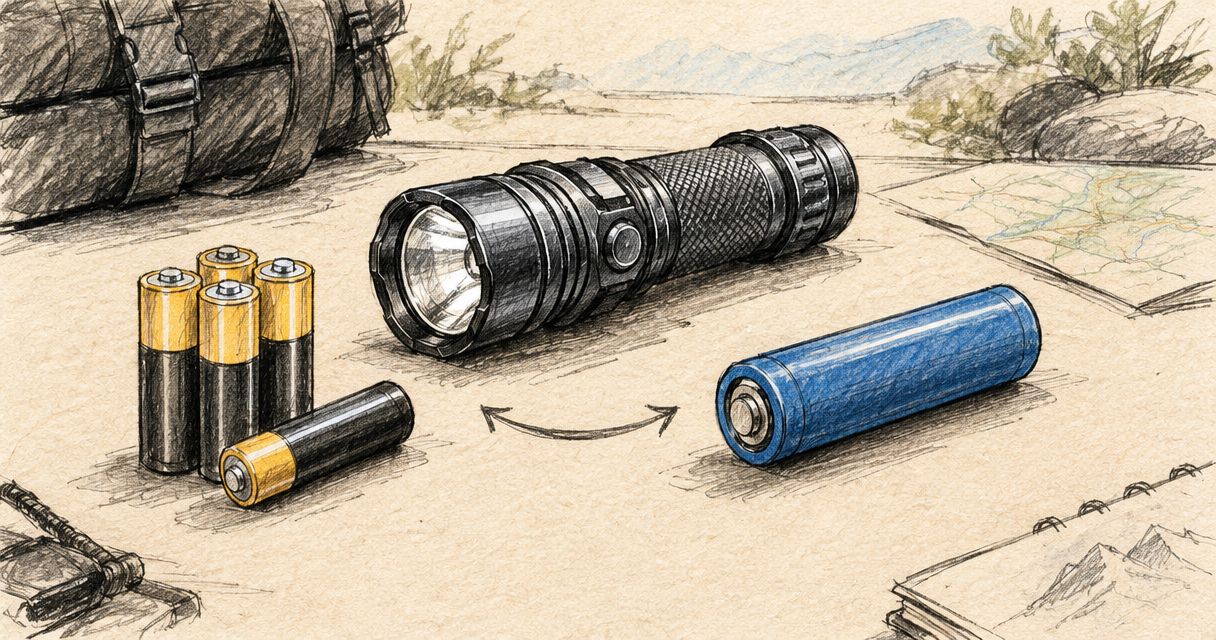
Confirm battery compatibility, charging arrangements and the controls before making a decision. For a 2026 shortlist, these practical details deserve the same attention as peak output because they determine how you will use and maintain the torch.
You can ask about torch specifications when the published information does not resolve a particular requirement. State the target, intended distance and expected duration so the question leads to a useful comparison.
FAQ
Can I calculate flashlight throw distance by lumens?
No. Flashlight throw distance by lumens cannot be calculated reliably because total output does not specify how tightly the optics concentrate the beam. Use peak candela or a rated beam-distance figure instead.
How far does a 1,000-lumen torch shine?
There is no fixed distance for a 1,000-lumen torch. Different optics distribute that output differently, so you need candela or a measured beam-distance specification to compare reach.
What is the difference between lumens and candela?
Lumens measure total visible light output, while candela measures intensity in a particular direction. Lumens help describe output; peak candela helps describe the concentrated part of a torch beam.
How many candela are needed for 300 metres of rated throw?
A rated distance of 300 metres corresponds to 22,500 candela at the standard 0.25-lux threshold. This is a calculated illumination endpoint, not a guarantee of identification at 300 metres.
Does twice the candela mean twice the beam distance?
No. Doubling rated beam distance requires four times the candela under the same threshold. For example, 10,000 cd calculates to 200 m, while 40,000 cd calculates to 400 m.
Is a flood beam or a throw beam better for camping?
A flood beam suits nearby campsite tasks, while a throw-focused beam suits inspecting a distant point. Choose a mixed beam when you need both surrounding coverage and a central hotspot, then check its actual beam pattern.
What should I compare before buying a torch in 2026?
Compare beam pattern, same-mode lumens and candela, rated distance, sustained output and battery requirements. TorchSA buyers should use the intended task to decide which specification matters most rather than ranking torches by lumens alone.
One last thing
A 400 m rated beam does not require twice the intensity of a 200 m beam; it requires four times as much. That square-root relationship explains why a substantial increase in candela can produce a smaller-looking increase in the distance figure.
Before dismissing that difference—or paying attention only to lumens—return to your target. The right comparison is the light delivered where you need it, with enough surrounding coverage and useful operating time to finish the task.