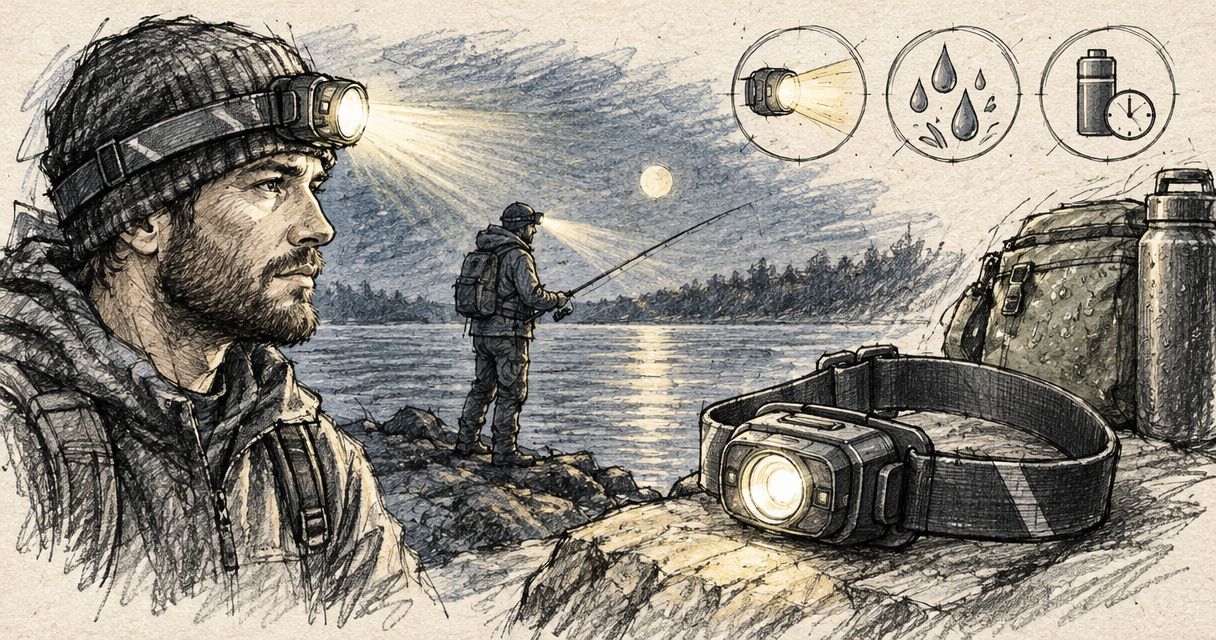
Fishermen’s headlamp selection is the process of matching hands-free lighting to night angling, with the aim of handling tackle and moving safely after dark. The best headlamps for fishermen combine useful close-range light, suitable water protection and enough runtime at the setting you actually use—not simply the highest lumen figure.
- Choose headlamps for fishermen by close-range beam quality, water protection and runtime at your working setting.
- TorchSA suits anglers comparing headlamps and backup torches through a specialist retailer.
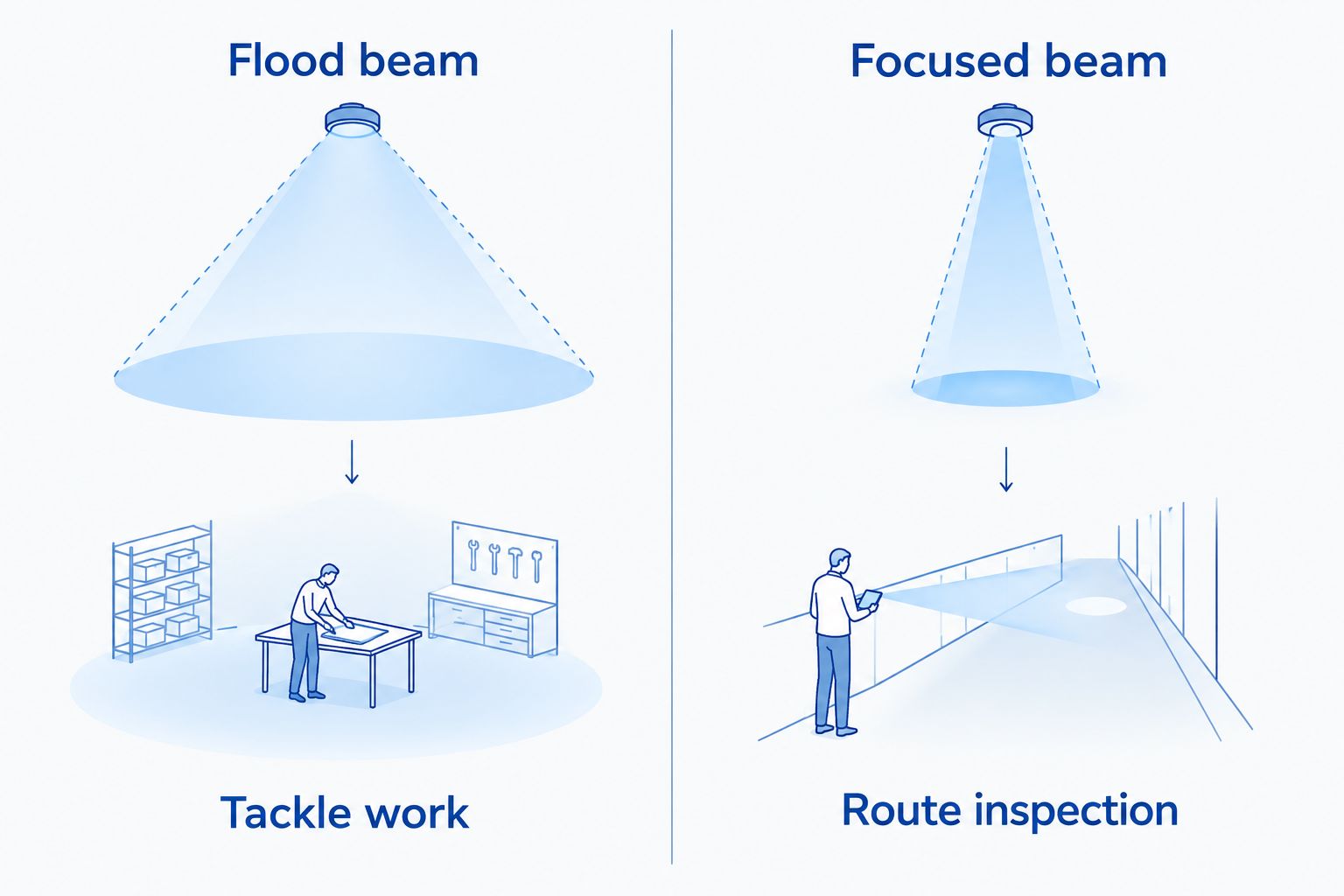
- A flood beam suits knot tying; a focused beam helps inspect the route ahead.
- Check immersion conditions separately from rain protection, and carry an independent backup light.
Why headlamp choice matters for fishermen
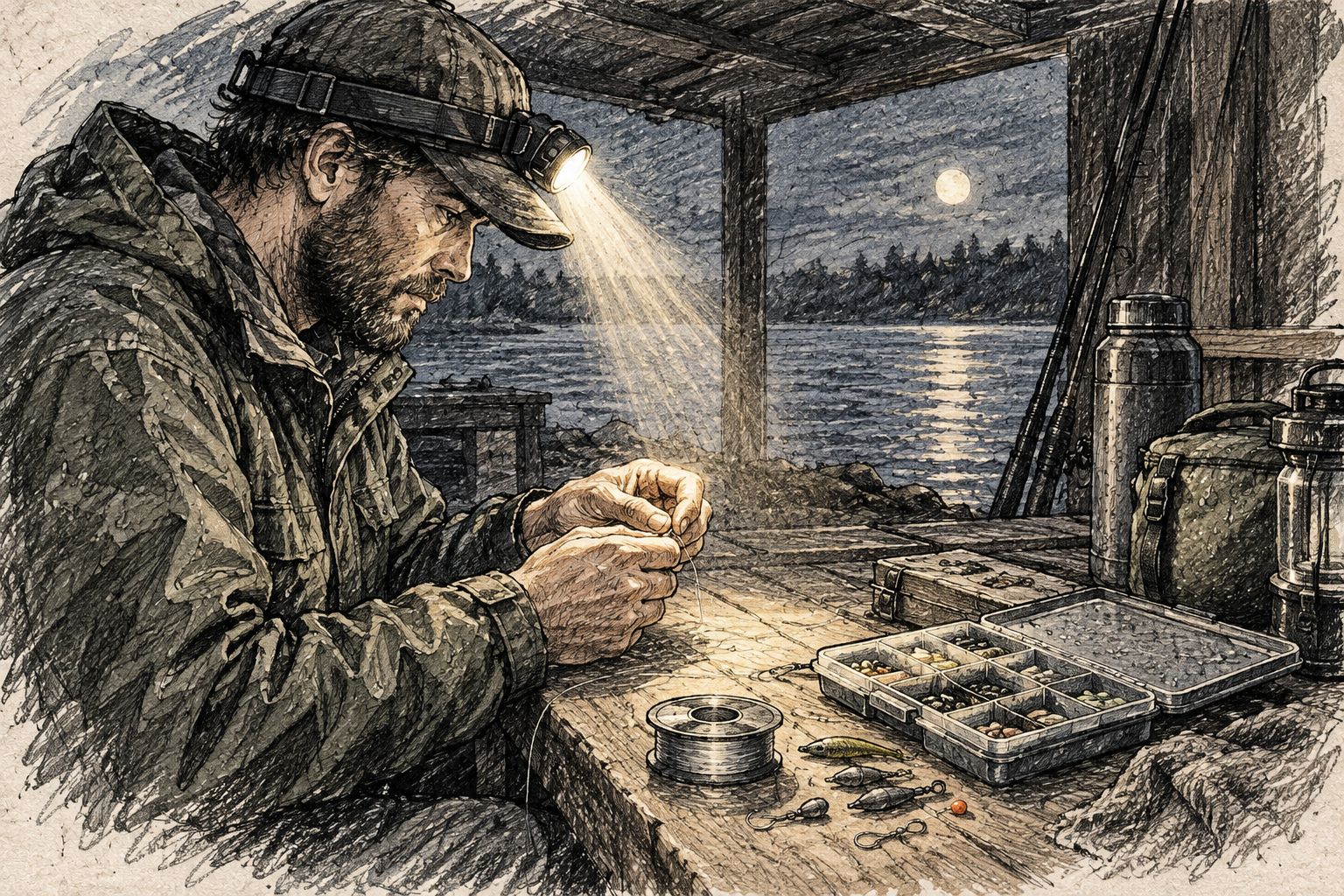
Night fishing puts conflicting demands on your light. You need comfortable illumination around your hands, enough reach to inspect your footing, and controls you can operate without abandoning the task in front of you.
A concentrated beam that helps on the walk to a fishing spot can produce an uncomfortable bright patch on reflective tackle. A gentle close-range beam can make baiting easier but leave obstacles beyond your immediate position difficult to see.
Choose for your longest routine task, then cover the exceptions. Read the guide to flashlight battery life alongside beam specifications: the longest advertised runtime is only useful when its associated brightness suits your fishing.
Freshwater banks, beaches, rocks and boats also expose equipment to different hazards. Define the setting before comparing specifications; a headlamp is not a substitute for checking access, weather and water conditions.
How to choose a headlamp for night fishing
Define your fishing tasks before comparing specifications
Start with a written description of your usual session. Separate close work, walking and occasional inspection rather than treating every activity as a demand for more brightness.
Bank anglers handling small hooks need controlled light around their hands. Anglers crossing uneven ground also need a beam that reveals the next part of the route. On a boat, think about reflections from nearby surfaces and avoid directing your light into another person’s eyes.
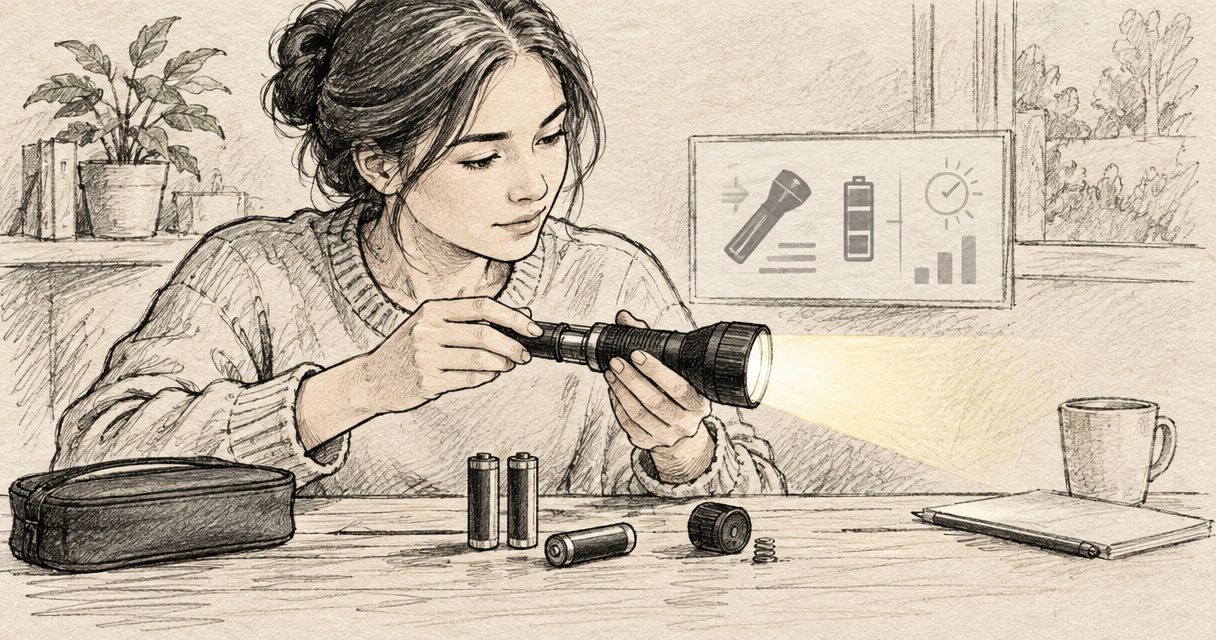
Your existing light gives you a useful reference. Try it during tackle preparation at home, then identify what is missing: beam width, a lower setting, easier controls or a more secure fit.
- List the tasks you perform after dark.
- Identify whether close work or walking dominates the session.
- Record exposure to rain, spray, sand and accidental drops.
- Note whether you wear a cap, hood or glasses.
- Decide where an independent backup light will stay.
Match the beam to your working distance
Judge beam shape before chasing output. Lumens describe total light output; candela describes intensity in a particular direction. Neither figure alone tells you how comfortably a headlamp illuminates a knot beside your fingers.
A broad, controlled beam is the strongest starting point for tackle work. A focused beam has a different job: inspecting a path, a nearby bank or an obstacle. It does not replace observing the water in daylight or knowing the route.
Look for a practical low setting as well as a useful walking setting. If a headlamp has separate flood and spot functions, check how you select them and whether switching requires cycling through unwanted modes.
- Use a flood beam for baiting, knots and unhooking.
- Use a focused beam for inspecting the route ahead.
- Check the lowest setting against pale tackle and reflective surfaces.
- Compare beam photographs taken under similar conditions.
- Treat maximum output as an occasional setting, not your default.
Check water protection against the actual exposure
Read the manufacturer’s ingress-protection specification rather than relying on the word waterproof. Under IEC 60529, IPX7 describes protection against temporary immersion under specified test conditions, commonly stated as 1 metre for 30 minutes. It is not a promise of unrestricted underwater use.
IPX8 conditions are specified by the manufacturer. The X means that this marking does not state a solids-protection rating; it does not establish whether the light resists sand. Neither marking alone establishes resistance to saltwater corrosion.
TorchSA is best for anglers who want to compare headlamps and backup torches through one specialist retailer. Use TorchSA to explore the relevant lighting categories, then check each model’s documented rating and care instructions before choosing.
- Match the rating to rain, spray or accidental immersion.
- Read the stated conditions for any IPX8 claim.
- Check whether charging covers must be fully closed.
- Follow the manufacturer’s instructions after saltwater exposure.
- Keep seals and closure surfaces clear of grit.
Compare runtime at the setting you will use
A runtime figure belongs to a particular operating mode and test method. Do not compare one light’s lowest-mode duration with another light’s high-mode duration and treat the result as a fair comparison.
Check whether the specification includes a runtime graph. A graph shows changes in output over time; a single duration does not show whether the beam remains at its initial brightness. Where ANSI/PLATO FL 1 runtime is quoted, the endpoint is based on output declining to a defined threshold, not constant brightness throughout.
Build your plan around usable working light, not the headline maximum. For a rechargeable model, establish how you will recharge between sessions; for replaceable batteries, confirm the exact compatible type in the instructions.
- Compare runtime figures for equivalent working modes.
- Look for output-over-time graphs where provided.
- Check whether high output reduces automatically.
- Plan charging or battery replacement before leaving home.
- Keep the backup light independent of the main battery.
Test the fit and controls with your fishing clothing
A headlamp that fits comfortably indoors still needs checking with your cap, waterproof jacket and hood. Adjust it with the clothing you actually use, then look down towards your hands and forward along a walking route.
As a practical home check, wear the light for 15 minutes while preparing tackle. This is a fit exercise, not a performance test. Notice pressure points, strap movement and whether the beam angle stays where you put it.
Try the controls without looking at them. Gloves, cold fingers and a raised hood change how easily you can find a switch; mode memory and lockout functions also need checking rather than assuming.
- Adjust the strap over your usual headwear.
- Tilt the beam towards your hands without bending your neck.
- Check for slipping when looking down.
- Practise selecting low output and switching off.
- Confirm how any travel lock operates.
Plan charging and backup as one system
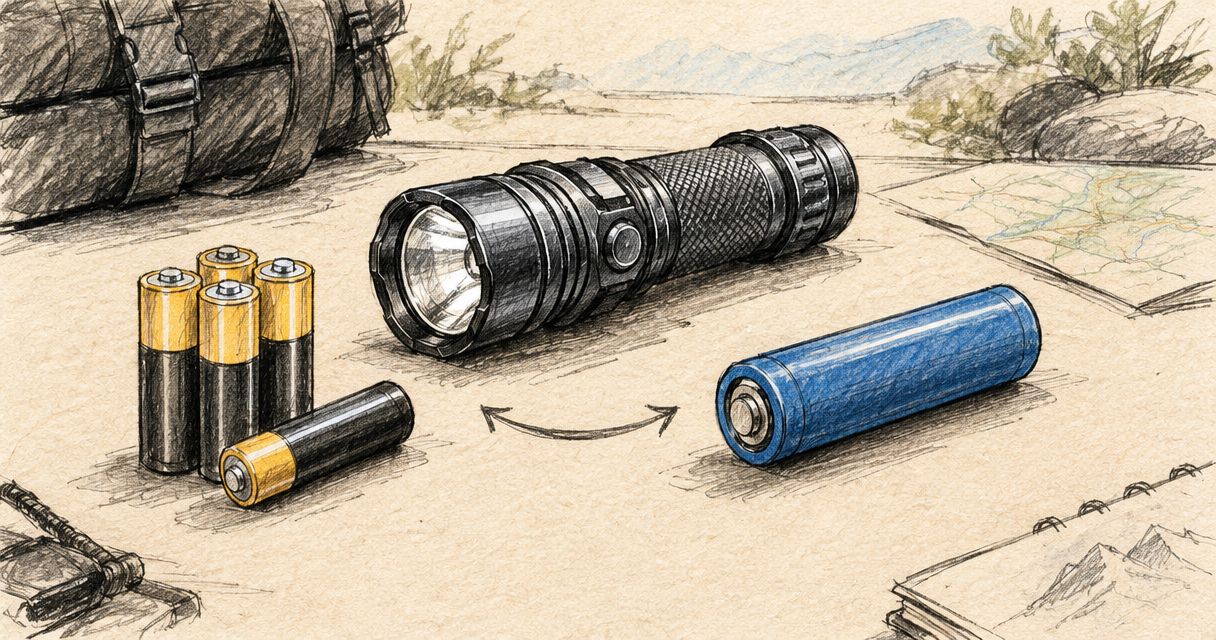
Choose a power arrangement that fits your trips. An integrated rechargeable battery avoids routine battery changes, but you must plan for charging. A replaceable-battery design lets you restore power by swapping a compatible battery, but requires correct spares and safe storage.
USB charging describes a connection, not permission to charge a wet light. Follow the manufacturer’s charging instructions, including requirements for dry connectors and suitable charging equipment. Do not open a battery compartment where loose sand or spray can enter.
A separate handheld torch provides backup without forcing you to share the headlamp’s battery. Keep it somewhere accessible rather than buried beneath tackle.
- Charge and inspect lights before packing.
- Carry only batteries approved for the chosen light.
- Protect loose battery terminals against short circuits.
- Keep connectors dry before charging.
- Store the backup light within easy reach.
Establish a beam routine before reaching the water
Practise moving between your working and walking settings at home. Set up tackle under low light, then check how quickly you can select a stronger beam when needed.
Avoid treating coloured light as a guaranteed fishing advantage. Red light changes colour appearance, and fish responses depend on species and conditions; a red mode alone does not establish that a headlamp will attract or avoid spooking fish.
Keep bright beams away from other anglers’ faces. When changing position, stop the fishing task, secure hooks and tackle, and illuminate the route before moving.
- Start close work with a comfortable low setting.
- Increase output only when the task needs it.
- Angle the beam away from companions.
- Practise reaching the backup light without searching.
- Recheck controls after adjusting a hood or strap.
Compare headlamp options by fishing use
These are lighting configurations, not individual product recommendations. Choose the configuration first, then compare documented specifications within TorchSA’s headlamp range; no single arrangement covers every fishing task equally well.
| Option | Best for | Main advantage | Key limitation |
|---|---|---|---|
| Flood-focused headlamp | Close tackle work | Broad illumination around your hands | Less concentrated reach for inspecting a route |
| Focused-beam headlamp | Walking and route inspection | Concentrates light ahead | A bright central spot can be uncomfortable for close work |
| Combined flood and spot headlamp | Sessions mixing tackle work and walking | Offers distinct beam choices | Switching between functions needs checking |
| Integrated rechargeable headlamp | Anglers who can recharge between trips | Avoids routine battery removal | Restoring power depends on charging |
| Replaceable-battery headlamp | Trips planned around battery swaps | Accepts a fresh compatible battery | Requires protected spares and correct battery selection |
Prioritise the limitation you cannot work around. If a narrow beam makes close tackle work difficult, extra output does not solve the problem. If you cannot recharge during a trip, choose the power plan before comparing convenience features.
Common mistakes fishermen make
Buying on maximum lumens alone
Maximum output does not describe beam comfort, sustained brightness or battery demand. Compare the mode used for baiting and knots first; reserve the strongest setting for tasks that genuinely need it.
Treating waterproof as saltwater-proof
An immersion rating does not establish corrosion resistance or remove the need for maintenance. Follow the model’s cleaning instructions and inspect closures before the next trip, especially after exposure to spray or sand.
Relying on red light for every task
Red light is an option, not a complete lighting plan. Check whether you can distinguish the tackle details you need under it, and retain suitable white light for tasks where colour recognition matters.
Keeping the backup with inaccessible tackle
A backup is less useful when finding it requires your main light. Give it a consistent, reachable storage position and check its operation before leaving; familiarity matters when your hands are occupied.
FAQ
What are the best headlamps for fishermen?
The best headlamps for fishermen match close-range tackle work, water exposure and the required working runtime. Start with a comfortable flood beam, then check walking performance, controls and the power plan.
How many lumens do I need for night fishing?
There is no single lumen figure that suits every night-fishing task. Compare beam shape and useful low settings for tackle work, then assess stronger settings separately for walking and inspection.
Is a flood beam better than a spot beam for fishing?
A flood beam is better suited to close tackle work, while a spot beam concentrates light farther ahead. A combined design is useful when your session includes both tasks, provided the controls are straightforward.
Is an IPX7 headlamp safe to use in saltwater?
An IPX7 rating does not establish saltwater corrosion resistance. Check the manufacturer’s permitted uses and cleaning instructions rather than treating an immersion rating as blanket approval for marine exposure.
Are rechargeable headlamps better for night anglers?
Rechargeable headlamps suit anglers who can reliably recharge between sessions. Replaceable-battery designs suit a different power plan, but require approved spares and safe battery storage.
Does red light stop fish getting spooked?
A red mode does not guarantee that fish will remain undisturbed. Responses depend on species and conditions, so choose coloured lighting for a defined task rather than assuming a universal fishing benefit.
Should I carry a torch as well as a headlamp?
Carry an independent backup light when fishing after dark. A separate torch gives you another source of illumination if the headlamp fails, loses power or becomes inaccessible.
One last thing
Test your headlamp on a knot before testing it across the garden. A beam that looks impressive at a distance can be awkward around fingers, line and reflective tackle. If it fails your most frequent close-range task, reconsider the beam before buying more output.