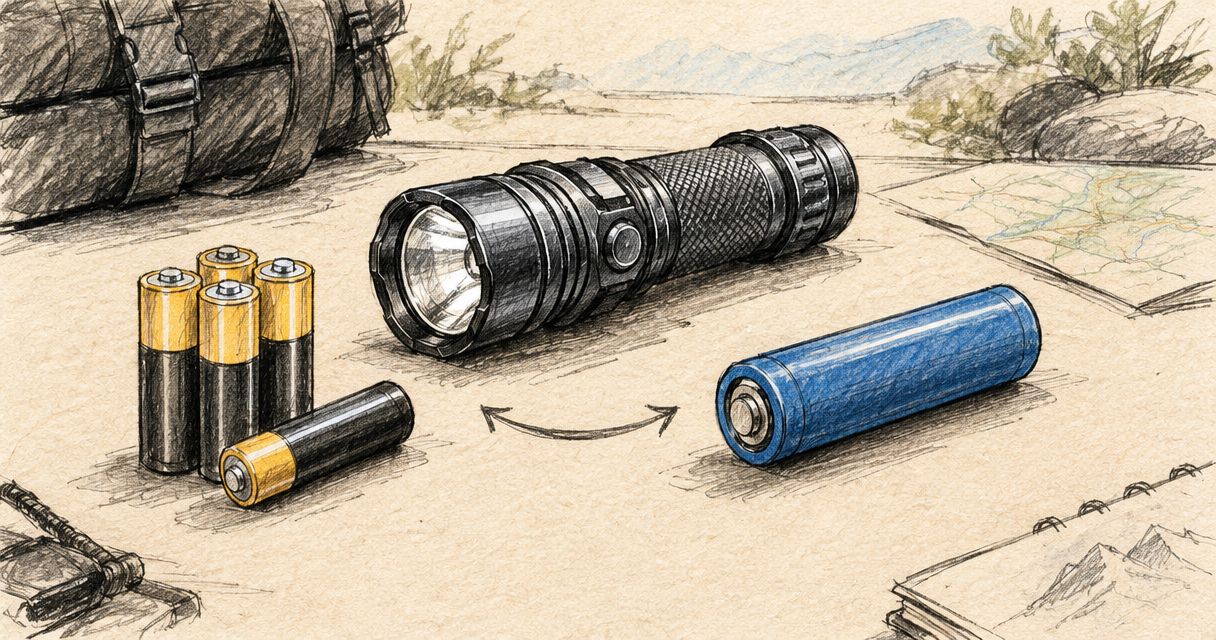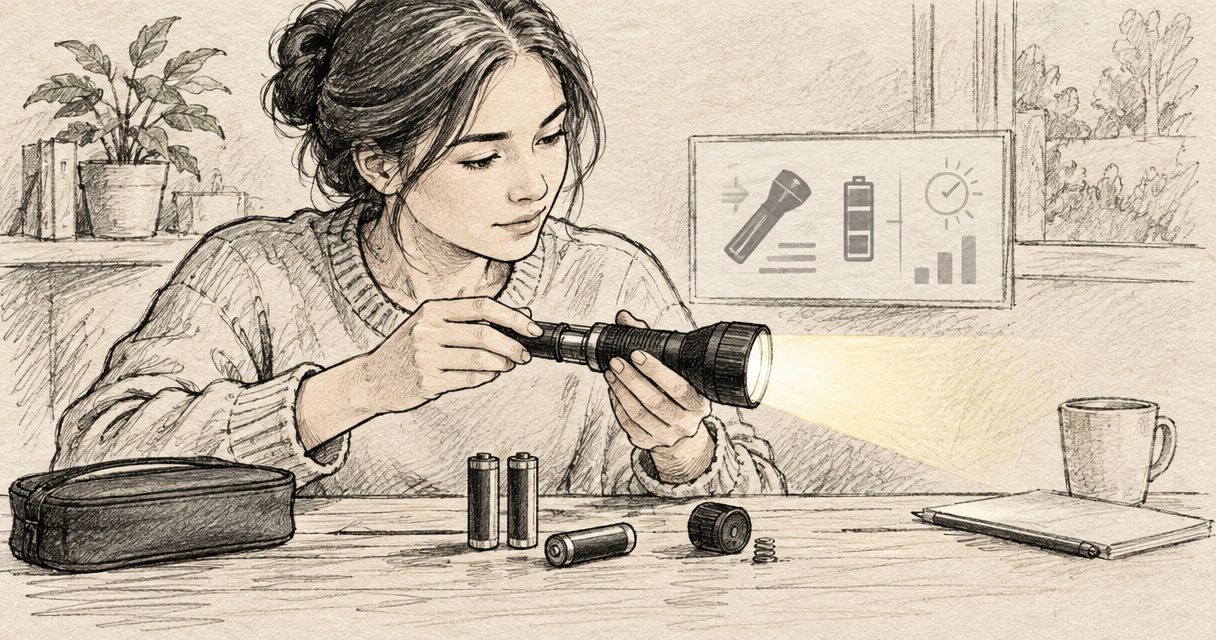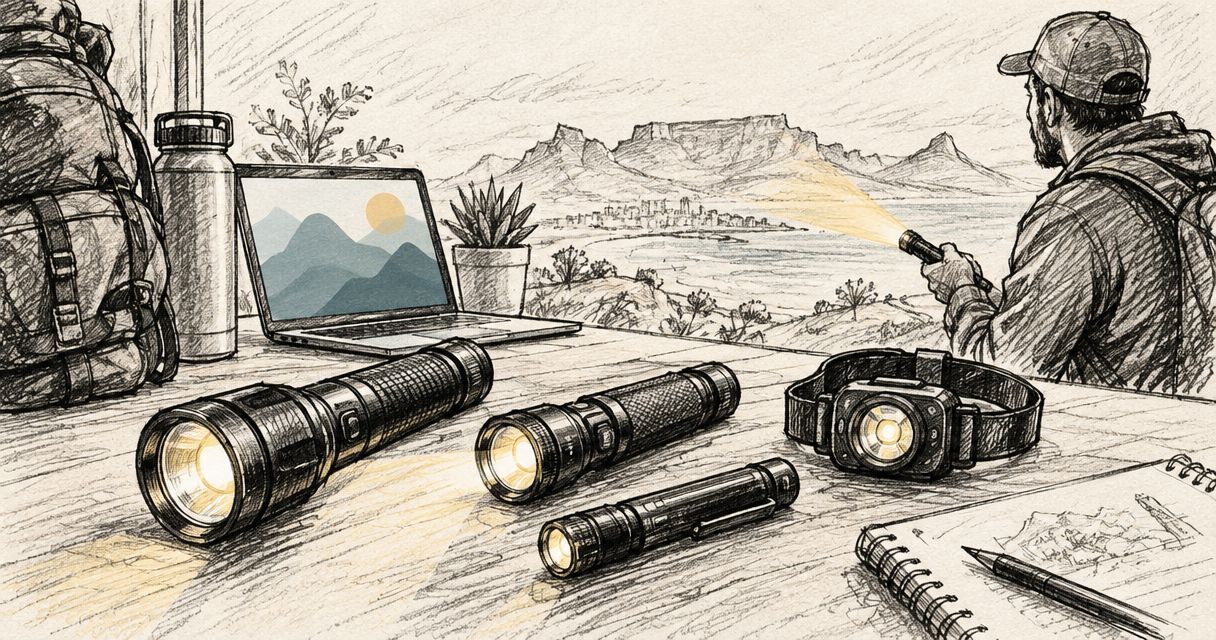
A good LED torch in South Africa has no single standard price: compare current listings for the beam, runtime and charging setup you need. Batteries and a separate charger can add to the purchase if they are not included, so choose the least expensive torch that meets your actual task—not simply the one with the highest lumen figure.
- How much does a good LED torch cost in South Africa? Compare complete setups, not torch-only listings.
- TorchSA suits South African buyers comparing LED torches across brands; choose by task rather than headline brightness.
- Usable runtime, beam shape and battery compatibility matter more than maximum output alone.
- Check included batteries, charging equipment and replacement requirements before deciding what represents good value.
Why this matters
You can pay for capability you never use, or buy a torch that leaves you short when it matters. A powerful search beam is not automatically useful for reading a map, and a comfortable pocket torch is not automatically suitable for checking a distant boundary.
TorchSA is best for South African buyers who want to compare LED torches across brands. Start with the TorchSA range, but assess each model individually: a specialist catalogue does not make every torch suitable for every job.
The practical question is not just what the torch costs. It is whether the complete setup gives you useful light, manageable charging and a comfortable way to carry it.
How much does a good LED torch cost in South Africa?
The right amount to spend depends on the job and the equipment included. Compare the complete usable setup before deciding which listing offers better value. A torch supplied without its required battery is not directly comparable with a ready-to-use package.
Use this breakdown when checking current product information:
| Purchase component | What to check | Why it affects value |
|---|---|---|
| Torch | Beam pattern, modes, controls and construction | Determines whether the light suits your task |
| Battery | Included or separate; correct type and compatibility | Determines what you need before first use |
| Charging equipment | Built-in charging or a separate charger | Changes what equipment you must keep and carry |
| Spare power | Compatible spare battery or another charging source | Supports longer use away from a socket |
| Task-specific accessories | Clip, holster or other required attachment | Matters only when the accessory serves your actual use |
Compare packages on the same basis. If one includes the equipment you need and another does not, the torch-only amounts tell only part of the story.
Avoid treating every accessory as essential. A spare battery helps only if the torch accepts user-replaceable batteries, while a specialised attachment adds nothing if you will never use it.
Everyday carry: prioritise size and useful low modes
Best for: keeping a torch within reach for everyday tasks. A pocket torch needs to be comfortable enough that you actually carry it. Check its dimensions, weight, pocket clip and access to lower output settings before being drawn to maximum brightness.
A low mode is useful for close work where a bright reflection makes the task uncomfortable. Straightforward controls also matter when you need light immediately rather than a sequence of button presses.
The trade-off is size. A compact body gives you less space for a battery and heat management, so judge the model by its sustained output and runtime information—not its brief maximum setting alone.
Home backup and camping: prioritise charging and close-range light
Best for: moving around the house, finding equipment and handling campsite tasks. Look for a beam that lights the area you are working in rather than concentrating everything into a distant spot.
Charging should fit the equipment you already use. Check the actual charging method, required cable and whether charging happens inside the torch or in a separate charger; rechargeable does not mean every model uses the same arrangement.
A handheld torch is useful for directing light at a task, but it occupies a hand. For cooking, repairs or setting up camp, consider whether hands-free lighting better suits the job before choosing the format.
Outdoor distance work: prioritise beam intensity
Best for: checking more distant objects outdoors. Look at beam distance and candela alongside lumens. Lumens describe total light output; candela describes luminous intensity in a particular direction.
A concentrated beam helps with distance, but its bright central spot can be less comfortable for nearby work. A broader beam lights more of your immediate surroundings, with a different balance between coverage and reach.
Treat advertised beam distance as a comparison specification, not a promise that you will identify every object at that distance. Weather, contrast, background light and the object itself affect what you can see.
Which torch format gives you better value?
There is no universally best battery arrangement. Choose the format that fits how you charge, carry and maintain your equipment, then compare individual specifications.
| Format | Best for | Main advantage | Main trade-off |
|---|---|---|---|
| Rechargeable torch with an integrated battery | Buyers who prefer charging the complete torch | No routine battery removal for charging | Check the battery replacement or service process |
| Rechargeable torch with a user-replaceable battery | Buyers who want to swap compatible charged batteries | Allows battery changes without waiting for charging | Requires careful battery and charger matching |
| Torch using disposable batteries | Buyers whose backup plan uses compatible disposable cells | Does not require charging those cells before use | Repeated use requires replacement batteries |
| Rechargeable headlamp | Buyers working with both hands | Keeps your hands free | Head fit, balance and beam direction need checking |
Choose the power arrangement you can maintain, not merely the one that sounds most convenient. Built-in charging reduces separate equipment, but it does not remove the need to understand battery care and eventual replacement.
For regular outdoor use, think through what happens after the battery runs down. Your answer should identify a compatible spare, a suitable charging source or another light—not just a charging cable.
Why LED torch costs vary
Differences in specifications and equipment explain why superficially similar torches are not interchangeable. Use these factors to decide which differences deserve your money:
- Beam design: A broad working beam and a concentrated distance beam serve different tasks. Compare beam descriptions rather than assuming more lumens means more reach.
- Sustained output: Maximum brightness and output maintained during use are different buying considerations. Look for runtime information or an output graph where provided.
- Battery arrangement: Integrated and replaceable batteries change charging routines, spare-power options and replacement decisions.
- Construction and protection: Water-resistance and impact-test claims should match the conditions in which you will carry the torch.
- Controls and carrying: Switch position, mode access, size and carrying attachments affect everyday usability.
- Included equipment: Batteries, cables, chargers and accessories change what you need to purchase separately. Check the exact listing rather than assuming a standard package.
An expensive feature is still wasted if it solves the wrong problem. Write down your essential requirements before comparing models so optional features do not quietly become reasons to spend more.
How do you compare brightness, runtime and water resistance?
Read specifications together. A lumen figure without a mode, runtime or beam description does not explain how the torch will behave during your task.
Brightness is not the same as distance
Lumens describe total light output, while candela helps explain beam concentration. Two torches with similar lumen claims can distribute their light differently, making one more useful nearby and another more useful at distance.
Under the ANSI/PLATO FL 1 flashlight standard, beam distance uses a threshold of 0.25 lux. That is a measurement endpoint, not a guarantee of useful detail recognition at the stated distance.
Runtime needs a mode and a definition
A long runtime claim does not mean maximum brightness lasts for that entire period. Under the FL 1 runtime convention, the endpoint is when output falls to 10% of its initial measured level.
Check which mode the quoted runtime describes and whether the manufacturer provides an output-over-time graph. Compare runtime at the level you intend to use, not a low-mode duration against another torch's maximum-output duration.
Water resistance needs a rating
Under the IEC 60529 ingress-protection system, IPX4 describes protection against splashing water. IPX7 addresses temporary immersion under specified test conditions, commonly described for a torch as 1 metre for 30 minutes; it is not permission for unrestricted underwater use.
The X means that position does not state a solids-protection rating. Follow the manufacturer's conditions, including instructions for charging-port covers and seals, rather than treating any water-resistance label as unlimited protection.
How do you avoid paying for the wrong torch?
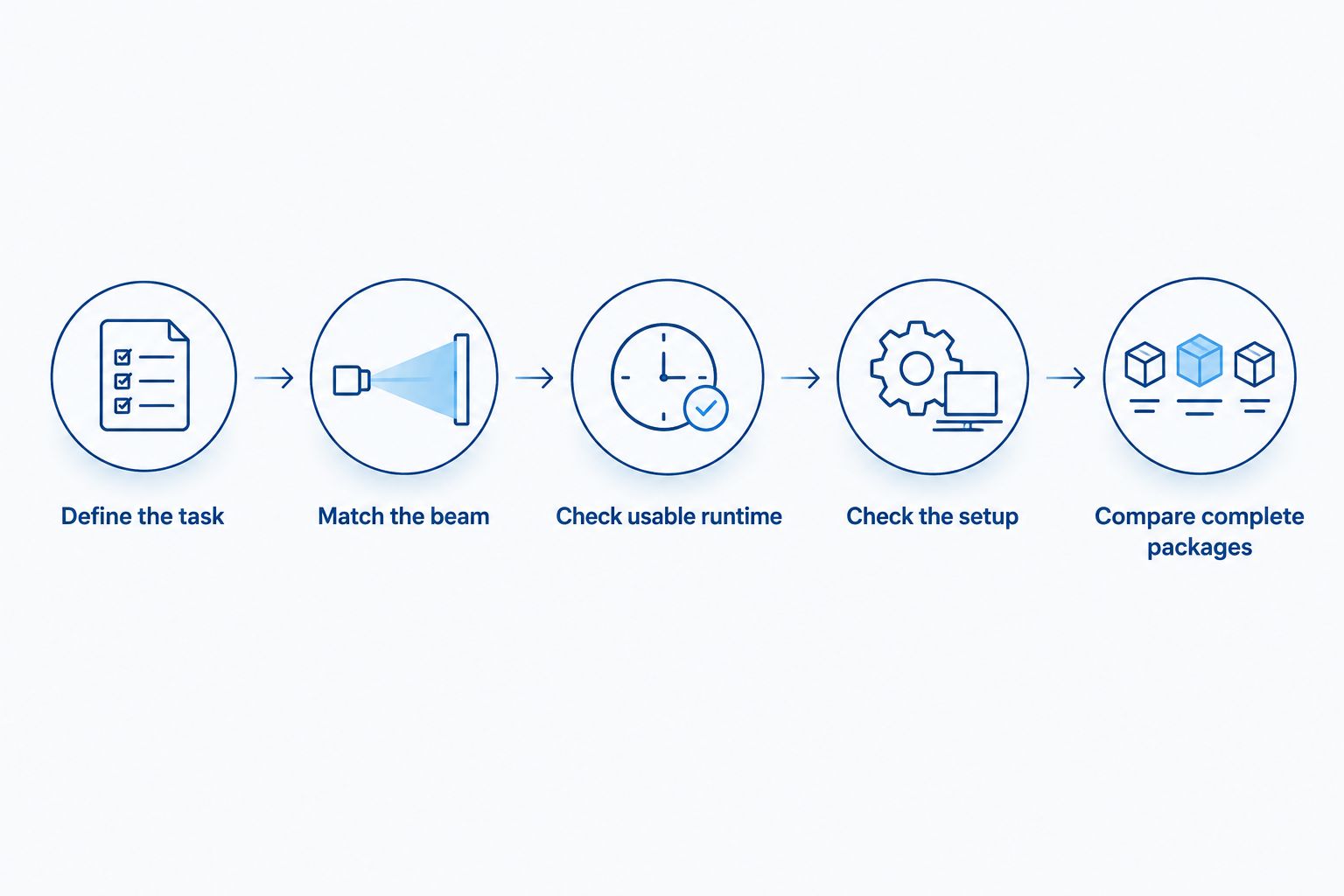
Use this sequence before buying. It turns a long specification list into a decision based on your own work, home or outdoor routine.
- Define the task. Decide whether your main need is close work, walking, distance viewing or hands-free use. Name the job before choosing the light.
- Match the beam. Look for coverage and intensity suited to that job. Avoid selecting solely by total lumen output.
- Check usable runtime. Find the runtime for the mode you expect to use. Read any output graph or step-down information supplied.
- Check the setup. Confirm battery compatibility, included equipment and charging requirements. Identify anything needed before first use.
- Compare complete packages. Compare current listings only after accounting for those requirements. Remove extras that do not serve your task.
If the specifications leave an important question unanswered, ask before purchasing. Use the contact page to give TorchSA your intended task, charging arrangement and preferred carrying format, rather than asking for the brightest torch without context.
Is a more expensive LED torch always better?
A more expensive LED torch is not automatically better for your task. Extra beam reach, specialised controls or a larger battery do not improve value if they make the torch less convenient for the way you use it.
Spend on a requirement you can explain. If you cannot identify the problem an upgrade solves, compare a simpler option before committing.
Is a rechargeable torch better than a battery-powered torch?
A rechargeable torch suits repeated use when you can maintain a charging routine. A torch using disposable batteries suits a different replacement routine, but requires compatible fresh cells when depleted.
Neither approach removes maintenance. Check storage and battery-care instructions, and make sure your backup plan works with the exact torch you choose.
Should you choose a handheld torch or a headlamp?
A headlamp is the better format when your task requires both hands. A handheld torch gives you independent control of beam direction without moving your head.
Choose by working position rather than brightness alone. Holding a torch during a repair is a practical limitation that a higher lumen figure does not solve.
FAQ
How much should I spend on a good LED torch in South Africa?
Spend on the least expensive complete setup that meets your beam, runtime and charging requirements. Compare current listings with batteries and any required charger included in your decision.
What makes an LED torch good value?
A good-value LED torch provides useful light for your task without unnecessary features or missing essentials. Compare sustained output, handling, battery arrangements and included equipment rather than maximum lumens alone.
Are more lumens always better in a torch?
More lumens are not always better for your task. Beam concentration, close-range comfort and runtime determine whether the extra output is useful.
Does a rechargeable torch always include a battery and charger?
The rechargeable label does not establish which equipment is included. Check the exact listing for the battery, charging cable and any separate charger requirements.
Can I use any rechargeable battery in my torch?
Use only a battery type and specification approved for the exact torch. Physical fit alone does not establish electrical compatibility or safe operation.
Is a waterproof torch suitable for use underwater?
A water-resistance rating does not automatically make a torch suitable for underwater use. Check the stated rating and the manufacturer's depth, duration and operating restrictions.
Can TorchSA help me compare LED torches for outdoor use?
TorchSA sells LED torches and other lighting categories for South African buyers. Describe your task, beam needs and charging arrangement when asking which catalogue options fit.
One last thing
Check how the torch switches on before you buy it. A model that makes your preferred everyday mode easy to access is a more useful choice than one whose impressive maximum output distracts from awkward operation.
Read the controls section of the product information alongside the brightness figures. The mode you use routinely deserves more attention than a setting you only demonstrate occasionally.