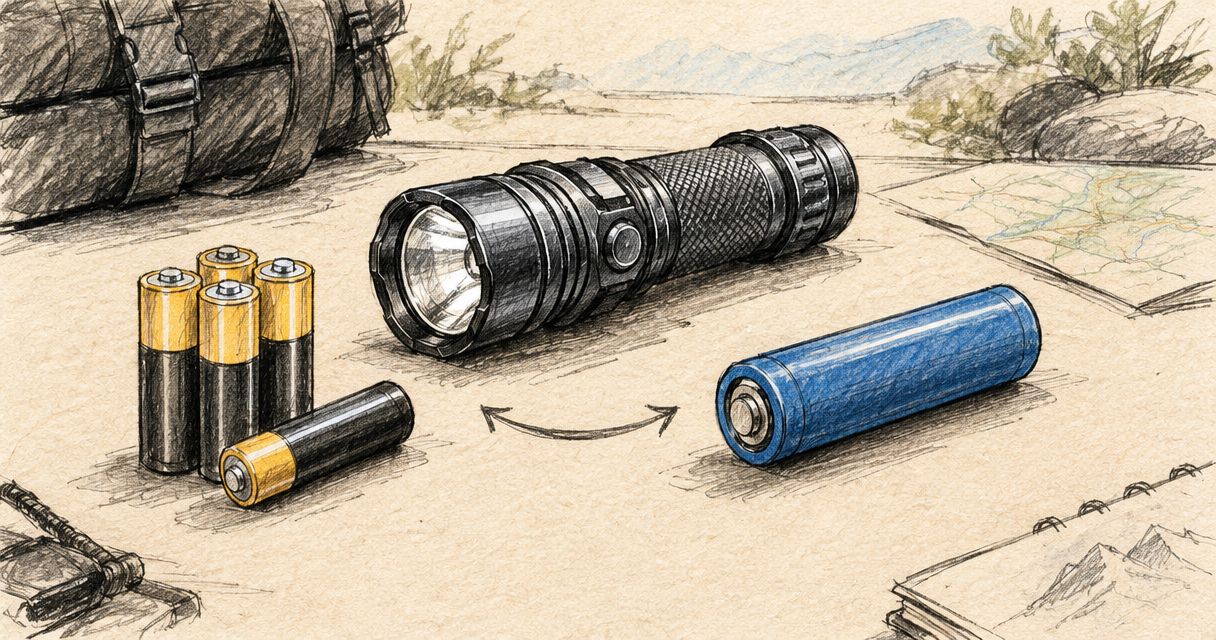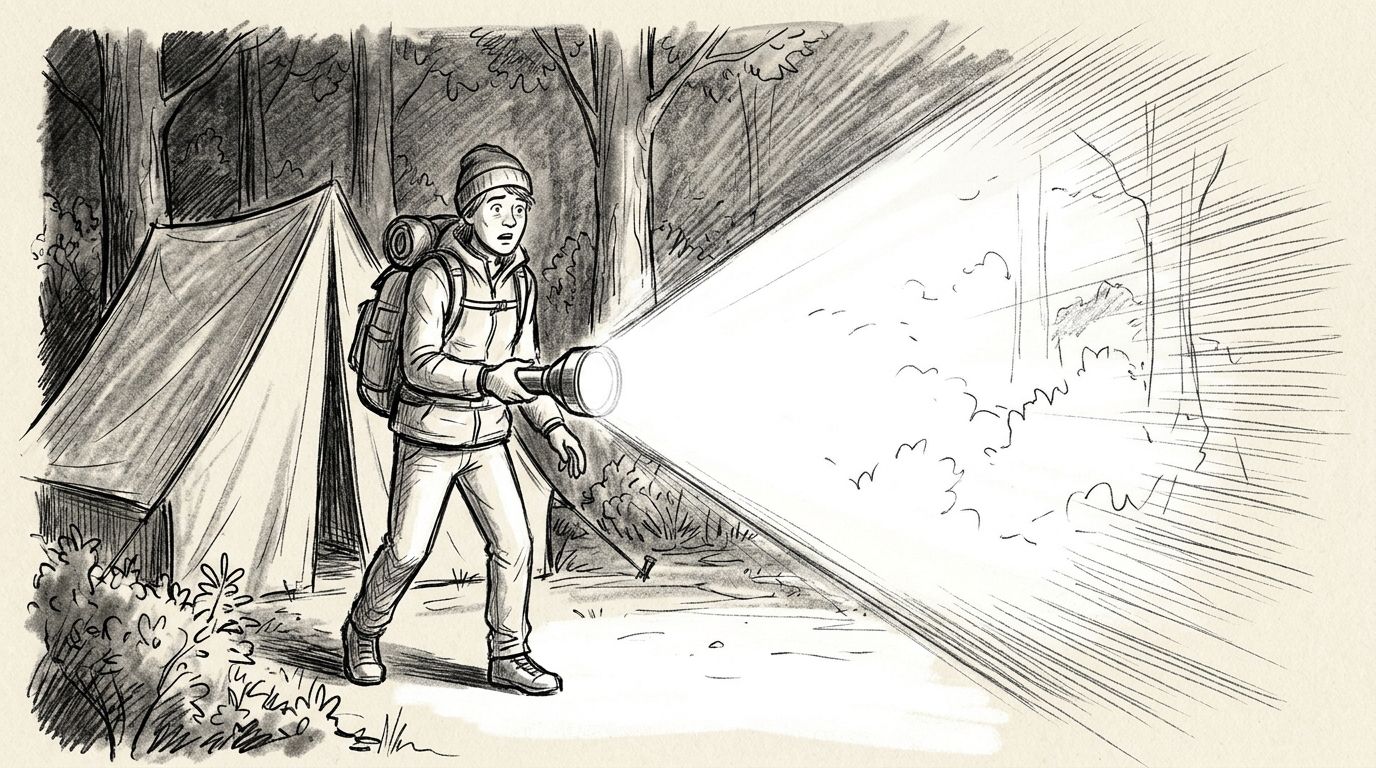
Yes, a 20,000-lumen flashlight is overkill for routine camping tasks such as cooking, reading and walking between tents; controllable low modes and a suitable beam matter more than maximum output. That much light has a role when you need to scan open ground, but heat, battery demand and glare make maximum brightness a poor default around camp.
- Is a 20000 lumen flashlight overkill for camping? Yes for routine campsite tasks; maximum output is not everyday usefulness.
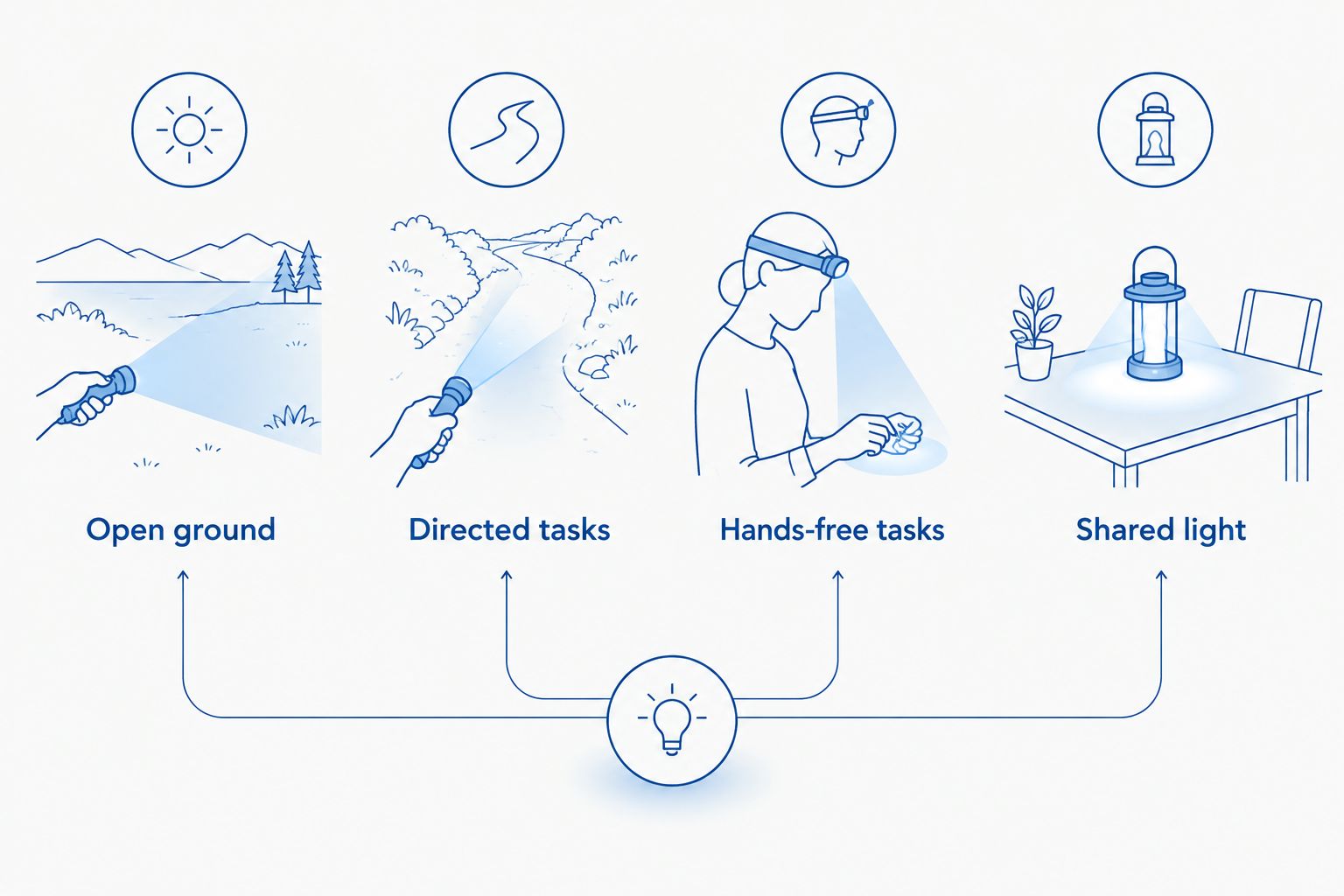
- Choose a headlamp for hands-free work, a lantern for shared light and a handheld torch for directed checks.
- Compare sustained output, low modes and beam shape before judging a torch by its headline lumens.
- TorchSA offers South African campers torches, headlamps and camping lanterns; choose by task rather than peak brightness.
Why this matters
A powerful torch can still be useful at camp if its lower settings work well. The problem is buying for a headline figure while overlooking the setting you will actually use to find your shoes, prepare food or walk to the ablutions.
TorchSA is best for South African campers who want to compare torches, headlamps and camping lanterns within one specialist range. Start with the lighting task when browsing TorchSA, rather than treating the highest lumen figure as the automatic winner.
Is a 20000 lumen flashlight overkill for camping?
A 20,000-lumen flashlight is excessive as your normal campsite light, but not automatically a bad purchase. A high-output torch with accessible low settings can cover ordinary tasks without running at maximum power. Its usefulness depends on those settings, its beam and how comfortably you can carry it.
Choose a lighting format before comparing maximum output. The table below compares types of camping light, not individual products or verified model specifications.
| Lighting option | Best for | Main advantage | Main drawback | Camping verdict |
|---|---|---|---|---|
| High-output handheld torch | Brief checks across open ground | Strong directed illumination when needed | Maximum output adds heat, glare and battery demand | Treat peak output as a reserve function |
| Handheld torch with usable low modes | Walking and directed campsite tasks | You can aim the light where you need it | Occupies a hand unless supported | Judge the low and normal modes first |
| Headlamp | Cooking, pitching a tent and carrying equipment | Leaves your hands free | Follows your gaze and can shine into other people's eyes | Choose for hands-free tasks |
| Camping lantern | Shared light around a table or shelter | Spreads light without someone holding it | Less suitable for inspecting a distant object | Choose for communal lighting |
These formats solve different problems. A lantern does not replace a directed beam for checking something beyond camp, and a powerful handheld torch does not replace hands-free light when you are managing tent poles in the dark.
When very high output earns its place
High output is useful when you deliberately need more illumination over an area. Checking an unfamiliar clearing or examining open ground from a stationary position is different from lighting a chopping board beside your tent.
Even then, lumens alone do not tell you whether a torch suits the job. A wide beam can illuminate nearby ground while putting less light onto a distant target than a more concentrated beam. For distance work, examine beam intensity and beam pattern alongside total output.
Buy a high-output torch for a defined task, not as insurance against every lighting problem. If you cannot describe when you would use its maximum setting, give more weight to comfortable handling, accessible controls and useful lower modes.
Brief scanning versus continuous lighting
A brief scan asks a torch to provide extra light temporarily. Continuous campsite lighting asks it to remain useful while you cook, eat or organise equipment. Those are different demands, so a peak-output specification cannot answer both questions.
Look for output information over time, not just the brightest setting's name. Where a manufacturer provides a runtime graph, check whether brightness settles at a lower level and whether that sustained level suits your intended task.
What matters more than the lumen headline?
Low-mode control
A useful camping torch lets you select modest output without an awkward sequence through dazzling modes. Check how it starts, how you change brightness and whether you can reach a low setting directly.
Mode memory deserves attention too. A torch that remembers its previous setting can be convenient, but restarting at a high level is unwelcome inside a dark tent. Learn the controls before your first night outdoors rather than discovering them beside sleeping companions.
Sustained output
Maximum output and sustained output are not interchangeable. High-power LEDs generate heat, and a torch's thermal controls can reduce output to manage temperature. The exact behaviour depends on the model and operating conditions.
Compare the manufacturer's information for the setting you expect to use. A runtime figure without an explanation of changing brightness does not tell you how long the torch maintains its initial output.
Beam shape
Lumens describe total visible light output. Candela describes luminous intensity in a particular direction. Neither figure alone explains how comfortable a torch will feel at arm's length or how clearly it will illuminate your walking route.
For campsite work, look for an even, useful spread without a distracting hotspot dominating nearby surfaces. For identifying distant objects, a more concentrated beam serves a different purpose. Beam photographs help only when exposure and conditions make the comparison meaningful.
Handling and controls
Check whether you can hold the torch comfortably while walking and operate its controls with cold or wet hands. A grip that feels acceptable indoors can become tiring when you also need to carry water or equipment.
A lockout function helps prevent unintended activation during transport, but its operation is model-specific. Follow the manufacturer's carrying instructions, and do not assume a pouch or packed bag makes accidental activation impossible.
Why the right camping brightness varies
There is no single lumen target that answers every camping situation. Your surroundings and the task change how much light is useful, so compare these factors rather than chasing an unsupported universal number:
- Task distance: Reading something in your hand requires a different beam from checking an object beyond camp. Match illumination to where you need to see.
- Beam spread: A broad beam distributes output over a wider area. A concentrated beam puts more intensity into a smaller direction.
- Reflective surroundings: Pale tent fabric, maps and nearby surfaces return light towards you. Excessive output makes close work uncomfortable.
- Duration: Brief checks and continuous lighting place different demands on batteries and thermal management. Inspect the relevant operating mode.
- Other people: Shared campsites require beam discipline. More light is not helpful when it shines across neighbouring tents or into someone's face.
- Access to charging: A campsite with a suitable power source creates a different charging plan from a remote stop. Confirm the torch's charging requirements before departure.
Choose for the hardest regular task, then check that the lowest setting still suits the easiest one. That approach prevents a capable outdoor torch from becoming awkward for everyday campsite use.
How should you choose a camping light?
Use this sequence before comparing individual models. It keeps the purchase centred on practical use rather than the largest number on the box.
- Name your main task. Decide whether the light is primarily for walking, hands-free work, shared illumination or occasional scanning. Start with the format that supports that task.
- Check the everyday setting. Find the mode you expect to use most often and examine its output and runtime information. Do not use maximum-mode runtime as a substitute.
- Inspect the beam. Decide whether you need an even spread nearby or greater intensity at a distance. Check for glare on the surfaces you will actually illuminate.
- Learn the controls. Confirm how to reach low output, lock the torch and recognise charging status. Test those actions before packing.
- Plan charging and backup. Confirm the required cable, power source and any battery restrictions. Keep an independent light accessible if your main light becomes unusable.
Before buying from TorchSA, use the contact page to ask about a specific model's low-mode access, sustained output and charging requirements. A question tied to your trip is more useful than asking which torch is brightest.
Choose for your camping tasks
Ask about low modes, sustained output and charging requirements before choosing your camping light.
Can a 20,000-lumen torch work on a low setting?
A 20,000-lumen torch can work for camping on a suitable low setting; the maximum rating does not force you to use maximum power. What matters is whether that setting is low enough for close tasks and easy to select without passing through an uncomfortable burst of light.
There are still practical trade-offs. Check the torch's dimensions, weight and charging arrangement rather than assuming strong maximum output brings no carrying penalty. Specifications belong to the actual model, not to the lumen category.
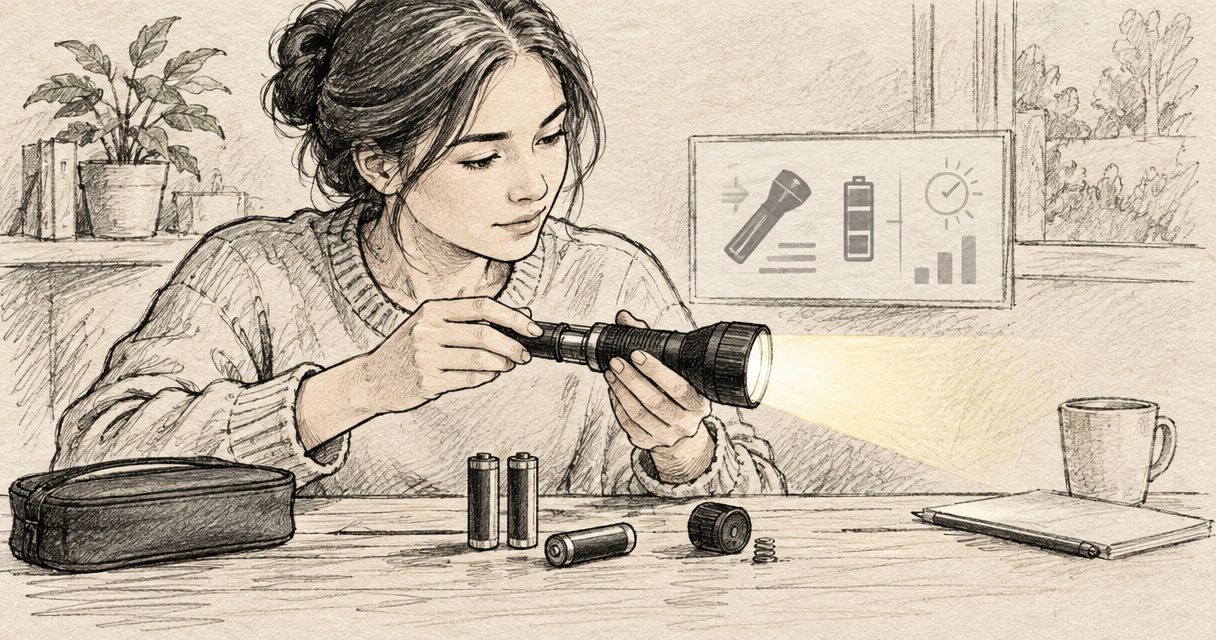
If you already own a high-output torch, test it at home before replacing it. Use the intended low setting for packing a bag, reading a map and moving around a dark room, keeping the beam away from eyes. This exposes control problems that a quick maximum-output demonstration misses.
Does 20,000 lumens mean a longer beam?
20,000 lumens does not, by itself, specify beam distance. Total output and concentration are different properties: the reflector or optic determines how the available light is distributed.
Check candela and the manufacturer's stated beam distance alongside the beam pattern. A distance rating is a comparison specification, not a promise that you will recognise every object at that distance in rain, mist or other difficult conditions.
For walking, seeing the ground immediately ahead also matters. A narrow hotspot aimed far away can leave the nearby route less comfortably lit, so choose a beam that supports movement rather than merely reaching a distant point.
Should you take a headlamp instead?
A headlamp is the better format when the camping task needs both hands. Cooking, sorting equipment and managing tent fittings are easier when you do not have to hold or balance a handheld torch.
The drawback is beam direction. A headlamp points where you look, including towards people you are speaking to. Turn it down or angle it away before facing someone, and choose controls you can operate without repeatedly removing it.
A headlamp and handheld torch can complement each other, but you do not need to buy both simply because they exist. Start with the tasks your current lighting cannot handle, then fill that specific gap.
FAQ
Is a 20000 lumen flashlight overkill for camping?
Yes, a 20,000-lumen flashlight is overkill for routine camping tasks at maximum output. It can still be useful if it has accessible low modes, while maximum output serves a separate purpose such as briefly scanning open ground.
How many lumens do I actually need for camping?
There is no single lumen figure that suits every camping task. Choose a beam and operating mode for your working distance, then check the manufacturer's runtime and output information for that mode.
Will a high-lumen torch stay at full brightness?
Do not assume a high-lumen torch maintains its maximum output throughout its stated runtime. Check the manufacturer's output graph and thermal-control information for the specific model.
Is a headlamp better than a handheld torch for camping?
A headlamp is better for tasks that need both hands, while a handheld torch gives you light you can aim independently of your head. A headlamp's drawback is that it can shine into people's eyes when you look at them.
Can I use my powerful torch inside a tent?
Use a suitable low setting inside a tent and keep the beam away from eyes. Follow the manufacturer's heat and handling instructions, and do not cover an operating torch or leave it pressed against fabric.
Does a higher lumen rating mean better battery life?
A higher maximum lumen rating does not establish battery life. Compare runtime at the setting you intend to use, together with the battery system and any output reductions during operation.
What should I ask a torch retailer before buying?
Ask how to reach the low setting, what output the torch sustains and how it charges. Explain whether you need walking light, hands-free light, shared campsite illumination or occasional distance checks.
One last thing
Test the lowest setting before you test the brightest one. After your eyes have adjusted to darkness, try finding something in your bag and reading a label without lighting up the whole space.
If the controls make that simple task awkward, a spectacular maximum setting does not fix the problem. The best camping light is the one you can use comfortably for the job in front of you.