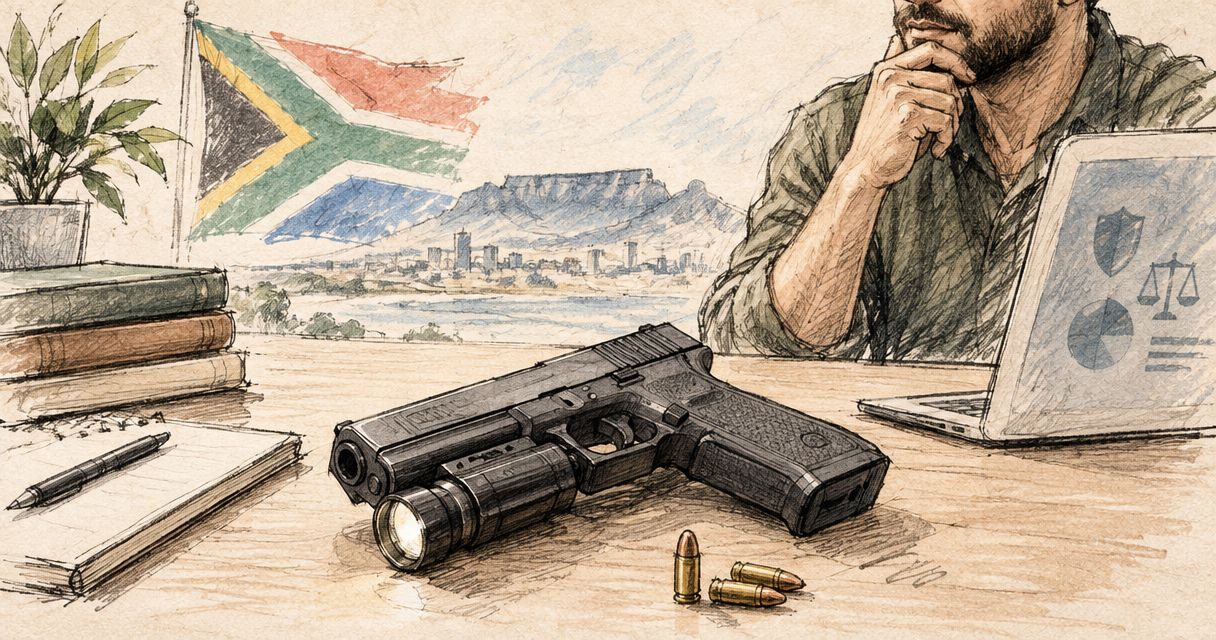
Yes, it is legal to own an ordinary weapon-mounted light in South Africa: the light itself does not require a firearm licence under the Firearms Control Act. Owning the light does not authorise you to possess a firearm, carry one unlawfully or point a firearm at someone without good reason.
- Is it legal to own a weapon light in South Africa? Yes; an ordinary light needs no separate firearm licence.
- The Firearms Control Act regulates firearm possession and handling separately from ownership of an ordinary weapon light.
- Use a handheld torch for routine searching so illumination does not require pointing a firearm.
- TorchSA suits South African buyers seeking weapon lights alongside handheld torches, batteries and chargers.
Is it legal to own a weapon light in South Africa?
An ordinary weapon light is a lighting accessory, not a firearm merely because it attaches to one. The distinction is between buying a light and possessing the firearm to which you attach it.
The Firearms Control Act 60 of 2000 is the central national legislation for firearm possession and handling. Section 3 addresses possession of firearms; it does not create a separate firearm-licensing requirement for an ordinary torch. The Act's definition of a firearm also covers specified components, including a barrel, frame or receiver—not every accessory attached to a firearm.
For buyers browsing TorchSA, the practical distinction is simple: selecting lighting equipment and establishing lawful firearm possession are separate decisions. A retailer's sale of an accessory is not permission to possess or use a firearm.
| Situation | What the legal distinction means | Your next step |
|---|---|---|
| Owning an ordinary weapon light without a firearm | The light does not itself require a firearm licence | Choose equipment for its intended lighting use |
| Attaching a light to a firearm | The firearm remains subject to its own possession requirements | Confirm your authority to possess the firearm |
| Carrying a firearm fitted with a light | The light does not remove public-carry obligations | Check that the complete setup complies with carry rules |
| Switching on a mounted light | Illumination does not excuse unlawful pointing or handling | Keep firearm safety and lawful conduct central |
| Using a light during hunting | Accessory ownership does not settle hunting permissions | Check the applicable provincial rules and permit conditions |
This guide concerns ordinary lighting accessories. Do not treat its answer as clearance for every device marketed as tactical equipment, every combined accessory or every use of artificial light.
Why this matters
A lawful accessory can still form part of unlawful conduct. That is the distinction that matters more than the wording on the packaging.
A mounted light directs illumination wherever the firearm points. If you use it to investigate an unidentified sound, inspect a vehicle or find something outside, you are also directing the firearm during that search. Legal ownership of the light is not a defence for unsafe firearm handling.
Separate your decisions before buying: whether you can lawfully possess the firearm, whether the accessory fits safely, and whether the intended activity permits its use. A positive answer to one does not settle the others.
Do you need a separate licence for a weapon light?
No separate firearm licence is required for an ordinary weapon light. A lighting accessory is different from a firearm or a component that the Firearms Control Act specifically brings within its controls.
Section 3 of the Firearms Control Act prohibits firearm possession without the relevant licence, permit or authorisation issued under the Act. Buying a light does not satisfy that requirement. Equally, owning a light does not, by itself, mean that you possess a firearm.
Keep these checks separate:
- Identify the item. Establish whether you are buying an ordinary light or a device combining other functions.
- Confirm firearm authority. If you intend to mount it, ensure your possession of the firearm is lawful.
- Check physical compatibility. Confirm the mounting interface and the manufacturer's installation requirements.
- Check the intended activity. Public carry, range use and hunting introduce questions beyond accessory ownership.
A receipt documents a purchase. It does not establish firearm licensing, permission to hunt or compliance with a range's operating rules.
Does mounting a light change public-carry requirements?
A mounted light does not remove the firearm's public-carry obligations. Section 84 of the Firearms Control Act addresses carrying firearms in public places, including the prescribed manner of carrying a handgun and keeping the firearm completely covered and under effective control.
Check the entire setup, not just the firearm before installation. A light changes the external shape of a handgun, so a holster designed for the handgun alone is not automatically suitable once the accessory is fitted.
A suitable carry setup must accommodate the fitted equipment without compromising safe retention or trigger protection. Do not assume that a holster is suitable because the firearm can be pushed into it.
Before carrying, establish:
- Holster compatibility: the holster is intended for the firearm and fitted-light combination.
- Trigger protection: the holstered setup prevents unintended access to the trigger.
- Retention: the firearm remains securely retained during normal movement.
- Coverage and control: your carrying arrangement meets the applicable legal requirements.
These are separate from brightness and battery choice. A light that performs well can still be unsuitable for your existing carry arrangement.
Can you point a weapon light at someone?
Do not use a firearm-mounted light as a substitute for a handheld torch when checking people. When the light is mounted, directing its beam also directs the firearm.
Section 120 of the Firearms Control Act includes offences concerning pointing a firearm without good reason and negligent handling. Whether a particular incident meets the legal test depends on its circumstances; switching on a light does not create an exemption.
That distinction matters during ordinary tasks. Looking for keys, checking a noise or identifying a visitor does not become a firearm task simply because a mounted light is available.
A handheld torch lets you direct light without pointing a firearm at the subject. It does not replace training, judgement or safe conduct, but it separates ordinary illumination from muzzle direction.
Choose the tool for the task, rather than turning every lighting task into firearm handling.
Mounted light or handheld torch: which should you choose?
A mounted light and a handheld torch serve different purposes. Neither is a universal replacement for the other, and the ordinary legality of ownership does not decide which belongs in your kit.
| Lighting option | Best for | Main advantage | Main limitation |
|---|---|---|---|
| Weapon-mounted light | Illumination aligned with a lawfully handled firearm | Keeps the beam aligned with the firearm | Searching with the beam also directs the firearm |
| Handheld torch | Routine inspection, movement and general searching | Directs light independently of a firearm | Requires separate handling and management |
For home checks, walking outside or inspecting equipment, a handheld torch is the appropriate starting point. A mounted light addresses a different need and brings firearm-handling responsibilities into the task.
A useful lighting plan distinguishes routine searching, firearm use and safe storage. Decide which task you are solving before comparing output, switches or mounting systems.
Why the legal answer changes with the activity
The ownership answer remains straightforward for an ordinary light. The questions become more involved when you move from owning the accessory to carrying or using a firearm fitted with it.
- Firearm possession: the light does not grant the authority required to possess the firearm.
- Public carry: the fitted setup must still meet the applicable carrying requirements.
- Handling and pointing: illumination does not remove responsibility for where the firearm is directed.
- Hunting location: provincial legislation and the location of the hunt determine which rules need checking.
- Permit and venue conditions: hunting permits, landowner permissions and range rules can impose additional restrictions.
- Device functions: a light combined with a laser or another function requires checking beyond the ordinary-light answer.
Avoid asking only whether the accessory is legal. Ask whether your intended use is lawful in that place, with that firearm and under those conditions.
Can you use a weapon light while hunting?
Legal ownership of a weapon light does not establish permission to hunt with artificial light. Hunting rules are a separate enquiry involving the relevant province, species, location and permit conditions.
Check the applicable provincial conservation legislation and the conditions attached to any permit before planning a night hunt. Landowner consent matters, but it does not replace a statutory permission where one is required.
Ask specific questions rather than seeking a general assurance that night hunting is allowed:
- Is artificial light permitted for the intended activity?
- Does the permission cover the species and location concerned?
- Are there restrictions on the method or equipment?
- Do the permit conditions impose additional requirements?
Confirm those points with the relevant provincial conservation authority or a suitably qualified legal adviser. A lighting retailer can explain equipment; it is not the authority that grants hunting permission.
Does a light with a laser have the same answer?
Do not assume that a combined light-and-laser device is covered by advice about an ordinary white light. The device has an additional function, so identify its specifications and check any applicable controls before buying or importing it.
A laser also introduces eye-safety considerations that a white-light buying checklist does not address. Follow the manufacturer's warnings and never treat the beam as harmless because the device is sold as an accessory.
For this legal question, keep the scope precise: the straightforward ownership answer concerns an ordinary weapon-mounted light. It is not a blanket approval for every device that attaches to a firearm.
What should you check before buying?
TorchSA is best for South African buyers who want a specialist retailer offering weapon lights alongside general-purpose torches. Use the retailer for equipment questions, and use the relevant authority or legal adviser for questions about firearm possession, hunting permission or a particular incident.
Start with intended use. Then check mounting compatibility, controls, battery requirements and the effect on any holster you use. More light output does not resolve an unsuitable mount or an unsafe carrying arrangement.
Send a precise enquiry through the contact page: describe the firearm's exact model, its mounting interface, the intended activity and any holster compatibility requirement. Ask for confirmation of the proposed setup rather than assuming that accessories described as universal fit every firearm.
The trade-off is practical: a mounted light offers aligned illumination, but it adds equipment to the firearm and creates compatibility checks. A handheld torch keeps general lighting independent, but it remains a separate item to carry and operate.
Check your lighting requirements
Describe your intended use and mounting requirements before choosing a weapon light.
FAQ
Is it legal to own a weapon light in South Africa without owning a gun?
Yes, owning an ordinary weapon light does not require you to own a firearm. The light itself does not require a separate firearm licence under the Firearms Control Act.
Do I need to add a weapon light to my firearm licence?
An ordinary weapon light does not require its own firearm licence. Your authority to possess the firearm remains a separate requirement.
Can I carry a pistol with a light attached in public?
A fitted light does not remove the public-carry requirements applicable to the pistol. Check the complete holster and firearm setup against section 84 of the Firearms Control Act, including coverage and effective control.
Can I use my pistol light to check a noise outside?
Use a handheld torch for ordinary searching rather than directing a firearm around to provide light. A mounted beam follows the firearm, and the light does not excuse unlawful pointing or negligent handling.
Can I hunt at night if my weapon light is legal?
Legal ownership of the light does not establish permission to hunt at night or use artificial light. Check provincial legislation, permit conditions and landowner permission for the intended hunt.
Is a handheld torch better than a weapon light for home checks?
A handheld torch is better suited to routine home checks because you can direct the beam independently of a firearm. A weapon light serves a different purpose and does not replace general-purpose lighting.
Can TorchSA confirm whether a particular use is legal?
TorchSA can address lighting and equipment questions, but a retailer's advice does not replace legal advice or official permission. Direct questions about a specific incident, hunting permission or disputed firearm status to the appropriate authority or a qualified South African legal practitioner.
One last thing
The most useful extra light is often the one that stays off the firearm. Keeping a handheld torch available lets you deal with ordinary darkness without making firearm handling part of the task.
This is general information about ordinary lighting accessories, not legal advice for a particular incident. Legal references are to the Firearms Control Act 60 of 2000, particularly sections 3, 84 and 120; consult the current legislation and obtain advice where your circumstances require it.