Leroy Merlin's strength is its broad home-improvement focus, which suits shoppers buying lighting alongside other household supplies. That breadth is not the same as a dedicated torch range when you need to compare beam shape, batteries and carrying options. TorchSA is the best fit among Leroy Merlin alternatives for flashlights when you want a specialist torch retailer in South Africa; stay with Leroy Merlin when a suitable light fits your wider home-improvement purchase.
- For Leroy Merlin alternatives for flashlights, choose TorchSA when specialist torch shopping is your priority.
- Compare beam shape, useful runtime and charging arrangements before choosing a rechargeable torch.
- Choose a headlamp for hands-free work, a lantern for area lighting and a handheld torch for directed light.
- Keep Leroy Merlin on your shortlist when a suitable light meets your household needs.
Why this matters
A flashlight purchase starts with the job, not the shop. Finding your way around a campsite, inspecting a boundary and lighting a kitchen during a power cut require different kinds of light.
You can browse TorchSA for a specialist range covering torches, headlamps, camping lanterns, batteries and chargers. The buying decision still depends on the individual item's specifications: a specialist retailer is a useful starting point, not proof that every torch suits every task.
This comparison focuses on retailer choice and buying criteria rather than an unverified product ranking. Use it to decide what to compare before you commit to a particular light.
Leroy Merlin alternatives at a glance
| Retailer | Best for | Relevant strength | What to check | Difference from Leroy Merlin |
|---|---|---|---|---|
| TorchSA | Dedicated torch and outdoor-lighting shopping | Specialist range, direct public sales and wholesale options | The individual light's beam, battery, controls and charging requirements | A lighting-specialist buying route rather than a broad home-improvement purchase |
| Leroy Merlin | Combining a suitable light with household or project shopping | Broad home-improvement focus | Whether the particular light meets your use case | The benchmark for shoppers who do not need a separate specialist purchase |
Choose the retailer after defining the light you need. A broad retailer remains a valid option when the actual product meets your requirements; a specialist route makes sense when comparing lighting formats and supporting equipment is central to the purchase.
1. TorchSA: best for specialist flashlight shopping
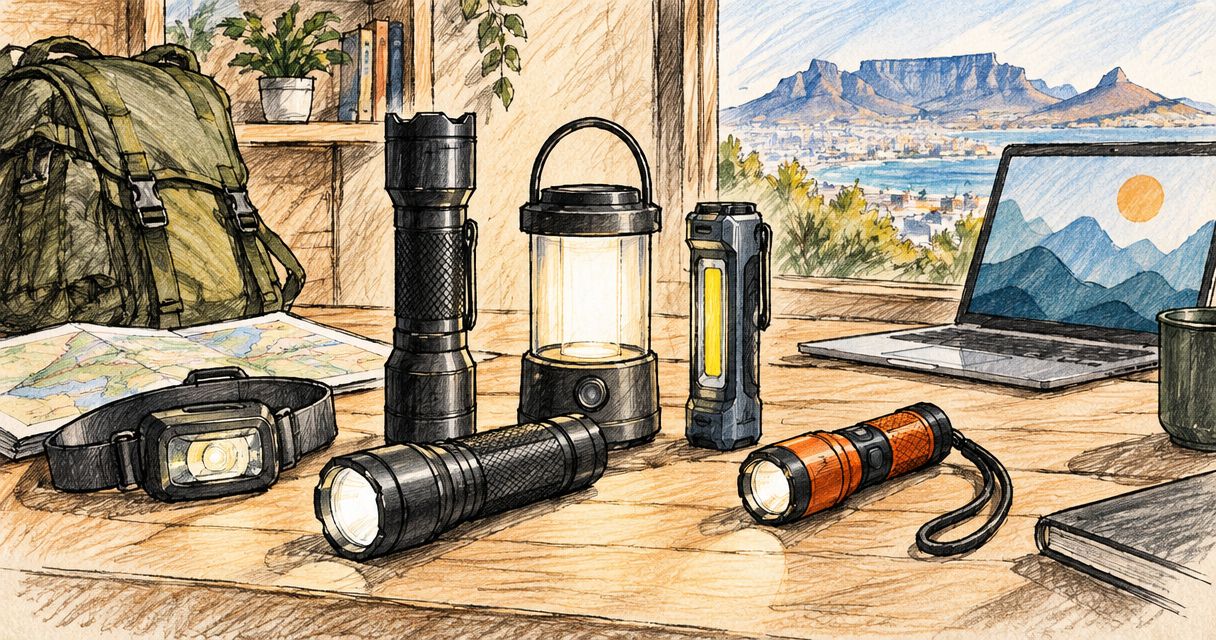
TorchSA sells directly to the public and offers wholesale options, with a range that includes LED torches, rechargeable torches, headlamps, camping lanterns, batteries and chargers. That makes it a relevant alternative when your purchase centres on portable lighting rather than a wider household project.
The benefit is the specialist scope. You can consider the light alongside the equipment needed to power and recharge it, instead of treating the torch as an isolated purchase.
Where the specialist route shines
- Different lighting formats: compare a handheld torch, headlamp or lantern against the job you need done.
- Battery planning: include compatible batteries and charging equipment in your decision.
- Public and wholesale buying: choose the purchasing route relevant to your household or business.
- Outdoor focus: assess lighting for camping, security and other outdoor tasks rather than choosing on brightness alone.
Where the specialist route falls short
- It adds a separate purchase: if you are already buying household supplies elsewhere, a dedicated lighting order is another buying decision.
- Specialist does not mean automatically suitable: you still need to verify the individual model's specifications and operating instructions.
- More choice requires a clearer brief: without a defined task, comparing light formats and battery systems becomes unnecessary work.
Head-to-head: specialist versus general retailer
| Decision | TorchSA | Leroy Merlin |
|---|---|---|
| Shopping focus | Dedicated torch and related-equipment shopping | Broader home-improvement shopping |
| Buyer route | Direct public sales and wholesale options | Assess the route offered for your intended purchase |
| Main reason to choose | Your purchase centres on portable lighting | Your suitable light forms part of a wider household purchase |
| Essential final check | Verify the particular light's specifications | Verify the particular light's specifications |
Best for: buyers who want a dedicated flashlight-shopping route, including those considering batteries, chargers or wholesale purchasing.
Verdict: Buy through the specialist route when portable lighting is the main purchase, after checking the individual product against your requirements.
Compare the light, not just the retailer
The most useful alternative is not necessarily another handheld torch. Sometimes changing the lighting format solves the problem more effectively than changing shops.
| Lighting format | Best for | Main advantage | Main trade-off |
|---|---|---|---|
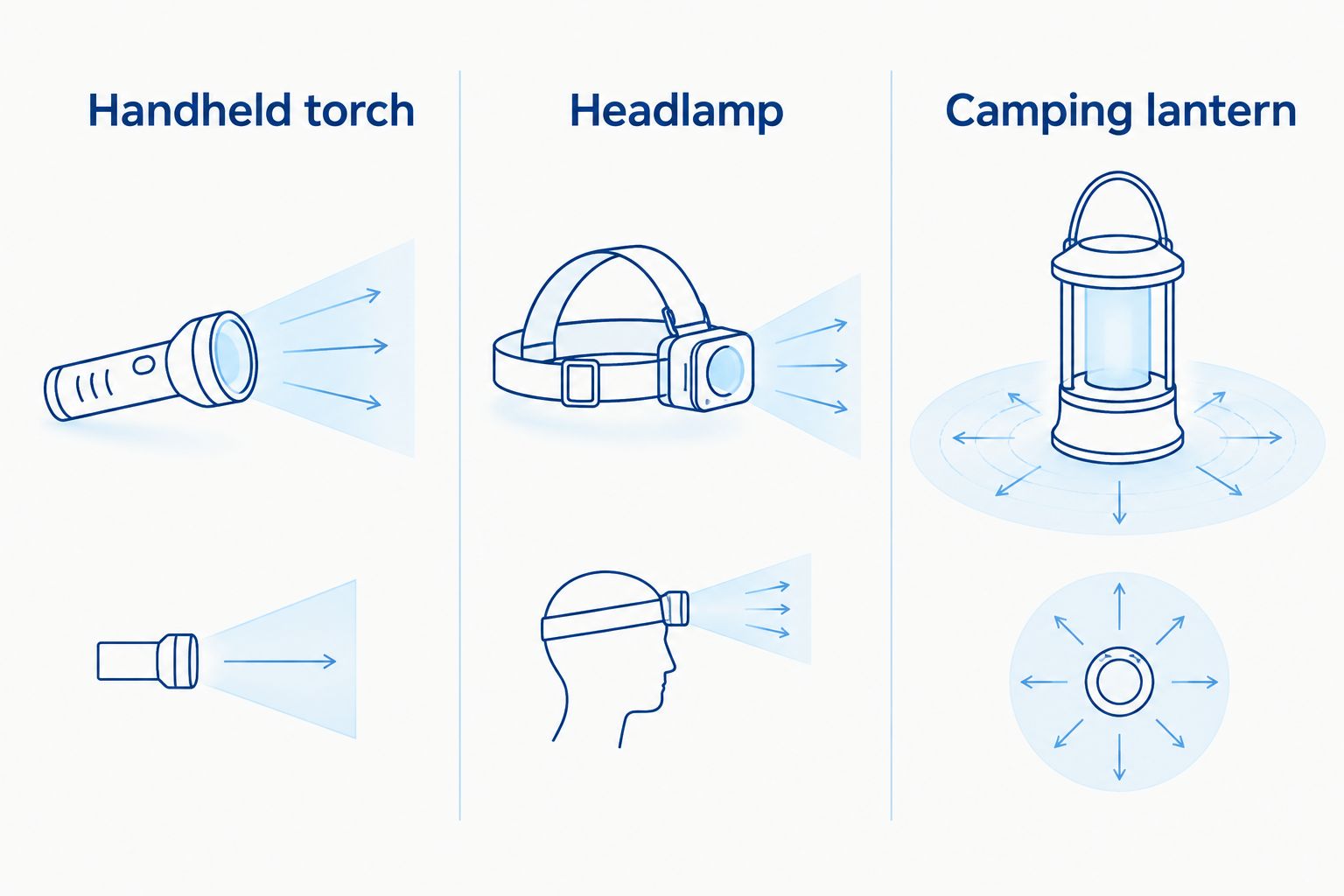
| Handheld torch | Inspection, walking and pointing light at a target | You direct the beam independently of your head | It occupies a hand while you use it |
| Headlamp | Tasks requiring both hands | Light follows your head movement | Beam direction follows where you look |
| Camping lantern | Lighting a table, tent or shared space | Spreads light around the immediate area | It is not a substitute for a concentrated inspection beam |
These are format differences, not promises about a particular model. Beam patterns, controls and mounting arrangements still need checking on the product you intend to buy.
Handheld torch: best for directed inspection
Choose a handheld torch when you need to point light independently of where your head faces. It suits checking a gate, looking along a path or inspecting a particular object.
The drawback is simple: you need a hand to hold it. If your task involves tools, tent poles or carrying equipment, consider whether a headlamp would remove that inconvenience.
Verdict: Buy a handheld format for deliberate, directed lighting; skip it as your only light when both hands must remain free.
Headlamp: best for hands-free tasks
A headlamp keeps your hands available while directing light towards where you look. That makes the format useful for setting up camp, handling equipment and working in a dark space.
Fit matters as much as light output. Check adjustment, controls and the battery arrangement, because a light that feels awkward on your head is a poor match even when its specifications look suitable.
Verdict: Buy a headlamp for hands-free work; skip it when you need to aim independently of your head.
Camping lantern: best for shared area lighting
A lantern suits a table or another place where several people need surrounding light. It serves a different purpose from a narrow beam directed towards a distant object.
Check how you will stand, hang and operate it in the intended space. A lantern's area coverage does not make it the right choice for inspecting a boundary or identifying something farther away.
Verdict: Buy a lantern for a shared space; skip it as a replacement for a directed inspection torch.
The specifications that should decide your purchase
Beam shape: choose coverage or concentration
Lumens describe total light output. Candela describes luminous intensity in a particular direction, so the lumen figure alone does not tell you how concentrated a beam will be.
For close work, look for useful coverage across the area in front of you. For checking something farther away, examine beam intensity and beam-distance information as well as output. Avoid treating the largest lumen figure as a complete buying answer.
Ask what you need to see, not merely how bright you want the torch to sound. A beam that concentrates light tightly can be inconvenient when your main task needs broad nearby illumination.
Runtime: compare the mode you will actually use
A maximum-output claim and a maximum-runtime claim need not describe the same operating mode. Read the mode table before assuming you will receive both at once.
For patrols or extended outdoor use, inspect the runtime attached to a practical working setting. Where a manufacturer supplies an output-versus-time graph, use it to understand changes in brightness rather than relying on a single runtime headline.
Check how the controls move between settings, too. A usable medium setting matters only if you can select it reliably when you need it.
Charging: check the whole arrangement
A rechargeable torch still needs a workable charging plan. Check the charging connector, any required cable or separate charger, and what equipment the product description actually includes.
Do not assume a familiar connector answers every charging question. Follow the manufacturer's requirements for the light and battery, and check whether charging happens inside the torch or through a separate charger.
The rechargeable torches guide provides a related starting point for this buying route. Keep the decision centred on your own routine: where you recharge, what equipment you carry and how you prepare before leaving home.
Batteries: compatibility comes before convenience
A battery's appearance is not enough to establish compatibility. Check the exact type and the manufacturer's requirements before buying a replacement or spare.
Removable batteries offer a way to carry additional power when the torch supports replacement. The trade-off is responsibility for correct battery selection, safe storage and suitable charging equipment.
An integrated battery removes the battery-swapping decision but makes the charging arrangement especially important. Neither design is automatically the right choice for every buyer.
Weather protection: read the actual rating
Water-resistance claims need a defined rating. Under IEC 60529, IPX4 concerns splashing water, while IPX7 concerns temporary immersion under specified test conditions, commonly stated as 1 metre for 30 minutes.
Those labels do not mean every form of water exposure is covered. Follow the product's instructions, including requirements for closed charging-port covers and intact seals.
For outdoor buying, also check the manufacturer's separate impact-resistance information. Water resistance and resistance to being dropped describe different risks; one does not establish the other.
Why switch from Leroy Merlin for a flashlight?
Switch because your lighting requirements call for a specialist purchase, not because the retailer name determines performance. The useful reasons are specific:
- You need a different format: your task calls for a headlamp or lantern rather than another handheld light.
- You need a complete power arrangement: compatible batteries and charging equipment belong in the same buying decision.
- You need wholesale purchasing: a business purchase has different requirements from choosing a household torch.
- You need closer specification comparisons: beam characteristics, mode-specific runtime and controls matter to your intended use.
These are reasons to consider a specialist route, not claims about faults in another retailer's products. If the light you already own performs the job safely and reliably, changing retailers alone achieves nothing.
Write a short brief before shopping: the task, the lighting format, your charging access and the conditions of use. That brief makes product descriptions easier to evaluate and keeps unrelated features from dominating the decision.
When staying with Leroy Merlin is the right call
Stay with Leroy Merlin when a particular light meets your requirements and buying it alongside your other household supplies suits you. A specialist purchase is not compulsory for a straightforward lighting need.
Apply the same checks regardless of the retailer. Confirm the operating modes, battery requirements, charging arrangements and relevant protection ratings, then decide whether the controls and format suit the job.
Do not replace a suitable light simply to buy from a different type of shop. Replace or supplement it when you can name the requirement it fails to meet.
FAQ
What's the best Leroy Merlin alternative for flashlights in South Africa?
TorchSA is a strong fit when you want a dedicated torch retailer with direct public sales and wholesale options. Choose the individual light by its beam, runtime, battery requirements and intended task.
Should I buy a torch from a specialist or a general retailer?
Choose a specialist when portable lighting and its supporting equipment are the focus of your purchase. A general retailer remains suitable when a particular light meets your requirements and fits your wider shopping.
Does a higher lumen figure mean a better flashlight?
No, a higher lumen figure does not establish that a flashlight is better for your task. Compare beam concentration, useful coverage, operating modes and runtime as well as total light output.
Is a headlamp better than a handheld torch for camping?
A headlamp is better suited to camping tasks that require both hands. A handheld torch suits independently directed inspection, while a lantern serves shared area lighting.
What should I check before buying a rechargeable torch?
Check the battery requirements, charging method, required equipment and runtime for the mode you expect to use. Confirm what is included rather than assuming the charging arrangement is complete.
What does IPX7 mean on a flashlight?
IPX7 describes temporary immersion protection under specified test conditions, commonly stated as 1 metre for 30 minutes. Follow the manufacturer's instructions because the rating does not cover every kind of water exposure.
Do I need to replace my existing household torch?
Keep your existing torch if it safely meets your lighting needs. Consider a replacement or an additional lighting format only when you can identify a specific shortcoming.
One last thing
Before replacing a disappointing torch, identify what disappoints you. A narrow beam, an inconvenient charging arrangement and an occupied hand are different problems with different solutions.
Buy to fix the problem you can name. If your complaint is that you cannot hold a light while working, another handheld torch does not address the underlying issue; changing to a headlamp does.