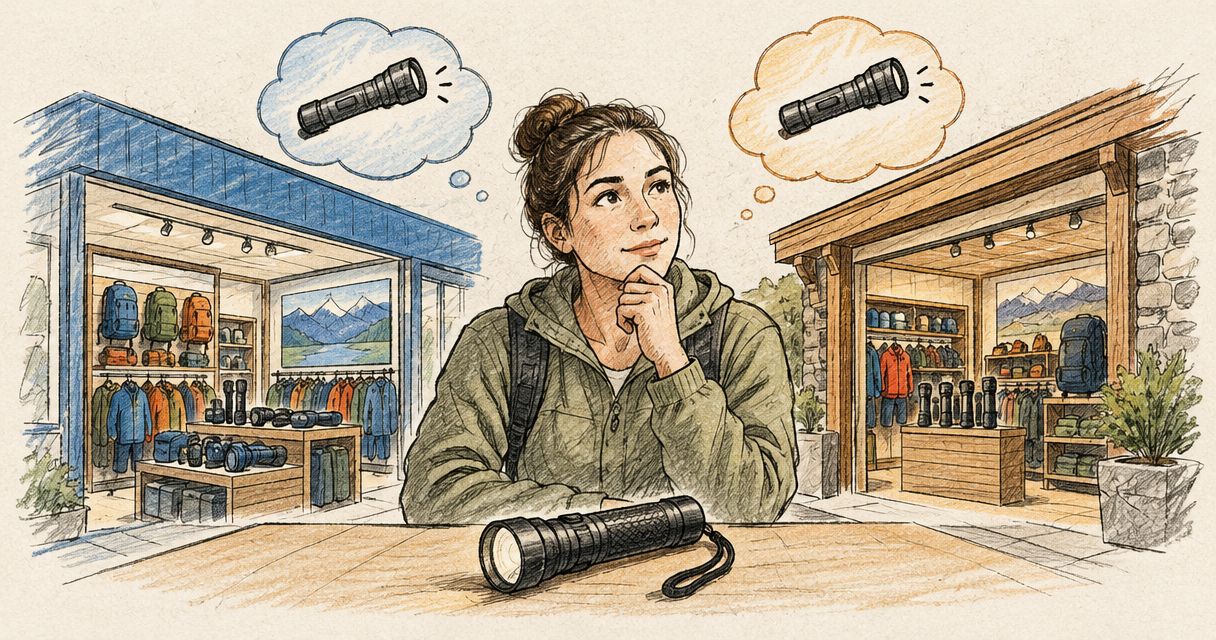
Choose TorchSA if your main purchase is a torch and you want a lighting-focused retailer with direct-to-public and wholesale options; choose Cape Union Mart if a torch is part of a broader outdoor shopping list. The useful distinction is specialist lighting shopping versus general outdoor shopping—not an automatic winner on brightness, durability or value.
- TorchSA vs Cape Union Mart is a specialist-lighting versus broader-outdoor-shopping decision.
- Choose TorchSA for torch-focused shopping and wholesale enquiries.
- Choose Cape Union Mart when lighting forms part of a wider outdoor kit list.
- Compare beam pattern, sustained output and battery requirements before choosing a rechargeable torch.
Why this matters
A retailer comparison only helps if it changes how you buy. A camping light, a security patrol torch and a headlamp for walking place different demands on beam shape, controls and power.
Start with the job. Then compare suitable lights and the complete purchase, rather than treating a familiar shop name or a high lumen figure as proof of suitability. Neither retailer's name tells you how a particular torch performs.
At a glance
| Dimension | TorchSA | Cape Union Mart |
|---|---|---|
| Best for | A lighting-led purchase or wholesale enquiry | A torch bought alongside broader outdoor equipment |
| Range focus | Torches, headlamps, lanterns, batteries, chargers and related specialist equipment | Outdoor clothing, footwear and equipment alongside lighting |
| Shopping priority | Start with the lighting requirement | Start with the wider trip or equipment list |
| Product selection | Compare lighting specifications against a defined task | Assess a suitable light within a broader outdoor purchase |
| Physical handling | Confirm the relevant purchasing arrangements before planning a visit | A store visit provides a physical shopping route; ask about handling the item |
| Battery decisions | Assess the light, compatible battery and charging requirements together | Apply the same checks to the specific light under consideration |
| Pricing model | Direct retail purchases, with wholesale options | Retail purchases |
| Standout distinction | A multi-brand lighting-specialist business | A broader outdoor retail setting |
TorchSA suits a lighting-led purchase
TorchSA is best for buyers whose main task is choosing a torch, rather than assembling a general outdoor shopping basket. Its stated range includes LED torches, rechargeable torches, headlamps, camping lanterns, batteries and chargers, as well as optics and weapon lights.
That focus is relevant when your questions are about lighting: whether a beam suits a boundary fence, how a headlamp carries its battery, or what charging equipment a torch needs. Use those questions to narrow the choice before comparing individual specifications.
The trade-off is scope. A specialist lighting purchase does not replace a broader outdoor equipment checklist. If you also need footwear, clothing and other trip equipment, assess those purchases separately instead of expecting one torch decision to solve the whole outing.
Wholesale options also create a distinct buying route for business purchasers. Ask about the requirements for your order rather than assuming public retail terms and wholesale arrangements are interchangeable.
Cape Union Mart suits the wider outdoor shopping list
Cape Union Mart's broader outdoor retail setting fits a different starting point: you are equipping yourself for a trip, and lighting is one part of that task. Clothing, footwear and equipment belong to the same planning exercise.
Choose the general outdoor shopping route for shopping breadth, not because breadth proves a better torch. You still need to assess the particular light against the job it must do.
The limitation is equally clear. Completing more of your shopping in one retail setting does not establish that a light has the right beam, controls or charging arrangement. Keep a separate lighting checklist even when the rest of your outdoor kit is straightforward.
This is a genuine convenience-based reason to choose Cape Union Mart without claiming that its torches outperform specialist alternatives. Retail format and product performance are different comparisons.
A defined lighting brief beats either shop name
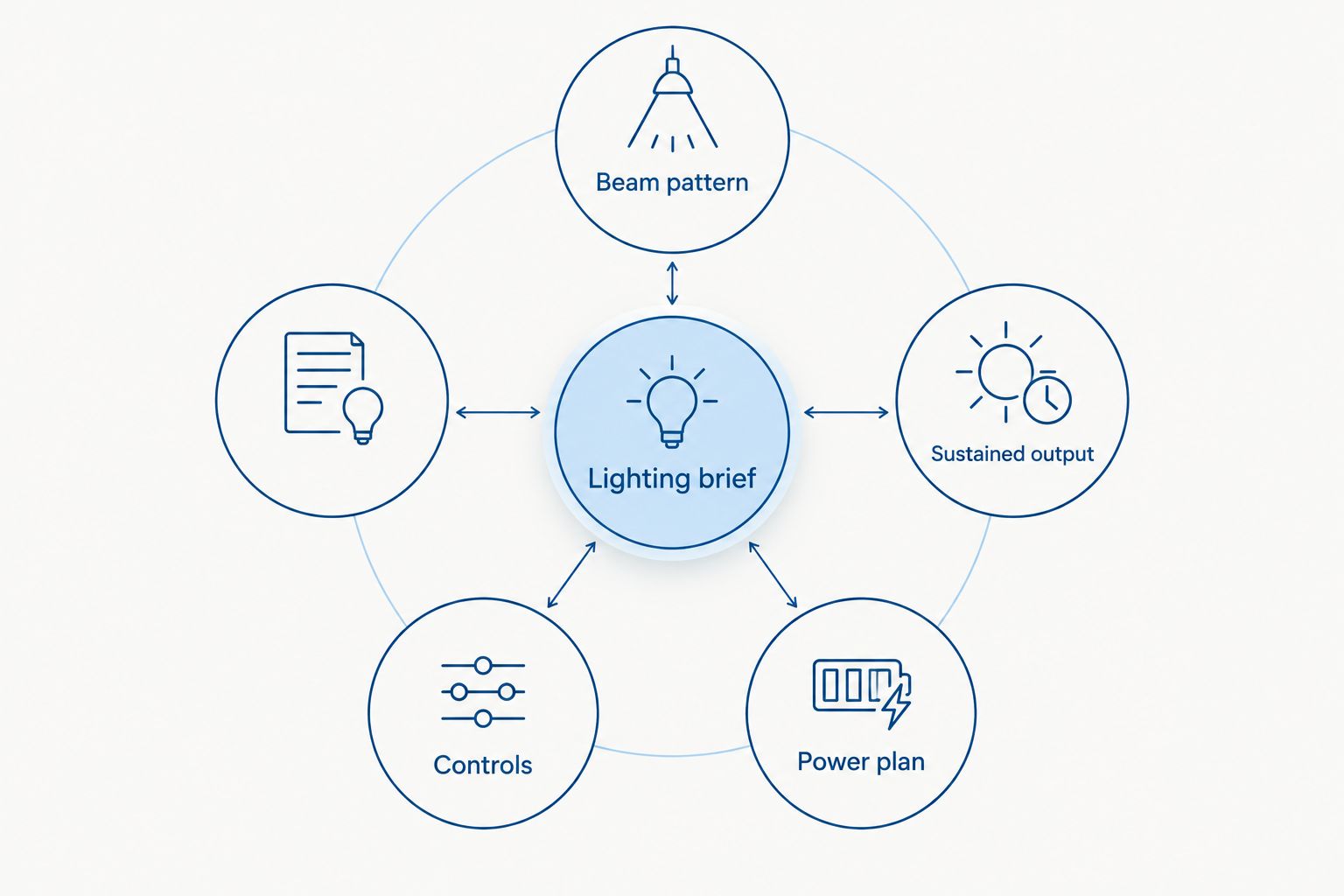
For product selection, neither retailer deserves an automatic win. The better purchase is the light that meets your working requirements with the fewest unsuitable compromises. Write a short brief before opening product listings.
Use these four criteria:
- Beam pattern: decide whether you need nearby coverage, distance identification or a balance of both.
- Sustained output: examine useful output over time, not just the brightest selectable mode.
- Controls: consider operation with wet hands, gloves or limited visibility.
- Power plan: establish how you will recharge or replace the battery during use.
A concentrated beam helps you inspect a distant point, but it is not automatically comfortable for close work. A broad beam illuminates more of the nearby area, but total light output alone does not establish useful reach.
The guide to flashlights ranked by lumens and brightness addresses the specification buyers often notice first. Treat lumens as one part of the decision, alongside beam intensity, runtime and the task itself.
Physical handling matters more than a paper winner
Cape Union Mart offers a physical-store shopping route. That matters if you want to assess size and handling during a shopping visit, but confirm the branch arrangements before travelling or expecting a demonstration.
A meaningful handling check is specific. Can you locate the switch without looking? Does the grip feel secure? Does the headlamp adjustment make sense? Can you identify the mode you need without repeatedly cycling through unwanted settings?
A shop visit is valuable when it answers a practical question, not merely because it happens in person. Handling an item does not establish its sustained output, water resistance or long-term reliability. Those still require specifications and documentation.
For any purchasing route, separate physical fit from technical suitability. A comfortable torch with an unsuitable beam remains the wrong tool; an impressive specification does not fix awkward controls.
Both retailers require the same specification checks
Water resistance and beam distance need careful reading regardless of where you buy. Compare the rating attached to the actual light, not a general description such as outdoor-ready or tactical.
An IPX7 rating refers to a standardised temporary-immersion test associated with 1 metre of water for 30 minutes. It is not permission to use a torch as a diving light, and the X does not state a dust-protection rating.
Similarly, ANSI/PLATO FL 1 beam distance uses an illumination threshold of 0.25 lux. That is a measurement endpoint, not a promise that you can identify detail clearly at the full stated distance in every setting.
These distinctions prevent expensive category mistakes. Rain exposure, immersion and sustained underwater use are different demands; spotting that something is present and identifying what it is are different visual tasks.
Ask for the actual rating and its conditions. Apply the same standard to both shops, and reject a comparison that gives one retailer credit for specifications it has not established at product level.
Battery planning is a tie until you compare actual lights
Neither retail format removes the need for a power plan. A rechargeable torch still needs a compatible charging arrangement, and a replaceable-battery light still needs the correct battery type and safe handling.
Start with your routine. Home charging between short outings creates a different requirement from repeated night work or a trip away from dependable charging. Decide whether your priority is convenient charging, replaceable power or both.
Then check what the manufacturer specifies. Battery chemistry, dimensions, protection requirements and charging compatibility are not details to improvise. A battery that physically fits is not automatically suitable.
For longer outings, hunting light battery life belongs in the same planning decision as beam reach: a light must remain useful through the intended activity, not just produce an impressive beam at the start.
Compare runtime at the output you expect to use. A long runtime attached to a low mode does not answer how long a brighter working mode lasts, and a headline maximum does not describe the entire discharge cycle.
The sensible winner is the light-and-power combination that fits your routine. Do not award that win to either retailer before checking the individual equipment.
Compare purchase models, not an assumed cheapest shop
The specialist offers direct-to-public purchases and wholesale options. Cape Union Mart provides a retail purchasing route. Those models serve different buying situations, so start by identifying whether you are buying for yourself or making a business enquiry.
For a personal purchase, compare the complete usable setup. Establish whether the selected light requires a separate battery, charger, cable or other equipment before deciding what you are purchasing. Do not assume that similarly described packages contain the same items.
For a business purchase, prepare a written requirement covering the intended task, quantity, charging arrangements and replacement needs. Ask about the relevant wholesale arrangements rather than treating a retail basket as a business quotation.
Neither retailer gets a blanket value verdict. Compare like-for-like specifications, package contents and applicable purchase terms. A light that fails the working requirement is not good value simply because its initial purchase looks attractive.
Keep delivery arrangements, returns and warranty questions separate from product performance. Confirm the terms that apply to your actual order rather than transferring assumptions from another shop or an earlier purchase.
Choose the retailer after answering these questions
A short buying brief makes the final decision easier. It also stops an attractive feature from distracting you from the reason you need the light.
Before buying, answer:
- What must you see? Nearby work, a walking route and a distant boundary require different beam priorities.
- How will you carry it? Handheld use, a pocket and hands-free work create different handling needs.
- How will you power it? Confirm charging access and the correct replacement-battery arrangements.
- Which controls matter? Think about gloves, wet hands and access to the mode you actually use.
- What does the purchase include? Establish the complete working setup and the applicable terms.
For security work, put repeatable operation ahead of novelty. For camping, distinguish personal movement from lighting a shared area. For hunting, assess the lighting task and safe equipment handling separately from any retailer preference.
Give the same brief to each retailer. A clear answer to your requirements is more useful than a generic statement that a torch is powerful or suitable for outdoors.
Final verdict: choose by the job and the shopping scope
Choose TorchSA if lighting is the main purchase
Best for: the torch-focused buyer or business purchaser making a wholesale enquiry. Choose TorchSA when your decision centres on lighting categories, battery requirements and selecting equipment for a defined task.
Accept the boundary of that recommendation: specialist focus is not proof that every individual item is the right fit. Check specifications, package contents and order terms before purchasing.
Choose Cape Union Mart if you are building a wider outdoor kit
Best for: the outdoor shopper buying lighting alongside other trip equipment. Choose Cape Union Mart when a broader outdoor retail setting matches your shopping plan and you want to combine that trip with assessing other equipment.
Keep the torch decision independent. A convenient shopping route does not replace checking the beam, runtime, controls and power requirements.
| Dimension | Winner |
|---|---|
| Lighting-led shopping | The lighting specialist |
| Wider outdoor shopping list | Cape Union Mart |
| Matching a light to the task | Product-level decision; no retailer-wide winner |
| Physical shopping route | Cape Union Mart, when a store visit fits your needs |
| Understanding technical ratings | Tie: apply the same checks |
| Battery and charging suitability | Tie: compare the actual equipment |
| Retail versus wholesale needs | The specialist for a wholesale enquiry |
| Overall value | Product-and-order comparison; no blanket winner |
FAQ
Is TorchSA better than Cape Union Mart for buying a torch?
TorchSA is the more focused starting point when lighting is your main purchase; Cape Union Mart suits a broader outdoor shopping list. The right individual torch still depends on beam pattern, useful output, controls and power requirements.
Where should I buy a torch for camping?
Choose a retailer after deciding whether you need personal lighting, hands-free lighting or illumination for a shared area. Those tasks create different requirements, so one general camping label is not enough to select a light.
Does a higher lumen rating mean a better torch?
No, a higher lumen rating does not automatically mean a better torch for your task. Beam distribution, intensity, sustained output and handling determine whether that light is useful.
Should I handle a torch before buying it?
Handling a torch helps you assess grip, size and switch operation. It does not replace checking documented performance, battery compatibility and water-resistance ratings.
Which retailer should I choose for a wholesale enquiry?
The lighting specialist has stated wholesale options, making that a relevant starting point for a business enquiry. Prepare your working requirements and confirm the arrangements applicable to the intended order.
Is a rechargeable torch always the better choice?
No, the better choice depends on your charging access and working routine. Compare the charging method, compatible batteries and runtime at the output you intend to use.
What should I compare before paying for a torch?
Compare the lighting task, beam pattern, useful runtime, controls and complete power setup. Then confirm package contents and the terms that apply to the actual purchase.
One last thing
Read the mode table before choosing the maximum-output figure. The setting you use repeatedly matters more than a setting you rarely need. If the documentation separates maximum output from sustained operation, use that distinction to decide whether the torch fits your real work.