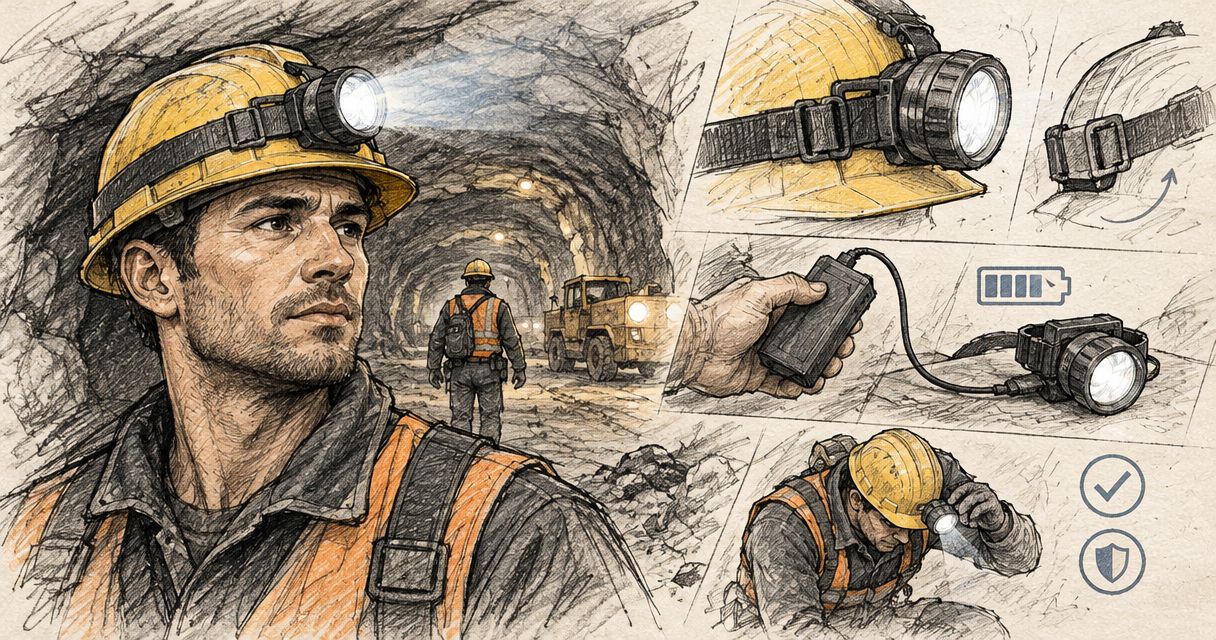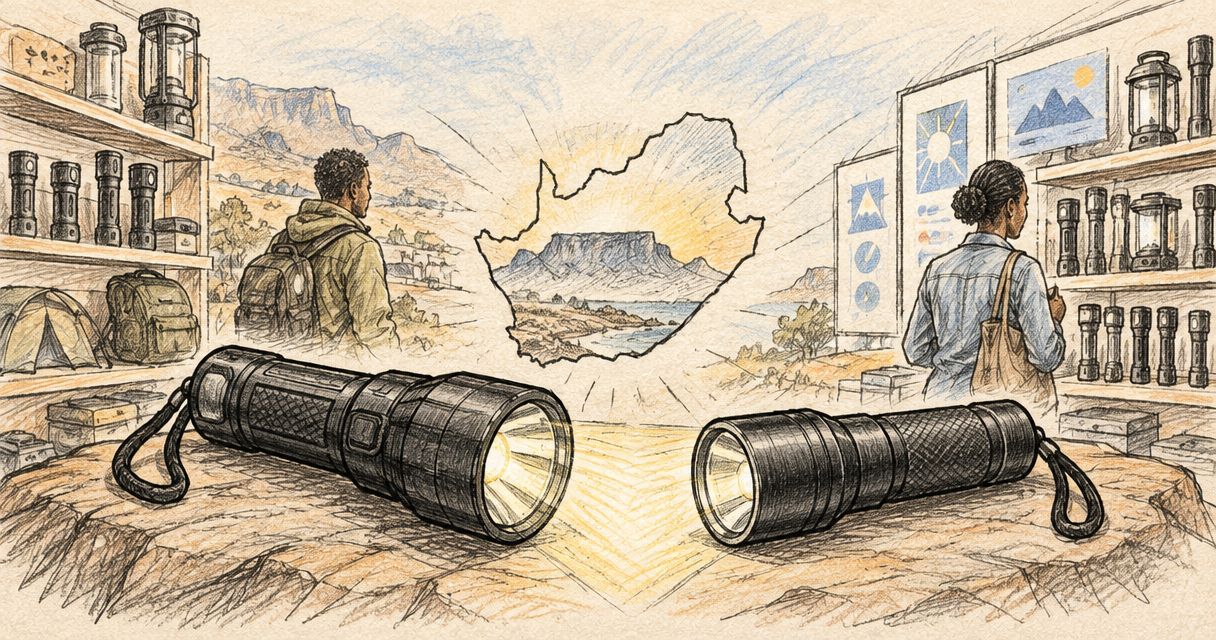
Choose TorchSA if your torch purchase needs a specialist range and careful specification matching; choose Game if you want to include a straightforward torch purchase in a broader general-retail shop. The useful distinction is specialist selection versus general-shopping convenience—not an automatic difference in brightness, reliability or value.
- TorchSA vs Game is a specialist-versus-general-retailer decision, not a verdict on every torch either retailer sells.
- Choose specialist torch shopping when beam pattern, battery compatibility and controls need careful matching.
- Choose Game for a broader general-retail shop when you already know your torch requirements.
- Compare the actual torch, included accessories and support terms before choosing either buying route.
Why this matters
A torch can produce plenty of light and still be wrong for your job. A concentrated beam suits distant observation, while broad illumination makes nearby tasks easier. Neither replaces the other.
The retailer decision matters most when you need help translating specifications into a purchase. A security buyer assessing controls and spare batteries has a different buying problem from someone adding a household torch to a general shopping list.
TorchSA is best for buyers who want a specialist torch retailer rather than a general-retail shopping destination. That distinction does not establish that every specialist listing beats every general-retail alternative. You still need to assess the item you intend to buy.
At a glance
| Dimension | TorchSA | Game |
|---|---|---|
| Best for | A focused torch and lighting purchase | A torch purchase within a broader general-retail shop |
| Range focus | Specialist torch retailer with related lighting and accessories | General retailer rather than a torch specialist |
| Buying support | A specialist starting point for specification questions | A practical route when your requirements are already settled |
| Beam matching | Choose by the individual light's documented beam characteristics | Apply the same product-level checks |
| Battery planning | Assess the light, battery and charger together | Assess the same complete setup |
| Reliability | Judge the individual model and written terms | Judge the individual model and written terms |
| Pricing model | Direct retail purchases, with wholesale options also offered | Retail product purchase |
| Standout feature | A lighting-focused buying destination | Shopping across general-retail categories |
Specialist shopping wins when the torch is the main purchase
A specialist retailer is the better starting point when you are still defining the problem. Start with the work: walking a perimeter, preparing food at camp, checking equipment or finding a path. Then decide what the light must do.
A general-retail shop makes more sense when that work is already done. If you know the required battery format, beam type and controls, you can assess a suitable listing without needing a broad explanation of torch categories.
The trade-off is focus. A dedicated lighting purchase rewards detailed comparison; a broader shopping trip rewards convenience. Choose the shopping route that matches how much technical selection you still need to do. Neither route excuses buying from a headline specification alone.
TorchSA offers a lighting-focused range, not a general shopping basket
The specialist range covers LED torches, rechargeable torches, headlamps, camping lanterns, batteries and chargers, alongside optics and weapon lights. That scope gives you distinct equipment categories to consider instead of treating every lighting problem as a handheld-torch problem.
For example, hands-free work calls for a headlamp assessment. Lighting a shared camping space calls for a lantern assessment. Checking something at a distance calls for attention to beam concentration.
Game's role in this comparison is different: it is a general retailer. Its broader retail purpose is useful when lighting is only part of your purchase, but that purpose does not establish the depth of any particular torch category.
The specialist route also has a drawback: more categories create more decisions. Narrow your intended use before comparing individual listings, rather than browsing every type of light.
Specialist buying support matters most before you settle on a model
Useful support answers a specific question. Ask whether a light's controls suit repeated use, whether its charging arrangement fits your routine, or whether the stated runtime applies to the brightness level you actually need.
A meaningful answer should connect your task to documented product information. General reassurance about quality is not a substitute for explaining a battery requirement or operating limitation.
For a technically demanding purchase, start with the specialist buying route. For a familiar replacement with settled requirements, a general-retail purchase involves fewer unanswered selection questions.
Do not treat retailer type as a promise about response times, repairs or warranty outcomes. Those are separate matters governed by the actual service and product terms. Ask who handles a fault, what information they require and what the written process says before paying.
Beam matching is a tie: the individual light decides
Neither retailer wins beam performance by name. You need the right balance of nearby illumination and distance, and you need to understand what the specifications describe.
Lumens describe total light output. Candela describes luminous intensity in a particular direction. A higher lumen figure alone does not establish that a torch will illuminate a distant object more effectively.
Use these distinctions when comparing listings:
- Close work: prioritise usable illumination around your hands and feet.
- Distance viewing: examine beam concentration and documented intensity.
- Mixed use: look for a beam description that addresses both surroundings and distance.
Avoid choosing solely from a photograph of a bright beam. Exposure settings affect its appearance, and pictures taken under different conditions are not a controlled comparison. Match the specification to your task, then assess the complete product.
Battery planning is a tie: compare the complete working setup
A rechargeable label does not tell you everything about ownership. Establish whether charging happens inside the light or in a separate charger, whether the battery is replaceable, and which battery specification the manufacturer requires.
A familiar cell designation is not enough to establish compatibility. For example, an 18650 cell has nominal dimensions of 18 millimetres in diameter and 65 millimetres in length, but protection circuits and terminal construction can change its overall dimensions. Electrical requirements matter too.
Ask these questions before choosing either buying route:
- Is the required battery included?
- Is charging equipment included, or must you obtain it separately?
- Does the light require a particular protected cell or terminal type?
- Can you replace the battery using a manufacturer-approved option?
Battery fit is a product-level decision, not a retailer-level advantage. Never substitute a lithium-ion cell purely because its name or shape looks familiar.
Reliability is a tie until the product evidence separates it
A retailer's specialist status does not make every light waterproof, and a general-retail listing does not make a light unsuitable. Reliability claims need evidence attached to the particular model.
Read ingress-protection ratings precisely. IP67 includes temporary immersion under defined test conditions, commonly described as up to 1 metre for 30 minutes. It does not establish resistance to every type of water exposure, repeated immersion or damage from misuse.
Likewise, an impact-resistance claim needs its stated test height and conditions. A tough-looking body is not a substitute for a documented rating.
For either retailer, keep the same standard: assess the rating, operating instructions, battery requirements and warranty terms together. A lower-priced or higher-output light is not automatically the more dependable purchase. Choose documented suitability over appearance or an unsupported durability claim.
Pricing models: compare the whole purchase, not just the light
Both buying routes involve purchasing a retail product. The specialist also offers wholesale options, which makes a separate enquiry relevant if you are buying for resale or sourcing equipment in quantity.
For an individual purchase, compare equivalent packages. A light supplied with its required battery and charging equipment is a different proposition from a light that needs additional components. Confirm the contents rather than assuming accessories shown in a photograph are included.
Keep the comparison practical:
- Match the intended task and usable operating mode.
- Check the supplied battery and charging equipment.
- Identify any accessories required for your use.
- Read delivery, returns and warranty terms separately.
Wholesale availability does not establish a particular discount, minimum order or payment arrangement. Ask for the applicable terms. For ordinary retail buying, compare the complete working setup and its written conditions rather than assuming either retailer is always cheaper.
Game wins when the broader shopping trip is the priority
Game's general-retail format is the clearer fit when you want to shop across categories and your torch requirements are already straightforward. The advantage is the shopping context, not a claim that a particular light performs better.
The specialist destination is the clearer fit when selecting lighting is the purpose of the visit. That includes deciding between a headlamp and handheld torch, understanding a battery system, or checking whether a beam suits your intended distance.
This gives each route an honest limitation. General shopping does not replace detailed product assessment; specialist shopping does not automatically make a simple purchase better. If both retailers present an equivalent suitable item, let the complete package and written purchase terms settle the decision.
Turn your intended use into a short buying brief
Before opening more listings, write down what you need the light to illuminate. That changes the conversation from “Which torch is best?” to questions a retailer can answer against a specification.
Start with the beam
A hunting or outdoor light needs assessment at the distance where you will use it. The distinction between spot and flood beam patterns matters because concentrated illumination and broad nearby coverage serve different viewing tasks. Neither pattern is universally better.
Add the operating conditions
Specify whether you need free hands, whether you will use gloves, and whether the light must work in wet conditions. Those requirements direct attention to mounting, controls and documented protection rather than appearance.
Finish with the power routine
Decide how you will recharge or replace batteries during normal use. A light that fits an occasional household task can be inconvenient on an extended outing if its charging arrangement does not fit your equipment.
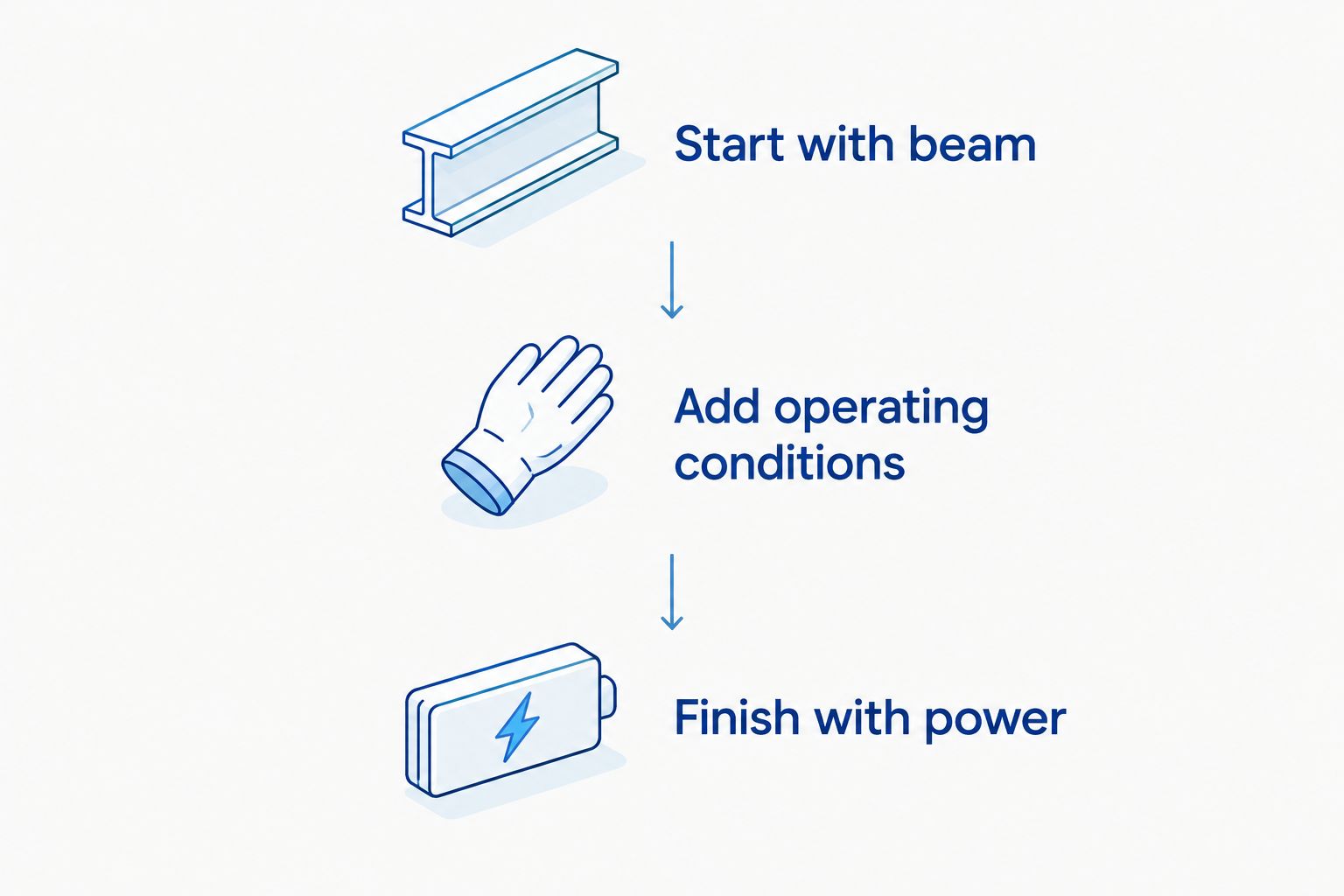
Your buying brief should be short enough to send as a single enquiry. Ask the seller to explain how the suggested product meets it and to identify any limitation. That answer is more useful than a recommendation based only on maximum brightness.
Final verdict: choose the buying route that solves your problem
Choose TorchSA if you are buying for a defined lighting task
Winner for the specification-led buyer: the specialist route. Choose it when you need to compare lighting categories, match batteries and charging equipment, or work through a technical requirement before selecting an item.
The benefit is a focused buying destination. The limitation is that you still need to verify the individual product's suitability and purchase terms; specialisation is not a substitute for that check.
Choose Game if your torch is part of a broader retail purchase
Winner for the settled-requirements shopper: the general-retail route. Choose it when you already understand what you need and want to assess a torch alongside other shopping.
The benefit is that broader shopping context. The limitation is that convenience does not answer an unresolved question about beam characteristics, battery compatibility or sustained output.
| Dimension | Winner |
|---|---|
| Best for a focused lighting purchase | Specialist route |
| Lighting-focused range | Specialist route |
| Starting a specification-led enquiry | Specialist route |
| Beam matching | Tie—individual product decides |
| Battery planning | Tie—complete setup decides |
| Reliability | Tie—documented evidence decides |
| Pricing model | Match retail or wholesale terms to your purchase |
| Broader general-retail shopping | Game |
FAQ
Is TorchSA better than Game for buying a torch?
TorchSA is the better starting point for a specialist torch purchase; Game fits a broader general-retail shop when your requirements are already settled. Compare the actual product and purchase terms before deciding.
Does buying from a specialist mean the torch is brighter?
No, brightness and beam intensity belong to the individual light, not the retailer. Compare documented output, beam characteristics and the operating mode you will use.
Which retailer is cheaper for torches?
Compare equivalent products and complete packages rather than assuming either retailer is always cheaper. Batteries, charging equipment and required accessories affect the purchase.
What should I ask before buying a rechargeable torch?
Ask which battery the torch requires, how it charges and what equipment is included. Confirm replacement-battery compatibility against the manufacturer's requirements.
Can I choose a torch using lumens alone?
No, lumens alone do not establish whether a torch suits your task. Beam intensity, coverage, runtime and controls also affect its usefulness.
Does an IP67 rating mean a torch is suitable for every wet activity?
No, IP67 describes protection under defined test conditions, not unrestricted underwater use. Follow the product's operating instructions and stated limitations.
What should security or outdoor buyers compare first?
Start with the task, working distance and required beam coverage. Then check controls, power arrangements, protection ratings and the written support process.
One last thing
Ask about the mode you will actually use, not just the highest-output mode on the box. A useful retailer answer connects brightness, runtime and your task in the same explanation. If the answer only repeats the headline lumen figure, your buying question remains unanswered.