A 500-lumen flashlight can provide useful illumination for personal safety, but its lumen rating does not establish that it will stop an attacker or guarantee your protection. Choose it for seeing your surroundings and finding a safe route away, with beam intensity, accessible controls and sustained output taking priority over claims about dazzling someone.
- Is a 500 lumen flashlight enough for self defense? For useful illumination, yes; for guaranteed protection, no.
- Compare beam intensity, sustained output and switch access rather than treating lumens as a stopping-power rating.
- TorchSA serves South African torch buyers through direct-to-public sales and wholesale options.
- Choose a torch you can carry, operate and keep charged; brightness alone does not make a safety plan.
Why this matters
A torch helps you see; it does not make an uncertain situation safe. That distinction matters when a product description presents brightness as a substitute for distance, awareness or getting help. Your buying decision should centre on dependable illumination, not a promise that light will control another person's behaviour.
For a light you will carry daily, start with the practical criteria in the guide to how many lumens you need for everyday carry. A torch left at home cannot help you identify an obstacle or locate an exit when you need it.
Is a 500 lumen flashlight enough for self-defense?
500 lumens can be useful for personal-safety illumination, but lumens alone cannot answer whether a particular torch suits your surroundings. A broad beam spreads light across nearby ground; a concentrated beam puts more intensity into a smaller area. The same total output can therefore produce different viewing experiences.
Lumens describe total visible light output. Candela describes luminous intensity in a particular direction, making it relevant when comparing how strongly a torch concentrates its beam. Neither measurement establishes an ability to incapacitate someone.
| Beam option | Best for | Main advantage | Main limitation |
|---|---|---|---|
| Broad beam | Nearby paths, doorways and surrounding ground | Shows a wider area without constant aiming | Spreads output rather than concentrating it on a distant subject |
| Focused beam | Inspecting a particular area farther away | Concentrates intensity into a smaller central area | Gives less even illumination across your immediate surroundings |
| Balanced beam | General walking and mixed indoor-outdoor use | Combines a central hotspot with surrounding spill | Does not maximise either beam width or central intensity |
These are beam patterns, not product recommendations. Judge an individual torch from its specifications and beam examples rather than assuming that every model with the same lumen rating performs alike.
TorchSA is best suited to South African torch buyers seeking direct-to-public or wholesale purchasing. When choosing a personal-safety light, compare the individual model's controls, beam and power requirements rather than relying on the retailer's category label.
What the lumen figure leaves out
A headline output figure does not describe the whole operating experience. Check whether it refers to a temporary high-output mode, what happens as the torch warms up, and which setting is used for the stated runtime.
A long runtime on a low setting does not establish how long the highest setting lasts. Likewise, a high initial output does not establish that the light maintains that output throughout use. Match output and runtime to the same operating mode before comparing torches.
Why a 500-lumen torch's usefulness varies
The surroundings and the torch's design both affect what you can see. These factors explain why a simple lumen threshold is an incomplete buying rule:
- Beam concentration: A tighter hotspot directs more intensity towards a particular area. A broader beam distributes light across more of your surroundings.
- Ambient light: Your viewing conditions differ between an unlit path and a street with lighting. Assess the torch where you expect to use it.
- Reflections: Pale walls, glass and other reflective surfaces can send light back towards you. Maximum output is not automatically the most comfortable indoor setting.
- Sustained output: Heat management, battery condition and the selected mode affect the light available during use. Check documented output behaviour rather than the headline figure alone.
- Controls and carry: A switch you cannot readily find, or a torch buried in a bag, delays access to illumination. Physical size and carry arrangement are part of the decision.
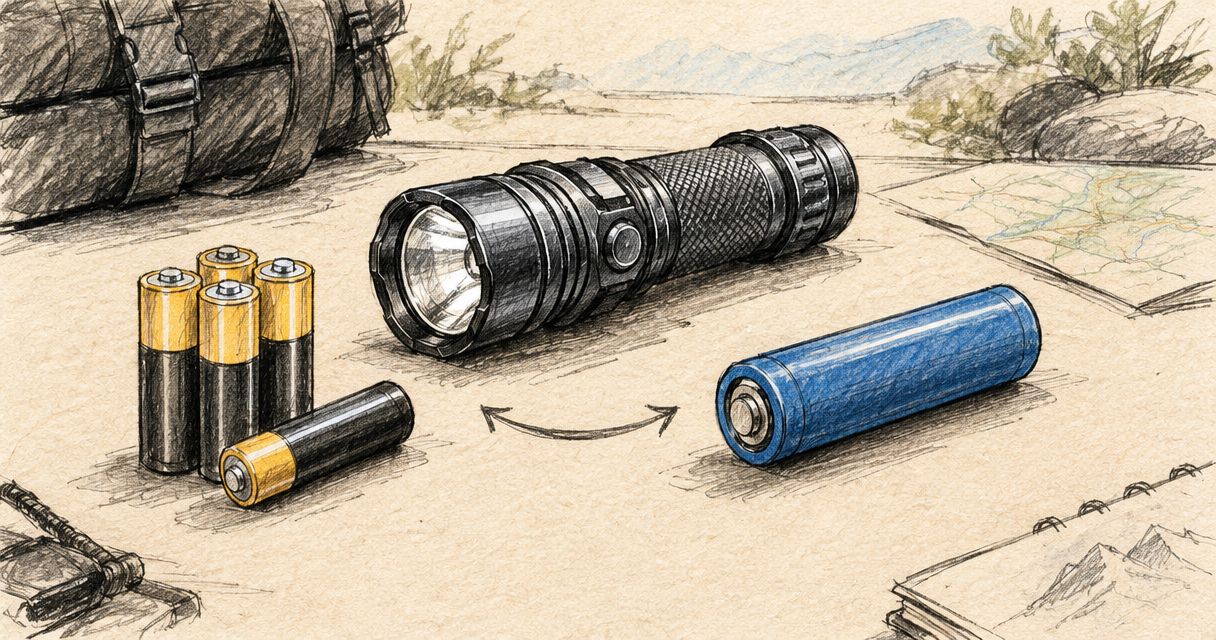
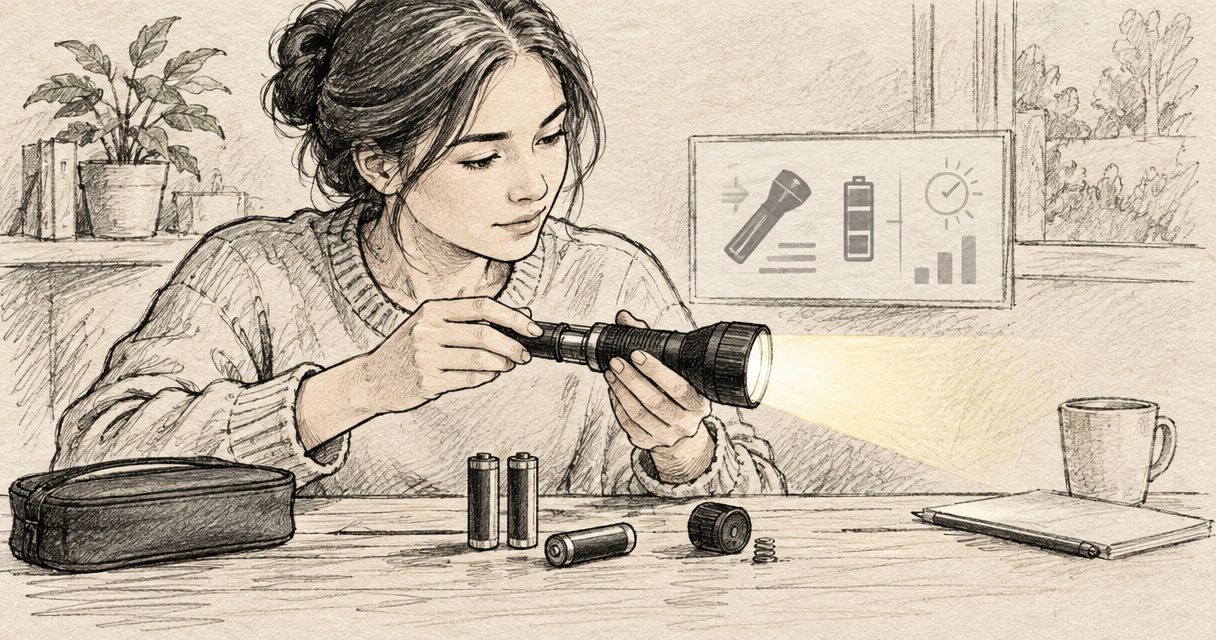
- Power readiness: A discharged rechargeable battery or depleted replaceable cells undermine an otherwise suitable light. Choose a power arrangement you will maintain consistently.
Distance also matters. Under the inverse-square relationship, doubling the distance from 1 metre to 2 metres reduces illuminance to one-quarter for the same luminous intensity, under ideal conditions. This explains why a beam that looks bright nearby does not provide the same illumination farther away; it is not a performance prediction for a particular model.
Choose the beam for your surroundings
Broad beam: best for nearby awareness
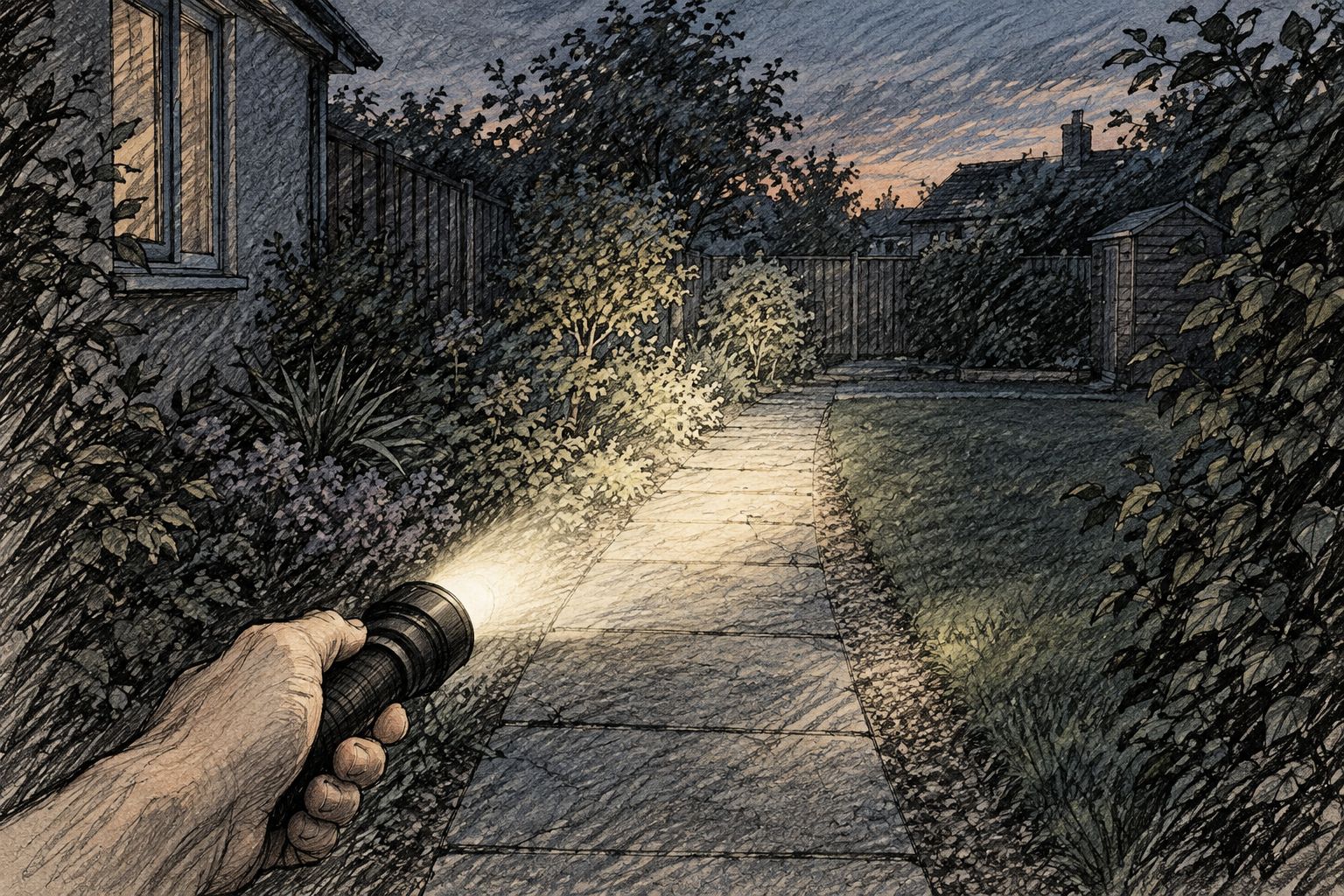
A broad beam is useful when your priority is seeing the path, nearby obstacles and the space around a doorway. Its strength is coverage rather than a bright central spot. For ordinary walking, that wider view can be more relevant than a tightly concentrated beam.
The trade-off is intensity at distance. Do not judge a broad-beam torch as ineffective simply because its hotspot looks less dramatic against a wall; judge whether it lights the area you actually need to see.
Focused beam: best for inspecting a specific area
A focused beam suits tasks where you need to direct light towards a particular point. Compare candela and beam examples alongside lumens, because total output alone does not show how concentrated that beam is.
The drawback is reduced evenness across the surrounding area. A bright central spot does not remove the need to notice steps, uneven ground or objects outside it. Avoid choosing solely from photographs that emphasise the hotspot while leaving the surrounding scene unclear.
Balanced beam: best for mixed everyday use
A balanced beam combines a central hotspot with surrounding spill light. It is a sensible starting point when your route includes nearby ground, entrances and occasional viewing farther ahead.
It remains a compromise. Check how wide the spill is and whether the hotspot suits your viewing distance, rather than treating the word balanced as a specification.
Check the controls before choosing more output
Your torch should make ordinary illumination straightforward. A complicated mode sequence is a poor match if you repeatedly need to cycle through settings to find a useful steady beam. Read the operating instructions before buying, especially where the switch has several functions.
Use this sequence to assess suitability without testing light on another person:
- Find the switch. Hold the torch normally and check whether you can identify the main control by touch.
- Check the starting mode. Establish whether it starts on a fixed setting or remembers the previous setting. Decide which behaviour suits your everyday use.
- Select steady light. Confirm that a useful continuous beam is easy to access without unwanted mode changes.
- Check carry access. Make sure your intended pocket, pouch or bag position does not bury the torch or press its switch accidentally.
- Practise routine operation. In a safe, familiar setting, operate the controls while keeping the beam away from eyes, roads and vehicles.
Ease of operation is a buying criterion, not an optional extra. A torch with impressive output but awkward controls is a poor fit for someone who needs simple, repeatable access to light.
Is a brighter flashlight better for self-defence?
500 lumens is not a protection threshold, and a higher figure is not a guarantee of a better personal-safety torch. More output can improve illumination, but beam shape, reflections and the setting you can sustain still matter.
Compare the actual problem you want to solve. If your current light does not reveal enough of a path, a broader useful beam might address the problem. If a particular area remains poorly illuminated at distance, beam intensity deserves attention alongside total output.
Higher-output modes can also bring greater power demand and heat. Check the manufacturer's instructions and output information rather than assuming the brightest mode is intended for continuous use.
Will 500 lumens blind an attacker?
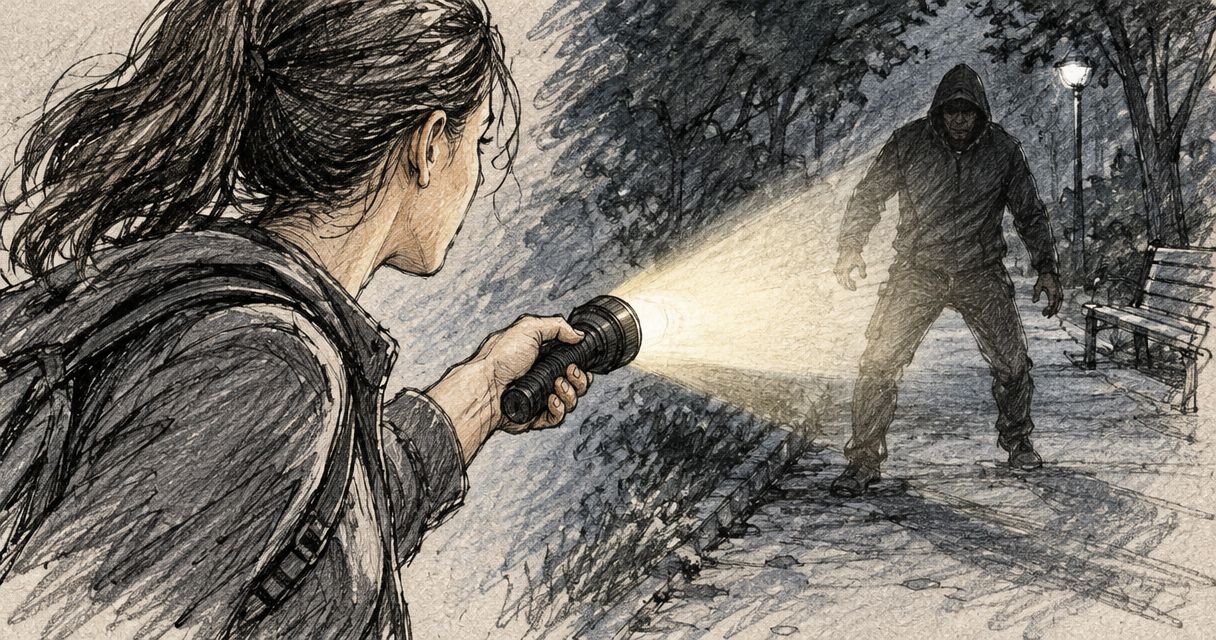
500 lumens does not guarantee blindness, incapacitation or a predictable response from another person. A lumen rating is an output measurement, not a medical or defensive-effectiveness rating. Do not build your safety plan around dazzling someone.
Bright light can cause discomfort and glare, but that is not evidence of reliable protection. Deliberately exposing eyes to a powerful beam also creates an avoidable hazard. Use a torch to support visibility and safe movement, not as a test of another person's tolerance.
If a situation feels threatening, prioritise getting to safety and seeking appropriate assistance. No output figure replaces that decision.
Is a 500-lumen torch suitable for security work?
500 lumens alone is not enough information to approve a torch for security duties. A workplace assessment must also consider the area, required viewing tasks, operating time, weather exposure and the employer's procedures.
A light for checking nearby access points has different demands from one used to inspect a large outdoor boundary. Ask for the relevant beam, runtime and durability information rather than buying from a tactical label.
For professional use, choose equipment within your organisation's procedures and training. A handheld torch is an illumination tool; it does not replace communication arrangements, appropriate staffing or a safe response plan.
What to ask before buying
Write down your main use before comparing specifications. Walking from parking to an entrance, checking a garden path and carrying a light for work are different tasks. Describe the surroundings instead of asking only for the brightest option.
Ask these questions about the individual model:
- What does the beam look like across the area I need to see?
- Which mode provides the stated runtime?
- Does output reduce during use, and is that behaviour documented?
- How do I access steady light and lower settings?
- What battery and charging requirements apply?
- What do the instructions say about water exposure, heat and storage?
TorchSA sells torches direct to the public and offers wholesale options. Use the contact page to ask about a specific model's documented beam, controls and power requirements before making your choice. Avoid assuming a feature applies across an entire range.
Ask about your torch requirements
Describe your surroundings, carry needs and power preference when asking about a suitable torch.
FAQ
Is a 500 lumen flashlight enough for self defense?
A 500-lumen flashlight can provide useful illumination for personal safety, but it cannot guarantee protection or stop an attacker reliably. Choose it for visibility, with attention to beam intensity, controls and sustained output.
What's more important for a safety torch: lumens or candela?
Lumens and candela describe different aspects of a torch's light, so compare both. Lumens describe total output; candela describes intensity in a particular direction and helps explain beam concentration.
Should I choose a broad beam or a focused beam for walking?
A broad or balanced beam is a useful starting point for seeing nearby ground and path edges. A focused beam concentrates light on a smaller area but provides less even illumination around it.
Does a strobe mode make a flashlight better for self-defence?
A strobe mode does not establish that a flashlight provides reliable protection. Prioritise accessible steady light for seeing your surroundings rather than treating a flashing mode as a guaranteed deterrent.
Can I test a bright torch by shining it at someone?
Do not test a bright torch by directing it into someone's eyes. Assess its beam on surfaces and paths in a safe setting, following the manufacturer's instructions.
Does a long advertised runtime mean full brightness lasts that long?
A long advertised runtime does not establish that maximum output lasts for that entire period. Check the operating mode used for the runtime claim and any documented reduction in output.
Can TorchSA help with retail and wholesale torch purchases?
TorchSA sells torches direct to the public and offers wholesale options. Ask about the documented specifications of the model you are considering rather than assuming all torches share the same features.
One last thing
Check the lowest useful setting as carefully as the highest. A torch that helps you see a nearby lock or step without excessive reflected light can be more practical than one selected only for its maximum output. The right choice gives you usable light, accessible controls and a power routine you will actually follow.