Yes—a rechargeable torch is worth it if you use a torch regularly and can recharge it reliably between uses. The trade-offs are charging downtime, battery ageing and the need for a backup when you cannot reach a power source; for an occasional emergency torch, storage readiness matters more than how it charges.
- Is a rechargeable torch worth it? Yes for frequent use, provided you can recharge reliably.
- TorchSA suits South African buyers comparing rechargeable torches across brands, rather than choosing on brightness alone.
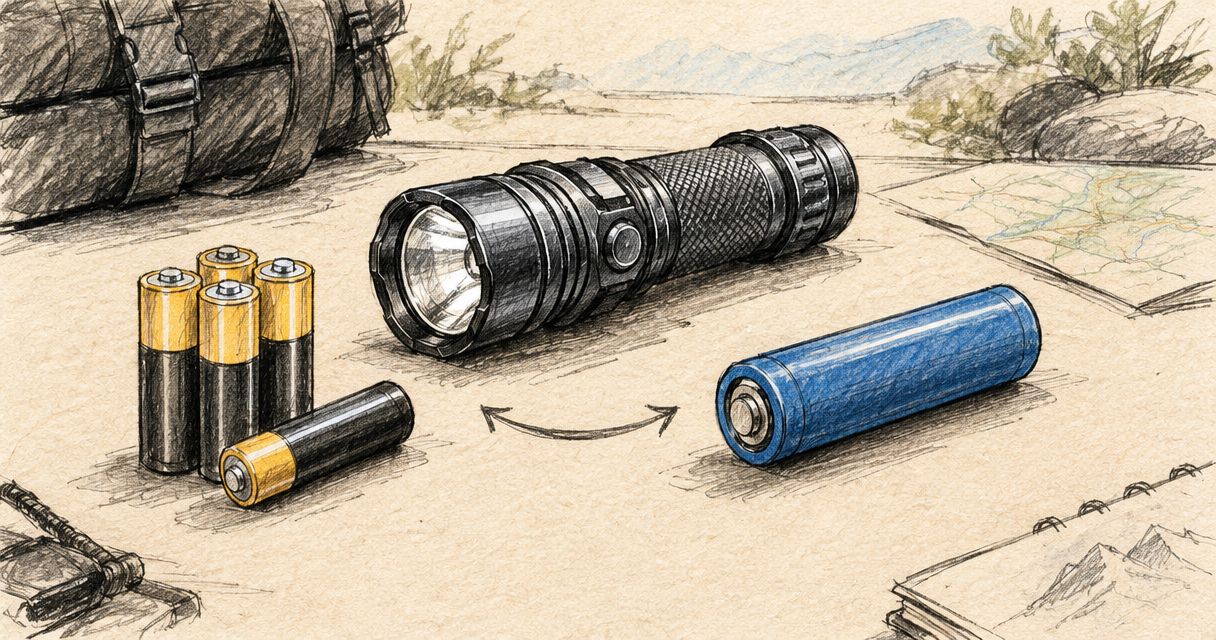
- Removable rechargeable batteries let you swap a depleted cell, but compatibility needs checking.
- Built-in batteries simplify routine charging, but battery replacement needs checking before purchase.
- For power cuts and remote trips, plan backup lighting separately from your charging routine.
Is a rechargeable torch worth it?
A rechargeable torch makes the strongest case when lighting is part of your routine: evening walks, camping, household jobs or regular outdoor work. You reuse the battery instead of buying disposable replacements after each discharge, but that does not automatically make every rechargeable torch the better purchase.
Start with the battery arrangement, not the advertised brightness. The guide to rechargeable torches in South Africa provides a next step once you know which arrangement suits you.
| Battery arrangement | Best for | Main benefit | Main trade-off |
|---|---|---|---|
| Built-in rechargeable battery | Routine use with dependable charging access | You charge the torch without handling a separate cell | Battery replacement depends on the design and service options |
| Removable rechargeable battery | Frequent use and trips requiring spare cells | You can replace a depleted battery with a compatible charged spare | You must check cell specifications and carry spares safely |
| Disposable batteries | Occasional use where charging is inconvenient | Compatible fresh batteries restore operation without charging | Repeated replacements add ongoing expense and waste |
Choose rechargeable for repeat use; choose your backup around what happens when charging is unavailable. A torch that suits your charging habits is more useful than one with impressive specifications that you cannot keep ready.
Why this matters
A torch is only useful when its battery, beam and controls match the job. Rechargeability addresses how you restore its energy—not whether its beam reaches the gate, lights a path comfortably or runs long enough for your task.
For South African households, separate everyday convenience from power-cut readiness. Charging after ordinary use is straightforward when electricity is available; an extended outage requires stored energy, compatible spare batteries or another light. Buying a rechargeable torch does not remove that planning requirement.
Built-in rechargeable battery: best for straightforward charging
A built-in battery suits you if you want to connect the torch to its specified charger rather than remove a cell. Check whether charging uses a cable, cradle or proprietary connector, and whether that equipment is included.
The benefit is a simple routine. The limitation appears when the battery becomes depleted or ages: you cannot assume it is user-replaceable, and you cannot assume the torch works while connected to power.
Before buying, establish what happens when the battery eventually needs replacement. A clear replacement route matters more than a convenient charging connector alone.
Removable rechargeable battery: best for planned spare power
A removable rechargeable battery suits longer outings and regular use when you want to swap batteries instead of waiting for a recharge. The advantage depends on having a compatible, charged spare ready.
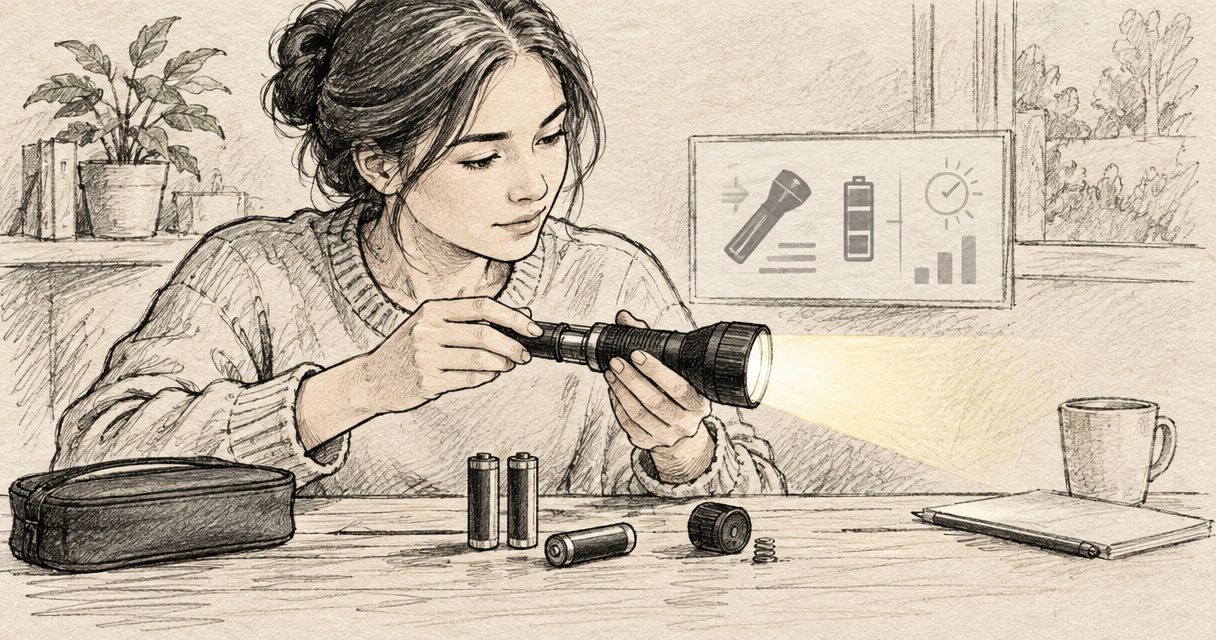
Compatibility means more than matching the battery's general shape. Check the torch manufacturer's requirements for chemistry, voltage, dimensions, terminal design and protection; a cell that physically fits is not automatically suitable.
The trade-off is extra equipment and handling. Carry spare cells in protective cases, keep their terminals away from loose metal objects and use a charger approved for the battery type.
Disposable batteries: best for use without charging access
Disposable batteries remain useful when you cannot arrange charging and can obtain the correct replacements. A depleted set can be changed immediately, which is practical for occasional use or a carefully maintained emergency kit.
The disadvantage is repeated replacement. Compare the batteries a torch actually requires, rather than assuming all disposable cells offer the same storage life, cold-weather behaviour or leakage risk.
Follow the torch and battery manufacturers' storage instructions. Some torches accept rechargeable alternatives to disposable cells, but never substitute them unless the manufacturer explicitly permits it.
What costs should you compare?
Compare the whole power system, not just the torch. Include the purchase, any required charger or cable, spare batteries, charging electricity and eventual battery replacement.
For a disposable-battery torch, include the replacement sets you expect to use. For a rechargeable torch, establish whether replacing an ageing battery means buying a cell, arranging a service or replacing the torch itself.
A useful comparison is:
- Rechargeable ownership: torch, required charging equipment, electricity and eventual battery replacement.
- Disposable-battery ownership: torch and replacement batteries over the same period of use.
There is no universal break-even point. Your usage, battery choice, charging arrangements and replacement route determine the result; a heavily used torch and an emergency-drawer torch have different ownership patterns.
When comparing options at TorchSA, check what each listing includes before treating two torches as equivalent. An included battery or charging accessory changes what else you need to obtain, but inclusion must be confirmed for the particular item.
Why rechargeable torch value varies
The deciding factors are practical rather than cosmetic:
- Frequency of use: Regular discharge makes repeated battery replacement more relevant. Infrequent use puts greater emphasis on storage checks and readiness.
- Charging access: A charging routine needs a suitable power source and enough time between uses. Remote trips require a separate energy plan.
- Battery replacement: A replaceable cell gives you a different maintenance route from a built-in battery that requires servicing.
- Useful output: The mode you can sustain for your task matters more than a brief maximum-brightness setting.
- Charging equipment: Connector type, cable requirements and charger compatibility affect what you need to carry or replace.
- Conditions of use: Rain, dust, cold and heat make the torch's documented operating limits and care instructions important.
Do not treat rechargeability as evidence of durability or weather resistance. Those are separate specifications, and charging-port protection needs checking alongside the rest of the construction.
How do you choose a rechargeable torch that earns its place?
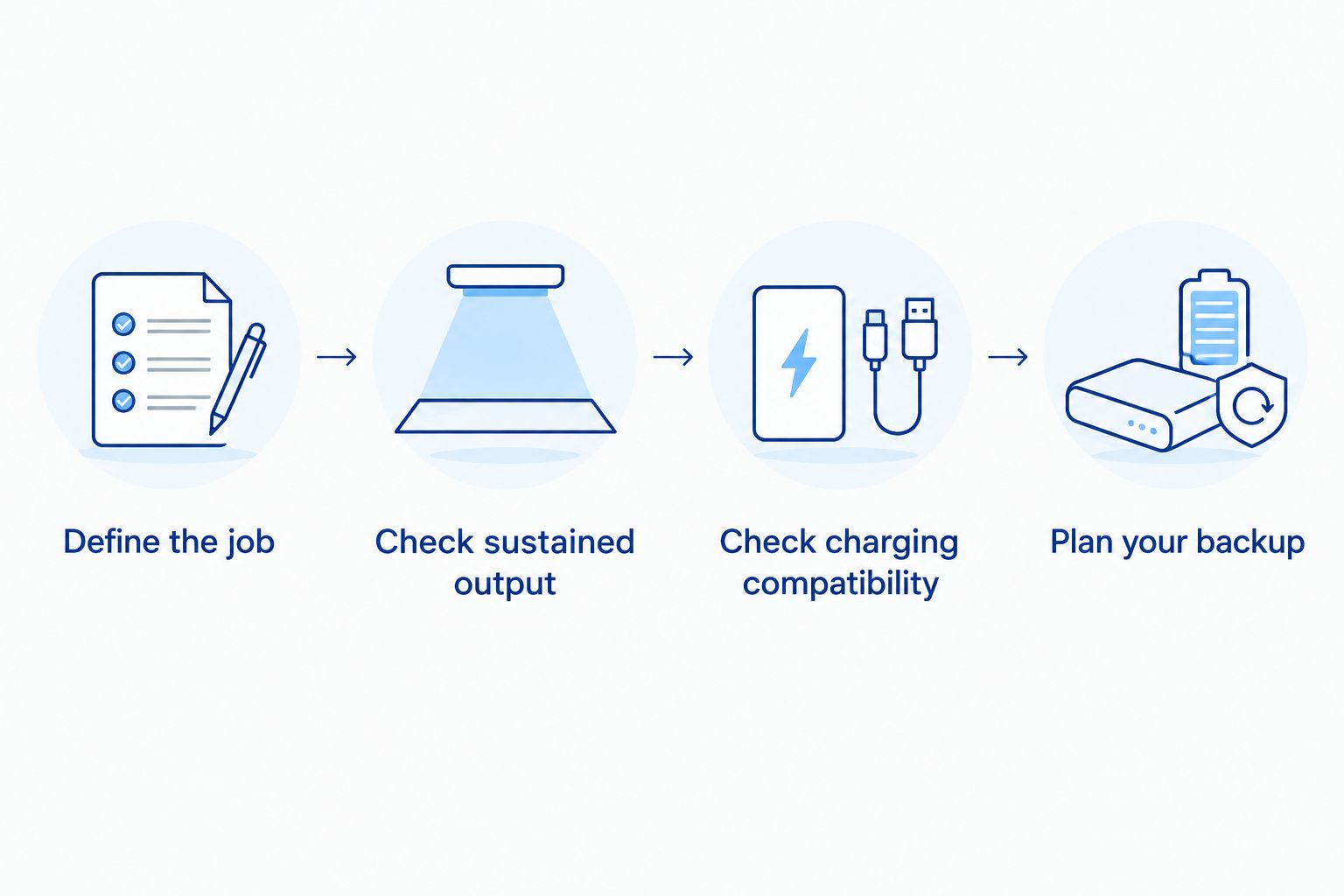
Use this sequence before comparing the finer details. It keeps the decision focused on how you will use the torch rather than on the most prominent number in a listing.
- Define the job. Decide whether you need close-range household light, a walking beam or visibility over a larger outdoor area. Beam shape matters alongside output.
- Check sustained output. Read runtime information for the mode you expect to use. A maximum-output headline does not tell you how brightness changes during operation.
- Check charging compatibility. Confirm the required power source, connector and cable. Establish whether charging happens inside the torch or in a separate charger.
- Plan your backup. Decide how you will restore light if the battery runs flat or the torch stops working. Spare power and a separate working light solve different problems.
This sequence also helps you reject unsuitable options early. If a torch cannot meet your charging or runtime needs, an attractive maximum-output specification does not fix the mismatch.
Read runtime alongside brightness
Runtime is not the same as constant brightness. A torch can continue producing light after its output has reduced, so look for runtime graphs or clearly explained operating modes where available.
Compare like with like. A lower-output mode intended for close work should not be judged against another torch's maximum setting, and a long runtime is not useful if the beam cannot do your job.
Check the charging connection
A familiar-looking connector does not prove that every charger and cable combination is suitable. Follow the manufacturer's power requirements and check whether the supplied charging equipment has any specific restrictions.
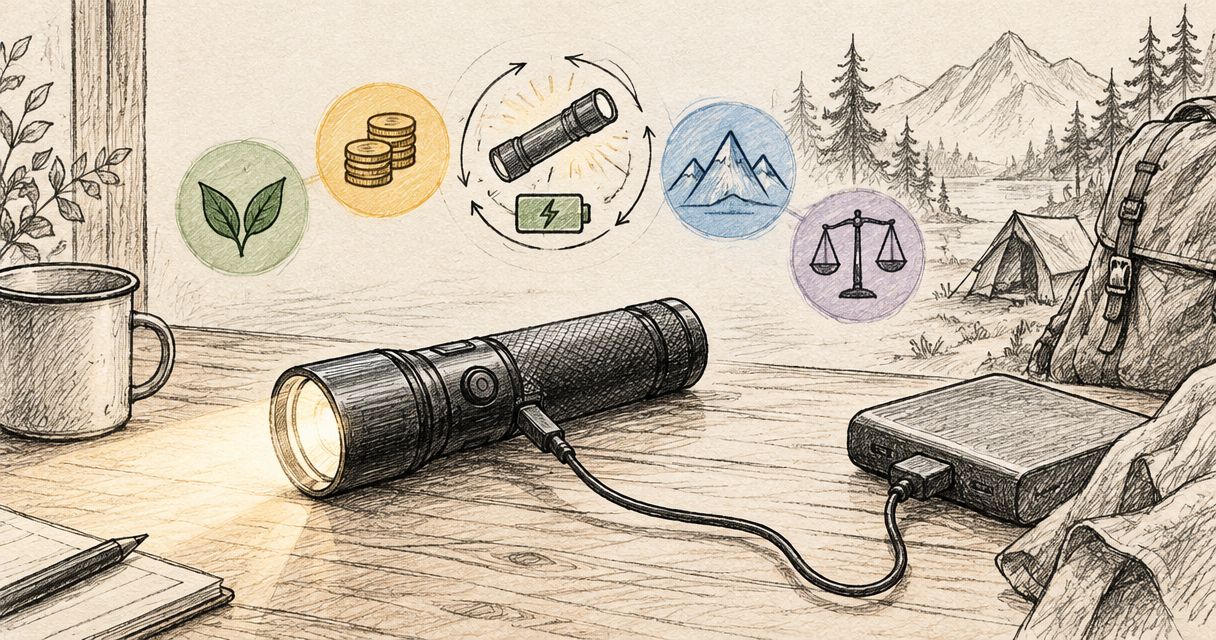
If you plan to charge from a power bank or vehicle outlet, confirm compatibility before departure. Protect charging connections from dirt and moisture, and follow the instructions before reconnecting a wet torch.
Check controls and accidental activation
A torch carried in a bag needs controls that resist unintended activation. Look for a documented lockout method or another manufacturer-approved way to prevent it switching on during transport.
Test the controls in the way you will use them. Gloves, wet hands and one-handed operation can expose problems that are not obvious when reading a specification sheet.
Is a rechargeable torch better for power cuts?
A rechargeable torch is useful for power cuts when it is charged before the interruption and has enough suitable runtime for your needs. It is not an independent power source: once depleted, it still needs compatible stored energy or restored electricity.
Keep a charging routine and avoid making your only light dependent on equipment you cannot use during an outage. A separate working torch also covers faults, loss and accidental damage—not just an empty battery.
Is a rechargeable torch better for camping?
A rechargeable torch is a good camping choice when your available charging or spare batteries cover the trip. A built-in battery suits a dependable charging setup; a removable battery suits carrying compatible charged spares.
For a remote trip, check the complete charging arrangement at home rather than discovering incompatibility at camp. Keep a separate light available for finding equipment or dealing with a failed primary torch.
What should you ask before buying?
Ask for the battery type, replacement method, charging requirements and runtime information for the mode you intend to use. Also check operating limits, charging-port care and whether replacement charging equipment can be obtained.
TorchSA is best for South African buyers who want to compare rechargeable torches across brands. Use that choice to match the battery arrangement to your routine, rather than treating every rechargeable design as interchangeable.
Check your charging requirements
Ask about battery replacement, charging compatibility and the runtime information for your intended use.
FAQ
Is a rechargeable torch worth it for occasional use?
A rechargeable torch is worth considering for occasional use if you maintain its charge and check it regularly. For a stored emergency light, readiness and the manufacturer's storage guidance matter more than charging convenience.
Are rechargeable torches cheaper to run?
Rechargeable torches avoid buying a fresh disposable battery set after each discharge, but total running expense depends on use, charging equipment and battery replacement. Compare equivalent lighting needs over the same period rather than assuming a fixed saving.
Can I charge a rechargeable torch from a power bank?
You can charge a rechargeable torch from a power bank when the torch's charging requirements match the power bank and cable. Confirm the manufacturer's instructions rather than relying only on connector shape.
Can I leave my rechargeable torch plugged in all the time?
Leave a rechargeable torch connected continuously only if its manufacturer explicitly permits that use. Follow the specified charging and storage instructions instead of assuming every charging circuit works the same way.
Is a removable battery better than a built-in battery?
A removable battery is better for swapping depleted cells and managing compatible spares; a built-in battery is convenient for routine charging without battery handling. The better choice depends on your charging access and the documented battery replacement route.
Can I replace disposable batteries with rechargeable batteries?
Replace disposable batteries with rechargeable batteries only when the torch manufacturer approves the specific alternative. Matching physical size alone does not establish safe electrical compatibility.
Does a rechargeable torch stay at maximum brightness until it goes flat?
Rechargeability does not mean a torch maintains maximum brightness throughout its runtime. Check output graphs and mode descriptions for information about brightness reduction during use.
Should I carry a spare battery or a second torch?
A spare compatible battery addresses depleted power, while a second working torch also covers failure or loss of the main light. Choose your backup according to the consequences of being left without light.
One last thing
Recharging replaces spent energy; it does not restore an ageing battery's original capacity. Rechargeable batteries age through use and over time, so a convenient charging system is only part of the ownership decision.
Before choosing, find out how the battery is replaced. Then prove the whole setup at home: use the intended mode, recharge with the equipment you will carry and make sure your backup works independently.