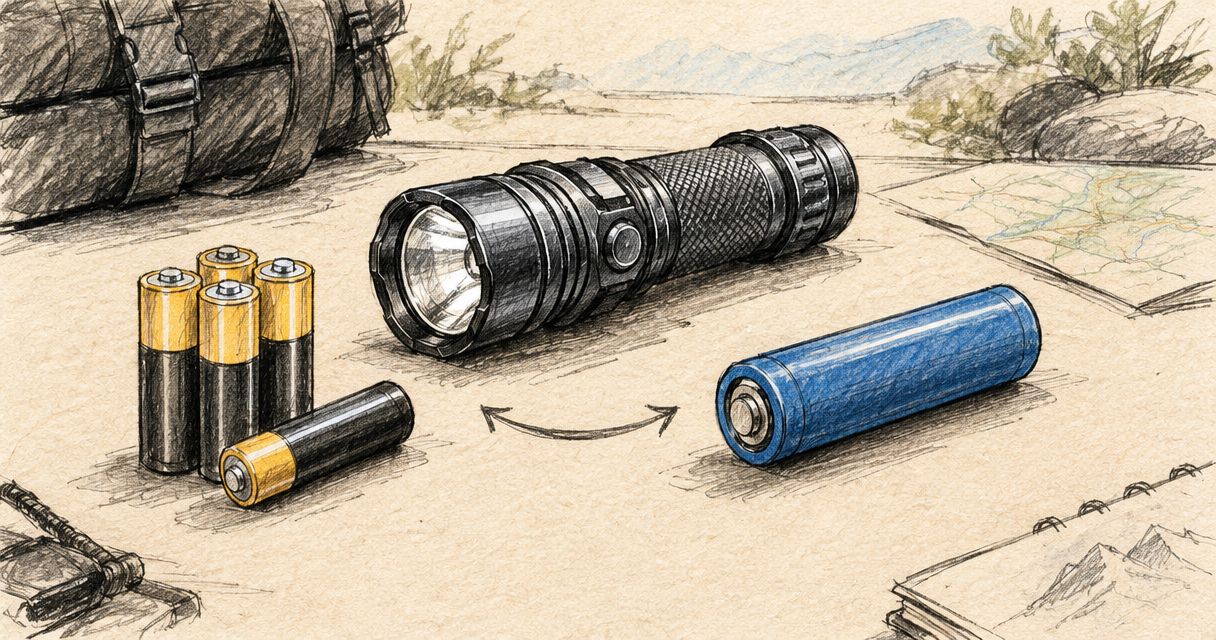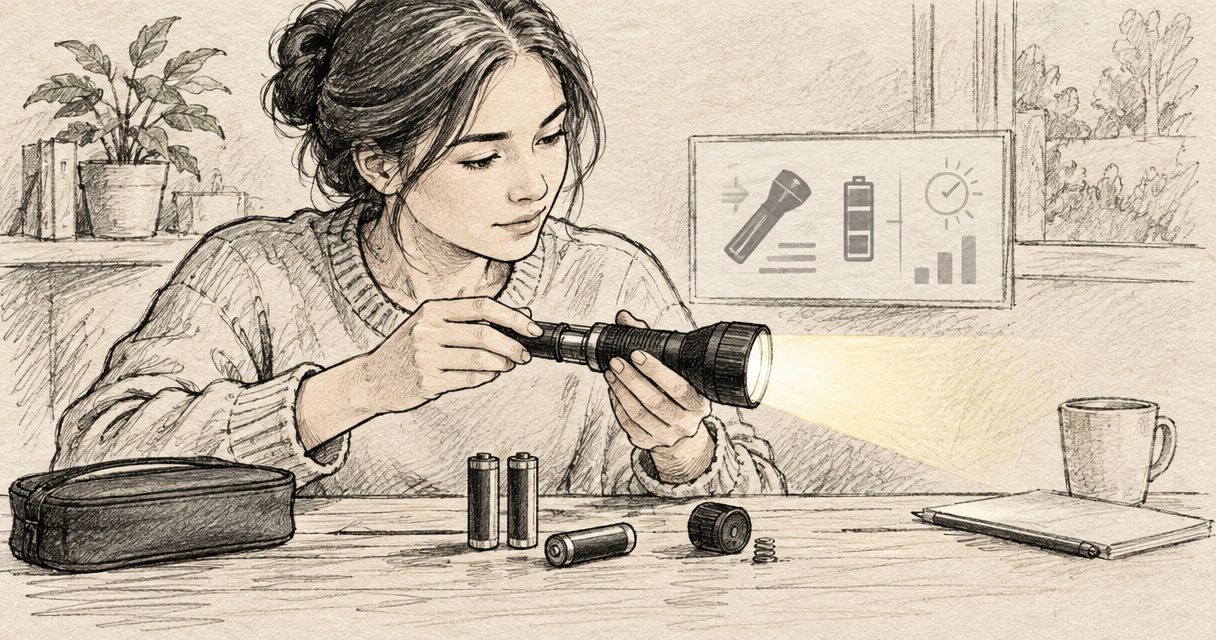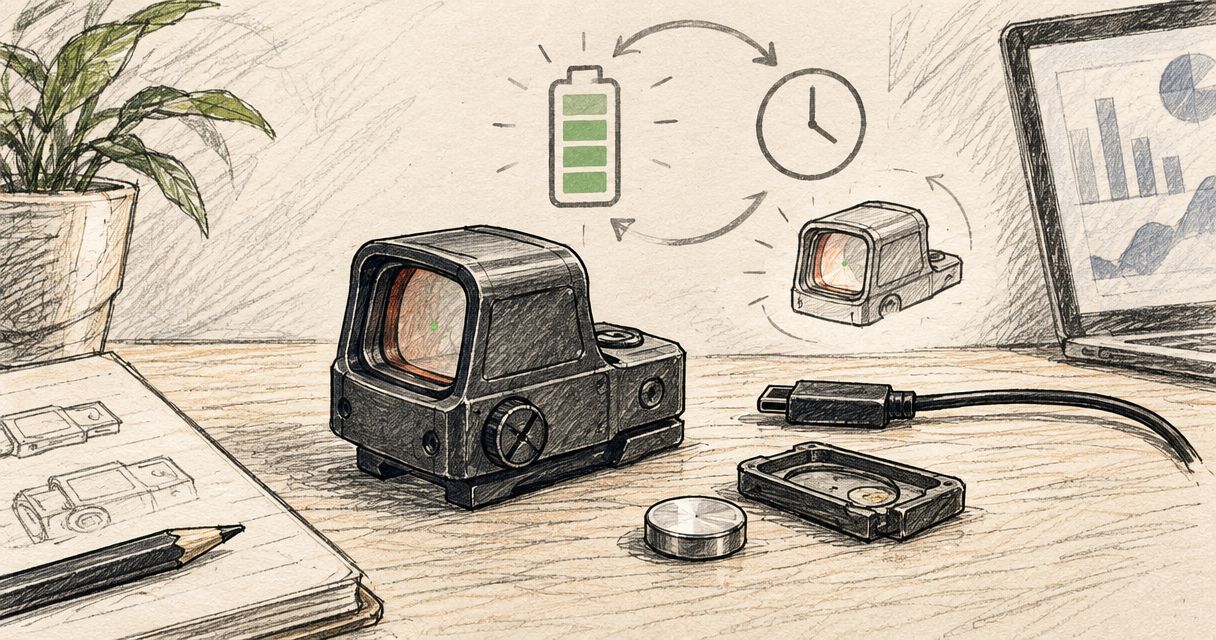
There is no single runtime for an Olight or Osight battery. Battery life per charge depends on the model, the output mode you run and the cell inside, and the spec sheet for your exact model is the only number that counts.
- How long an Olight or Osight battery lasts per charge depends on model, mode and cell size, so read the runtime table for your model.
- Turbo drains a cell far faster than the low and medium modes you use most.
- A larger cell, such as a 21700 over an 18650, gives more capacity in the same torch class.
- Cold, heat and cell age all cut real-world runtime below the rated figure.
How long does an Olight or Osight battery last per charge?
Runtime is set by three things: cell capacity, output mode and conditions. Olight makes torches, headlamps and weapon lights. Osight is its optics line. They do not share one battery figure, so any single number you see online is a guess.
The manufacturer publishes a runtime table for each model, usually listing hours at each output level. That table is measured under controlled conditions. Treat it as the best case, then adjust for how you use the light.
If you are still choosing a torch, start with the best Olight flashlights in South Africa and check the runtime table on each product page before you buy.
Why battery life varies between models
Every model draws power differently. A pocket EDC light with a small cell and a high-output weapon light with a larger cell are built for different jobs. These are the factors that decide your runtime:
- Cell capacity. Capacity is rated in mAh. Common 18650 cells sit roughly between 2,600 and 3,500 mAh, and 21700 cells roughly between 4,000 and 5,000 mAh.
- Output mode. Higher lumens draw more current. Turbo is built for short bursts, not for sustained use.
- Thermal step-down. Many lights reduce output automatically when they heat up, which stretches runtime but lowers brightness.
- Temperature. Lithium cells lose usable capacity in the cold.
- Cell age. An older cell holds less charge than a new one, whatever the rating on the label.
- Battery type. Built-in rechargeable packs, removable cells and primary batteries all behave differently.
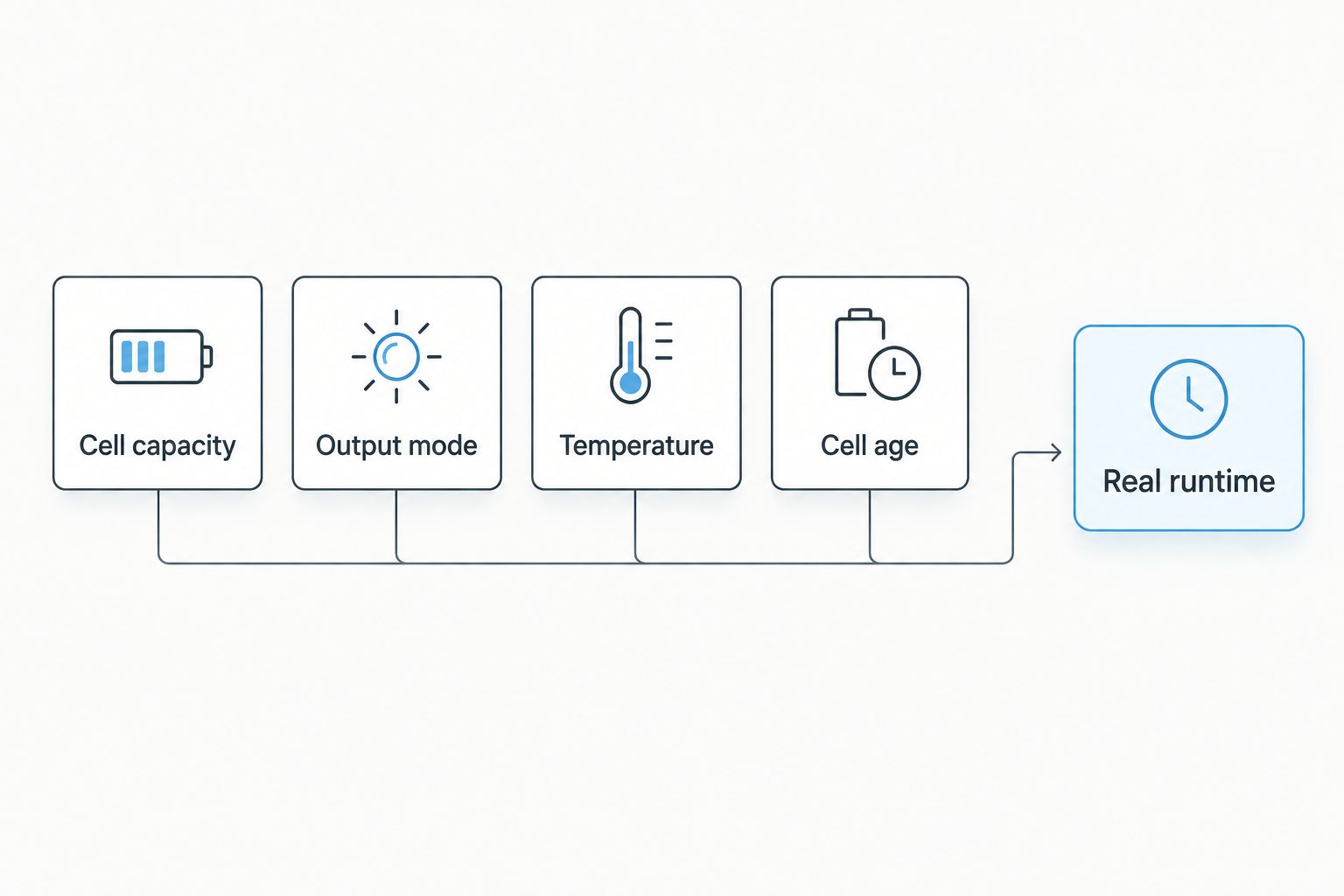
The diagram above is the whole picture: the same torch can last very different times depending on how you run it.
Cell capacity: what the battery size tells you
Capacity is the simplest predictor you have. A bigger cell stores more energy, so the same light on the same mode runs longer. For a side-by-side look at the two most common sizes, read the 18650 vs 21700 capacity benchmarks.
A rough way to estimate runtime is capacity divided by current draw. A 3,000 mAh cell feeding a light that pulls 1,000 mA gives roughly three hours, before losses. This is an illustration of the method, not a rating for any Olight model. Real lights lose some capacity to heat and regulation, so expect less.
Output mode: where most of the drain comes from
Mode choice is the factor you control. Run the lowest mode that does the job.
| Use | Typical mode | Battery impact |
|---|---|---|
| Walking, reading, close work | Low | Longest runtime |
| General camp or yard tasks | Medium | Moderate runtime |
| Searching or signalling | High or Turbo | Shortest runtime |
Best for long nights: low and medium modes. Best for short tasks: high and turbo. Turbo is not a sustained mode, and the runtime table will show a steep drop at that level.
Osight optics: battery life works differently
Optics such as red dot sights draw very little power compared with a torch. Their battery life depends on the brightness setting and whether the sight has an auto-off or motion-wake feature. Run the lowest brightness that is visible against your target and you get the most from the battery.
Because battery type and rated life differ by sight, confirm the figure for your model on the product page. For the full range and brand-specific detail, see Osight's optics range. If you mount a light and sight together, the Olight PL Mini and Osight combo setup guide shows how the pairing is arranged, but check each unit's runtime separately because each runs on its own power source.
Why real-world runtime falls short of the rating
Rated runtime comes from lab conditions. Your use rarely matches.
- Cold nights. Cells deliver less in low temperatures. Keep a spare cell warm in an inside pocket.
- Frequent mode switching. Repeated high-output bursts drain more than steady low use.
- Old cells. After many charge cycles a cell holds less. If a light that used to last a night now dies early, test the cell. The guide to testing whether an 18650 is still good walks through it.
- Storage. A fully charged cell left for months loses charge slowly. Top up before a trip.
How to get more from each charge
- Read the runtime table for your exact model and note the hours at the mode you use most.
- Default to low or medium and only step up when you need to.
- Carry a spare charged cell for any trip longer than one night.
- Charge before you leave, not the night before a long storage period.
- Replace cells that no longer hold a charge.
For official model details and brand support, the Olight South Africa site carries the full range information.
Need help choosing a battery or torch?
Ask the TorchSA team which model suits your runtime needs.
How long does a rechargeable Olight take to recharge?
Charge time depends on cell size and the charger or port the light uses. Larger cells take longer than small ones. The product page lists the charge time for each model.
FAQ
How long does an Olight battery last per charge?
It depends on the model, the output mode and the cell size. Each Olight model publishes a runtime table, so check that table for your exact torch.
How long does an Osight battery last?
Osight optics draw far less power than a torch, and life depends on the brightness setting and the sight's features. Confirm the figure on the product page for your model.
Does turbo mode drain the battery faster?
Yes. Turbo draws the most current, so runtime at that level is much shorter than at low or medium. Many lights also step down automatically as they heat up.
Is a 21700 cell better than an 18650 for runtime?
A 21700 generally has more capacity than an 18650, so the same light runs longer on it. Only use the cell size your torch is designed for.
Why does my torch die sooner than the rated runtime?
Rated runtime comes from controlled testing. Cold weather, frequent high-mode use and an ageing cell all reduce what you get in the field.
How do I make my battery last longer?
Use the lowest mode that does the job, keep spare cells warm in cold weather, and replace cells that no longer hold a full charge.
One last thing
The most useful habit is to note the runtime at your usual mode once, then plan trips around that number instead of the turbo rating. A spare cell costs far less than a dead torch at the wrong time.